Table of Contents >> Show >> Hide
- The moment that changed everything
- What happened at the Rio Eras Tour concert
- The father’s statement: grief, restraint, and a demand for consequences
- Investigations, official responses, and the push for accountability
- So… will “someone be punished”?
- Concert safety in extreme heat: what organizers can’t ignore anymore
- What fans can do: practical heat-safety moves that don’t kill the vibe
- The bigger picture: mega-tours, climate reality, and the cost of “business as usual”
- Conclusion: grief that demands change
- Real-world experiences & lessons inspired by this tragedy
- SEO Tags
When a night meant for friendship bracelets and confetti turns into a family’s worst phone call, the questions don’t stop at the stadium gates.
The moment that changed everything
On November 17, 2023, a sold-out Taylor Swift “Eras Tour” show in Rio de Janeiro became the backdrop for a tragedy that still echoes far beyond Brazil’s borders.
Ana Clara Benevides Machado, a 23-year-old fan who traveled to see her favorite artist, collapsed during the concert amid brutal heat and later died at a hospital.
What followed was a whirlwind of grief, public outrage, investigations, and a father’s painfully simple demand: find out what happenedand if negligence played a role,
punish whoever is responsible.
In a world where “concert safety” usually means “don’t lose your friends during the bathroom break,” this story forced a tougher conversation:
what does safety look like when the biggest threat is the weather, crowd density, and whether water is treated like contraband?
What happened at the Rio Eras Tour concert
A timeline built from witness reports, official statements, and later findings
Multiple reports described a record-breaking heat wave in Rio, with conditions that felt dramatically hotter than the raw air temperature.
The show took place at Estádio Olímpico Nilton Santos (often called Engenhão), with tens of thousands of people packed inmany waiting for hours before doors opened.
According to later reporting and a forensic finding obtained by the Associated Press, Benevides collapsed early in the showduring “Cruel Summer,” the second song
and was transported to a hospital, where she died. A forensics report later confirmed heat exhaustion as the cause, describing heat exposure leading to cardiorespiratory arrest,
and noting no indication that preexisting conditions or substance use contributed to her death.
In the immediate aftermath, criticism landed heavily on the event organizer, Time For Fun (T4F), amid allegations about insufficient access to water and restrictions on bringing
personal water bottles into the venue. Organizers disputed some claims and said they complied with rules and provided waterbut the public response made one thing clear:
people wanted accountability, not corporate shrug emojis.
Why the “water bottle ban” became the symbol of the crisis
If you want to understand why this story detonated across social media and mainstream news, start with the image that felt upside down:
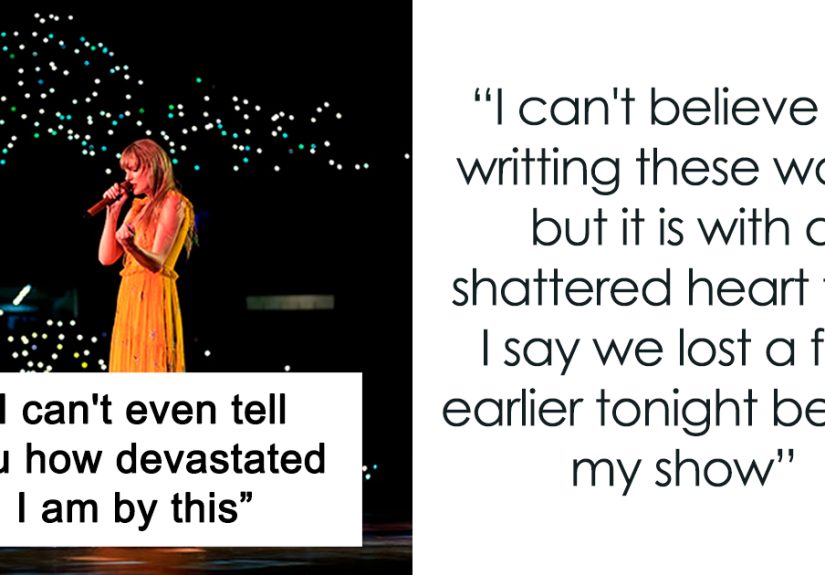
Taylor Swift herself signaling for water distribution mid-showan artist onstage acting like a crisis coordinator.
Videos showed her pointing to distressed sections of the crowd and asking staff to get water to people who needed it.
Fans also described how crowd density and heat made it difficult to reach vendors or hydration points.
When you combine extreme temperatures, long waits, limited shade, and dehydration risk, the margin for error shrinks to basically zero.
That’s not “bad vibes.” That’s an emergency plan failing its stress test.
The father’s statement: grief, restraint, and a demand for consequences
“Nothing will bring my daughter back…”
Benevides’ father, José Weiny Machado, spoke publicly in the days after his daughter’s death, choosing his words carefully.
He said he wanted a full accounting of what happened: whether concertgoers were actually prohibited from bringing in water, and whether there was negligence in providing assistance.
Then came the line that traveled around the world because it captured what so many families feel after preventable tragedies:
he hoped that if negligence was confirmed, “someone will be punished,” so it doesn’t happen to anyone else.
Why that sentence matters (and why it’s bigger than one concert)
He wasn’t calling for vengeance. He was asking for responsibility.
The difference matters: responsibility is how societies learn. It’s how policies change. It’s how safety becomes proactive instead of reactive.
And his comment about Swift handing out watercalling it “absurd” for an event of that sizewasn’t a swipe at the artist.
It was a spotlight on scale: when tens of thousands gather in dangerous heat, hydration can’t depend on an entertainer’s mid-song heroics.
That’s not a plan. That’s luck wearing sequins.
Investigations, official responses, and the push for accountability
Authorities began looking at T4F and event conditions
After the incident, Brazilian authorities announced investigations into the circumstances around the show and the organizer’s responsibilities,
including questions about water access, structure, and safety measures. Reporting widely carried in U.S. outlets described police steps and government scrutiny,
while also noting that investigations take time and conclusions shouldn’t be assumed in advance.
The forensics report: heat exhaustion confirmed
In late December 2023, the forensic report obtained by the Associated Press confirmed Benevides died from heat exhaustion after attending the concert.
The report described heat exposure leading to cardiorespiratory arrest and indicated there was no contribution from preexisting health conditions or substance use.
That finding didn’t magically answer every operational questionbut it clarified the central danger: extreme heat wasn’t background noise; it was the threat.
When the environment is that hostile, every decisionentry timing, shade, water policy, medical staffing, crowd flowbecomes life-or-death math.
Swift’s response and the postponed show
Swift publicly expressed heartbreak after the death, and she postponed the following night’s Rio show citing extreme temperatures and safety concerns.
She also appeared to pause during the performance to call for water distribution. Later reporting also described her and her team reaching out privately to the family
and inviting relatives to attend a later show, reflecting a desire to support them away from the cameras.
So… will “someone be punished”?
What accountability can look like (beyond a courtroom)
When people read “punished,” they often picture a dramatic courtroom scene with a gavel slam that sounds like a bass drop.
In reality, accountability can take several forms:
- Criminal findings (if authorities determine laws were broken and responsibility is proven).
- Civil liability (lawsuits, damages, settlements, and insurance consequences).
- Administrative penalties (fines, licensing changes, compliance mandates).
- Regulatory reform (new rules that change how future events operate).
Even when criminal charges aren’t filed (or don’t stick), civil and regulatory outcomes can still reshape the industry.
Sometimes the most lasting “punishment” is a new standard that makes cutting corners far more expensive than doing it right.
The “Taylor Swift effect” on event rules
One of the clearest outcomes reported after the tragedy was a renewed pushby officials and legislatorsfor rules guaranteeing water availability at large events.
The conversation wasn’t just “what happened?” but “how do we keep it from happening again?”
That’s the part of the father’s statement that often gets overlooked: he wasn’t only speaking for his family.
He was pleading for future fansanyone’s kids, anywhereto come home safe after a concert.
Concert safety in extreme heat: what organizers can’t ignore anymore
Heat is a crowd-control issue, a medical issue, and a logistics issue
In the U.S., conversations about concert tragedies often revolve around crowd crushes, security failures, or violence.
Heat-related emergencies are quieterbut they escalate fast. A person can go from “I’m fine” to “I can’t stand” quicker than it takes to buy a $12 soda.
What does “best practice” look like when the heat index is brutal?
- Hydration access that’s obvious: free refill stations, clear signage, and enough points so people aren’t trapped in dense sections without water.
- Entry and queue management: reducing hours-long waits in direct sun; creating shaded lanes; staggering entry when feasible.
- Medical readiness: staffing that matches the risk profile, not the average day; rapid routes for extraction from dense floor areas.
- Communication: real-time announcements, visible staff, and a plan for pausing or delaying when conditions become dangerous.
- Common-sense water policies: if items are restricted for safety reasons, provide alternatives that don’t turn hydration into a scavenger hunt.
Why “but we followed the rules” can still fail the moment
One hard lesson from disasters across industries is that compliance is not the same as competence.
A checklist can be technically satisfied while real-world conditions make the checklist meaningless.
If extreme heat is the hazard, the plan must be built around heat, not around “what we usually do.”
What fans can do: practical heat-safety moves that don’t kill the vibe
Fans shouldn’t have to prepare for concerts like a survival show, but reality is realityand heat waves are becoming more common.
Here are practical, non-alarmist ways to protect yourself (and your friends) at any large event:
Before you go
- Check the forecast and heat index, not just temperature.
- Hydrate early. “I’ll drink water later” is how heat illness sneaks up on people.
- Plan your clothing like you’re dressing for comfort, not for a Pinterest board.
On-site
- Know where water and medical help are as soon as you enter.
- If you feel dizzy, nauseated, or unusually weak: tell someone immediately. Don’t “push through” for the chorus.
- Use the buddy system. The best friendship bracelet is the one that comes with “text me if you feel weird.”
And yes, speak up
If you see someone in distress, flag staff, move them toward help if possible, and don’t worry about looking dramatic.
The only embarrassing thing is letting fear of awkwardness delay care.
The bigger picture: mega-tours, climate reality, and the cost of “business as usual”
The Eras Tour is a phenomenonculturally, economically, logistically. It’s also a reminder that mega-events are now colliding with a hotter planet.
When temperatures spike, venues and promoters face a question that’s both moral and operational:
will safety be treated as a baseline cost of doing business, or an optional add-on?
Benevides’ death became a heartbreaking symbol of that collision. It also sharpened a truth that should be obvious:
a concert is not a controlled environment just because there’s a stage schedule.
It’s a moving ecosystem of bodies, barriers, heat, and timewhere small failures can compound quickly.
That’s why her father’s words landed so hard. They weren’t just grief. They were a warning flare.
Conclusion: grief that demands change
José Weiny Machado didn’t ask for sympathy from the internet. He asked for answers.
He asked for an investigation that takes the details seriously. And he asked for consequences if negligence is proven.
In the long run, the question isn’t only whether “someone will be punished.”
It’s whether organizers, venues, and regulators treat heat and hydration as non-negotiable parts of concert safetyeverywhere, every time,
especially when crowds are huge and the weather is unforgiving.
No policy can undo the loss of Ana Clara Benevides Machado. But a better standardone built for the world we actually live incan save lives.
That’s the kind of justice families mean when they say: make sure this never happens again.
Real-world experiences & lessons inspired by this tragedy
If you’ve ever been to a stadium show in serious heat, you know the weird part: it can feel festive and dangerous at the same time.
The crowd is singing, the lights are perfect, your friend is crying (in a good way), and your body is quietly negotiating with gravity.
People often describe heat illness as sneakynot like a cartoon bonk on the head, but like your energy bar slowly draining while you’re distracted by the spectacle.
Many concertgoers share a similar “I didn’t realize how bad it was until…” moment. Until they stood up and saw stars.
Until they tried to move through a dense floor section and realized there was no easy path to a vendor.
Until they noticed that the line for water was longer than the bridge of a three-hour setlist.
In those moments, the best safety feature isn’t a fancy wristbandit’s a clear lane, a visible hydration point, and staff who are empowered to act fast.
Another common experience at mega-events is the “micro-decision trap.” You feel slightly off, but you tell yourself:
“It’s just nerves.” “It’s just excitement.” “It’s just because I’ve been standing.” Then you wait for the next song, because leaving feels like missing a milestone.
That’s why public messaging matters. When venues normalize stepping out to hydrate, when artists or staff repeatedly remind people that getting help is not a disruption,
fans are more likely to act earlybefore symptoms become severe.
People also talk about how quickly group dynamics change in a crisis. In a typical crowd, strangers keep polite distance.
But in a heat emergency, you’ll often see an instant shift: someone fans a stranger with a sign; another person passes a water bottle backward;
a third starts guiding people toward an exit with the urgency of a human GPS.
Those spontaneous acts are beautifulbut they shouldn’t have to carry the burden of a professional safety plan.
A well-run event supports the crowd’s goodwill with structure: more water access, more shade, more routes, more medical visibility.
There’s also the “infrastructure illusion.” From the stands, everything looks organized: lights, sound, screens, timing.
But logistics can break down where you can’t see itat entry points, in queue lanes, near barriers, and inside the densest sections of the floor.
Fans frequently describe how the hardest place to get help is the place with the best view.
That’s not a moral failing of the crowd; it’s geometry. The tighter the space, the harder it is for vendors and medical staff to move.
In extreme heat, that geometry becomes a risk multiplier.
Finally, there’s the lesson families and fans repeat most often after tragedies: “Please don’t treat the basics like extras.”
Water is not a luxury item. Shade is not a VIP perk. Medical care is not a “nice to have.”
And when policies restrict what fans can bring in for legitimate safety reasons, organizers have to replace that restriction with an equally safe alternativeat scale.
Otherwise, you end up with the kind of surreal scene people couldn’t stop talking about in Rio:
the biggest pop star on the planet trying to solve hydration problems from a stage.
The experience many readers take away from this story is not fearit’s clarity.
Concerts can be joyful and safe, but safety requires planning that matches reality, especially as heat waves become more frequent.
If the legacy of Ana Clara Benevides Machado includes better hydration rules, smarter crowd logistics, and faster medical response at large events,
that won’t erase lossbut it can turn grief into protection for the next person in the crowd.