Table of Contents >> Show >> Hide
- The Real Reason Carl Dean Didn’t Go to Events
- A Superstar and a Homebody: Why Their Marriage Worked
- Carl Dean Loved Dolly, Not the Limelight
- The One Event That Changed Everything
- Why Fans Find Carl Dean So Fascinating
- Dolly Parton’s Public Image vs. Private Reality
- What Carl Dean’s Choice Says About Healthy Boundaries
- How Dolly Honored Carl Dean After His Death
- Why This Story Still Matters
- Experiences and Reflections Related to Dolly Parton and Carl Dean’s Story
- Conclusion
Note: This article is written as original editorial content based on publicly reported information from reputable entertainment and biographical sources.
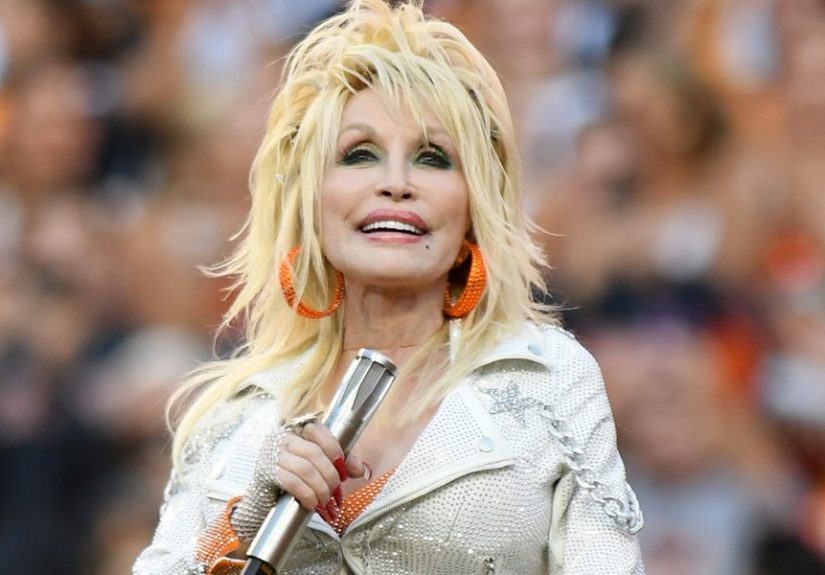
Dolly Parton has spent more than six decades becoming one of America’s most recognizable entertainers: the voice, the wigs, the rhinestones, the jokes sharp enough to trim a hedge, and the kind of work ethic that makes coffee look lazy. Yet for nearly all of that time, one person remained famously absent from her red carpets, award shows, premieres, and celebrity-packed photo calls: her husband, Carl Dean.
For years, fans wondered the same thing: Why didn’t Dolly Parton’s husband appear at events with her? Was he camera-shy? Did he dislike fame? Was there a dramatic Hollywood story hiding behind the curtain? As it turns out, the truth was much simpler, much funnier, and very Dolly. Carl Dean was not avoiding Dolly’s career. He was avoiding the circus around it.
Parton has explained in interviews that Dean loved music but had no desire to be part of the music business. He attended one major industry event with her early in their marriage, felt deeply uncomfortable, and made one very clear request afterward: he did not want to do it again. Dolly, being Dolly, respected that boundary. The result was one of the entertainment world’s most unusual love stories: a global superstar married to a man who preferred home, normal routines, and privacy over flashbulbs and velvet ropes.
The Real Reason Carl Dean Didn’t Go to Events
The real reason Carl Dean didn’t appear at events was not scandalous. It was not mysterious. It was not a publicity stunt. He simply did not enjoy being in the spotlight.
Dolly has said Dean was never interested in the music industry, even though he enjoyed music itself. That distinction matters. Plenty of people love songs without wanting to wear a tuxedo, sit through speeches, shake hands with executives, and smile while photographers shout their names. Carl Dean seems to have been one of those peopleexcept his wife happened to be Dolly Parton, which made avoiding show business a little more impressive.
According to Parton, Dean agreed to attend an award event with her early in her career. Reports commonly identify the event as the BMI Awards, where Parton was being recognized during a major early moment in her songwriting life. She rented him a tuxedo, encouraged him to come, and he went. But the night confirmed what Dean already seemed to know about himself: formal entertainment events were not his natural habitat.
After the event, Parton recalled that Dean began taking off the formalwear almost immediately and told her, in very direct language, not to ask him to go to another one. That was not a rejection of her success. In fact, he made it clear he wanted her to do everything she wanted to do. He just did not want to be dragged along as the celebrity spouse accessory.
In a world where many celebrity relationships are practically managed like press campaigns, that honesty feels almost refreshing. Carl Dean did not try to become “Mr. Dolly Parton” on the public circuit. He remained Carl Dean: private, grounded, and apparently allergic to red carpets.
A Superstar and a Homebody: Why Their Marriage Worked
Dolly Parton has often described herself as a traveling, performing, highly social person, while Dean was more of a homebody. That contrast might sound like a recipe for trouble, but for them, it became part of the balance. Dolly could go out into the world and be Dolly Parton, the rhinestone-powered entertainment institution. Carl could stay home and be himself.
The key word is respect. Parton did not treat Dean’s privacy as a problem to fix. Dean did not treat Dolly’s ambition as something to shrink. They let each other be different. That may not sound dramatic enough for a streaming documentary, but it is probably more useful than half the relationship advice floating around the internet.
The couple met in Nashville when Parton was 18, and they married in 1966. Their marriage lasted nearly 60 years, until Dean’s death in March 2025 at age 82. Throughout those decades, Parton’s fame expanded from country music success to movie stardom, business leadership, philanthropy, Dollywood, publishing, and global pop culture icon status. Dean, meanwhile, remained mostly outside public view.
That separation between public life and private marriage helped create an unusual kind of stability. Dolly had the stage. Carl had the quiet. Their relationship did not require them to perform the same role.
Carl Dean Loved Dolly, Not the Limelight
One reason the story has fascinated fans is that celebrity culture often teaches people to confuse visibility with devotion. If a spouse is not standing beside a star at every event, the rumor machine starts stretching before breakfast. But Dolly Parton and Carl Dean proved something different: love does not always need a step-and-repeat banner behind it.
Dean’s absence from events did not mean absence from Dolly’s life. Parton repeatedly described him as supportive, funny, and proud of her. He simply did not want to participate in the public-facing side of her career. That is a subtle but important difference.
Many fans also admire that Parton never tried to rebrand him for public consumption. She could have turned their marriage into a constant media feature. Instead, she protected it. She gave interviews here and there, shared affectionate stories, and occasionally offered glimpses into their home life, but she did not force Dean into the celebrity machine.
That restraint made Carl Dean even more interesting. Ironically, the less he appeared, the more curious people became. He became the rare celebrity spouse famous for not wanting fame.
The One Event That Changed Everything
The famous award-show story has become central to understanding Dean’s public absence. Dolly was early in her career and naturally wanted her husband beside her for a meaningful professional milestone. Dean went, but the experience was clearly not for him.
Picture the scene: Dolly is glowing, the room is full of industry figures, and Carl Dean is in formalwear, surrounded by people who know how to network with one hand while balancing a plate of banquet chicken in the other. Some people come alive in those rooms. Others begin planning their escape before dessert. Dean belonged firmly to the second group.
His reaction afterward was not complicated. He was happy for Dolly. He supported her dreams. But he did not want to attend another event like that. Dolly has repeated this story with humor rather than bitterness, which says a lot. She understood that Carl was not rejecting her world out of resentment; he was simply being honest about where he did and did not belong.
That moment became a boundary. And unlike many boundaries in celebrity life, it was honored for decades.
Why Fans Find Carl Dean So Fascinating
Carl Dean’s privacy created a kind of legend around him. Fans knew Dolly Parton as warm, witty, and wildly open in interviews, but her husband remained mostly unseen. That contrast made people wonder about him even more.
There were very few public photos of Dean compared with the endless archive of Dolly on stages, magazine covers, and television sets. He did not build a brand around being married to a superstar. He did not chase interviews. He did not become a recurring red-carpet character. In modern celebrity terms, this is almost radical.
But his low profile also matched the values Dolly often expressed about keeping part of life sacred. Fame can be generous, but it can also be hungry. It asks for more photos, more access, more explanations, more emotional details. Dolly gave the public plenty through her music, performances, humor, and philanthropy. Her marriage, however, remained partly behind the front door.
That privacy may be one reason their relationship lasted so long. They did not have to constantly prove it to strangers.
Dolly Parton’s Public Image vs. Private Reality
Dolly Parton is one of the most public people in American entertainment, but she has always been more private than her sparkly image suggests. She understands show business as theater. The hair, clothes, makeup, and jokes are part of the performance. But performance is not the same as total access.
Her marriage to Carl Dean shows that difference clearly. Dolly could be open-hearted without being wide-open. She could tell stories without turning every detail into content. She could be adored by millions and still keep one of the most important relationships in her life protected from constant public inspection.
This is part of why Parton’s image has aged so well. She feels authentic not because she reveals everything, but because she seems to know exactly what belongs to the audience and what belongs at home.
What Carl Dean’s Choice Says About Healthy Boundaries
The story of Dolly Parton and Carl Dean is not just a celebrity curiosity. It is also a useful reminder about boundaries in relationships. Two people do not need identical personalities to build a lasting partnership. They do need to understand each other’s limits.
Dean’s limit was public celebrity events. Dolly accepted it. In return, he supported her career in ways that did not require him to become someone else. That kind of arrangement can look unusual from the outside, but from the inside it may have been beautifully practical.
Every couple has some version of this. One person loves parties; the other wants to leave after 40 minutes. One person enjoys attention; the other would rather reorganize a garage than make small talk. One person thinks a packed calendar is exciting; the other hears “networking event” and quietly considers moving to the woods.
The lesson is not that couples should live separate lives. It is that love works better when support is customized. Carl did not have to sit at every award show to be supportive. Dolly did not have to stay home to prove loyalty. They built a rhythm that fit them.
How Dolly Honored Carl Dean After His Death
When Carl Dean died in March 2025, Dolly Parton shared public messages that reflected the depth of their bond while still preserving the dignity and privacy that had defined much of their marriage. Her official site remembered Dean as a quiet, devoted presence who spent decades beside her while staying out of the spotlight.
Parton also released “If You Hadn’t Been There,” a musical tribute to Dean, shortly after his death. The song gave fans a rare emotional window into their relationship without turning grief into spectacle. It was personal, but still graceful.
In later updates, Parton spoke about the difficulty of facing “firsts” after Dean’s death, including anniversaries and holidays. She thanked fans for their support while acknowledging that healing takes time.
That response felt consistent with the way she had always spoken about him: loving, grateful, and protective.
Why This Story Still Matters
The reason Carl Dean did not appear at events may seem small at first. A man disliked award shows. His famous wife let him stay home. End of story, right?
Not quite. The reason this story continues to travel is because it pushes against the usual celebrity script. Public life often rewards overexposure. Couples are expected to pose, explain, document, and perform together. Dolly and Carl did something different. They let the marriage be real without making it constantly visible.
That is why the story feels so human. It is not about glamour. It is about a husband who knew himself and a wife who respected him. It is about love that did not need matching outfits, dramatic interviews, or synchronized red-carpet smiles.
In the end, Carl Dean’s absence from events became one of the clearest signs of who he was. He was not uninterested in Dolly. He was uninterested in fame. And Dolly, wisely, knew the difference.
Experiences and Reflections Related to Dolly Parton and Carl Dean’s Story
One reason this topic connects with so many readers is that almost everyone knows a “Carl Dean.” Maybe it is a spouse who refuses office parties. Maybe it is a parent who supports every dream but would rather chew cardboard than appear in a group photo. Maybe it is a friend who loves you deeply but considers “public attention” a medical condition. These people are not cold or unsupportive. They simply have a different relationship with visibility.
Dolly Parton’s story offers a surprisingly practical model for handling those differences. Imagine a partner who is building a career that requires public appearances: conferences, performances, business dinners, community events, interviews, or ceremonies. It is easy to assume that love means showing up for everything. But real life is more nuanced. A supportive partner might help behind the scenes, listen after a long day, protect peace at home, or offer honest advice. They may not be comfortable under bright lights, but that does not make their support less real.
The opposite is also true. A person with a big public life should not always have to shrink themselves to make a private partner comfortable. Dolly did not stop attending events because Carl disliked them. She continued building one of the most successful careers in entertainment history. The compromise was not “both people become the same.” The compromise was “both people remain respected.” That is a much healthier formula.
For readers, the takeaway is useful beyond celebrity culture. In relationships, mismatched social energy can become a constant source of tension if nobody talks about it honestly. One person may feel abandoned when the other skips events. The other may feel pressured when every invitation becomes a test of loyalty. Dolly and Carl’s example suggests that the better question is not “Why won’t you come with me?” but “What kind of support feels real for both of us?”
There is also a lesson here for fans and media audiences. Not every private person is hiding something. Not every quiet marriage is troubled. Not every absence needs a conspiracy theory wearing sunglasses. Sometimes a person simply knows what makes them uncomfortable and chooses a quieter life. In Carl Dean’s case, that choice became part of his identity, and Dolly’s respect for it became part of their love story.
Their marriage also shows that privacy can be romantic. In an age when couples can post breakfast, lunch, dinner, arguments, vacations, anniversaries, and matching socks, Dolly and Carl’s relationship feels almost old-fashioned. But that privacy may have protected the tenderness of it. They did not need the public to validate their bond every week. They knew what they had.
That does not mean every couple should copy them exactly. Some partners love attending events together. Some enjoy being public. Some build shared careers and thrive in the same spotlight. The point is not that privacy is better than visibility. The point is that authenticity is better than performance. Carl Dean was authentic as a private man. Dolly Parton was authentic as a public entertainer. Their love worked because neither forced the other to trade identities.
So the next time someone asks why Dolly Parton’s husband never appeared at events, the best answer is also the simplest: because he did not want to, and Dolly loved him enough to respect that. It may not sound like a Hollywood twist, but it is a pretty good marriage lesson. And honestly, it is hard to improve on a love story where one person gets the spotlight, the other gets the quiet, and both get to be exactly who they are.
Conclusion
Dolly Parton revealed that Carl Dean stayed away from events because he was never comfortable with the entertainment industry spotlight. After attending one major awards event early in their marriage, he made it clear that he did not want to repeat the experience. Dolly respected his wishes, and that decision became part of the couple’s long-lasting rhythm.
Their story is not about distance. It is about understanding. Carl Dean loved Dolly Parton, supported her career, and remained devoted to her while choosing a private life. Dolly, in turn, allowed him to remain himself. That mutual respect helped shape one of the most enduring marriages in American entertainment history.