Table of Contents >> Show >> Hide
- What “Bus Pirate” Really Means (and Why It Still Matters)
- Why ESP32 Is a Perfect Hull for This Voyage
- Meet the ESP32 Bus Pirate Firmware: The Multitool Gets an Upgrade
- Protocol Basics You’ll Actually Use (Without the Textbook Nap)
- Five Real-World Missions Where an ESP32 Bus Pirate Earns Its Keep
- Mission 1: “What sensor is this?” (I2C device discovery)
- Mission 2: “Please let this flash still contain the data” (SPI flash dumping)
- Mission 3: “There’s a debug port… somewhere” (UART reconnaissance)
- Mission 4: “Why is the bus angry?” (sniffing for timing and protocol mistakes)
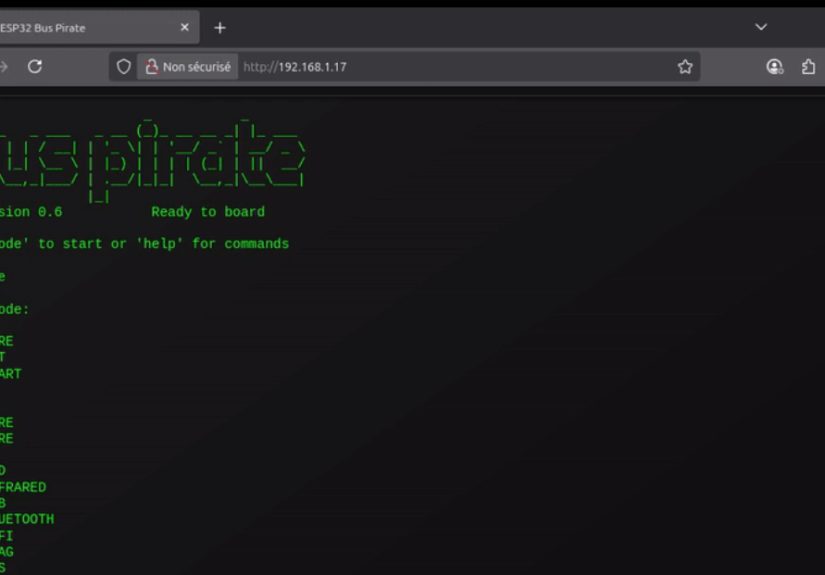
- Mission 5: “I need a pocket lab, not a rolling cart” (web CLI in the field)
- ESP32 Bus Pirate vs. Classic Bus Pirate (and Why You Might Want Both)
- Bonus: The Logic Analyzer Angle (Because Sometimes You Need a Waveform, Not a Vibe)
- Safety & Sanity: Don’t Let the Magic Smoke Become a Sea Fog
- Quick-Start Playbook: From “Board in a Drawer” to “Protocol Multitool”
- Conclusion: A Classic Concept, Upgraded for the Wi-Fi Era
- Sea Trials: of Real-World ESP32 Bus Pirate Moments
Once upon a time (okay, 2008), the original Bus Pirate showed up and basically told every mystery header on every
mystery PCB: “Talk to me.” It was a terminal-driven, open-source, Swiss-Army-knife gadget for digital busesperfect for
the moment you’re staring at four unlabeled pins and thinking, “This could be I2C… or a tiny portal to sadness.”
Fast-forward to now, and the ESP32 Bus Pirate idea takes that same vibeprobe, sniff, decode, talkand bolts it
onto a modern microcontroller that also happens to do Wi-Fi, Bluetooth, slick web UIs, and “I can run off a power bank”
portability. The result: a Bus Pirate-style multitool that doesn’t demand a laptop as tribute every time you want to poke a bus.
If you can power an ESP32, you can sail.
What “Bus Pirate” Really Means (and Why It Still Matters)
“Bus Pirate” isn’t a specific brand so much as a job description: a single tool that can interface with many common
embedded communication protocolsthink I2C, SPI, UART, 1-Wire, sometimes
CAN, and beyondusing a simple command-line workflow. Instead of writing custom firmware just to read an EEPROM or test a sensor,
you issue a few commands and get answers immediately.
That’s the magic: it turns unknown hardware into a conversation. And on a modern bench, that conversation usually starts with:
- Identification: “Which protocol is this header using?”
- Validation: “Are these signals sane, timed right, and at the right voltage?”
- Extraction: “Can I read a flash chip, an EEPROM, or configuration registers?”
- Control: “Can I send commands to test behavior without rewriting the target’s code?”
The classic Bus Pirate solved those questions with a terminal and a handful of pins. The ESP32 version keeps the terminal feelbut
adds modern connectivity and a much broader “toolbox” footprint.
Why ESP32 Is a Perfect Hull for This Voyage
The ESP32 family (especially ESP32-S3 boards) hits a sweet spot: fast enough, cheap enough, and friendly enough to become the “always
in the drawer” device you actually use. Here’s why it works so well as a protocol analyzer and bus tool:
1) It’s built for multiple interfaces
A Bus Pirate-style tool lives on hardware peripherals: UARTs for serial, I2C controllers for scanning and transactions, SPI for
flash and displays, timers for accurate bit-banging, and enough GPIO to map signals without playing musical chairs. ESP32 boards
generally bring plenty of that to the partyespecially the ESP32-S3 dev kits and similar devices.
2) Wi-Fi turns “terminal” into “any browser”
The original Bus Pirate was famously tethered: plug into a PC, open a terminal, go. With ESP32-based firmware, the workflow can be
USB serial or a Wi-Fi web CLIwhich means your phone can be your console, your tablet can be your console,
and your laptop can stay closed while you’re crouched inside a machine enclosure like an electronics gremlin.
3) Portable power = portable debugging
If your “device under test” is in a car, a ceiling, a locked cabinet, or a robotics chassis that hates being moved, portability is not a luxury.
ESP32 tools can run from a battery pack and still give you interactive control, making “field bus debugging” way less dramatic.
Meet the ESP32 Bus Pirate Firmware: The Multitool Gets an Upgrade
The ESP32 Bus Pirate project is open-source firmware that transforms supported ESP32 devices into a multi-protocol hardware
hacking tool inspired by the classic Bus Pirate. It’s designed for sniffing, sending, scripting,
and general-purpose interaction with common digital protocolsthrough USB serial or a web-based CLI.
What makes it feel “modern” is how wide the scope is. In addition to the usual suspects (I2C, SPI, UART, 1-Wire), it branches into:
- Network-adjacent tools: Wi-Fi and Ethernet utilities for diagnostics and exploration.
- Wireless/radio experimentation: Bluetooth features and optional sub-GHz workflows (board-dependent).
- Infrared tooling: IR send/receive and “universal remote” style functionality.
- Convenience features: scripting, file transfer, and direct pin control for quick bench tests.
The firmware supports a range of devicesfrom straightforward ESP32-S3 dev kits to more specialized handhelds like M5Stack-style boards that
include screens and keyboards for semi-standalone operation. Many setups can be installed using a browser-based flasher workflow, so you can go from
“random ESP32 board” to “protocol multitool” without turning firmware installation into a weekend hobby.
Protocol Basics You’ll Actually Use (Without the Textbook Nap)
I2C: Two wires, infinite opportunities to forget pull-ups
I2C is a shared two-wire bus (SCL clock, SDA data) that typically uses open-drain/open-collector signaling. Translation:
devices pull the line low, but they don’t actively drive it highso the bus needs pull-up resistors to bring signals back to logic-high.
When your I2C scan returns “nothing,” the culprit is often: missing pull-ups, wrong voltage, or swapped pins.
A Bus Pirate-style workflow shines here: scan for devices, read an EEPROM, sniff traffic between a microcontroller and a sensor, then verify timing.
It’s the difference between guessing and knowing.
SPI: Fast, simple, and full of “Which mode is this?”
SPI is generally faster than I2C and uses separate lines for clock and data (commonly SCK, MOSI, MISO) plus a chip select (CS/SS). The gotcha:
clock polarity and clock phase (often summarized as “SPI Mode 0–3”) must match between host and device. If you get garbage data, the
wiring can be perfect and the mode can still be wrong.
A modern ESP32 Bus Pirate approach lets you test read commands, dump flash, and iterate quickly through settingswithout rewriting code on the target board.
UART: The “Hello world” of embedded debugging
UART is asynchronous serial communicationno shared clockso both ends must agree on baud rate and framing. On most embedded boards, UART is still the
easiest way to get logs, shell access, or boot messages. The telltale sign is usually a pair of pins labeled TX/RX (or not labeled at all, because life is hard).
A good Bus Pirate workflow here is simple: find the pins, detect the baud rate, read the stream, then optionally bridge it to another interface (including a network link)
for remote monitoring.
Five Real-World Missions Where an ESP32 Bus Pirate Earns Its Keep
Mission 1: “What sensor is this?” (I2C device discovery)
You inherit a board with a mystery sensor footprint populated by “something.” The datasheet is missing, and the silkscreen says only “U7,” which is deeply helpful.
An ESP32 Bus Pirate setup can scan the I2C bus for addresses, then probe likely register reads. If you see a common address and plausible ID registers, you’ve gone from
mystery to shortlist in minutes.
Mission 2: “Please let this flash still contain the data” (SPI flash dumping)
SPI flash shows up everywhere: configuration storage, firmware images, calibration data, logs. If a device is bricked, reading the flash directly can tell you whether
the data is intact, corrupted, encrypted, or simply not present. A Bus Pirate-style tool can help you identify the chip, verify pinout (including CS), and perform reads
to extract contents for analysislegally and responsibly, on hardware you own or are authorized to service.
Mission 3: “There’s a debug port… somewhere” (UART reconnaissance)
Many embedded products still expose a UART consolesometimes politely labeled, sometimes hidden behind test pads. With the right caution (and correct voltage levels),
you can locate TX/RX, determine baud rate, and watch boot logs. That often reveals bootloader messages, reset reasons, or crash loopsexactly the clues you need before
you start swapping components.
Mission 4: “Why is the bus angry?” (sniffing for timing and protocol mistakes)
Debugging embedded communication failures is often about seeing the transaction that didn’t happen correctly: a missing ACK on I2C, a wrong SPI mode, a chip select that
deasserts too early, or a UART that’s running at a baud rate that’s “close enough” to be wrong. A Bus Pirate plus sniffing/decoding workflows helps you validate reality
instead of debating it.
Mission 5: “I need a pocket lab, not a rolling cart” (web CLI in the field)
The underrated feature is the web-based CLI. When you can power a device and interact via Wi-Fi, you can debug in places where a laptop is inconvenient:
crowded racks, workshop floors, inside enclosures, or awkward installations. It’s not just coolit’s practical.
ESP32 Bus Pirate vs. Classic Bus Pirate (and Why You Might Want Both)
The classic Bus Pirate lineage has evolved dramaticallynewer dedicated hardware versions add level-shifting, buffers, displays, and logic analyzer modes. For example, modern
Bus Pirate hardware iterations include features like multiple voltage levels, improved terminals, and logic analyzer support.
So where does an ESP32-based approach fit?
- ESP32 Bus Pirate wins on portability and UI: Wi-Fi control, handheld-friendly boards, quick flashing, and “use what you already have.”
- Dedicated Bus Pirate hardware wins on electrical robustness: purpose-built buffering, known pin protection, and a design optimized for poking at unknown signals all day.
- They meet in the middle: Both embrace the terminal-driven “talk to any bus” mentality, and both can integrate with logic-analyzer ecosystems (often via well-known protocols).
Bonus: The Logic Analyzer Angle (Because Sometimes You Need a Waveform, Not a Vibe)
A Bus Pirate-style tool helps you interact with a protocol. A logic analyzer helps you observe itespecially when you need protocol decoding, triggers, and timing analysis.
Conveniently, the Bus Pirate world and the ESP32 world both have paths into logic analyzer tooling.
One common bridge is the SUMP logic analyzer protocol, which is implemented by multiple devices and is supported by popular desktop tooling like Sigrok/PulseView.
Dedicated Bus Pirate documentation describes using SUMP mode and notes capabilities like multi-channel capture and high sampling rates on some hardware, along with the importance of using
high-impedance input configurations when you’re observing signals rather than driving them.
Separately, ESP32-based logic analyzer projects demonstrate that ESP32 silicon can capture and forward samples to a web interface or PulseViewuseful for self-diagnostics or lightweight
captures. The practical takeaway: an ESP32 tool can be both the “talker” and, in some setups, part of the “listener” toolchain.
Safety & Sanity: Don’t Let the Magic Smoke Become a Sea Fog
Hardware hacking tools are powerful because they touch real hardware. That’s also why they can break real hardwarequickly.
Voltage rules (the ones you tattoo on your soul)
- ESP32 is fundamentally a 3.3V world. If your target is 5V, use proper level shifting and buffering.
- Never connect unknown voltages blindly. Measure first, connect second, celebrate later.
- Share a ground. Without a common reference, your “signals” are interpretive art.
Bus etiquette
- Start in Hi-Z mode. Observe before you drive.
- Use pull-ups intentionally on I2C. Too weak = slow edges; too strong = excess current.
- Know when not to sniff. Some buses are sensitive; passive observation is safer than injecting traffic.
Legal & ethical boundaries
Some firmware toolchains include capabilities that can be misused (especially around wireless and credentialed systems). Treat this like a soldering iron:
it can build amazing things, but it can also ruin your day if you point it at the wrong stuff. Use these tools only on systems you own or have explicit permission to test,
and stay within applicable laws and responsible disclosure norms.
Quick-Start Playbook: From “Board in a Drawer” to “Protocol Multitool”
- Pick a supported ESP32 device: ESP32-S3 dev kits and certain handheld/embedded boards are common targets. Ensure adequate flash.
- Install the firmware: Use a web flasher flow where supported to simplify installation.
- Choose your interface: USB serial for fastest “bench terminal” work, or Wi-Fi web CLI for portable sessions.
- Start in Hi-Z mode: Confirm voltage levels and pin mappings before enabling protocols.
- Run a simple success test: I2C scan, a UART read, or a basic SPI ID readsomething quick that proves your wiring is correct.
- Graduate to scripting: Once you repeat a sequence twice, it’s a script. Your future self will send you a thank-you postcard.
Conclusion: A Classic Concept, Upgraded for the Wi-Fi Era
The Bus Pirate idea endures because it solves a timeless problem: embedded systems speak dozens of “languages,” and engineers can’t afford to build a custom translator for every conversation.
The ESP32 Bus Pirate approach modernizes that translator with Wi-Fi control, broader device support, and the convenience of turning widely available hardware into a serious
protocol analyzer and debugging companion.
Whether you’re scanning I2C sensors, dumping SPI flash, hunting down a UART console, or just trying to figure out why your bus is sulking, an ESP32-based Bus Pirate workflow can turn
“random guessing” into “repeatable process.” And that’s the real treasure.
Sea Trials: of Real-World ESP32 Bus Pirate Moments
The first time you use an ESP32 Bus Pirate in anger, it usually starts with optimism and ends with humility. You clip onto a header, open the web CLI on your phone like a sci-fi mechanic,
and run an I2C scan. Nothing. You feel the familiar urge to blame the firmware, the board, the moon phaseanything but your wiring. Then you remember the ancient law of I2C:
pull-ups exist. Five minutes later, with proper pull-ups (or by realizing the target already has them and you simply weren’t sharing ground), the scan lights up with addresses
and your confidence returns like a rebooted router.
Another classic moment: the “SPI flash treasure hunt.” You find a tiny 8-pin chip, squint at the markings, and realize the PCB designer used the world’s smallest font because they hate you.
You connect power (carefully), map MOSI/MISO/SCK/CS, and try a basic read. The bytes look like soup. That’s when you meet SPI’s lovable gremlin: clock phase and polarity. You toggle the mode,
try again, and suddenly the data becomes structuredmanufacturer ID, device ID, predictable patterns. It’s the embedded equivalent of tuning a radio until the static becomes a song.
UART sessions are a different flavor of joy. You attach to TX/RX, hit “read,” and watch boot logs spill out like a diary entry from a stressed microcontroller. Sometimes it’s glorious:
a clear error message, a filesystem mount failure, a watchdog reset reason. Sometimes it’s just repeated “Guru Meditation” style despair. Either way, you’ve moved from “it’s broken” to
“it’s broken in a specific, actionable way.” That’s progress. That’s engineering.
The web CLI changes the vibe entirely. Instead of balancing a laptop on a knee, you’re standing next to the hardware with a phone, running commands in a browser while your other hand
nudges a probe or toggles a reset line. It feels a little ridiculousand then you realize you’re faster. You’re closer to the signals, you can respond immediately, and you’re not dragging
half your desk into the field. Portability stops being a gimmick and starts being a workflow upgrade.
You also learn boundaries. When a tool offers powerful wireless or emulation features, you treat them like a loaded soldering iron: aimed only at authorized targets, used for legitimate
testing, and put away when you’re done. The best “hardware hacking” stories end with fixed devices and improved designsnot awkward conversations with legal departments.
And finally, there’s the moment every tinkerer recognizes: you label a cable. You label the pins. You save a script. You create a repeatable setup so future-you doesn’t have to rediscover
the same truth at 2 a.m. That’s when you know the ESP32 Bus Pirate stopped being a novelty and became a toolthe kind you reach for instinctively whenever a bus goes quiet
and the debugging seas get choppy.