Table of Contents >> Show >> Hide
If you hang out in horror circles long enough, certain titles keep popping up like cursed VHS tapes:
Salò, Martyrs, Cannibal Holocaust… and, inevitably, Guinea Pig 2: Flower of Flesh and Blood.
This 1985 Japanese splatter short has been called everything from a “pseudo-snuff masterpiece” to “forty minutes of someone showing off their special-effects skills and nothing else.”
The movie’s reputation is so intense that actor Charlie Sheen famously reported it to the FBI because he thought he’d just watched a real killing.
That incident turned an already notorious underground tape into a full-blown horror legend. These days,
Flower of Flesh and Blood sits near the top of many “most disturbing movies ever made” lists, even among fans who admit they’ll never watch it again.
So where does this film really rank in the world of extreme horror, and what do fans and critics actually think of it once you look past the shock-value marketing?
Let’s dive into the rankings, the opinions, and the strange cultural afterlife of one of Japan’s most infamous horror exports.
What Exactly Is Guinea Pig 2: Flower of Flesh and Blood?
Guinea Pig 2: Flower of Flesh and Blood is a 42-minute Japanese splatter film written and directed by
manga artist Hideshi Hino and released straight to video in 1985. It’s the second entry in the
Guinea Pig series, a run of six ultra-violent horror shorts (plus a few making-of features) that pushed
practical effects and graphic imagery to extremes.
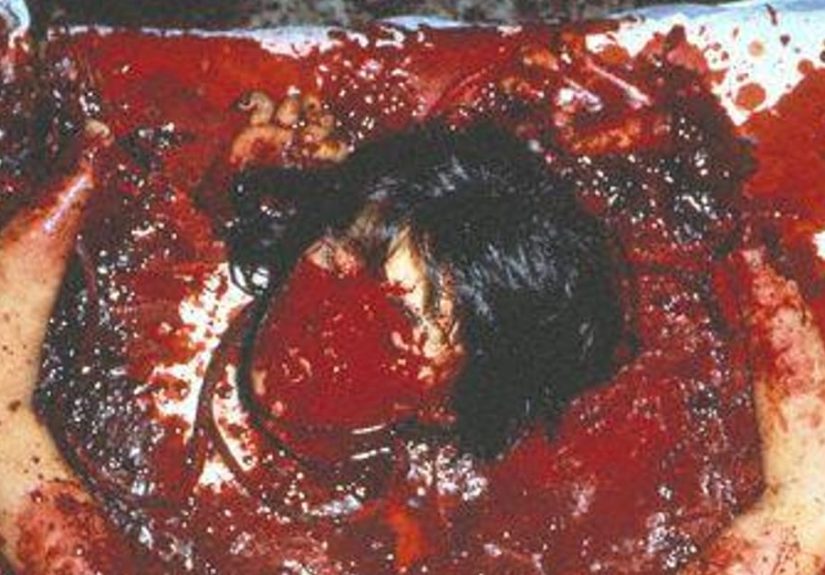
The plot is deliberately thin: a woman is followed, abducted, and subjected to prolonged, carefully staged violence by a man dressed in samurai-style clothing, who treats the whole process as a kind of grotesque art project.
The movie adopts a grim, documentary-like style designed to feel uncomfortably real, with almost no character development, limited dialogue, and an obsessive focus on the “process” of what’s happening.
In other words, this is not a cozy Friday-night popcorn watch. It’s a deliberately confrontational experiment in how far you can push on-screen brutality using practical effects and camera tricks.
Whether you see that as “art” or “a big red flag” depends very much on your tolerance for extreme cinema.
Why Is It So Controversial?
Japanese Censorship and Moral Panic
In Japan, Flower of Flesh and Blood quickly became a lightning rod. Education boards examined the film, and it was reportedly withdrawn from the home video market after concerns about its extreme content.
Around the same time, the arrest of serial killer Tsutomu Miyazaki whose large home video collection included horror titles kicked off a broader moral panic about violent media.
For a while, media reports suggested Miyazaki had been directly inspired by Guinea Pig 2, but Hideshi Hino later clarified that another entry in the series not his film was actually found in the killer’s collection.
By then, though, the damage was done: the series, and part 2 in particular, had become shorthand in Japan for “this is why we need stricter controls on violent imagery.”
The Charlie Sheen–FBI Incident
The film’s international legend really exploded in the early 1990s, when Charlie Sheen reportedly watched a copy and became convinced he’d seen an actual homicide on screen.
Horrified, he contacted the authorities, and the FBI opened an inquiry into the movie’s producers and distributors.
The investigation ended once agents viewed behind-the-scenes footage showing how the special effects were created.
Still, the story has been retold so many times in horror communities that it’s taken on urban-legend status the kind of anecdote people bring up whenever a new “too realistic” film comes along.
Legal Trouble and Bans
Outside Japan, the movie ran into customs and obscenity laws. In the UK, for example, a man was fined in the early 1990s for importing the tape, with prosecutors arguing that it effectively functioned as a snuff video because of how convincing the simulated violence was.
In several countries, the film was either banned outright or released only in heavily controlled or underground contexts.
All of this controversy fed into the movie’s “forbidden artifact” branding. For some fans, that’s the main appeal: it’s the horror film so notorious that governments, boards of education, and even Hollywood stars wanted it gone.
Rankings: Where Does Flower of Flesh and Blood Stand?
Within the Guinea Pig Series
Among the six original Guinea Pig films, most fans and critics agree that part 2 is the most infamous and, depending on who you ask, the most “effective.” Critics who have reviewed the entire series describe
Flower of Flesh and Blood as the point where the franchise’s splatter aesthetics and “fake snuff” style click into focus, even if the movie barely qualifies as a traditional narrative.
The first film, Devil’s Experiment, is also very extreme, but it often gets described as more repetitive and technically rough.
Later entries, like He Never Dies or Devil Doctor Woman, lean more into black comedy, which makes them less likely to top “most disturbing” lists and more accessible to viewers who don’t want forty minutes of pure cruelty.
So, if you’re ranking the franchise purely on intensity and notoriety, Flower of Flesh and Blood typically lands at or very near #1.
If you rank on storytelling or thematic depth, things get more divisive, with some viewers calling it a technical showcase and others calling it “a special-effects reel in search of a reason to exist.”
On “Most Disturbing Movies Ever” Lists
Zooming out to the wider extreme-horror landscape, Guinea Pig 2 shows up consistently on “most disturbing films of all time” lists.
Horror sites and magazines that cover extreme cinema often rank the entire Guinea Pig collection as one of the most brutal series ever released, and they frequently single out part 2 as the most infamous entry.
You’ll also find it mentioned alongside (or just below) heavyweights like Cannibal Holocaust, August Underground, and Grotesque in fan discussions on horror forums and Reddit threads about “the most disturbing movie you’ve ever seen.”
Sometimes people rank it at #1 for sheer realism; other times it sits mid-pack because the film’s one-note structure can feel numbing rather than emotionally devastating.
One interesting detail: despite its outsized reputation, the movie’s raw star rating on mainstream databases like IMDb hovers in the middling range (around the high 4s out of 10), indicating that outside the niche of extreme-horror fans, a lot of viewers don’t actually enjoy the experience, even if they grudgingly respect the craft.
“So Real It Must Be Fake”: The Effects Ranking
Even critics who dislike the movie’s content often concede that the practical effects are remarkably convincing.
Articles and essays about the film routinely position it as one of the clearest examples of how far analog effects can go without digital help, and why law-enforcement officials and casual viewers could mistake it for real footage before seeing the making-of feature.
If you were to rank extreme films purely on “convincing practical effects,” Flower of Flesh and Blood would sit very high on the list arguably higher than some better-known but more obviously stylized gorefests.
It helped inspire later “fake snuff” aesthetics in both Japanese and Western underground horror, including spiritual successors like the American Guinea Pig films.
Critical and Fan Opinions: Is It Actually a Good Movie?
Technical Craft vs. Narrative Thinness
Critics and horror bloggers who focus on extreme cinema often acknowledge two competing truths about Guinea Pig 2:
- The practical effects and technical execution are undeniably impressive for the mid-1980s, especially given the small-scale production.
- As a narrative film, it’s almost aggressively minimal, with little character development and no real story beyond “this event happens, in detail.”
Many fan reviews describe it as “effective at what it sets out to do,” while admitting they have no desire to rewatch it.
On platforms like Letterboxd, you can find four-star ratings from viewers who considered it “actually very good,” right next to one-star reviews from people who found it empty, cruel, or simply boring once the initial shock wore off.
Feminist and Ethical Critiques
Academic writing on the Guinea Pig series often digs deeper into the films’ relationship to gender and power.
One recent analysis of the franchise frames it as an anthology of body horror that appears, on the surface, to revel in misogynistic violence, yet also contains moments that subtly critique patriarchal control and objectification.
Still, even sympathetic critics acknowledge that Flower of Flesh and Blood is a tough sell if you’re sensitive to gendered violence.
The victim is largely voiceless, and the camera’s unwavering focus on her suffering makes it easy to see why many viewers consider the film exploitative, regardless of any underlying artistic intent.
Cult Status in the Horror Community
Within extreme-horror fandom, Guinea Pig 2 has a very specific niche: it’s a “badge movie.”
People watch it to say they’ve survived it, then spend the rest of their lives telling others whether it was worth the experience.
Collectors proudly display special editions and box sets, while plenty of horror fans are content to just hear the story and never hit play.
In that sense, the movie functions less like traditional entertainment and more like an endurance test, a historical artifact, and a conversation starter about what horror can and should be allowed to depict.
Should You Watch Guinea Pig 2?
Let’s be blunt: this is not a casual recommendation.
If your idea of intense horror is something like Hereditary or The Conjuring, Flower of Flesh and Blood is operating on an entirely different wavelength.
It’s short, but it’s relentless, and it was designed to make people question whether what they were seeing was real.
You might consider watching it only if all of the following are true:
- You’re an adult with a high tolerance for extreme, realistic movie violence.
- You’re interested in the history of horror effects, censorship, or “video nasty” culture.
- You understand that the film prioritizes shock and technique over character or plot.
If any of those boxes stay unchecked, reading about the film its controversies, its rankings, and the stories surrounding it will probably be more rewarding (and far easier on your nervous system) than actually watching it.
Experiences and Anecdotes: How People React to Flower of Flesh and Blood
Part of what keeps Guinea Pig 2: Flower of Flesh and Blood alive in horror culture isn’t just what happens on screen, but the stories people tell about encountering it.
For a lot of fans, the experience starts long before they press play with whispered recommendations, online listicles, and that one friend who says, “No, seriously, this is the one that messed me up.”
Many viewers’ journeys begin with those “most disturbing movies” lists, where Flower of Flesh and Blood tends to appear near the top alongside titles like Martyrs and The Human Centipede 2.
People talk about working up to it, watching slightly tamer extreme films first as a kind of training.
By the time they finally fire up Guinea Pig 2, there’s already a sense of ritual: the lights off, the volume low, maybe a friend on call “just in case.”
Reactions are often surprisingly split:
-
Some viewers are genuinely shaken. They report needing to pause, to step away, to throw on a feel-good sitcom afterward to “reset their brain.”
For them, the movie delivers exactly what its reputation promises: a deeply unpleasant, hyper-real piece of cinematic shock therapy. -
Others walk away underwhelmed, saying, “That’s it?” After years of hearing about how no one could finish it, they find the single-location setup and lack of story monotonous.
The film’s realism impresses them, but they don’t feel the same psychological gut punch they get from more emotional or narrative-driven horror.
Collectors and hardcore fans often talk about Guinea Pig 2 the way music nerds talk about obscure vinyl.
Owning a special edition or an uncut release is less about rewatching the movie and more about having a tangible piece of horror history on the shelf a relic from the era of gray-market tapes, import crackdowns, and whispered recommendations.
Online, discussions can get philosophical fast. People debate whether suffering through the film is a kind of personal test, or whether that mindset just encourages an unhealthy race to the bottom in seeking more and more extreme content.
Some argue that experiencing a film like this once can sharpen your awareness of how violence is used in media making you more critical of lazy, exploitative imagery elsewhere.
Others feel there are better, less traumatic ways to have that conversation.
The Charlie Sheen story remains one of the most frequently cited “experiences” tied to the movie, even for people who have never seen it.
The idea that a major Hollywood actor watched it, panicked, and called the FBI makes the film feel larger than life like a cursed object that briefly crossed from the underground into mainstream celebrity culture.
Then there are the critics and academics who approach Flower of Flesh and Blood from a distance, often via festival retrospectives or archival screenings.
For them, the experience is less about thrill-seeking and more about context: placing the film within Japan’s 1980s home-video boom, the rise of “video nasties,” and the ongoing negotiation between free expression and public standards of decency.
Whether you ever watch it or not, Guinea Pig 2: Flower of Flesh and Blood has become one of those titles that horror fans use as a reference point.
It’s a measuring stick, a conversation starter, and for some a cautionary tale about how far you really want your viewing habits to go.
In rankings, it often sits near the top for intensity; in actual enjoyment, it lands all over the map.
And maybe that’s the most honest review of all: powerful, unpleasant, important to horror history… and absolutely not for everyone.