Table of Contents >> Show >> Hide
- What the Hardware Hack Actually Does
- Why This Matters More Than It First Appears
- The Robocall Problem Is Still a Very Real Mess
- How Industry and Regulators Are Fighting Back
- Why Hardware Still Has a Place in a Software World
- The Limits of the Hack
- The Bigger Lesson: Good Engineering Respects Human Annoyance
- Experiences Related to the Topic
- Conclusion
Robocalls are the cockroaches of modern communications. You block one, three more appear. You ignore them, they leave a voicemail about your “urgent warranty matter.” You answer once, and suddenly your phone behaves like it signed up for a timeshare presentation in hell. So when a clever hardware tweak comes along and makes a robocall-blocking service even better, it deserves a standing ovation, or at least a relieved sigh from everyone with a home phone.
The idea behind this story is delightfully simple: if a blocking service already catches spam calls, why should your house still hear that first annoying ring before the system kicks in? That question led to a DIY hardware hack that smooths out one of the most irritating flaws in robocall filtering. It does not end robocalls forever, because apparently evil still has a data plan, but it does show how a smart piece of hardware can improve the real-world experience of call blocking in a surprisingly elegant way.
And that is what makes this topic so interesting. It is not just about one gadget. It is about the larger fight against illegal robocalls, spoofed caller IDs, nuisance telemarketing, and scam campaigns that keep slipping through digital defenses. In a world full of apps, carrier filters, and federal enforcement actions, this little hardware hack makes a strong argument for something old-fashioned: sometimes the best fix is still a physical one.
What the Hardware Hack Actually Does
The hack at the center of “Hardware Hack Makes Robocall Blocking Service Even Better” grew out of a practical problem with services such as Nomorobo on VoIP home-phone setups. These services can use simultaneous ringing to send an incoming call both to your home phone and to the robocall-blocking service. If the service recognizes the number as junk, it answers the call and stops it. Great in theory. Slightly less great when your living room still hears the first ring before the spam gets taken out behind the barn.
That first ring is not there by accident. Caller ID data on many U.S. phone systems is delivered between the first and second ring. So the service needs a moment to “see” the incoming call details before deciding whether to block it. The result is a tiny delay that turns into a big annoyance when your phone rings all day with fake debt collectors, made-up Medicare pitches, solar panel sales, or the ever-classic “your car’s extended warranty.” That first ring is short, but when it happens twenty times a week, it starts to feel like psychological warfare.
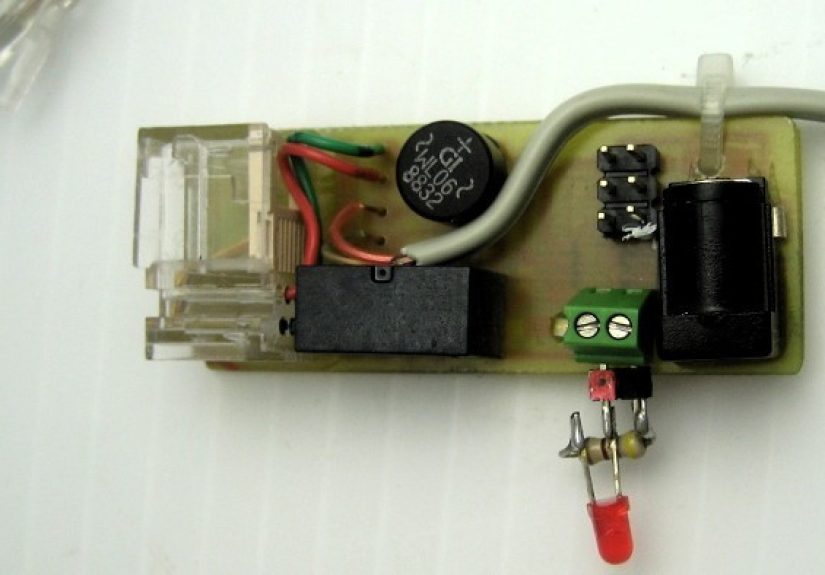
The DIY solution was clever: sense the incoming ring signal from the analog telephone adapter or VoIP modem, then use a small microcontroller-and-relay setup to temporarily disconnect the house phones during that first ring. After the right moment, reconnect the phones so legitimate calls still come through and caller ID can still work. If the robocall-blocking service decides the call is spam and answers it, the phones in the house never audibly ring. To the people inside, the nuisance call has basically vanished into the void, which is exactly where it belongs.
That is the beauty of the hack. It does not try to outsmart the robocaller directly. It improves the timing and user experience of an existing filtering service. Instead of fighting the whole war with one heroic gadget, it wins a very specific battle: making the spam that was already being caught stop bothering you in the first place.
Why This Matters More Than It First Appears
At a glance, the hack may look like a niche trick for people who still have a home phone, a VoIP setup, and the patience to appreciate timing windows between rings. But that would undersell it. This project points to something bigger about robocall defense: convenience matters. A system can be technically effective and still drive users nuts if it leaves behind just enough friction to be annoying.
That is exactly what the “first ring problem” represents. A blocking service may be doing its job, but the human experience still feels broken. The phone rings, you tense up, the dog barks, your concentration dies, and then the call disappears. Congratulations, the spam was blocked. The stress was not.
That is where hardware earns its keep. Software and cloud services often make decisions. Hardware can shape what you actually experience. The difference is subtle but important. Digital filtering might stop a scammer from talking to you. A hardware layer can stop the interruption from ever reaching your ears. In practical terms, that means less distraction, fewer false alarms, and a calmer phone experience overall.
For households with elderly relatives, people working from home, parents with sleeping babies, or anyone who has been conditioned to flinch at every ring, that upgrade is not trivial. It is quality-of-life engineering. It takes a service that already helps and makes it meaningfully less irritating.
The Robocall Problem Is Still a Very Real Mess
Part of what makes this hack feel relevant is that robocalls are still not some ancient problem from the flip-phone era. They remain a major consumer headache in the United States. Federal regulators continue to treat illegal and spoofed robocalls as a top priority, and the complaint volumes show why. Even though enforcement and call authentication have improved the landscape, the nuisance has not disappeared. It has evolved.
That evolution matters. Years ago, many robocalls were obvious sales pitches with all the subtlety of a marching band. Today, the ecosystem is broader and meaner. Some calls are plain telemarketing. Others are scam attempts dressed up as banks, government agencies, utilities, healthcare providers, or debt collectors. Caller ID spoofing makes them look local, familiar, or official. That means the issue is no longer just volume. It is trust.
The Federal Trade Commission has repeatedly warned that the National Do Not Call Registry does not stop scammers, because scammers do not care about rules in the first place. The registry helps with legitimate telemarketers. It does not magically repel fraud. So consumers end up needing layered defenses: legal protections, carrier filtering, phone settings, third-party tools, skepticism, and sometimes, yes, a little hardware wizardry.
That layered approach is why the hack is interesting even in 2026. It is not trying to replace policy or carrier analytics. It fits into a broader strategy where every layer does one job well. Federal agencies chase bad actors. Carriers label suspicious calls. Apps block known spam. Users ignore unfamiliar callers. The hardware piece improves the final mile inside the home.
How Industry and Regulators Are Fighting Back
The anti-robocall playbook in the U.S. has become much more sophisticated over time. One of the biggest technical tools is STIR/SHAKEN, the caller ID authentication framework designed to make spoofing harder on IP-based networks. In plain English, it helps telecom providers verify whether a call is really coming from the number it claims to be coming from. That does not solve every problem, but it gives carriers better information for labeling, screening, and blocking suspicious traffic.
Federal agencies have also leaned harder into enforcement. The FTC and DOJ have targeted robocallers, lead generators, dialing platforms, and VoIP providers accused of helping fraudulent traffic move across the system. The message has become clearer: the government is not only chasing the clown making the call, but also the people handing the clown a megaphone.
Meanwhile, carriers have expanded consumer-facing tools. AT&T, Verizon, and T-Mobile all promote spam-filtering or call-protection features through their apps and network tools. Many consumers now have some form of call labeling, scam warnings, or automatic blocking baked into their mobile service. That is a real improvement over the days when your phone simply rang and left you to guess whether the caller was your doctor or a robot with a fake tax emergency.
Still, none of these defenses are perfect. Some legitimate calls get mislabeled. Some scam calls still slip through. Some older households rely on VoIP or home phones instead of smartphones with robust screening tools. And many people do not want every solution to depend on handing more personal data to yet another app. That leaves room for specialized approaches, especially in the landline and home-phone world.
Why Hardware Still Has a Place in a Software World
There is a tendency to assume every modern problem should be solved in the cloud. Robocalls, however, are a reminder that the physical layer still matters. Phones ring in real homes, in real kitchens, next to real people trying to live their lives. A cloud service may classify the call, but the ring still happens in your space. Hardware can intervene at exactly that point.
This matters most for people using VoIP adapters, analog handsets, and home-phone systems that sit outside the slick app-centric universe of modern smartphones. In those environments, a hardware solution can offer something software alone often cannot: extremely local control. You can shape what happens between your adapter and your phones. You can change the behavior of the ring itself. You can tailor the experience for your specific setup instead of waiting for a carrier to decide what options you deserve.
There is also a privacy argument here. Some users are comfortable relying on carrier tools and third-party apps. Others would rather not install one more service that wants access to their call data, contacts, or voicemail behavior. A physical add-on that improves a call-blocking workflow inside the home may feel more controlled and more transparent. It does one thing. It does not need a giant dashboard, a monthly push notification, or a suspiciously cheerful privacy policy.
Of course, hardware is not magic. It can introduce complexity, compatibility issues, and maintenance headaches. The original hack itself had trade-offs, including delays in caller ID display and the need to carefully handle ring detection and relay timing. Telephone lines and analog adapters are not toys, and anybody fooling around with them should understand that ring voltages are real. So the point here is not “everyone should build this immediately.” The point is that clever hardware still solves problems software leaves slightly unfinished.
The Limits of the Hack
It is worth being honest: this kind of DIY upgrade does not block robocalls by itself. It depends on a service doing the actual filtering. It also does not fix spoofing, solve scam detection, or guarantee that every legitimate call arrives perfectly. It is more of a refinement than a revolution.
That said, refinements matter. The history of consumer technology is basically one long parade of products becoming more tolerable. We celebrate giant breakthroughs, but most daily happiness comes from small frictions disappearing. A better keyboard. A faster unlock. A quieter dishwasher. A phone that does not scream at you about fake warranties before breakfast. These are the real victories.
And there is one more limit worth mentioning: robocalls increasingly move across channels. Today’s scammer might call, text, email, and message through social media before lunch. So even an excellent phone-specific defense should be part of a broader fraud-awareness mindset. If a suspicious call says your bank account is locked, hang up and call the real number yourself. If a recorded voice claims to be from a government office and demands payment, that is your cue to end the call, not negotiate with the robot.
The Bigger Lesson: Good Engineering Respects Human Annoyance
What makes “Hardware Hack Makes Robocall Blocking Service Even Better” such a satisfying idea is that it respects the emotional side of technology. Good engineering is not only about whether the system worked on paper. It is about whether the user feels relief in real life.
Nomorobo-style filtering already helps by intercepting bad calls. The hardware hack goes one step further and says, “Fine, but let’s also stop that one stupid ring.” That is a small sentence with a very large amount of human wisdom packed into it. It recognizes that interruption is part of the harm. The scammer does not need to talk to you to be annoying. Sometimes making the phone twitch is enough.
In that sense, the hardware solution is not merely clever electronics. It is empathy in circuit form. It understands what the user actually hates and removes more of it. That is why it feels smarter than a flashy app or another vague promise that AI will solve everything. Sometimes the best innovation is not a moonshot. Sometimes it is a tiny relay saying, “Not today, spam devil.”
Experiences Related to the Topic
One of the most relatable things about this topic is how universal the robocall experience has become. Almost everyone has some version of the story. A home office gets interrupted in the middle of a client call by a fake insurance pitch. A grandparent hears the phone ring and rushes to answer, only to get a prerecorded message about Medicare benefits that are not real. A parent finally gets a baby down for a nap, and then the phone chirps with an “urgent” warranty scam involving a car the household sold three years ago. Nobody enjoys these moments, and yet they happen so often that many people have started treating them like weather.
That is exactly why a hardware improvement feels so satisfying in practice. People are not only tired of fraud. They are tired of the interruption itself. Even when you know better than to answer, the ring still steals attention. It still triggers that little burst of curiosity or concern. Is it the school? The pharmacy? A family member? Or just another robot with a fake local number and bad intentions? In real life, that uncertainty is exhausting.
There is also a generational angle. Smartphone users may lean on built-in silence features, carrier tools, or third-party screening apps. But many households still rely on home phones, VoIP boxes, or hybrid setups where an older family member is most comfortable answering a familiar handset in the kitchen. In those homes, a hardware tweak can be more practical than trying to train everyone on new apps, menus, permissions, and spam settings. A quiet phone is easier to understand than a six-step tutorial.
Another common experience is the “almost useful” feeling of many robocall solutions. People sign up for a service, see some improvement, and then discover the system still lets through enough first rings or mislabeled calls to keep the irritation alive. That can make users cynical. They start feeling as if every anti-robocall product is just another layer of modern nonsense. The charm of the first-ring blocker idea is that it addresses one of those everyday annoyances directly. It does not promise utopia. It just promises fewer pointless rings, which honestly sounds pretty luxurious at this point.
For tinkerers, the story also lands emotionally because it reflects a familiar mindset: a commercial service solves 80 percent of the problem, but the last 20 percent is what keeps needling you until you build something. That impulse is wonderfully human. It is the same spirit that makes people improve routers, automate lights, or build custom sensors for their garage. The robocall hack belongs to that tradition. It says that if the product is close, but not quite there, maybe the answer is not to complain harder. Maybe the answer is a smarter box.
And on the emotional side, there is real comfort in reclaiming a little peace. That may sound dramatic for something as small as a phone ring, but constant low-grade interruption changes how a home feels. When nuisance calls drop, the space feels calmer. People stop jumping up for nothing. They trust the phone a little more. That is why this topic resonates beyond hobby electronics. It is ultimately about control, quiet, and the small pleasures of not being bothered by nonsense.
Conclusion
The robocall epidemic has not vanished, but the defenses are getting smarter. Federal enforcement is tougher. Carriers are better at filtering. Caller ID authentication has improved. Consumers have more tools than they did a few years ago. Yet the humble hardware hack in this story proves an important point: better technology is not always about inventing a brand-new system. Sometimes it is about smoothing out the annoying edge of a system people already use.
That is what makes this DIY approach so memorable. It takes a useful robocall-blocking service and makes it feel better in day-to-day life. Less ringing. Less disruption. Less irritation. In the endless war against spam calls, that counts as a genuine win. Maybe not a Hollywood-style victory with triumphant music and exploding scam call centers, but a very satisfying household victory all the same.