Table of Contents >> Show >> Hide
- Why My Drawing Habit Disappeared (Spoiler: It Wasn’t Laziness)
- Step 1: Make It So Small You Can’t Talk Yourself Out of It
- Step 2: Warm Up With Scribbles and Swirls (Because Your Hand Has Opinions)
- Step 3: Trade “Perfect” for “Observant” With Contour Drawing
- Step 4: Go Full Chaos (In a Controlled Way) With Blind Contour
- Step 5: Use Prompts and Constraints So You Don’t Waste Your “What Should I Draw?” Energy
- Step 6: Track the Habit Without Turning It Into a Court Case
- Step 7: Build a Weekly “Drawing Menu” So Your Practice Feels Fresh
- What I Got Out of It (Besides a Growing Stack of Slightly Crooked Mugs)
- A 7-Day Starter Plan (If You Want to Steal My Method)
- Conclusion: The Habit Came Back When the Pressure Left
- Bonus: From My Sketchbook (The Real-Life Part)
- SEO Tags
For a while, my sketchbook lived the glamorous life of a decorative object. It sat on my desk like a confident houseplantpresent, silent, and absolutely not doing what it was put there to do.
I’d tell myself I was “too busy” to draw, which is a fascinating lie because I somehow had time to reorganize my phone apps by mood. (Utilities? More like “Maybe Later.”)
The truth was simpler: I didn’t stop drawing because I ran out of time. I stopped because I ran out of permissionpermission to be messy, to be bad, to make something that didn’t deserve a frame, a filter, or a standing ovation.
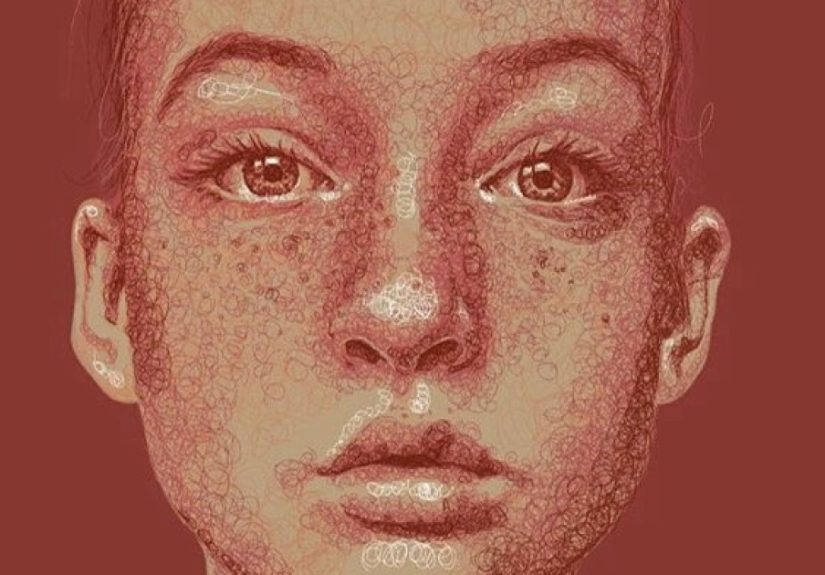
And then, one day, I started again in the least impressive way possible: I scribbled. I swirled. I made lines that looked like spaghetti trying to escape a colander. And weirdly? That’s what brought me back.
Why My Drawing Habit Disappeared (Spoiler: It Wasn’t Laziness)
When people say they “lost” their daily drawing habit, they usually blame discipline. I blamed discipline tooright up until I noticed that I had plenty of discipline for things like brushing my teeth and rewatching the same comfort show for the 400th time.
What I actually lost was a low-stakes relationship with drawing. At some point, drawing stopped being “something I do” and started being “something I perform.” The sketchbook became a test, not a playground.
So I decided to rebuild my habit the same way you rebuild trust with a skittish cat: show up consistently, move slowly, and don’t make sudden loud demands like “CREATE A MASTERPIECE RIGHT NOW.”
Step 1: Make It So Small You Can’t Talk Yourself Out of It
My comeback didn’t start with a grand plan. It started with a tiny one. The goal wasn’t “draw something good.” The goal was “touch pen to paper daily.”
I picked a minimum that felt almost silly: 30 seconds. Not 30 minutes. Not a “serious session.” Thirty seconds of marks.
My “Tiny Habit” drawing recipe
I used a simple formula:
- Anchor: After I pour my morning coffee
- Behavior: I draw for 30 seconds
- Celebration: I say (out loud): “Nailed it.”
Yes, the celebration felt goofy. That was the point. I was retraining my brain to associate drawing with completion, not critique. The moment I finishedeven if it was a single wobbly lineI got a tiny win.
And on days when I felt like drawing longer, I did. But the habit’s foundation was the smallest version, the one that could survive bad moods, busy days, and existential dread.
Step 2: Warm Up With Scribbles and Swirls (Because Your Hand Has Opinions)
Here’s what surprised me: I didn’t just need motivation. I needed a warm-up. My hand felt stiff, my lines felt timid, and my brain wanted to micromanage every stroke like an unpaid middle manager.
So I started each day with the easiest thing possible: marks with no subject.
The Scribble-Swirl Warm-Up Menu
- Spirals: Big to small, small to big, clockwise, counterclockwise.
- Messy scribbles: Fast, loose, filling a square like you’re “shading” with chaos.
- Confident lines: One long line across the page, then another, aiming for smooth motion.
- Circles and ellipses: Different sizes, different angles, drawn from the shoulder when possible.
- “Ghosting”: Hover your hand over the path before you commit the line to paper.
This did two important things:
- Reduced pressure. No subject meant nothing to “ruin.”
- Built mileage. Drawing is physical. Your hand needs reps the way your legs need reps if you’re trying to jog without sounding like a bag of joints.
Some days, the warm-up was the whole drawing. And that still counted. Because the goal was consistency, not impressing an invisible art jury.
Step 3: Trade “Perfect” for “Observant” With Contour Drawing
Once scribbles and swirls made showing up easier, I moved into something that felt like drawing but still kept the stakes low: contour drawing.
Contour drawing is basically the art version of “look at the thing more than you look at your paper.” You draw the edges and outlines as you observe them, trying to keep your eyes on the subject.
My one-object-a-day rule
I picked one ordinary object per day. Not a dramatic landscape. Not a portrait that would expose my inability to draw symmetrical eyeballs. Just everyday stuff:
- a mug
- my keys
- a sneaker
- a houseplant doing its best
- a spoon (the humble spoon deserves respect)
I used a pen sometimes to remove the temptation to “fix” everything. If the line was weird, congratulations: it was now a documentary record of my attention.
Step 4: Go Full Chaos (In a Controlled Way) With Blind Contour
When I needed to break perfectionism’s grip, I leaned into blind contour drawing: drawing the subject without looking at the paper.
Blind contour drawings often look hilariously wrong. That’s why they work. They force you to prioritize seeing over performing.
How I kept it fun instead of frustrating
- I set a timer for 1–3 minutes.
- I chose simple subjects: my hand, a piece of fruit, a remote control.
- I treated the results like comedy, not judgment.
The strange thing is: even when the drawing looked like a haunted potato, my observation improved. I noticed angles, proportions, and negative space more clearly when my brain stopped trying to “make it pretty.”
Step 5: Use Prompts and Constraints So You Don’t Waste Your “What Should I Draw?” Energy
Decision fatigue is real. If I had to come up with a brilliant idea every day, I would simply never draw again. So I built a prompt system that was boring on purpose.
My prompt types
- Everyday inventory: draw something you touched today.
- Line-only days: no shading, just lines and line weight.
- Shape days: build a subject from simple shapes first.
- Texture days: fill a page with tiny texture studies (wood grain, fabric folds, leaf veins).
- “One tool” days: pen only, marker only, or one pencil grade.
Constraints don’t limit creativity. They start it. When you remove infinite options, you remove the perfect excuse to procrastinate.
Step 6: Track the Habit Without Turning It Into a Court Case
I used a simple habit tracker: a calendar grid where I marked an X for any day I drew something. Not “something good.” Just something.
The tracker did three jobs:
- It made progress visible. A chain of X’s is oddly motivating.
- It lowered the bar. “Just get the X” is a powerful mantra.
- It helped me bounce back. One missed day didn’t feel like failureit felt like a gap to close.
I also adopted a rule that saved my sanity: never miss twice. Miss a day? Fine. Miss two in a row? That’s how the habit starts to drift into “someday” territory.
Step 7: Build a Weekly “Drawing Menu” So Your Practice Feels Fresh
Doing the same thing every day can get stale. Doing a random thing every day can get chaotic. My solution was a weekly menuvariety with training wheels.
My sample weekly rotation
- Monday: scribble/swirl warm-up + contour drawing of an object
- Tuesday: circles/ellipses practice + a simple still life
- Wednesday: blind contour day (embrace the weird)
- Thursday: gesture sketches (quick, timed, loose)
- Friday: shading/hatching studies
- Saturday: “fun page” (doodles, patterns, lettering)
- Sunday: review + a tiny drawing from memory
This structure kept me from getting bored, while still letting me show up without thinking too hard.
What I Got Out of It (Besides a Growing Stack of Slightly Crooked Mugs)
Yes, I improved technically. My lines became steadier. My shapes got more confident. I got better at seeing what was actually in front of me.
But the bigger payoff was mental:
- Less stress. Drawing became a small daily downshift for my nervous system.
- More focus. Even a few minutes of drawing trained attention in a gentle, non-lecture-y way.
- More play. Scribbles reminded me art doesn’t have to be “important” to be valuable.
I stopped treating creativity like a rare event that required the perfect mood. I started treating it like brushing my teeth: small, regular maintenance for being a person with a brain.
A 7-Day Starter Plan (If You Want to Steal My Method)
- Day 1: 30 seconds of scribbles. Stop. Celebrate.
- Day 2: Spirals + 3 circles + 1 object contour.
- Day 3: Blind contour of your hand (1 minute).
- Day 4: Fill a page with ellipses of different sizes.
- Day 5: Draw a mug or shoe using simple shapes first.
- Day 6: 5 quick gesture sketches (30–60 seconds each).
- Day 7: Free choicemake it fun, not impressive.
If you do nothing else, do the smallest version daily. That’s the engine. Everything else is just customizing the ride.
Conclusion: The Habit Came Back When the Pressure Left
I didn’t rebuild a daily drawing habit by becoming a more disciplined person. I rebuilt it by making drawing easier to start, safer to finish, and kinder to repeat.
Scribbles and swirls weren’t “real art.” They were the doorway back to it. They reminded me that the point of practice isn’t to prove yourselfit’s to return to yourself, one tiny line at a time.
Bonus: From My Sketchbook (The Real-Life Part)
The first week I restarted my habit, my drawings were so small they looked like they were trying not to be noticed. I’d open the sketchbook like it might yell at me. Then I’d do the tiniest scribble in the cornerjust enough to say, “Hello, I still exist.”
On Day 3, I drew a spiral while my coffee brewed. It wasn’t a “good” spiral. It wobbled like a slinky falling down stairs. But I felt something click: my hand had shown up before my brain could start its usual TED Talk about how I should be drawing something meaningful, preferably something that would make strangers cry with appreciation.
A few mornings later, I tried contour drawing my keys. Keys are a great subject because they’re basically tiny metal puzzles. I drew the outer edges slowly, forcing myself to look at the real angles instead of the “key icon” my brain wanted to substitute. The result wasn’t accurate, but it was honest. It looked like a key that had been described to me over a bad phone connection. Still, I was weirdly proud. I hadn’t made a perfect drawingI’d practiced paying attention.
The funniest part was blind contour day. I drew my hand without looking at the paper and ended up with something that resembled a starfish negotiating a lease. I laughed out loud, which was important because laughter is the enemy of perfectionism. Perfectionism can’t survive in a room where you’re giggling at your own haunted artwork.
By week two, the habit started attaching itself to my life in sneaky ways. I’d sit down for “just 30 seconds” and realize five minutes had passed. I drew on the couch during commercials. I filled a page with circles while waiting on hold. I started keeping a pen in places where I usually scrollednext to the bed, by the front door, in my bagso drawing could compete fairly with my phone’s endless buffet of distractions.
Then came the day I missed. I traveled, got tired, and skipped drawing entirely. Old me would’ve declared the habit dead and held a small funeral. New me simply marked nothing on the tracker and moved on. The next morning, I scribbled one line while my coffee brewed and thought, “There. We’re back.” That tiny return felt like the real win. Not the streak. The recovery.
Now, when I flip through my sketchbook, I don’t see a portfolio. I see a record of days I showed upmessy days, busy days, joyful days. The scribbles and swirls are still there, and I love them most. They’re proof that the habit didn’t come back because I became fearless. It came back because I finally let “small and imperfect” count as success.