Table of Contents >> Show >> Hide
- Nun vs. Sister: Start with the Right Terms
- Basic Requirements to Become a Nun
- 1. You generally need to be a Catholic woman
- 2. You must be free to enter religious life
- 3. You cannot have dependent children
- 4. Debt matters more than many people expect
- 5. Good physical, emotional, and psychological health is important
- 6. Age requirements vary by community
- 7. Education and life experience can help
- 8. You need a genuine desire for religious life
- The Process: How to Become a Nun Step by Step
- Step 1: Discern the call
- Step 2: Research communities and charisms
- Step 3: Contact a vocation director
- Step 4: Begin the application and screening process
- Step 5: Enter aspirancy, candidacy, or pre-postulancy
- Step 6: Become a postulant
- Step 7: Enter the novitiate
- Step 8: Make temporary vows
- Step 9: Profess perpetual or final vows
- How Long Does It Take to Become a Nun?
- What Daily Life Is Often Like
- Common Challenges in the Discernment Process
- Experiences Women Commonly Have While Becoming a Nun
- Final Thoughts
- SEO Tags
If you have ever wondered how to become a nun, you are not alone. Plenty of women feel drawn to religious life and then immediately run into a fog of questions: Do you have to be Catholic already? Can you join if you have student loans? Is there an age limit? What exactly is a novitiate, and why does it sound both holy and slightly medieval?
The short answer is this: becoming a nun is a real, structured, multi-year process of discernment, formation, and commitment. It is not a dramatic overnight decision, not a spiritual impulse purchase, and definitely not something you do because you had one moving retreat weekend and suddenly want to disappear into a stone convent by Tuesday. Communities take vocation seriously, and they expect candidates to do the same.
This guide walks through the usual requirements and process for becoming a Catholic nun in standard American English, with a practical, no-mystery approach. We will cover the difference between a nun and a sister, the most common eligibility requirements, the stages of formation, and what the experience often feels like in real life. If you are researching religious life, this article will give you a grounded place to start.
Nun vs. Sister: Start with the Right Terms
People often use nun and sister as if they mean exactly the same thing. In everyday conversation, that is common. In the Church, though, there is a technical difference.
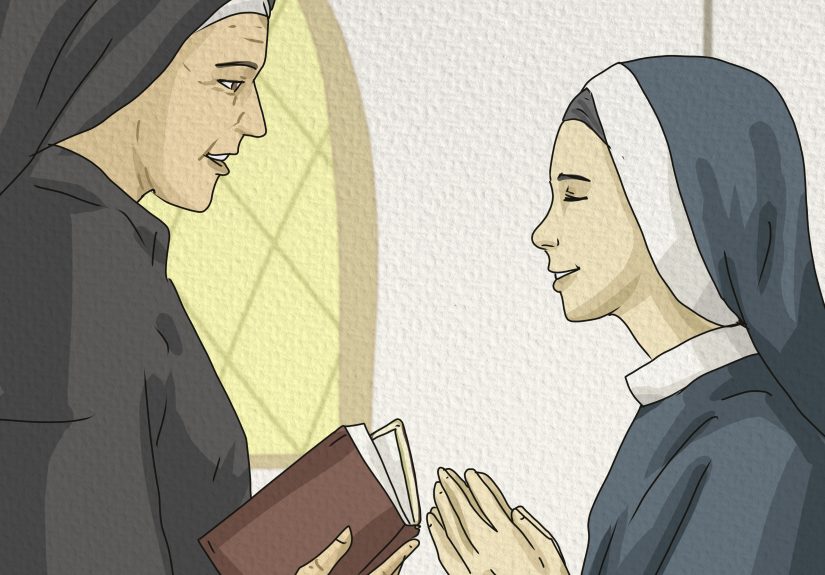
A nun usually lives a contemplative or cloistered life in a monastery. Her life centers heavily on prayer, community life, and enclosure. A sister, by contrast, usually belongs to an apostolic community and serves more actively in the world through ministries like teaching, health care, social outreach, parish work, or advocacy. Both are women religious. Both may be addressed as “Sister.” But if you are asking how to become a nun, it helps to know that some communities are contemplative and others are active.
Why does that matter? Because the daily life, formation style, schedule, and even vocabulary may change depending on the community. One woman may feel deeply drawn to silence, enclosure, and liturgical prayer. Another may feel called to a life that combines prayer with teaching, nursing, or serving immigrants and the poor. Neither path is more “holy.” They are simply different expressions of religious life.
Basic Requirements to Become a Nun
Specific requirements vary from one order to another, but several expectations show up again and again when communities explain who may enter. Think of these as the common starting points rather than a one-size-fits-all admissions poster.
1. You generally need to be a Catholic woman
Most Catholic communities require that you be a baptized and practicing Catholic woman before entering formation. If you are not Catholic but feel strongly drawn to religious life, the first conversation is usually not “Which habit do I wear?” but “How do I enter the Catholic Church and grow in the faith?”
2. You must be free to enter religious life
That usually means you are single and not currently married in the eyes of the Church. Widows may often apply. Women who were previously married may sometimes be eligible, but if there was a Catholic marriage or a marriage recognized by the Church, an annulment may be required. This is one of those areas where the answer is not always a flat yes or no; it depends on the circumstances and the community.
3. You cannot have dependent children
This is one of the clearest practical requirements. Many communities state that a woman cannot enter if she still has dependent children. In some cases, women with adult, independent children may be considered. Religious life involves a full commitment to the community, so unresolved family dependency is a major issue.
4. Debt matters more than many people expect
If you are exploring how to become a nun, here is the unglamorous but important truth: money still exists, even in spiritual discernment. Many communities require candidates to be free of significant debt by the time they enter the novitiate. Student loans are a common hurdle. Some communities are flexible about educational debt during earlier stages, but large financial obligations often have to be resolved before formal advancement.
5. Good physical, emotional, and psychological health is important
This does not mean a woman must be superhuman, permanently cheerful, or medically flawless. It means she should be healthy enough to live the demands of prayer, work, community life, and ministry. Communities are looking for maturity, stability, and the capacity to adapt. Managed health conditions do not always disqualify someone, but they do need honest discussion.
6. Age requirements vary by community
Some communities prefer younger entrants. Others accept women in their 30s, 40s, and sometimes beyond. If you are older, do not assume the door is automatically closed. At the same time, do not assume age never matters. Communities differ widely. One may welcome later vocations; another may have tighter age limits because of its formation model or way of life.
7. Education and life experience can help
A college degree is not always required, but many communities strongly value education, work experience, ministry experience, or simply evidence that you have lived responsibly in the world. A woman who has learned how to handle relationships, hold a job, serve others, and pray steadily often arrives better prepared for community life than someone who is trying to use the convent as a dramatic escape hatch.
8. You need a genuine desire for religious life
This sounds obvious, but it matters. Communities are not looking for people who are merely tired of dating, disappointed by modern culture, or fascinated by veils. They are looking for women who sincerely desire to follow Christ in poverty, chastity, and obedience within a specific community and charism.
The Process: How to Become a Nun Step by Step
The process of becoming a nun is usually gradual and deliberate. The names of the stages may differ a little, but the basic path tends to look like this.
Step 1: Discern the call
Before paperwork, interviews, and formation houses comes discernment. This is the stage where you pray, reflect, and ask whether God may be calling you to women’s religious life at all. You might speak with a priest, spiritual director, trusted mentor, or vocation director. You might begin attending daily Mass more regularly, praying the Liturgy of the Hours, reading about religious life, or serving in your parish.
This stage matters because a vocation is not simply about liking the aesthetic of convent walls and quiet hallways. It is about whether your life is being drawn toward a specific form of love and service. Discernment takes time, honesty, and patience. In other words, it is a terrible activity for people who want immediate certainty and an excellent activity for people who can live with prayerful mystery.
Step 2: Research communities and charisms
Once a woman believes she may be called to religious life, the next question is not merely “Do I want to become a nun?” but “With whom?” Every community has a charism, or particular spiritual gift and mission. Benedictines often emphasize prayer, stability, and hospitality. Dominicans may focus on preaching and truth. Franciscans may highlight poverty, simplicity, and service. Carmelite nuns center contemplation and prayer.
You are not just choosing a uniform. You are discerning a way of life. A woman may feel deeply called to a cloistered monastery, or she may thrive in an active community serving in schools, hospitals, or social ministries. Reading websites helps, but visits, retreats, and conversations are what make the difference.
Step 3: Contact a vocation director
This is usually the first formal move. A vocation director is the person appointed by the community to walk with women who are discerning. She answers questions, explains the community’s expectations, recommends prayer resources, and helps both sides determine whether there may be a fit.
At this point, you may be invited to phone calls, Zoom conversations, live-in visits, retreats, or “Come and See” events. These are valuable because they let you observe the actual rhythm of the community: prayer, meals, silence, work, ministry, recreation, and the very human fact that holy people also have laundry.
Step 4: Begin the application and screening process
If discernment becomes serious, most communities require an application process. This may include autobiographical writing, sacramental records, educational transcripts, references, interviews, health forms, and other screening steps. Some communities may ask about debt, family circumstances, work history, mental health, and your sacramental life. The goal is not to interrogate you like a spy movie villain. It is to see whether the candidate is truly ready and free for religious life.
Step 5: Enter aspirancy, candidacy, or pre-postulancy
Many communities begin with an early stage of closer contact called aspirancy, candidacy, affiliation, or pre-postulancy. In this period, the woman and the community continue mutual discernment. She may visit often, pray with the sisters, live temporarily with the community, and learn more about its mission and expectations.
Think of this stage as the bridge between “I am interested” and “I am entering.” It is usually a time for deepening trust, testing compatibility, and seeing whether the attraction is stable rather than emotional fireworks with a rosary attached.
Step 6: Become a postulant
Postulancy is often the first official stage of life with the community. A postulant lives, prays, studies, and works with the sisters or nuns while continuing to discern. She learns the community’s customs, spirituality, and daily rhythm. Depending on the order, this stage may last several months to around two years.
Postulancy can be both beautiful and revealing. Beautiful, because the woman begins to experience the shape of the life she has felt drawn toward. Revealing, because community life has a way of showing you whether you are genuinely called or simply romantic. Prayer at dawn feels different when it happens daily. Silence feels different when you cannot fill every gap with your phone. Shared mission feels different when it includes shared chores.
Step 7: Enter the novitiate
The novitiate is the heart of initial formation. During this stage, the novice receives more intensive formation in the community’s spirituality, constitutions, vows, prayer life, and way of living. This is the stage most people picture when they imagine preparation for final commitment. In many communities, it lasts about two years.
The novitiate is not just religious school with better candles. It is a concentrated period of learning how to live the evangelical counsels of poverty, chastity, and obedience in a concrete, daily way. The novice grows in prayer, community life, self-knowledge, and freedom. She is also being tested, in the healthiest sense of that word: Is this life truly hers?
Step 8: Make temporary vows
After a successful novitiate, the woman may profess temporary vows, sometimes called first vows or simple vows. This means she publicly commits herself to the life of the community for a limited period, usually renewed over several years.
Temporary vows are serious, but they are not yet the final lifelong profession. They allow the sister or nun to live the vows more fully while continuing formation, ministry, and discernment. This stage helps both the individual and the community confirm whether the vocation is stable, fruitful, and lasting.
Step 9: Profess perpetual or final vows
The final stage is perpetual profession, also called final vows or, in some communities, solemn profession. At this point, the woman makes a lifelong commitment to God in that religious community. She is no longer testing the waters. She is saying yes for life.
This is the moment many people imagine when they think of fully becoming a nun. In truth, the journey began long before this point. Final vows are the fruit of years of prayer, community living, discernment, study, sacrifice, and grace.
How Long Does It Take to Become a Nun?
If you are hoping the answer is “by next spring,” the process may gently disappoint you. Becoming a nun usually takes years, not weeks. Between inquiry, aspirancy, postulancy, novitiate, and temporary vows, the total path to final vows is usually a long, serious formation journey.
That is not a flaw in the process. It is the process. Religious life is lifelong, so the Church and the community want enough time to ensure the call is real, the woman is free, and the commitment is wise. Quick vows make for good movie montages. Slow formation makes for strong vocations.
What Daily Life Is Often Like
Women discerning how to become a nun often ask less about requirements and more about reality: What is the life actually like? The answer depends on the community, but common elements include daily prayer, Mass, spiritual reading, work, meals in community, recreation, service, and a simpler lifestyle than the average American pace allows.
Some communities wear a full habit. Some do not. Some live in strict enclosure. Some teach fourth grade, run retreat centers, or serve in health care. Some communities are more structured and traditional; others are more flexible in appearance while remaining serious about vows and mission. That is why visiting communities matters so much. A vocation is not only about ideals. It is also about fit.
Common Challenges in the Discernment Process
Even when a woman feels called, the process can be emotionally demanding. Family members may not understand. Debt can slow things down. Leaving a career can feel costly. The shift from individual freedom to community obedience can be difficult. So can the slower pace, the silence, or the sheer honesty that prayer demands.
But those challenges are not always signs that the call is wrong. Sometimes they are signs that the process is doing what it should do: clarifying motives, strengthening trust, and turning romantic ideas into real commitment.
Experiences Women Commonly Have While Becoming a Nun
Every vocation story is personal, but many women describe surprisingly similar experiences during the journey into religious life. At first, the call often feels quiet rather than dramatic. It may begin as a persistent sense that ordinary life, while good, is not the whole story. A woman may notice that she feels most alive in prayer, Eucharistic adoration, service, or silence. She may feel drawn to the saints, to the liturgy, or to a particular community’s way of living the Gospel.
Then comes the awkwardly human part: actually contacting a vocation director. Many women say that first email feels far more nerve-racking than it should. It can feel like writing, “Hello, I think God may be rearranging my entire life, please advise.” But once the conversation begins, the process often becomes more concrete and less intimidating.
A common experience during visits is surprise. Women often discover that convent life is both more ordinary and more beautiful than they expected. Yes, there is prayer. Yes, there is silence. But there is also laughter at dinner, practical work, shared responsibilities, tiredness, schedules, and a whole cast of human personalities. In other words, holiness does not erase humanity. It baptizes it and hands it a broom.
Another major experience is learning the difference between attraction and calling. A woman may love a community’s mission but realize she is not suited for its lifestyle. She may admire contemplative life but discover she is more deeply drawn to active ministry. Or she may expect to thrive in apostolic work and instead find herself profoundly at home in silence and enclosure. Discernment often narrows the path by showing what is good but not yours.
Many women also describe a period of interior stretching during postulancy or novitiate. Living in community can be deeply joyful, but it can also expose habits that went unnoticed in ordinary life. Maybe you like control. Maybe you avoid conflict. Maybe you rely too much on noise, busyness, achievement, or private space. Religious life has a way of bringing those things into the light. Not to shame a person, but to free her.
Family relationships also shape the experience. Some families are supportive from day one. Others are confused, worried, or convinced their daughter is “throwing away her life,” which is usually code for “I had a very different plan.” Over time, many families come to see the peace and joy that religious life can bring, but that adjustment is often part of the journey.
There is also the experience of waiting. Waiting for debt to be resolved. Waiting for a visit. Waiting for acceptance. Waiting to see whether a desire remains steady over time. This can be frustrating, especially in a culture that treats speed as proof of success. But women who persevere often say the waiting itself became part of the vocation, teaching patience, freedom, and trust in God.
And then there is joy, often quieter than expected but more durable. The joy of praying with a community. The joy of belonging somewhere spiritually. The joy of discovering that vows are not a shrinking of life, but a way of focusing it. Women who continue in the process often describe a deepening sense that they are not escaping the world. They are giving themselves to God for the life of the world in a different way.
Final Thoughts
If you are researching how to become a nun, the biggest takeaway is this: the requirements and process are real, structured, and deeply personal. Most communities look for a practicing Catholic woman who is free to enter, mature enough for community life, without dependent children, and usually able to resolve debt before deeper stages of formation. The process then unfolds through discernment, contact with a vocation director, community visits, application, postulancy, novitiate, temporary vows, and final vows.
It is a path that asks for honesty, patience, sacrifice, and real freedom. But for women who are genuinely called, it can also be a path of striking joy, deep purpose, and lasting peace. If the question keeps returning in prayer, do not panic, do not romanticize, and do not ignore it. Start where most real vocations start: pray, ask good questions, and take the next faithful step.