Table of Contents >> Show >> Hide
- Why Marble Needs a Gentle Touch (and a Little Respect)
- What You’ll Need
- The Daily Natural Cleaning Routine (5 Minutes, Maximum)
- Weekly or Monthly Deep Cleaning (Still Natural, Still Marble-Safe)
- Natural Stain Removal: A Calm, Effective Rescue Plan
- Etching: The “Natural Cleaner” Mistake Most People Make
- Natural Ways to Disinfect Marble (Without Wrecking It)
- Habits That Keep Marble Looking New (and Save You Cleaning Time)
- Sealing: The Natural Maintenance Step People Forget
- Quick FAQ
- of Real-World Marble Counter “Lessons” (So You Don’t Learn the Hard Way)
- Conclusion: Natural Marble Cleaning That Actually Works
Marble countertops are the supermodels of kitchens: stunning, photogenic, and
very sensitive to the wrong product touching them. If you’ve ever watched a single drop of lemon juice
turn into a sad, dull spot, you already know marble has opinions.
The good news: you don’t need harsh chemicals to keep marble clean. In fact, “strong” cleaners are often the
fastest way to turn a shiny countertop into a chalky, etched mood board. This guide walks you through a natural,
marble-safe routinedaily cleaning, deeper cleaning, stain rescue, and long-term careusing gentle, kitchen-friendly
supplies and smart technique.
Why Marble Needs a Gentle Touch (and a Little Respect)
Marble is a natural stone that can stain, scratch, and etch more easily than some other countertop materials.
It’s also usually sealed, and that protective sealer can be damaged by the wrong cleaners. The classic “natural”
cleaning staplesvinegar and lemonare acidic, which is exactly what marble hates. Translation: you can absolutely
clean marble naturally… as long as your version of “natural” doesn’t mean “acidic and chaotic.”
Stains vs. Etches: Know Your Enemy
Before you clean like a hero, identify what you’re dealing with:
- Stains soak in and discolor the stone (coffee, oil, wine, turmeric, makeupmarble holds grudges).
- Etches are dull, light marks caused by acids reacting with the surface (citrus, vinegar, tomato sauce, wine).
Stains can often be lifted. Etches are surface damagesometimes improved with polishing, sometimes requiring a pro.
The trick is handling each problem the right way instead of panic-scrubbing like you’re trying to erase your browser history.
What You’ll Need
Keep it simple. A natural marble cleaning kit can fit in one small basket.
- Microfiber cloths (2–3, because “one cloth for everything” is how streaks are born)
- Soft sponge (non-scratch, no green scouring pad energy)
- Warm water
- Gentle, pH-neutral dish soap (a few drops is plenty)
- Spray bottle (optional, but convenient)
- Baking soda (for poulticesused carefully)
- Hydrogen peroxide (3%) (optional, for certain organic stainstest first)
- Plastic wrap and painter’s tape (for poultice cover)
- Plastic or wooden scraper (old gift card works)
- Stone sealer (if you’re resealingfollow label directions)
The Daily Natural Cleaning Routine (5 Minutes, Maximum)
Step 1: Remove crumbs and grit first
Dust, salt, sugar crystals, and crumbs can act like tiny abrasives. Wipe or sweep them away before you wet-clean.
It’s boring, yes. It also prevents micro-scratches that make marble look tired over time.
Step 2: Make a gentle soap-and-water spray
In a spray bottle, mix warm water with a few drops of gentle dish soap. That’s it.
Your marble does not want a bubble bath.
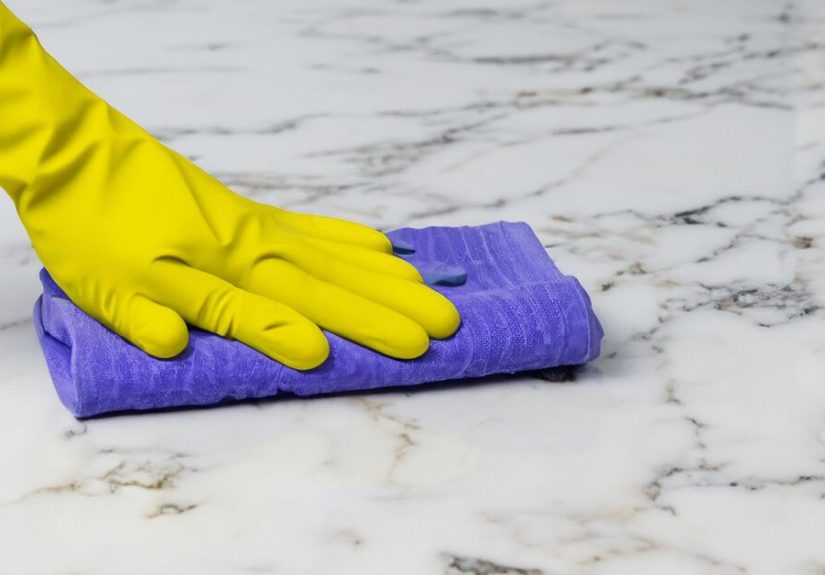
Step 3: Wipe with a microfiber cloth
Lightly spray the surface (or dampen your cloth), then wipe in overlapping passes. Don’t scrub like you’re
sanding a deck. Gentle pressure plus patience is the natural marble cleaner “secret sauce.”
Step 4: Rinse and dry
Wipe again with a cloth dampened with plain water to remove any soap film. Then dry immediately
with a clean microfiber cloth. Marble can show water marks, and leftover cleaner can streak.
Natural rule of thumb: Clean, rinse, dry. If you only remember three words, let them be those.
Weekly or Monthly Deep Cleaning (Still Natural, Still Marble-Safe)
If your counters feel slightly sticky, look dull, or collect fingerprints like a detective’s dream, it’s time for a deeper clean.
You can do this naturally without “degreasing” your marble into an existential crisis.
Option A: Slightly stronger soap solution
Use warm water with a touch more dish soap than your daily mix. Wipe thoroughly, rinse well, and dry.
The goal is to lift oilsnot leave residue.
Option B: Use a stone-safe, pH-neutral cleaner (still “natural-friendly”)
If you cook a lot (hello, olive oil mist) or have kids (hello, mystery smears), a pH-neutral cleaner labeled safe
for natural stone can be a practical upgrade. This isn’t “giving up on natural”it’s choosing a formula designed
to avoid etching and sealer damage.
What NOT to use (even if the internet swears by it)
- Vinegar (acidic = etching risk)
- Lemon juice (also acidic, also drama)
- Bleach or ammonia (can degrade sealer and create fumes; also not “natural”)
- Abrasive powders or scrub pads (dulls and scratches)
- Magic eraser/melamine foam (can dull the finish and remove sealer)
Natural Stain Removal: A Calm, Effective Rescue Plan
Stains happen. Marble is porous, and it will happily sip your coffee like it paid rent. The key is choosing the right
approach based on the stain typeand resisting the urge to “just scrub harder,” which is the cleaning equivalent of yelling at your Wi-Fi.
First response: blot, don’t wipe
For fresh spills, blot with a clean cloth or paper towel. Wiping can spread pigments and push liquid
into the pores. After blotting, clean the area with your gentle soap-and-water routine, rinse, and dry.
Oil-based stains (cooking oil, butter, mayo, lotion)
Oils can darken marble and linger. A baking soda poultice helps draw oil out.
- Make a paste: Mix baking soda with water until it’s like peanut butter (spreadable, not runny).
- Apply: Spread a 1/4-inch layer over the stain, extending 1 inch beyond the edges.
- Cover: Place plastic wrap over it and tape the edges down.
- Wait: Leave 24–48 hours. (Yes, patience is the active ingredient.)
- Remove: Lift the poultice, scrape gently with plastic/wood, rinse with water, and dry.
- Repeat if needed: Stubborn stains may take 2–3 rounds.
Important: Baking soda is mildly abrasive and alkaline, so don’t scrub it into the surface.
The poultice works by drawing the stain out while it sitsnot by sandblasting your countertop into submission.
Organic stains (coffee, tea, wine, berries, food coloring)
For organic discoloration, many people have success with a gentler poultice. If you want to stay “naturally leaning,”
start with baking soda + water. If that doesn’t budge it, a carefully tested baking soda + small amount of 3% hydrogen peroxide
can help on some light-colored marbles (it may lighten stonealways test in a hidden spot first).
Metal/rust stains (cans, cast iron, wet bottle caps)
Rust and metal marks can be stubborn. The safest move is to stop the source (don’t leave wet metal on marble)
and try a poultice method. If the stain persists after a couple attempts, this is often a “call a stone pro” moment,
because aggressive removers can do more harm than good.
Water rings and cloudy spots
Some “water spots” are just mineral residue; others are etches. First try your gentle clean + rinse + dry routine.
If the mark stays and looks dull in angled light, it’s likely an etch (surface damage), not a stain.
Etching: The “Natural Cleaner” Mistake Most People Make
If vinegar, lemon, or tomato sauce caused a dull spot, you’re looking at etching. No amount of natural stain remover
will “pull out” an etch because it isn’t a stainit’s a slightly damaged surface.
What you can do at home
- Stop the acid (obvious, but important).
- Clean gently so residue doesn’t make the spot look worse.
- Try a marble polishing powder made for stone (follow the label and test first).
When to call a pro
Deep etches, widespread dullness, or visible unevenness usually needs professional polishing (and sometimes resealing).
Pros can restore the surface evenlywithout turning your countertop into a DIY science fair project.
Natural Ways to Disinfect Marble (Without Wrecking It)
Let’s talk about germs, because kitchens are real life. Marble doesn’t love harsh disinfectants, so “sanitize naturally”
needs a smarter approach.
Everyday food-prep hygiene
For routine cleaning after meal prep, the soap-and-water method is usually enough to remove grime and reduce microbial load.
Always use cutting boards for raw meat and producemarble should be the stage, not the cutting surface.
Occasional gentle sanitizing
If you want an occasional “extra clean” moment, choose an approach that won’t etch marble:
- Stone-safe disinfectant labeled for natural stone (follow directions).
- Light hydrogen peroxide (3%) used sparingly on a cloth, then wipe with water and dry (test first; avoid frequent use on dark marble).
Avoid bleach, ammonia-heavy sprays, and anything acidic. If the label doesn’t explicitly say it’s safe for natural stone,
assume your marble will take it personally.
Habits That Keep Marble Looking New (and Save You Cleaning Time)
1) Wipe spills fastespecially acids and oils
Citrus, wine, vinegar, tomatoes, soda, hot saucethese can etch. Oils can stain. The faster you blot and clean, the less drama later.
2) Use coasters, trivets, and cutting boards
Put a coaster under that iced coffee. Put a trivet under hot cookware. Use a cutting board for everything.
This is not you being “extra.” This is you being future-you’s favorite person.
3) Skip the harsh tools
No scouring pads, no abrasive powders, no scraping with metal. Use soft cloths and gentle technique.
Marble shines when you treat it like a luxury itemnot like a sidewalk.
4) Keep the sealer in good shape
Sealer doesn’t make marble stain-proof, but it buys you time. If water stops beading and starts soaking in quickly,
your countertop may need resealing.
Sealing: The Natural Maintenance Step People Forget
A good sealer helps resist staining and makes daily cleaning easier. Many marble countertops need periodic resealing,
though timing depends on the marble type, finish, how heavily you use the kitchen, and the sealer itself.
Simple “water test” (quick check)
- Put a few drops of water on the marble in an inconspicuous spot.
- Wait 10–15 minutes.
- If it darkens quickly, the stone may be absorbing water and could be due for resealing.
If you reseal, follow the product directions carefullymore is not always better. And yes, sealing still counts as “natural care”
because you’re protecting the stone so you can keep using gentle cleaners.
Quick FAQ
Can I use vinegar to clean marble countertops naturally?
No. Vinegar is acidic and can etch marble and dull the finish. “Natural” doesn’t automatically mean “safe for stone.”
Is baking soda safe on marble?
Baking soda is useful as a poultice (left to sit and draw out stains). Avoid using it as a scrub, since it can be abrasive
and may dull the finish over time.
What’s the safest everyday natural marble cleaner?
Warm water + a few drops of gentle dish soap, wiped with microfiber, followed by a clean-water rinse and a dry buff.
Why does my marble look cloudy even after cleaning?
It could be soap residue, hard-water deposits, or etching. Try rinsing thoroughly and drying. If it’s still dull in the same spot,
it may be etched and require polishing.
of Real-World Marble Counter “Lessons” (So You Don’t Learn the Hard Way)
Marble care advice sounds simple until real life shows up holding a mug of coffee in one hand and a lemon in the other.
Based on the most common kitchen scenarios people share, here are the “I wish someone told me this sooner” lessons that make
natural marble countertop cleaning easierand a lot less stressful.
Lesson #1: The biggest damage happens in the first 60 seconds.
Not because marble is fragile like a soap bubble, but because liquids spread fast. A splash of red wine doesn’t politely stay in a circle.
It runs, pools at seams, and creeps toward that slightly unsealed spot you didn’t know existed. The win is simple: blot quickly, then do your
gentle clean-rinse-dry routine. Fast response beats fancy products almost every time.
Lesson #2: “Just a little vinegar” is how etches are born.
Many people switch to natural cleaning and reach for vinegar out of habit. On marble, that’s like using hot sauce as eye drops.
The countertop doesn’t always etch instantly; sometimes it looks fine until the light hits it at night andsurprisethere’s a dull shadow.
If you want a natural routine, make peace with dish soap and warm water as your daily MVP.
Lesson #3: Scrubbing harder makes you feel productive… and makes marble look worse.
When a stain won’t budge, the human instinct is to apply elbow grease until your triceps file a complaint.
But marble responds better to “sit and lift” strategies (like poultices) than friction. A baking-soda poultice feels almost too lazy to work,
which is exactly why it works: it slowly draws the stain out instead of grinding the surface down.
Lesson #4: Dark marble is beautifuland slightly more dramatic about lighteners.
People hear “hydrogen peroxide helps” and go full enthusiasm. On darker stones, peroxide can sometimes lighten the area.
That doesn’t mean peroxide is banned; it means you test first, use sparingly, and don’t treat your countertop like a whitening strip.
For dark marble, starting with the mildest option (soap/water, then poultice) is the calmer path.
Lesson #5: Prevention is the least boring way to keep marble perfect.
Coasters, trivets, and cutting boards feel like tiny choresuntil you realize they eliminate 80% of stains and etches.
A coaster under iced coffee prevents both rings and the slow seep of sugary condensation. A trivet prevents heat stress.
A cutting board prevents scratches, bacteria in pores, and the weirdly emotional moment when you realize you’ve been dicing limes directly on marble.
Natural care isn’t about being precious; it’s about setting up tiny habits so cleaning stays easy.
Conclusion: Natural Marble Cleaning That Actually Works
To clean marble countertops naturally, think gentle, not aggressive: warm water, a small amount of pH-neutral dish soap, microfiber cloths,
and a rinse-and-dry finish. For stains, use calm, targeted methods like a baking-soda poultice instead of abrasive scrubbing.
Skip vinegar and lemon (your marble will thank you), stay consistent with simple daily cleaning, and keep your sealer in good shape.
Marble will always be a little high-maintenancebut with the right natural routine, it can stay gorgeous without turning your kitchen into a chemistry lab.