Table of Contents >> Show >> Hide
- The Quick Answer: Wipe or Rinse?
- Why Mushrooms Look Dirty (and Why It’s Usually Not “Dirt”)
- The Great Mushroom Washing Debate (with a Dash of Reality)
- Tools You Need (No, You Don’t Need a Tiny Toothbrush… Unless You Want One)
- Step-by-Step: How to Clean Common Grocery-Store Mushrooms
- How to Clean Different Types of Mushrooms
- Common Mistakes That Turn Mushrooms Into Slime
- Food Safety Notes (Without the Drama)
- Bonus: The “I Cleaned ThemNow How Do I Make Them Taste Amazing?” Section
- Conclusion
- Real-Life Kitchen Experiences: Lessons That Stick (and Not Like Dirt)
Mushrooms are the only ingredient that can make people argue like it’s a family group chat:
“Do you wash them?” “Never wash them!” “My grandma washed them and she lived to 97!”
Meanwhile, the mushrooms are just sitting therequiet, earthy, and covered in a little growing mediumwaiting for you to figure it out.
Here’s the good news: cleaning mushrooms properly is easy, fast, and doesn’t require a microscope, a toothbrush,
or a meditation retreat with a “mushroom whisperer.” The key is choosing the right method for the level of dirt,
the type of mushroom, and how you plan to cook (or serve) them.
The Quick Answer: Wipe or Rinse?
If you want the simplest rule that actually works in real kitchens (not just in culinary-school legends), use this:
- Lightly dirty store-bought mushrooms: wipe with a damp paper towel or soft brush.
- Gritty, visibly dirty mushrooms: give them a quick rinse (or dunk-and-swish), then dry immediately.
- Never soak (unless the mushroom type truly needs it): long baths can mess with texture and shorten shelf life.
- Clean right before cooking: don’t wash and then “save them for later.” That’s how you invite slime to the party.
Why Mushrooms Look Dirty (and Why It’s Usually Not “Dirt”)
Most common grocery-store mushrooms (button, cremini, portobello) are cultivated indoors and may arrive with bits of
growing medium clinging to themoften peat or compost-like material. It’s not the same as digging one out of your backyard
after a thunderstorm. It’s still worth removing because grit is nobody’s favorite seasoning.
Wild mushrooms are a different story. They can carry actual soil, tiny bits of leaf litter, and occasionally a stowaway insect
who did not pay rent. Those need a more careful approach (we’ll get there).
The Great Mushroom Washing Debate (with a Dash of Reality)
The old myth says mushrooms “absorb water like sponges,” so rinsing them will ruin browning and turn them sad and soggy.
In practice, quick washing doesn’t doom your dinner. What does mess up browning is starting with mushrooms that are
wet and then cooking them gently in a crowded panaka steaming them into submission.
So can you rinse mushrooms?
Yesbriefly. The trick is to dry them well and cook them properly. Some testing-focused cooks have measured that
rinsed mushrooms can pick up a small amount of water (on the order of a couple percent by weight), which translates to a short
bump in cook timenot a culinary catastrophe. The bigger issue is letting them sit wet in the fridge, where moisture shortens their
best-quality window.
Tools You Need (No, You Don’t Need a Tiny Toothbrush… Unless You Want One)
Use whatever you already have. If your kitchen drawer is basically “rubber bands and chaos,” you’re still fine.
- Soft brush (mushroom brush, pastry brush, or a clean soft produce brush)
- Paper towels or a clean dish towel
- Colander for quick rinsing
- Salad spinner (optional but amazing for rinsed mushrooms)
- Paring knife for trimming ends
- Spoon (helpful for scraping portobello gills if you choose)
Step-by-Step: How to Clean Common Grocery-Store Mushrooms
Step 1: Sort, Inspect, and Trim
Spread mushrooms out on a cutting board. Toss any that are slimy, deeply bruised, or smell off.
A little discoloration is normal; a slippery film is a red flag.
Trim the dry, tough end of the stem (especially on cremini and white button mushrooms). Don’t amputate the whole stem out of habit
it’s edible on most varieties and tastes great when sliced.
Step 2: Choose Your Cleaning Method
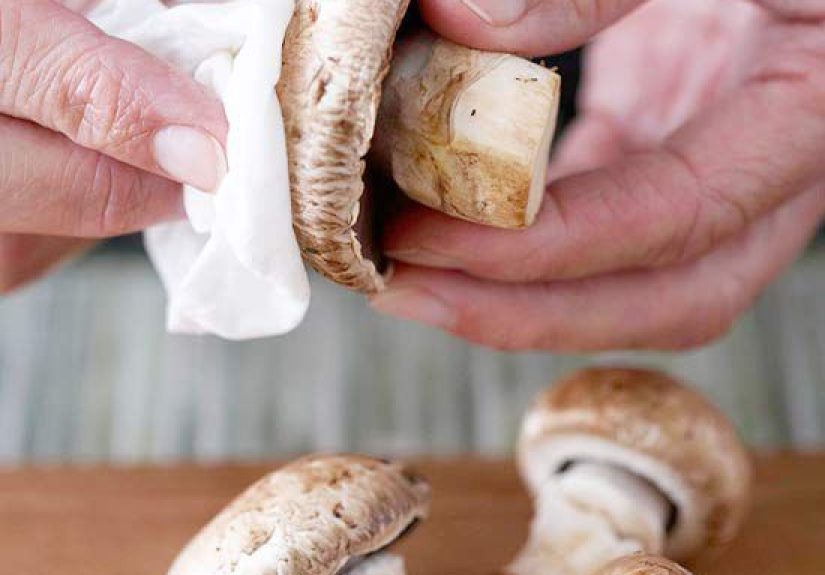
Option A: The Damp-Towel Wipe (Best for Light Dirt)
- Lightly dampen a paper towel (not drippingthink “morning dew,” not “monsoon”).
- Wipe each cap and stem to remove specks of debris.
- Use a soft brush for stubborn spots and creases.
This is the neatest method and keeps mushrooms drier if you’re aiming for maximum browninggreat for sautéing and roasting.
Option B: The Quick Rinse (Best for Gritty Mushrooms)
- Place mushrooms in a colander.
- Rinse under cool running water for a few seconds, tossing gently with your hand.
- Stop as soon as the grit is goneno extended spa sessions.
Option C: The Dunk-and-Swish (Fast for Big Batches)
- Fill a large bowl with cool water.
- Dunk mushrooms, swish briefly, and drain immediately.
- Do not leave them soaking “while you chop onions.” (That’s how you forget, and then regret.)
Step 3: Dry Like You Mean It
Drying is the difference between “golden and savory” and “why are these steaming in their own feelings?”
- Pat dry with paper towels or a clean dish towel.
- If you rinsed a lot: spin briefly in a salad spinner, then pat dry.
- Cook soon after cleaning for best texture and shelf life.
How to Clean Different Types of Mushrooms
Not all mushrooms behave the same. Some are sturdy. Some are delicate. Some are basically edible lace.
Here’s how to clean mushrooms properly by type.
White Button and Cremini Mushrooms
These are forgiving and easy. Wipe for light dirt; quick rinse for gritty batches. Trim stem ends if dry.
If you’re slicing, clean them firstotherwise you’ll rub debris into the cut surfaces.
Portobello Mushrooms
Portobellos are just mature creminis with big caps and bigger opinions. Wipe or rinse the cap.
If there’s debris in the gills, use a damp towel or a soft brush.
Do you need to remove the gills? It’s optional. Leaving them adds flavor but can darken sauces or marinades.
If you want a cleaner look, scrape gently with a spoon.
Shiitake Mushrooms
Shiitakes often have tougher stems. Remove the woody stems (save them for broth) and clean the caps with a damp towel or quick rinse,
then dry well.
Oyster Mushrooms
Oysters are usually pretty clean, but their frilly edges can hide tiny bits of debris.
A gentle wipe is often enough. If you rinse, do it quickly and dry carefullythese bruise easily.
Maitake (Hen of the Woods)
Maitake’s ruffles are wonderful at trapping little bits of everything. Break into clusters, shake out loose debris, then use a quick rinse
only if needed. Dry thoroughly (a salad spinner on a gentle spin can help if you’re careful).
Enoki Mushrooms
Enoki typically come in a tight bundle. Trim off the connected base, then separate gently.
A quick rinse is fine if needed, followed by a careful pat dry.
Morels (Special Case: The Honeycomb)
Morels have a textured, honeycomb-like structure that loves to hide grit. Brush first, slice lengthwise (they’re hollow),
then swish briefly in cool water. Dry well before cooking.
Chanterelles and Other Wild-Foraged Mushrooms
Wild mushrooms can be pristine or covered in forest confetti. Start with a dry brush to remove surface debris.
If they’re gritty, a quick swish in water can helpbut keep it brief and dry them immediately.
Important: Cleaning does not make unknown mushrooms safe. Only eat wild mushrooms that are correctly identified by a qualified expert
or purchased from reputable sellers.
Dried Mushrooms
Dried mushrooms are “cleaned” by rehydrating. Rinse quickly only if dusty, then soak in warm water.
Strain the soaking liquid through a fine filter (coffee filter or paper towel-lined sieve) to remove grit, and use it as a flavor booster in soups and sauces.
Common Mistakes That Turn Mushrooms Into Slime
- Washing mushrooms hours (or days) ahead: extra surface moisture shortens their good texture window.
- Soaking “just in case”: mushrooms don’t need a bath to be clean; they need a quick clean and a thorough dry.
- Storing in sealed plastic: trapped moisture speeds up spoilage. Use breathable packaging when possible.
- Cooking while still wet: wet mushrooms steam first, delaying browning and making texture softer.
- Crowding the pan: even perfectly cleaned mushrooms will steam if there’s no space for moisture to evaporate.
Food Safety Notes (Without the Drama)
Mushrooms are produce. Treat them like produce:
- Use clean running water if rinsing. Avoid soap, detergent, or “produce wash.”
- Wash hands, cutting boards, and knivesespecially if mushrooms share counter space with raw meat.
- Discard mushrooms that are slimy, moldy, or smell unpleasant.
- If serving raw mushrooms (like in salads), clean them carefully and dry well for best texture.
Bonus: The “I Cleaned ThemNow How Do I Make Them Taste Amazing?” Section
Cleaning is step one. Browning is where mushrooms turn into something you’d write poetry about.
- Start hot: preheat your pan so moisture evaporates quickly.
- Don’t overcrowd: cook in batches if needed.
- Let them sit: stir less than you think; browning needs contact with the pan.
- Salt later: salting early draws out moisture. Salt once you see good color.
- Finish with flavor: butter, garlic, herbs, lemon, or soy sauce near the end.
Conclusion
To clean mushrooms properly, match the method to the mess: wipe lightly dirty mushrooms, quick-rinse gritty ones,
and always dry them like you’re trying to win a towel-folding competition. Avoid soaking, clean close to cooking time,
and give wild mushrooms extra attention (and extra caution). Once you get this down, you’ll spend less time fussing and more time eating mushrooms that are browned, savory, and blissfully grit-free.
Real-Life Kitchen Experiences: Lessons That Stick (and Not Like Dirt)
Let’s talk about the kind of mushroom “experience” nobody posts on social media: the gritty bite in a creamy pasta, the mysteriously soggy sauté,
and the moment you realize you’ve been scrubbing mushrooms one-by-one like you’re detailing a luxury car. These little kitchen moments are exactly
why learning how to clean mushrooms properly pays off fast.
The Gritty Risotto Incident: You know the one. You’re stirring risotto, feeling like an Italian nonna for about ten minutes,
and thencrunch. That crunch isn’t “al dente.” That’s leftover growing medium clinging to the mushroom cap. The fix is simple: if mushrooms look dusty
or you see debris in the gills, don’t rely on wishful thinking. A quick rinse and a thorough dry takes less time than the emotional recovery from a
gritty bite.
The Salad Spinner Redemption: If you rinse mushrooms, you’ll eventually meet the problem: they look clean, but they’re still wet enough
to sabotage browning. This is where the salad spinner earns its paycheck. A short, gentle spin (followed by a quick pat dry) can take mushrooms from
“steaming pile of regret” to “deeply browned and meaty.” It’s one of those tools that feels optional until the day it saves dinner.
The Portobello Gill Situation: Portobellos are dramatic in the best way, but their gills can hold onto debris and also tint marinades dark.
If you’re grilling them for burgers, wiping the cap and leaving the gills alone is usually fine. If you’re slicing them into a pale cream sauce and you want
it to stay… well, pale, scraping gills with a spoon is the move. Not requiredjust a nice “choose your own adventure” option.
The “Washed Too Early” Mistake: This is a classic: you wash mushrooms with great intentions, then get distracted by life, and the mushrooms
sit damp in the fridge. Later, they feel tacky and smell a little… questionable. The lesson: clean mushrooms close to cook time. If you’re meal prepping,
store them dry, and clean right before they hit the pan. Mushrooms prefer short, efficient encounters with waterlike a cat that tolerates exactly three
seconds of affection.
The Fancy Wild Mushroom Panic: If you ever buy chanterelles or morels, you’ll probably handle them like rare antiques. That’s fairthey’re pricey
and delicate. Start with a brush, inspect for grit, and only use water if you truly need it. The goal isn’t “sterile,” it’s “clean enough to eat without
crunching on the forest floor.” And remember: cleaning doesn’t make unidentified mushrooms safe. Safety starts with correct identification and reputable sourcing.
The through-line in all these experiences is pretty comforting: mushroom cleaning doesn’t need to be precious. It needs to be appropriate.
Wipe when they’re barely dirty, rinse quickly when they’re gritty, dry thoroughly, and cook with confidence. Once you stop treating mushrooms like they’ll
dissolve in water, they become what they’re meant to be: an easy, flexible ingredient that tastes like you tried harder than you did.