Table of Contents >> Show >> Hide
- Why Air Force 1s Are Perfect for Customization
- Before You Start: Prep Like You Mean It
- Way #1: Paint a Clean Color-Blocked Design
- Way #2: Add Hand-Painted Graphics or Line Art
- Way #3: Upgrade the Laces, Dubraes, and Small Details
- Way #4: Add Texture With Patches, Fabric, or Layered Details
- Common Mistakes to Avoid When Customizing AF1s
- How to Make Customized Air Force 1s Last Longer
- Final Thoughts: Make Them Yours, Not Just Loud
- Extra: Real-World Experience With Customizing Air Force 1 Shoes
There are sneakers, and then there are Air Force 1sthe white leather legends that somehow go with jeans, cargos, dresses, sweats, and that “I just ran out for coffee but still look suspiciously put together” outfit. The beauty of AF1s is that they already look good out of the box. The danger, of course, is that once you realize they’re basically a wearable blank canvas, your brain starts whispering, “What if I made these cooler?”
That whisper is correct.
If you’ve been wondering how to customize Air Force 1 shoes without turning them into a tragic craft project, this guide will walk you through four eye-catching approaches that actually look stylish, wearable, and intentional. We’ll cover painted color blocking, graphic artwork, lace-and-hardware upgrades, and texture-based add-ons. Along the way, you’ll also learn how to prep leather properly, avoid the most common mistakes, and keep your customized sneakers looking sharp instead of “survived a chaotic weekend in the garage.”
Why Air Force 1s Are Perfect for Customization
The Nike Air Force 1 has become a favorite for customization for one simple reason: the silhouette is clean. The panels are easy to map out, the leather upper takes paint well when prepped correctly, and the overall shape is iconic enough that even small changes make a big visual impact. You don’t need to reinvent the wheel here. You’re just giving the wheel better taste.
Another reason AF1s work so well is versatility. A tiny detaillike swapping in thick rope laces or adding a single painted heel accentcan make the shoe feel personalized without screaming for attention. On the other hand, if you want to go full main-character mode, AF1s can handle bold graphics, vibrant palettes, and layered textures too.
Before You Start: Prep Like You Mean It
Before you touch a brush, marker, charm, patch, or lace, do the least glamorous but most important part of the process: prep. This is what separates clean custom Air Force 1 shoes from cracked, sticky, peeling disappointment.
Clean the Shoes First
Even brand-new AF1s can have dust, factory residue, or oils on the leather. If your shoes are used, clean off dirt and grime first. Focus on the leather upper, midsole edges, and seams. Let the shoes dry fully before doing anything else. Water and creative ambition are not the same thing.
Use Painter’s Tape and a Plan
Masking off edges is not a sign of weakness. It is a sign that you enjoy straight lines and emotional stability. Use painter’s tape to protect the midsole, outsole, and any panel you don’t want to touch. Then sketch your idea on paper first. Even a rough layout helps you balance color placement and avoid the classic “I thought this would look cooler in my head” moment.
Respect the Material
Most AF1 customs work best on leather panels. If you plan to customize rubber or plastic areas, you’ll need different prep and adhesion strategies. Also, don’t overload crease-heavy zones like the toe box with thick layers of paint or bulky glued-on pieces. Shoes bend. Your design has to bend with them.
Way #1: Paint a Clean Color-Blocked Design
If you want the biggest visual payoff for the least chaos, color blocking is the move. This method gives you a professional-looking result even if your artistic skills currently top out at drawing stars in notebook margins.
How It Works
Instead of painting complex illustrations, you assign different colors to specific panels on the shoe. For example, you might keep the toe white, paint the mudguard sage green, make the swoosh navy, and finish the heel tab in tan. Suddenly your basic AF1 looks like a boutique drop with a suspiciously cool backstory.
Best Color Combos for Air Force 1 Customs
Some combinations are especially effective because they play nicely with the shape of the shoe. Try cream, forest green, and gum-inspired brown for a refined streetwear look. Go with baby blue and white for a clean spring palette. Black, charcoal, and silver can create a sleek modern vibe. Or lean into vintage energy with burgundy, sail, and muted gold.
The trick is to choose one dominant color, one supporting shade, and one accent. That keeps the shoe visually interesting without making it look like a color wheel lost a fight.
How to Make It Look Polished
Apply thin coats rather than one thick one. Thin layers give you smoother coverage, better flexibility, and fewer visible brush marks. Let each coat dry before the next. Yes, patience is annoying. It is also stylish.
For an especially clean result, keep one section untouchedusually the midsole or toe boxso the finished design still has breathing room. Good customization is not just about what you add. It is also about what you leave alone.
Way #2: Add Hand-Painted Graphics or Line Art
If color blocking is the minimalist’s choice, hand-painted graphics are for people who want their sneakers to have a personality. This is where you can add stars, flames, cartoon eyes, flowers, checkerboard accents, abstract lines, initials, tiny smiley faces, or a subtle doodle theme that wraps around the heel and swoosh.
Start Small, Not Dramatic
A common mistake is trying to turn your first pair into a museum exhibit. Don’t. Start with a simple motif and repeat it strategically. A small daisy near the heel, a stitched-look outline around the swoosh, or minimalist black line art on white leather can look far more elevated than one giant complicated graphic that ends in regret and rubbing alcohol.
Placement Matters More Than People Think
Where you place your design affects the whole feel of the shoe. Graphics on the outer side panel are more noticeable and make a bolder statement. Details on the heel tab or back quarter feel more custom and slightly more grown-up. A design around the swoosh adds movement. Toe-box artwork gets attention fast, but it also sits in a high-crease area, so keep that in mind.
Ideas That Usually Look Great on AF1s
Monogram initials are timeless and easy to personalize. Fine-line stars or lightning bolts add energy without overpowering the shoe. Floral accents work especially well when paired with muted color blocking. Street-art-style outlines can give the sneaker a sketchbook effect. And if you want something trendy without feeling try-hard, contrast stitching effects painted in a faux hand-sewn style are weirdly cool.
The secret here is restraint. One clever graphic concept repeated with confidence beats ten unrelated ideas fighting for custody of the same sneaker.
Way #3: Upgrade the Laces, Dubraes, and Small Details
Not every custom Air Force 1 needs paint. Sometimes the smartest upgrade is also the easiest: change the accessories. This approach is ideal if you want your shoes to stand out but still look clean, wearable, and not like a freshman art final.
Swap the Laces
Laces change the vibe immediately. Flat cream laces can make white AF1s feel softer and more vintage. Black laces add contrast and edge. Rope laces create a chunkier, more styled look. Satin laces can make the shoe feel fashion-forward. Patterned laces, used carefully, can add attitude without overwhelming the sneaker.
Just remember this: loud laces are already doing a lot of talking. Let the rest of the shoe keep its indoor voice.
Change the Dubrae and Hardware
The lace tagoften called a dubraeis a tiny detail with surprising power. A custom metal dubrae, initials, or a colored replacement can make the sneaker feel more premium. You can also add lace jewels, mini charms, or a subtle chain detail if that suits your style. Keep it balanced. One hardware moment is fashion. Six hardware moments are cosplay.
Use Contrast Without Commitment
This method is great because it’s reversible. You can try cream laces one week, swap to red the next, and add a metallic dubrae for a sharper finish. If you’re the kind of person who changes your mind often, lace-based customization is your safest creative playground.
Way #4: Add Texture With Patches, Fabric, or Layered Details
Want your AF1s to look more expensive, more artistic, or more one-of-one? Texture is your best friend. While paint changes color, texture changes the entire mood of the shoe.
What Counts as Texture?
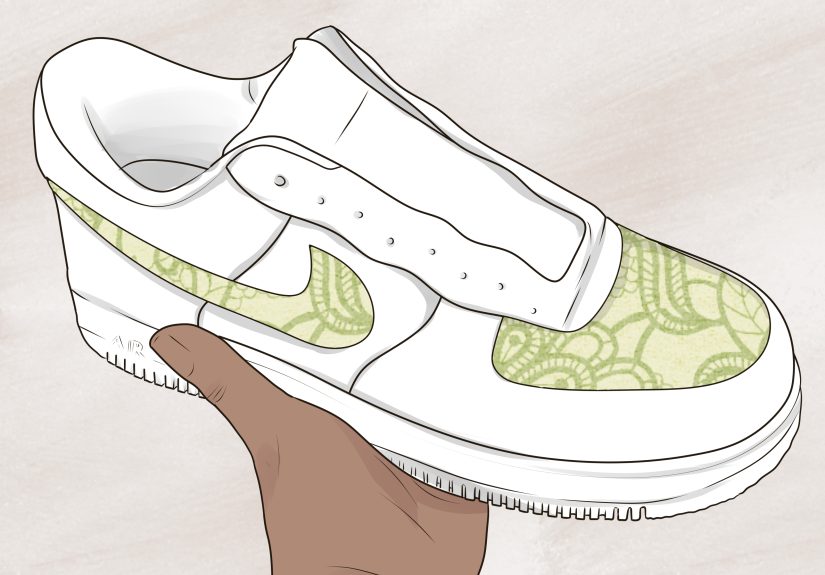
Texture-based customization can include denim swoosh overlays, stitched patches, fabric heel tabs, faux pony-hair accents, canvas panel add-ons, reflective strips, or carefully placed embroidered details. Even replacing basic laces with woven or speckled ones contributes to the effect.
Why Texture Looks So Good on Air Force 1s
The AF1 already has strong panel lines, so mixed materials feel natural on the silhouette. A denim swoosh on smooth white leather creates contrast immediately. A suede heel tab can make the shoe feel richer. A small stitched patch near the back panel adds visual interest without overpowering the design.
Keep It Intentional
The key with texture is editing. Pick one material story and stick with it. If you add denim, maybe pair it with cream laces and a navy heel accent. If you add patches, keep the rest of the shoe simple. If everything is special, nothing is special. That sentence sounds rude, but your sneakers will thank you.
Common Mistakes to Avoid When Customizing AF1s
Using thick coats of paint: Thick layers crack faster and look uneven.
Skipping prep: The coolest design in the world will still fail if the surface is dirty or slick.
Overdesigning the shoe: Leave some white space. It keeps the custom feeling premium.
Ignoring wear zones: Toe boxes, collar edges, and sole areas take the most abuse.
Rushing the finish: Let paint dry, let sealants cure, and don’t wear the shoes too soon unless you enjoy gambling with your hard work.
How to Make Customized Air Force 1s Last Longer
Once your design is finished, protect it. Store the shoes in a cool, dry place. Clean them gently instead of scrubbing like you’re trying to erase history. Avoid throwing them in the washer or dryer. Use a soft cloth or gentle brush for routine care, and keep harsh chemicals away from painted areas.
If you customized the shoes with paint, let them cure properly before wearing them outside. And when you do wear them, maybe don’t debut them on a rainy day, at a muddy concert, or during a spontaneous sprint across a parking lot. Customized sneakers deserve a slightly better opening scene.
Final Thoughts: Make Them Yours, Not Just Loud
The best custom Air Force 1 ideas aren’t always the wildest. They’re the ones that feel cohesive, personal, and wearable. A clean color-blocked palette can be just as eye-catching as an elaborate painted design. A lace swap can be just as effective as a full rebuild. A textured swoosh can quietly steal the whole show.
That’s the real charm of customizing AF1s: you get to decide what kind of statement you want to make. Loud, subtle, artsy, sporty, polished, playfulthere’s room for all of it. The only real rule is to customize with intention. And maybe test your idea before you freestyle on a $100-plus pair of sneakers. That rule is less poetic, but more financially responsible.
Extra: Real-World Experience With Customizing Air Force 1 Shoes
The funny thing about customizing Air Force 1s is that the process usually starts with confidence and ends with humility. At first, you look at a clean white pair and think, “How hard can this be?” A few hours later, you’re crouched over a table, protecting one tiny panel with tape like you’re performing surgery on a fashionable marshmallow. It is both ridiculous and weirdly satisfying.
One of the first things many people notice is how different the shoes feel once you stop seeing them as just sneakers and start seeing them as a project. You become hyper-aware of every line, every curve, every panel break. Suddenly the swoosh is not just a swoosh. It is a design decision. The heel tab is not just the heel tab. It is an opportunity. The laces are no longer laces. They are now “texture elements,” which is the kind of phrase you start using when a hobby quietly takes over your weekend.
There is also a very specific thrill that comes from the first successful detail. Maybe it’s a painted panel that dries smoother than expected. Maybe it’s a lace swap that makes the entire shoe look ten times more expensive. Maybe it’s a tiny graphic on the outer side that somehow pulls the whole concept together. Whatever it is, that moment hits hard. You look at the shoe and think, “Okay, I get it now.” That’s when customization becomes addictivein the harmless, design-obsessed, “I should probably make another pair” kind of way.
Of course, not every moment is glamorous. There are also the classic mistakes. Choosing a color that looked perfect online but feels wildly different in person. Realizing too late that one shoe has a cleaner line than the other. Smudging a detail because you were just a little too confident and a little too early. These moments are annoying, but they’re also part of the experience. Custom sneakers rarely become memorable because they are flawless. They become memorable because they reflect decisions, adjustments, and a little bit of chaos.
Another thing people don’t always expect is how personal the final result feels. A customized pair of AF1s can say a lot without using words. Maybe the colors match your favorite team, your personal style, or the palette you wear all the time. Maybe the graphics reference a hobby, a city, or a joke only your friends understand. Even a very subtle custom can feel more “you” than something expensive bought straight off a shelf. That personal connection is a big reason customized shoes feel special long after the novelty wears off.
There’s also the social side of it. Customized Air Force 1s attract attention in a different way than hype sneakers do. Instead of people asking what you paid or where you found them, they ask what you changed, how you did it, and whether you made them yourself. That shift is fun. It turns the shoes into a conversation piece rather than just a flex. And honestly, getting asked, “Wait, you customized those?” is deeply satisfying in a way that is hard to explain unless you’ve been there.
In the end, the best experience with customizing AF1s is not just the finished pair. It’s the whole process: the planning, the small wins, the unexpected fixes, and the moment the shoes finally feel like something no one else owns. That’s what makes it worth doing. You are not just decorating sneakers. You are taking an icon and giving it your own point of view. Which is a very stylish way of saying you made your shoes more interesting than everybody else’sand they deserved it.