Table of Contents >> Show >> Hide
- Before You Begin: What “Disney Style” Really Means
- Step 1: Start With Story and Shape Language
- Step 2: Build the Head From Simple Forms
- Step 3: Draw Expressive Eyes, Brows, and Mouth First
- Step 4: Use Gesture to Design the Body and Pose
- Step 5: Simplify the Silhouette and Make the Pose Read Clearly
- Step 6: Add Hair, Hands, Clothing, and Appealing Exaggeration
- Step 7: Clean the Drawing and Use Color to Support the Mood
- Common Mistakes to Avoid
- Conclusion
- Extended Experience: What Learning This Style Usually Feels Like
- SEO Tags
If you have ever looked at a Disney character and thought, “Why does this face have the emotional range of a Shakespeare actor and the cuteness of a marshmallow?” you are asking exactly the right question. Learning how to draw in the Disney style is not really about copying one nose, one eye shape, or one princess-approved chin. It is about understanding a visual language: appealing shapes, readable emotions, strong silhouettes, believable structure, and storytelling in every pose.
That is the secret sauce. Or the secret pencil shavings. Either works.
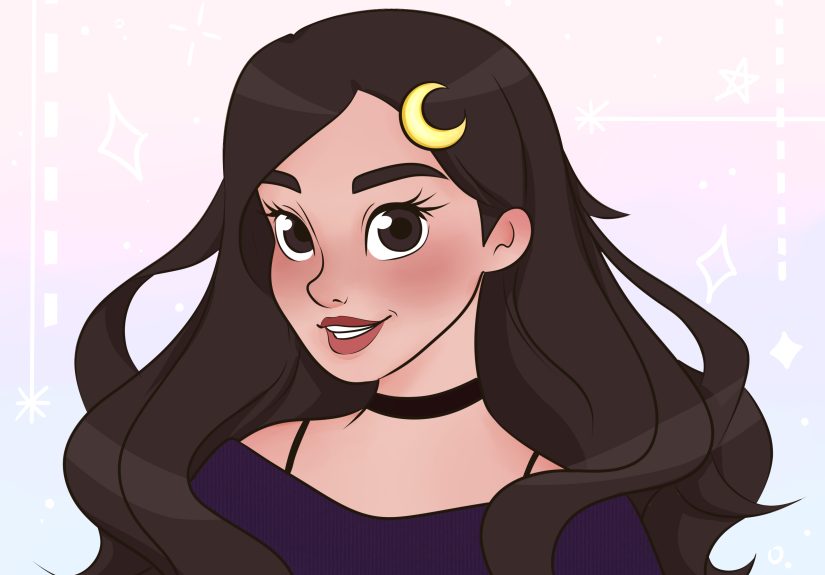
When artists talk about the Disney look, they usually mean a style associated with animated features that feels warm, expressive, polished, and instantly readable. Characters tend to be built from simple forms, then pushed with personality. Their faces are clear. Their poses are dynamic. Their features are stylized, but they still feel solid and alive. In other words, they are exaggerated without becoming random, cute without becoming mushy, and theatrical without turning into chaos wearing eyelashes.
This step-by-step guide breaks that process down into seven practical stages. Whether you are sketching on paper, drawing in Procreate, or staring at a blank page like it personally offended you, these steps will help you create Disney-inspired drawings with more confidence, structure, and charm.
Before You Begin: What “Disney Style” Really Means
Before we jump into the seven steps, one quick reality check: there is no single universal Disney face. Classic films, Renaissance-era features, and modern animated movies all handle design a little differently. Still, several ideas show up again and again. Characters are built with clean shape language. Faces are designed for expression first. The head and eyes often carry a lot of emotion. Poses are based on gesture, not stiffness. Color and lighting support mood. Most importantly, the drawing serves the story.
So if you want a Disney-inspired result, do not chase surface details first. Start with appeal, structure, and clarity. Fancy eyelashes can wait. Your drawing will survive without them. It may even thank you.
Step 1: Start With Story and Shape Language
Every strong Disney-style drawing starts with a simple question: who is this character, and how should they feel at first glance? If you skip that question and jump straight to “big eyes, tiny nose,” you may end up with a polished drawing that says absolutely nothing. It will be cute, sure, but in the same way a refrigerator magnet can be cute.
Start by deciding on the character’s role, mood, and energy. Are they brave, awkward, dreamy, dramatic, mischievous, or so confident they would absolutely narrate their own entrance? Once you know that, choose shapes that support the idea. Rounded shapes usually feel friendly, soft, and approachable. Squares can feel sturdy and dependable. Triangles feel sharper, quicker, or more dangerous. This is called shape language, and it is one of the easiest ways to make a design feel intentional.
For example, a sweet, optimistic heroine might lean on circles and flowing curves. A strict authority figure might use straighter lines and blockier forms. A trickster sidekick might mix uneven shapes with playful angles. Try drawing three tiny thumbnail sketches of the same character using different shape families. Keep them loose. These are not finished drawings. They are visual auditions.
If one thumbnail instantly feels more alive, trust it. Good design often reveals itself early, before details arrive and complicate everything like an overenthusiastic group chat.
Step 2: Build the Head From Simple Forms
Once your idea feels solid, begin the head with the simplest construction possible. In Disney-inspired drawing, the head usually carries the emotional weight of the character, so you want a strong structure underneath the stylization. Start with a sphere or rounded egg shape for the cranium, then attach the jaw and chin as a separate form. Think in three dimensions. Even if the final drawing is cute and stylized, it still needs to feel like a real object turning in space.
Use a center line and an eye line to establish the angle. This matters a lot. A front-facing head, a three-quarter view, and a profile all create different emotional effects. The three-quarter view is especially common in animation art because it feels lively and shows both dimension and expression. If your character’s face keeps looking flat, it usually means the construction lines were treated like decoration instead of a map.
Keep the cheeks generous and the cranium roomy. Many Disney-style characters have a soft, rounded head shape that leaves space for large eyes and expressive brows. That does not mean every head should be identical. Change the jaw width, forehead height, chin shape, and cheek fullness to create variety. A delicate face, a heroic face, and a comic face can all sit within the same broad family of animation design while still feeling distinct.
The main rule here is simple: build first, stylize second. If the head works as a simple form, the final drawing will be much easier to refine.
Step 3: Draw Expressive Eyes, Brows, and Mouth First
Now we reach the part most people rush into with the energy of a kid sprinting toward cake: the face. In Disney-style character drawing, the eyes are usually large, clear, and expressive. But size alone is not enough. The real magic comes from relationships: the spacing between the eyes, the tilt of the brows, the cheek lift, the mouth shape, and the way all those elements work together.
Place the eyes lower than many beginners expect. In stylized animation, the forehead often takes up more space than you would use in a realistic portrait, especially on youthful characters. The upper eyelid shape is important because it can suggest softness, alertness, confidence, or intensity with only a slight change. Brows matter just as much as the eyes themselves. If the brows are dead, the face is dead. Harsh but true.
Keep the nose simple. In this style, the nose usually supports the expression rather than stealing the scene. A small bridge, a rounded tip, and carefully placed nostrils are often enough. For the mouth, think in curves. A smile is not just a smile; it can be sly, warm, nervous, smug, relieved, or triumphant depending on the corners, the cheeks, and the brow shape above it.
Try drawing one face with four different emotions without changing the head construction. Only adjust the eyes, brows, and mouth. This exercise teaches an important lesson: expression is not decoration. It is design. And once you get that, your drawings stop looking like mannequins in a costume aisle.
Step 4: Use Gesture to Design the Body and Pose
A lot of beginner character drawings fail for one simple reason: the face is doing all the acting while the body stands there like it missed rehearsal. Disney-style art relies heavily on gesture. The pose should communicate attitude before the viewer notices details. If the body language is clear, the drawing instantly becomes more animated.
Start with a line of action. This is the main directional sweep that runs through the pose and gives it flow. It can curve, lean, twist, or stretch depending on the emotion. A proud character may stand tall with an open chest and lifted chin. A shy character may fold inward with a softer, curved spine. A determined character may lean forward as if the whole body has already made the decision before the feet catch up.
Keep the gesture loose at first. Use simple forms for the rib cage, pelvis, arms, and legs. Think about rhythm. One side compresses, the other stretches. Hips and shoulders often tilt in opposite directions, which adds life and balance. Avoid symmetry unless the scene truly calls for it. Symmetry can make a character feel posed rather than alive.
Even in a still drawing, the body should suggest movement, weight, and intent. If your character looks like they are waiting for passport photos, push the gesture further. Exaggerate the flow. Shift the weight. Tilt the shoulders. Animation-style posing is not about realism alone. It is about readable, appealing force.
Step 5: Simplify the Silhouette and Make the Pose Read Clearly
Once you have a rough pose, step back and squint. Better yet, fill the whole figure in as a black shape. Can you still tell what the character is doing? If not, the silhouette needs work. Clean silhouette is one of the most important parts of a Disney-inspired drawing because animation depends on instant readability.
Separate overlapping forms when possible. If both arms are glued to the torso, the pose becomes muddy. If the hair, hands, and costume details all compete in the same area, the drawing gets busy fast. Strong silhouettes create negative space between limbs and around the body, which makes the action easier to read. A bent elbow that sticks out from the torso often reads better than one hidden in front of the chest. A hand placed on the hip creates a much clearer statement than a hand floating vaguely in front of the waist.
This is also the stage where you choose your focal point. Usually, it is the face. Use the body and costume shapes to support that focus rather than distract from it. A good pose feels organized. The viewer’s eye knows where to go first, second, and third.
Here is a useful trick: draw three tiny versions of the same pose and push each one farther than feels comfortable. One will probably look too mild, one will look ridiculous, and one will land in the sweet spot. Congratulations. You have just met the ancient art of “push it more.” Every animator eventually does.
Step 6: Add Hair, Hands, Clothing, and Appealing Exaggeration
Now that the construction and pose are working, add the design elements that make the character feel complete. Hair, hands, and clothing can do a lot of storytelling in Disney-style art, but only if you treat them as part of the character rather than decorative frosting.
Start with the big shapes. Hair should have mass, direction, and flow before you draw individual strands. Think of it as a sculpted shape that follows the movement of the head and pose. If the character turns quickly, the hair can echo that motion. If the character is gentle or dreamy, the hair may follow in soft, elegant curves. The same idea applies to clothing. Do not draw every wrinkle. Focus on the larger folds that support movement, form, and personality.
Hands deserve patience. They are expressive and terrifying, which is frankly rude. Simplify them into mitten-like blocks at first, then refine the fingers. In stylized animation drawing, hands often need to be readable more than anatomically perfect. A hand gesture that clearly supports emotion is better than a technically detailed hand that confuses the pose.
This is also where exaggeration becomes your best friend. Enlarge what matters. Soften what does not. Push the cheek shape, the eye tilt, the curve of the smile, the sweep of the hair, or the elegance of the neck if it supports the character. The key is purposeful exaggeration. You are not adding random flair. You are amplifying personality.
Step 7: Clean the Drawing and Use Color to Support the Mood
The final step is where the drawing stops being a sketch and starts feeling finished. Clean line work matters because Disney-inspired art usually looks polished, but do not confuse clean with stiff. You still want lively curves and confident shapes. Trace over your rough drawing with a focus on line economy. Use as few lines as possible to say the most. One strong curve often does more than five hesitant ones.
When adding color, think like a storyteller. Warm palettes can feel inviting, hopeful, or magical. Cooler palettes can feel mysterious, elegant, or sad. Contrast helps guide the eye, especially around the face. If the character’s face is your focal point, keep the strongest color contrast or cleanest value separation there. That is how you direct attention without yelling.
A little lighting logic also goes a long way. Even stylized characters benefit from simple light-and-shadow thinking. Where is the light coming from? Which planes face it? Which fall into shadow? Soft gradients can help, but strong shape design still matters more than fancy rendering. A beautifully shaded weak drawing is still a weak drawing in very expensive makeup.
Before calling the piece done, flip the canvas or hold the paper in a mirror. Mistakes become obvious fast. Off-center eyes, drifting features, and crooked proportions suddenly reveal themselves with all the subtlety of a marching band. Fix those, and your finished illustration will feel much more professional.
Common Mistakes to Avoid
- Copying surface features without understanding structure: Big eyes do not automatically create a Disney-inspired drawing.
- Ignoring gesture: A pretty face on a stiff body still feels lifeless.
- Over-detailing too early: Start simple, then refine.
- Using symmetrical poses: Symmetry often drains energy from the figure.
- Drawing every hair and wrinkle: Focus on larger design shapes first.
- Forgetting silhouette: If the pose is not readable in simple shape form, it needs another pass.
Conclusion
Learning how to draw in the Disney style takes more than memorizing a few facial tricks. It requires you to think like a storyteller, a designer, and a performer at the same time. You are building form, shaping emotion, directing attention, and creating appeal in one image. That sounds like a lot because, yes, it absolutely is. But it also gets easier with practice.
Start small. Draw heads from different angles. Practice expressions. Fill pages with gesture sketches. Make thumbnails before committing to a pose. Push your silhouettes. Simplify your lines. Most of all, remember that style grows from understanding, not imitation. The closer you get to the underlying principles, the more natural and convincing your Disney-inspired drawings will become.
So sharpen your pencil, open your sketchbook, and give your character a reason to exist beyond “looking cute.” Cute is nice. Appeal with personality is better.
Extended Experience: What Learning This Style Usually Feels Like
For many artists, the experience of learning how to draw in the Disney style is equal parts exciting, humbling, and weirdly addictive. At first, the process can feel deceptively simple. You look at a polished character and think, “Okay, round face, big eyes, clean lines, I got this.” Then you try it, and somehow the head tilts in the wrong direction, one eye wanders off to start a new life, and the smile looks less “animated charm” and more “guy who definitely knows where the treasure is buried.” That early stage is normal.
The biggest shift usually happens when artists stop chasing the finish and start paying attention to the structure underneath. The moment you realize that appealing drawings come from construction, gesture, and clear design decisions, everything changes. Practice becomes less random. You begin to notice why one sketch feels lively while another feels frozen. You stop blaming your tools and start improving your process. It is a deeply annoying but useful development.
Many beginners also discover that expression is harder than it looks. A cheerful face is not just two upward curves and a set of shiny eyes. The brows, cheeks, eyelids, and mouth corners all need to agree with each other. When they do, the character feels alive. When they do not, the drawing can look oddly fake, like someone saying “I’m fine” through clenched teeth. After enough practice, though, expression becomes one of the most rewarding parts of the whole process because tiny changes suddenly create huge emotional differences.
Another common experience is learning to love thumbnails. At first, tiny rough sketches feel like a boring delay before the “real drawing” starts. Later, they become a lifesaver. Artists who use thumbnails often find they waste less time on bad poses and weak compositions. It is much easier to fix a messy two-inch sketch than a polished piece you have already spent an hour rendering. Thumbnailing is not glamorous, but neither is restarting a drawing because the pose reads like a coat rack.
There is also a confidence boost that comes from repeated studies. When you draw heads from multiple angles, repeat hand gestures, and practice silhouette design, you start building visual memory. Eventually, the work feels less like guessing and more like solving a creative puzzle. You still make mistakes, of course, but they become fixable mistakes instead of mysterious disasters. That difference is huge.
Over time, artists often notice something even more important: they stop trying to copy a single movie look and start developing their own interpretation of animation appeal. That is where the experience becomes truly valuable. The goal is not to become a photocopier with a sketchbook. The goal is to understand why these design choices work so you can apply them with your own voice. Once that clicks, drawing in a Disney-inspired style becomes less about imitation and more about visual storytelling with warmth, clarity, and personality. And honestly, that is where the fun really begins.