Table of Contents >> Show >> Hide
- What Part of a Pomegranate Do You Eat?
- What Does Pomegranate Taste Like?
- How to Choose a Good Pomegranate
- How to Open a Pomegranate Without Making a Huge Mess
- How to Eat Pomegranate
- Is Pomegranate Good for You?
- How to Store Pomegranate
- Common Mistakes to Avoid
- Simple Serving Ideas for Everyday Meals
- Real-Life Experiences With Pomegranate: What People Usually Learn After the First Few Tries
- Conclusion
- SEO Tags
Pomegranates are one of those fruits that look like they belong in a still-life painting or on a queen’s breakfast tray. Gorgeous? Absolutely. A little intimidating? Also yes. If you have ever stood in the produce aisle holding one and wondering whether you were about to buy a healthy snack or a kitchen cleanup project, welcome. You are among friends.
The good news is that learning how to eat pomegranate is much easier than people make it sound. Once you know what part to eat, how to open it without turning your counter into a red-speckled crime scene, and the best ways to use the arils, this fruit goes from “mysterious holiday decoration” to “why don’t I buy these more often?”
This simple guide walks you through exactly how to eat pomegranate, how to choose a good one, how to open it with less mess, and how to enjoy it in everyday meals. Whether you want to snack straight from a bowl, toss the seeds into salads, or dress up your breakfast like it finally got its act together, you are in the right place.
What Part of a Pomegranate Do You Eat?
Let’s clear up the biggest question first. The edible part of a pomegranate is the arils, which are the jewel-like red pods inside the fruit. Each aril contains juice and a small seed in the center. Yes, you can eat the whole thing. No, you do not need to sit there separating the juicy part from the seed like you are doing fruit surgery.
The parts you do not want to eat are the thick outer skin and the white pith or membrane inside. The pith is bitter, dry, and basically the party guest nobody invited. Leave it out of your bowl and your pomegranate experience will improve immediately.
If you have heard people ask, “Do you eat the seeds or spit them out?” the practical answer is simple: most people eat them. The texture is lightly crunchy, similar to a soft grape seed crossed with a tiny kernel of confidence. If you personally do not enjoy the crunch, you may prefer pomegranate juice or to chew the arils lightly and move on. But for most people, eating the whole aril is normal, easy, and the best way to get the full fiber and texture of the fruit.
What Does Pomegranate Taste Like?
Pomegranate has a flavor that is both sweet and tart. Think cranberry, red grape, and berry energy all rolled into one shiny little bite. Some arils taste sweeter than others depending on ripeness and variety, but in general they have a bright, refreshing flavor that works in both sweet and savory dishes.
That sweet-tart balance is exactly why pomegranate is so useful in the kitchen. It can wake up plain yogurt, make a salad feel less boring, and bring a fresh pop to richer foods like roasted chicken, grain bowls, and holiday desserts.
How to Choose a Good Pomegranate
If you want the easiest, tastiest experience, start by picking a good fruit. A ripe pomegranate usually feels heavy for its size, which is a great sign that it is full of juice. The skin should look rich in color and feel firm but not rock-hard. Some of the best pomegranates are not perfectly round, either. Slightly angular or flatter sides can be a sign that the arils inside are plump and developed.
Skip fruit with large cracks, deep cuts, leaking juice, soft mushy spots, or obvious bruising. Minor surface scuffs are usually not a big deal, but anything that looks like the fruit lost a fight with a shopping cart is probably not your winner.
Pomegranate season in the United States is strongest in fall and winter, so this is when you are most likely to find the best whole fruit. During other times of year, you may also find packaged arils in the refrigerated produce section, which can be a nice shortcut when you want the fruit without the prep.
How to Open a Pomegranate Without Making a Huge Mess
There are a few popular methods for opening a pomegranate, but the cleanest beginner-friendly approach is the score-and-separate method, often with a bowl of water nearby. It is low drama, low splatter, and far more civilized than hacking straight through the middle and hoping for the best.
Step 1: Rinse the Outside First
Before cutting into the fruit, rinse it under cool running water and dry it well. This matters because dirt from the outside can transfer to the knife and then to the edible inside. Also, no need for soap or produce wash. Plain running water does the job.
Step 2: Cut Around the Crown or Top
Use a sharp knife to trim off the crown or a small portion of the top. You are trying to expose the natural sections inside, not slice the fruit in half like a sandwich. A little patience here saves a lot of burst arils later.
Step 3: Score the Skin Along the Natural Ridges
Look for the ridges running from top to bottom. Make shallow cuts along those ridges. The key word is shallow. You want to cut the skin, not stab the arils like they owe you money.
Step 4: Pull It Apart Into Sections
Gently pull the fruit apart with your hands over a bowl. It should separate into segments along the scored lines. If it resists, deepen the score slightly and try again.
Step 5: Remove the Arils
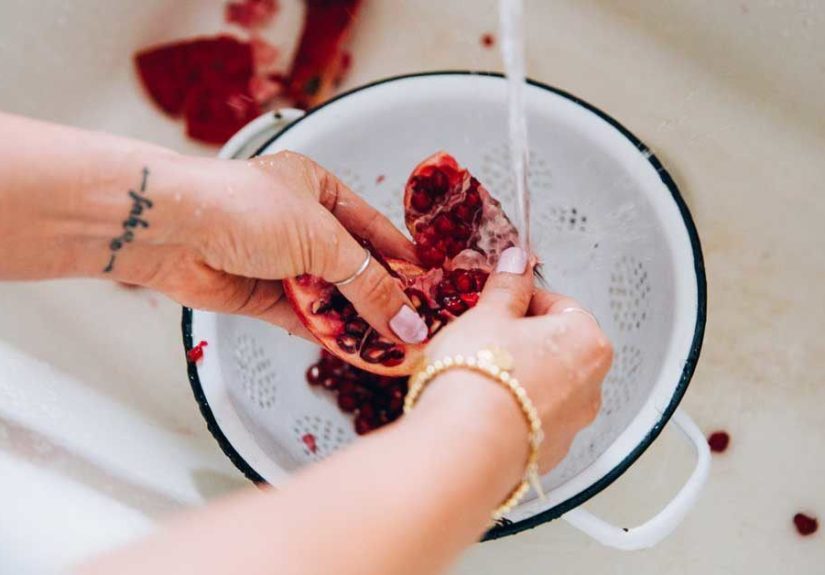
Now use your fingers to loosen the arils from each section. For less mess, do this over a bowl of water. The arils usually sink while bits of the bitter white membrane float, which makes cleanup much easier. Skim off the floating pieces, drain the arils, and you are ready to eat.
Some cooks also use the spoon-tap method, where you hold a half or section cut-side down and tap the back with a wooden spoon until the seeds fall out. It works, but it can feel a little like percussion practice with fruit. Use whichever method fits your personality and your laundry schedule.
How to Eat Pomegranate
Once the arils are out, eating pomegranate is delightfully easy. There is no official ceremony. No tiny fork required. No need to look thoughtful by a window. Just use the fruit in ways that make sense for your taste and routine.
1. Eat the Arils Straight From a Bowl
This is the simplest and often the best method. Chilled arils make a refreshing snack with sweetness, crunch, and a little drama in every bite. They are perfect when you want something fruity but more interesting than another apple.
2. Sprinkle Them Over Yogurt or Oatmeal
Pomegranate seeds on plain Greek yogurt are an easy breakfast upgrade. Add nuts, granola, or honey and suddenly your breakfast looks like it has ambition. They also work beautifully on oatmeal, overnight oats, and chia pudding.
3. Add Them to Salads
Pomegranate and salad are best friends. The arils pair especially well with arugula, spinach, kale, goat cheese, feta, walnuts, pecans, roasted squash, and citrus. They add sweetness, acidity, and crunch all at once, which is basically salad therapy.
4. Use Them on Savory Dishes
Pomegranate can brighten roasted vegetables, grilled chicken, turkey, lamb, rice dishes, couscous, and grain bowls. A handful of arils on top of warm food adds contrast in temperature and texture, which makes the whole plate feel more alive.
5. Stir Them Into Desserts
Pomegranate seeds look spectacular on cakes, pavlovas, panna cotta, ice cream, fruit salads, and dark chocolate desserts. They are decorative without trying too hard, which is a rare and admirable quality.
6. Turn Them Into Juice
If you like the flavor but not the crunch of the seeds, you can blend the arils and strain the mixture to make fresh pomegranate juice. It can be used in dressings, sauces, mocktails, marinades, and glazes. Just remember: pomegranate juice stains like it has a personal vendetta, so protect your clothes and wipe surfaces quickly.
Is Pomegranate Good for You?
Yes, pomegranate is a nutrient-dense fruit. The arils provide fiber along with vitamin C, vitamin K, folate, potassium, and naturally occurring antioxidants. That does not mean it is magic, and it definitely does not mean one bowl of pomegranate seeds will transform you into a wellness influencer by Tuesday. But it is a smart, flavorful fruit to include in a balanced diet.
One reason pomegranate gets so much attention is its antioxidant content. Another is that, unlike some fruit juices, whole arils give you fiber too. That is a good reason to eat the fresh seeds when you can, rather than relying only on sweetened bottled juice products.
How to Store Pomegranate
Whole pomegranates keep surprisingly well. In the refrigerator, they can last for weeks, and often much longer than softer fruits that start giving up emotionally the second you get them home. If you have already removed the arils, store them in an airtight container in the fridge.
For best quality, use fresh arils within several days to about a week, depending on freshness when purchased and how well they are stored. If you know you will not use them quickly, freeze them in a single layer first, then transfer to a freezer-safe container or bag. That way they stay loose instead of becoming one giant ruby iceberg.
Common Mistakes to Avoid
Cutting Too Deep
If you slice straight through the fruit, you will rupture a bunch of arils and create extra juice, extra stains, and extra regret.
Ignoring the White Membrane
The white pith is bitter. Remove as much of it as you can so the fruit tastes bright and clean.
Buying a Lightweight Fruit
Heavier pomegranates tend to be juicier. If one feels suspiciously light, it may be drier inside.
Letting Prepared Arils Sit Too Long
Once opened, the clock starts ticking faster. Store them cold and use them while they still taste fresh and juicy.
Forgetting About the Stains
Pomegranate juice is beautiful in food and extremely committed to fabric. Wear something you do not mind washing and avoid cutting it next to your favorite white shirt unless chaos is part of the menu.
Simple Serving Ideas for Everyday Meals
- Mix pomegranate arils into Greek yogurt with honey and walnuts.
- Top avocado toast with arils, chili flakes, and a squeeze of lemon.
- Add them to a spinach salad with feta and toasted pecans.
- Scatter over roasted Brussels sprouts or sweet potatoes.
- Use them as a garnish for grilled chicken, salmon, or lamb.
- Fold into fruit salad for color and tartness.
- Blend into homemade juice or use the juice in vinaigrettes.
- Spoon them over vanilla ice cream or dark chocolate mousse.
Real-Life Experiences With Pomegranate: What People Usually Learn After the First Few Tries
There is a reason pomegranates inspire equal parts admiration and suspicion. The first time many people buy one, they assume it will behave like an orange or an apple. It does not. It behaves like a beautiful little puzzle with a flair for dramatics. That first attempt often includes one of the following: cutting straight through the middle, splashing juice across the counter, discovering that the white membrane tastes terrible, or staring at the fruit halfway through the job and wondering whether store-bought arils were actually the wiser life choice.
Then comes the turning point. Usually by the second or third pomegranate, people figure out a rhythm. They learn to rinse the fruit first, score the outside instead of slicing deeply, and pull it apart gently over a bowl. That is when the fruit stops feeling difficult and starts feeling oddly satisfying. Removing the arils becomes almost meditative. It is repetitive, neat once you know the trick, and strangely rewarding in the way shelling peas or shucking corn can be. A little kitchen task, a little payoff, a lot of shiny red gems in a bowl.
Another common experience is realizing how versatile pomegranate is after initially thinking of it as a once-a-year holiday garnish. People start by eating the arils plain, then toss them on yogurt. After that, they end up adding them to salads, grain bowls, roasted vegetables, and desserts. Suddenly the fruit that once felt “too fancy” becomes part of normal eating. It is the produce version of discovering that the intimidating neighbor is actually very nice and just owns excellent lamps.
Texture is another surprise. Some people expect the seeds to be hard and unpleasant, but most find the crunch mild and enjoyable, especially when the fruit is ripe and juicy. Kids often like the bright color and the popping bite, while adults appreciate that the fruit feels refreshing without being boring. Of course, not everyone falls in love with the seed texture immediately. For those people, juicing the arils or mixing them into softer foods like yogurt can make the transition easier.
One more thing many home cooks mention: once you learn how to open a pomegranate the right way, your confidence with unfamiliar produce grows. It is not just about one fruit anymore. It is the pleasant reminder that many foods seem hard only until someone shows you the simple version. That is the real charm of pomegranate. It looks complicated, but it is actually approachable, useful, and worth the few extra minutes of prep. And once you place that first bowl of bright, glossy arils on the table, it feels a little less like work and a little more like victory.
Conclusion
Learning how to eat pomegranate is mostly about knowing three things: eat the arils, skip the pith, and open the fruit gently instead of aggressively. Once you do that, the whole process becomes simple. A ripe pomegranate gives you sweet-tart flavor, beautiful color, satisfying crunch, and a lot of ways to upgrade everyday meals.
So yes, pomegranates may look dramatic. They are dramatic. But they are also delicious, versatile, and much easier to handle than their reputation suggests. Once you crack the code, you may find yourself buying them on purpose instead of just admiring them from a safe emotional distance in the produce aisle.