Table of Contents >> Show >> Hide
- What Is a Vertical Asymptote?
- What Is a Rational Function?
- How to Find Vertical Asymptotes of a Rational Function: 6 Steps
- Quick Formula for Finding Vertical Asymptotes
- Example 1: Finding Two Vertical Asymptotes
- Example 2: A Hole and a Vertical Asymptote
- Example 3: No Real Vertical Asymptotes
- Common Mistakes When Finding Vertical Asymptotes
- Why Vertical Asymptotes Matter
- Study Experience: What Actually Helps When Learning Vertical Asymptotes
- Conclusion
Vertical asymptotes sound like the kind of thing a math textbook whispers in a dark hallway, but they are not as scary as they look. In plain English, a vertical asymptote is a vertical line that a graph gets very close to but usually never touches. For rational functions, these lines often appear where the denominator becomes zero and the function basically says, “Nope, I refuse to exist here.”
If you are learning how to find vertical asymptotes of a rational function, the secret is not to stare at the graph until it confesses. The reliable method is algebraic: factor the rational expression, cancel common factors, and solve the remaining denominator. Once you know that routine, vertical asymptotes become much less mysterious and much more like a checklist.
This guide walks through the process in six clear steps, explains the difference between vertical asymptotes and holes, and gives practical examples so you can handle homework, quizzes, and graphing problems without needing to bribe your calculator.
What Is a Vertical Asymptote?
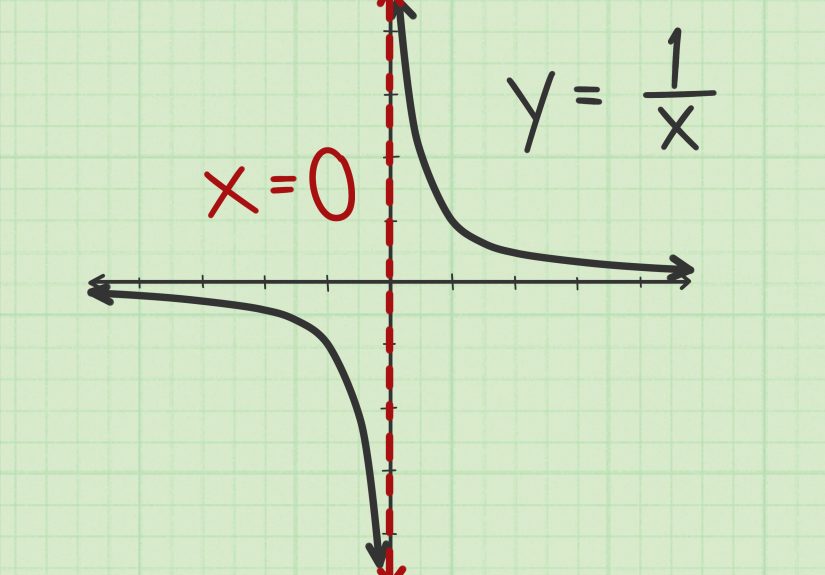
A vertical asymptote is a vertical line, usually written as x = a, that the graph of a function approaches as the input gets close to a certain value. For rational functions, vertical asymptotes usually happen because the denominator gets very close to zero while the numerator does not also cancel out that problem.
For example, look at this rational function:
f(x) = 1 / (x – 2)
The denominator is zero when x = 2. Since division by zero is undefined, the graph cannot pass through x = 2. Instead, the function values shoot upward or downward as x gets closer to 2. That means the vertical asymptote is:
x = 2
Think of a vertical asymptote as an invisible fence on the graph. The curve may run toward it dramatically, like a squirrel with strong opinions, but it does not cross through that forbidden x-value in the usual rational-function setup.
What Is a Rational Function?
A rational function is a function written as a ratio of two polynomials:
f(x) = p(x) / q(x)
Here, p(x) is the numerator and q(x) is the denominator. The denominator cannot equal zero because division by zero is undefined. This is why vertical asymptotes, domain restrictions, and holes all start with the same question: What makes the denominator equal zero?
However, there is a catch. Not every zero of the original denominator becomes a vertical asymptote. Sometimes a factor in the denominator cancels with a matching factor in the numerator. When that happens, the graph may have a hole, also called a removable discontinuity, instead of a vertical asymptote.
How to Find Vertical Asymptotes of a Rational Function: 6 Steps
Step 1: Write the Rational Function Clearly
Start by identifying the numerator and denominator. This may sound obvious, but many mistakes happen because students rush into solving before noticing the structure of the function.
Suppose you are given:
f(x) = (x + 4) / (x2 – 9)
The numerator is:
x + 4
The denominator is:
x2 – 9
Since vertical asymptotes are usually connected to denominator values that become zero, your attention should immediately move to the denominator. The numerator matters too, but first you need to know where the denominator could cause trouble.
Step 2: Factor the Numerator and Denominator
Factoring is the heart of the process. It reveals whether the numerator and denominator have common factors. Without factoring, you might mistake a hole for a vertical asymptote, which is like calling a trapdoor a wall. Both are gaps, but they are not the same thing.
For the function:
f(x) = (x + 4) / (x2 – 9)
Factor the denominator:
x2 – 9 = (x – 3)(x + 3)
So the function becomes:
f(x) = (x + 4) / [(x – 3)(x + 3)]
The numerator does not share a factor with the denominator, so nothing cancels. That means both denominator factors are candidates for vertical asymptotes.
Step 3: Cancel Any Common Factors
This is the step that separates vertical asymptotes from holes. If the same factor appears in both the numerator and denominator, cancel it before deciding where the vertical asymptotes are.
Consider this function:
g(x) = (x2 – 4) / (x2 – x – 6)
Factor both parts:
x2 – 4 = (x – 2)(x + 2)
x2 – x – 6 = (x – 3)(x + 2)
So:
g(x) = [(x – 2)(x + 2)] / [(x – 3)(x + 2)]
The factor (x + 2) appears on top and bottom, so it cancels:
g(x) = (x – 2) / (x – 3), where x ≠ -2
The canceled factor creates a hole at x = -2, not a vertical asymptote. The remaining denominator factor (x – 3) gives a vertical asymptote at x = 3.
This is one of the most important ideas in rational functions: uncanceled denominator factors create vertical asymptotes; canceled denominator factors create holes.
Step 4: Set the Remaining Denominator Equal to Zero
After simplifying the rational function, take the denominator that remains and set it equal to zero. This gives the x-values where vertical asymptotes occur.
Using the earlier example:
f(x) = (x + 4) / [(x – 3)(x + 3)]
Set the denominator equal to zero:
(x – 3)(x + 3) = 0
Now solve each factor:
x – 3 = 0 gives x = 3
x + 3 = 0 gives x = -3
So the vertical asymptotes are:
x = 3 and x = -3
Notice that vertical asymptotes are written as equations of vertical lines, not just numbers. Write x = 3, not simply 3. That small detail matters, especially on tests where your teacher is watching notation like a hawk with a red pen.
Step 5: Check for Holes and Domain Restrictions
Even after you find the vertical asymptotes, you should identify any holes. A hole is a point where the original function is undefined because a factor canceled. The simplified expression may behave normally there, but the original function still does not allow that x-value.
Return to:
g(x) = [(x – 2)(x + 2)] / [(x – 3)(x + 2)]
The factor (x + 2) cancels, so x = -2 is a hole. The remaining denominator (x – 3) gives the vertical asymptote x = 3.
The domain excludes both values:
x ≠ -2 and x ≠ 3
But only x = 3 is a vertical asymptote. This is a common source of confusion. Domain restrictions include every x-value that makes the original denominator zero. Vertical asymptotes include only the values that still make the denominator zero after simplification.
Step 6: Confirm the Behavior on the Graph
Once you find a vertical asymptote algebraically, it is smart to confirm the graph’s behavior. Near a vertical asymptote, the function values usually increase or decrease without bound. In other words, the graph shoots up toward positive infinity or dives down toward negative infinity as x approaches the asymptote.
For example:
f(x) = 1 / (x – 2)
As x gets closer to 2 from the right, the denominator becomes a tiny positive number, so the function becomes a very large positive number. As x gets closer to 2 from the left, the denominator becomes a tiny negative number, so the function becomes a very large negative number. The graph climbs and drops sharply near x = 2, confirming the vertical asymptote.
You do not always need to make a full table of values, but checking the graph can help you avoid mistakes. It also helps you understand why the algebra works instead of just memorizing another math recipe to survive until Friday.
Quick Formula for Finding Vertical Asymptotes
For a rational function:
f(x) = p(x) / q(x)
Use this rule:
Vertical asymptotes occur where the simplified denominator equals zero.
In practical terms:
- Factor the numerator and denominator.
- Cancel common factors.
- Set the remaining denominator equal to zero.
- Solve for x.
- Write the answers as vertical lines, such as x = a.
That is the whole engine. The rest is careful algebra and not letting a sneaky canceled factor trick you.
Example 1: Finding Two Vertical Asymptotes
Find the vertical asymptotes of:
f(x) = (x + 1) / (x2 – 16)
Factor the denominator:
x2 – 16 = (x – 4)(x + 4)
So:
f(x) = (x + 1) / [(x – 4)(x + 4)]
There are no common factors to cancel. Set the denominator equal to zero:
(x – 4)(x + 4) = 0
Solve:
x = 4 or x = -4
The vertical asymptotes are:
x = 4 and x = -4
Example 2: A Hole and a Vertical Asymptote
Find the vertical asymptotes and holes of:
h(x) = (x2 + 5x + 6) / (x2 + x – 6)
Factor the numerator:
x2 + 5x + 6 = (x + 2)(x + 3)
Factor the denominator:
x2 + x – 6 = (x + 3)(x – 2)
Now write the function in factored form:
h(x) = [(x + 2)(x + 3)] / [(x + 3)(x – 2)]
The factor (x + 3) cancels, so x = -3 is a hole. The remaining denominator is (x – 2), so set it equal to zero:
x – 2 = 0
x = 2
The vertical asymptote is:
x = 2
The hole occurs at:
x = -3
Example 3: No Real Vertical Asymptotes
Not every rational function has a real vertical asymptote. Consider:
f(x) = (x – 5) / (x2 + 1)
Set the denominator equal to zero:
x2 + 1 = 0
x2 = -1
There is no real number whose square is -1. Therefore, this function has no real vertical asymptotes. In many algebra and precalculus classes, you would simply say:
No vertical asymptotes
This example is a good reminder that “set the denominator equal to zero” does not automatically guarantee a real answer. Math likes to keep us humble.
Common Mistakes When Finding Vertical Asymptotes
Mistake 1: Forgetting to Factor First
If you do not factor, you may miss common factors. This can cause you to label a hole as a vertical asymptote. Always factor before solving.
Mistake 2: Using the Numerator Instead of the Denominator
The numerator helps you find zeros or x-intercepts, not vertical asymptotes. Vertical asymptotes come from the denominator after simplification.
Mistake 3: Canceling Terms Instead of Factors
You can cancel common factors, not random terms. For example, in (x + 2) / (x + 5), you cannot cancel the x’s. That would be algebraic vandalism, and the graph will press charges.
Mistake 4: Forgetting to Write x =
A vertical asymptote is a line, so write it as x = 4, not just 4. This notation tells the reader you mean the vertical line through x = 4.
Mistake 5: Confusing Holes with Vertical Asymptotes
A canceled factor gives a hole. A factor left in the denominator gives a vertical asymptote. If you remember only one sentence from this article, make it that one.
Why Vertical Asymptotes Matter
Vertical asymptotes are more than lines on a graph. They help describe where a rational function is undefined, how the graph behaves near restricted x-values, and how the function is divided into separate branches. They are especially useful when graphing rational functions because they act like guideposts.
When you know the vertical asymptotes, horizontal asymptotes, intercepts, and holes, you can sketch a rational function much more accurately. Without them, graphing is mostly guesswork with extra pencil smudges.
Study Experience: What Actually Helps When Learning Vertical Asymptotes
One of the best ways to learn how to find vertical asymptotes of a rational function is to stop treating the process as a mystery trick. In practice, the students who improve fastest usually build a routine and follow it every single time. The routine is simple: factor, cancel, solve the remaining denominator, and label holes separately. It is not glamorous, but neither is brushing your teeth, and both prevent disaster.
A helpful experience is to work through examples in pairs. Choose one rational function with no canceled factors and one rational function with a canceled factor. For example, compare (x + 1) / [(x – 2)(x + 4)] with [(x + 1)(x – 2)] / [(x – 2)(x + 4)]. In the first function, both denominator factors stay, so the vertical asymptotes are x = 2 and x = -4. In the second function, (x – 2) cancels, so x = 2 becomes a hole, while x = -4 remains a vertical asymptote. Seeing those two examples side by side makes the difference much easier to remember.
Another useful habit is to write domain restrictions before simplifying. When you look at the original denominator, list every x-value that would make it zero. Then, after canceling common factors, decide which restrictions are holes and which are vertical asymptotes. This prevents a common mistake: canceling a factor and completely forgetting that the original function was still undefined at that value. The canceled factor may disappear from the simplified expression, but it does not disappear from the domain story.
Graphing also helps. Even a rough sketch can make the algebra feel more real. Draw dashed vertical lines for the vertical asymptotes and open circles for holes. The dashed line shows where the graph shoots upward or downward. The open circle shows a missing point where the graph would otherwise continue smoothly. This visual difference is powerful because it turns an abstract rule into something you can actually see.
If you use a graphing calculator or online graphing tool, do not let it do all the thinking for you. Graph the function after you have already predicted the vertical asymptotes and holes. Then use the graph to check your work. Technology is excellent as a mirror, but it is a terrible substitute for understanding. A graphing tool may show a break or a strange gap, but you still need algebra to explain exactly what is happening.
Finally, practice with messy-looking problems. Textbook examples are often polite; test problems sometimes arrive wearing muddy boots. Work with quadratics that need factoring, differences of squares, trinomials, and functions where no real vertical asymptote exists. The more patterns you see, the quicker your brain recognizes them. Eventually, finding vertical asymptotes becomes almost automatic: you spot the denominator, factor it, check for cancellations, and solve what remains. That is the moment when rational functions stop feeling like a haunted house and start feeling like a puzzle with very predictable doors.
Conclusion
Finding vertical asymptotes of a rational function is all about understanding where the denominator creates undefined behavior. The six-step method is straightforward: write the function clearly, factor the numerator and denominator, cancel common factors, set the remaining denominator equal to zero, check for holes, and confirm the graph’s behavior.
The biggest lesson is this: not every denominator zero becomes a vertical asymptote. If a factor cancels, it creates a hole. If it remains in the denominator, it creates a vertical asymptote. Once you master that difference, rational functions become much easier to analyze, graph, and explain.
Note: This article synthesizes standard rational-function methods commonly taught in U.S. algebra, college algebra, precalculus, and calculus learning materials. It is written for educational publishing and does not include unnecessary citation placeholders or source-code references.