Table of Contents >> Show >> Hide
- Why STI Testing Still Matters, Even in a Pandemic
- When You Should Get Tested for STIs During COVID-19
- Your Main STI Testing Options During the Pandemic
- How to Book an STI Test Without Making It More Complicated Than It Needs to Be
- What Happens During STI Testing?
- How to Reduce COVID-19 Exposure While Getting Tested
- What to Do If You Test Positive
- How the Pandemic Changed STI Testing for Good
- What Getting Tested Felt Like During the Pandemic: Real-World Style Experiences
- Final Thoughts
The COVID-19 pandemic changed almost everything, including the usually simple act of booking a sexual health checkup. One minute, people were planning dentist appointments and pretending they flossed regularly. The next, they were learning words like “telehealth,” “curbside,” and “please keep your mask on in the waiting room.” Somewhere in that chaos, STI testing became harder to access for many people, even though the need for testing did not magically disappear.
That is the key point: pandemics do not cancel sexual health. If anything, they make it even more important to stay on top of it. Many sexually transmitted infections do not cause obvious symptoms right away, which means people can feel completely fine and still need testing. Delaying care because clinics were closed, limited, or intimidating during COVID-19 was understandable, but it also created a perfect storm for missed diagnoses, untreated infections, and a whole lot of unnecessary stress.
The good news is that testing never fully disappeared. It just changed shape. During the pandemic, many health systems added telehealth visits, lab-only appointments, drive-up check-ins, mail-in kits, and lower-contact clinic workflows. And even now, those changes still shape how STI testing works in the United States. So whether you are writing about the pandemic era, living through a delayed screening backlog, or simply trying to understand the smartest way to get tested with minimal hassle, here is what you need to know.
Why STI Testing Still Matters, Even in a Pandemic
COVID-19 was loud. STI symptoms, on the other hand, are often sneaky, mild, or totally absent. That mismatch created a real problem. Public attention was fixed on one virus, while other infections kept moving quietly in the background.
Skipping STI testing because you are busy, nervous, or trying to reduce COVID exposure can feel logical in the moment. But untreated infections can lead to larger health issues later, including pelvic inflammatory disease, fertility complications, pregnancy-related risks, and an increased chance of passing an infection to a partner. In plain English: procrastination is not a treatment plan.
Testing matters if you have symptoms, but it also matters when you do not have symptoms. It is especially important if you have a new partner, more than one partner, a partner who tested positive, or a personal routine that includes regular screening. And because a standard physical does not automatically include STI testing, you usually need to ask for it directly. Never assume your doctor read your mind. Doctors are good, but telepathy is still not a billing code.
When You Should Get Tested for STIs During COVID-19
There is no one-size-fits-all rule, but there are some common times when testing is a smart move. You should strongly consider getting tested if:
- you have symptoms such as unusual discharge, burning with urination, sores, rash, pelvic pain, or bleeding that is out of the ordinary;
- a current or recent partner tells you they tested positive for an STI;
- you had sex with a new partner and want a baseline check;
- you have multiple partners and routine screening is part of your health care;
- you are pregnant or planning pregnancy;
- you were treated for an STI and need follow-up or retesting.
Routine testing schedules vary by age, sex, anatomy, pregnancy status, and sexual history. Some people may only need periodic screening, while others benefit from testing every few months. The most useful approach is not guessing based on vibes. It is talking honestly with a clinician about your risk and asking exactly which tests make sense for you.
Your Main STI Testing Options During the Pandemic
During the height of COVID-19, people often assumed the only choices were “go into a clinic and panic” or “do nothing and panic privately.” In reality, a middle ground quickly developed. Here are the major options that became common.
1. Schedule a Telehealth Visit First
Telehealth became one of the biggest pandemic-era shifts in sexual health care. Instead of walking into a clinic first, many patients started with a phone or video visit. That conversation could cover symptoms, exposure history, what tests were needed, whether treatment should start right away, and where samples should be collected.
This option worked especially well for people who wanted medical guidance without spending extra time in a waiting room. A clinician could tell you whether you needed urine testing, bloodwork, or a swab, and then direct you to the safest next step. Sometimes that meant a lab appointment. Sometimes it meant a short in-person visit. Sometimes it meant a mailed kit.
Telehealth also helped people sort out the difference between “I should probably get screened soon” and “I need urgent care today.” That alone saved time, stress, and a lot of awkward Googling at midnight.
2. Use a Lab-Only or Low-Contact Appointment
Many clinics adapted by reducing face-to-face time. Instead of a full traditional visit, some offered express testing, lab-only appointments, curbside check-in, or streamlined nurse visits. These setups were designed to keep patients moving efficiently while lowering COVID exposure risk.
That meant you might complete forms online, wait in your car, answer screening questions before entering, and spend only a few minutes on site. In many cases, the visit focused on specimen collection instead of a long office exam. For people without complex symptoms, this model was a game-changer.
If your local clinic had limited hours during COVID-19, do not assume it was closed forever. Many centers reduced their schedules rather than shutting down completely. A quick phone call or online check often revealed hidden gems like “Tuesday mornings for STI testing only” or “book online for same-day specimen drop-off.”
3. Try At-Home STI Testing or Home Sample Collection
One of the most important pandemic developments was the growth of home-based testing. At the time, many services relied on home sample collection kits that were mailed to a lab. More recently, fully at-home options for certain infections have become more available.
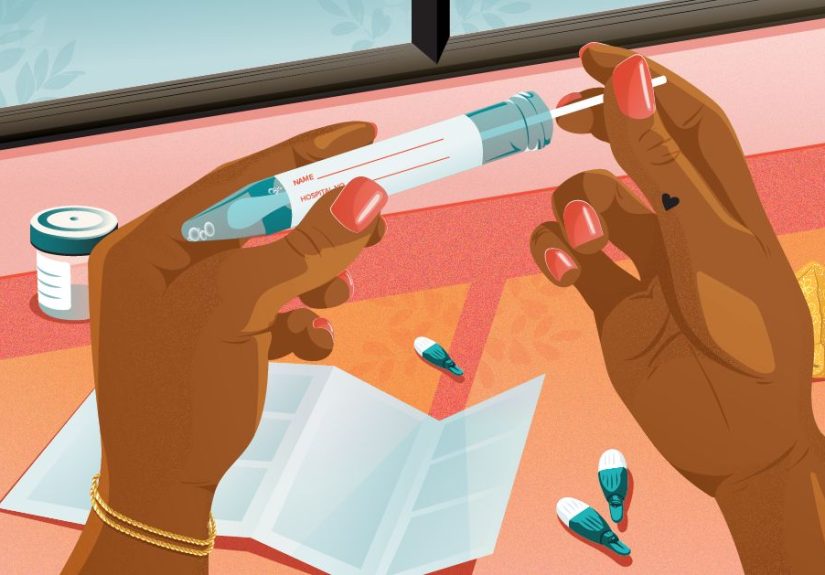
Home-based STI testing can be appealing for obvious reasons: privacy, convenience, and zero waiting room small talk. Depending on the service, you may collect a urine sample, vaginal swab, finger-prick blood sample, or another specimen at home and either mail it in or process part of the test yourself.
That said, not every kit checks for every infection, and not every home option fits every body or situation. Some infections still require follow-up lab work, confirmation testing, or in-person evaluation. So if you choose a home option, read the fine print like your peace of mind depends on it, because it kind of does.
4. Use Community Clinics, Planned Parenthood, or Public Health Resources
Public health departments, community health centers, and Planned Parenthood locations remained essential during the pandemic. Even when operations changed, many centers continued offering STI testing, treatment, counseling, and referrals.
If you are not sure where to go, a testing locator can help you find nearby options, including free or low-cost services. This is especially useful if your regular doctor’s office has long wait times, limited sexual health services, or no clear telehealth pathway for STI care.
Confidentiality is another reason people choose these clinics. If privacy matters to you, ask directly how results are handled, whether appointments are confidential, and what billing looks like before you schedule.
How to Book an STI Test Without Making It More Complicated Than It Needs to Be
- Start by deciding what kind of care you need. Do you want routine screening, or do you have symptoms or an exposure that may need faster attention?
- Call or check online first. During COVID-19, hours changed constantly. Ask whether the clinic offers telehealth, lab-only testing, or home kits.
- Be clear about your concern. Say you want STI testing, whether you have symptoms, and whether you may have been exposed to a specific infection.
- Ask what to expect. Find out whether you will need urine, blood, or swab samples, how long the visit lasts, and when results usually come back.
- Ask about cost. Insurance coverage varies. Many clinics also offer reduced-cost or confidential services.
- Confirm COVID-era logistics. Ask about masking, screening questions, visitor rules, and whether you should wait outside before entering.
That is it. Not glamorous, but effective. Health care is often more manageable when you replace dread with a checklist.
What Happens During STI Testing?
The exact tests depend on your symptoms, anatomy, and sexual history. STI testing is not one giant universal test with a flashing green light at the end. It is usually a combination of the following:
- Urine testing: often used for infections such as chlamydia and gonorrhea.
- Blood tests: commonly used for infections such as HIV and syphilis.
- Swabs: may be taken from the vagina, cervix, throat, rectum, or sores, depending on exposure and symptoms.
One important detail people often miss: the right testing site matters. If exposure may have involved oral or anal sex, throat or rectal testing may be appropriate. A urine test alone does not always tell the whole story. This is one reason a quick pre-test discussion with a clinician can be so useful.
Results may come back quickly or take several days, depending on the infection and the type of test used. If you test positive, many STIs are treatable, and some are curable. Follow-up matters, and in some cases you may need retesting later to make sure the infection is gone or to check for reinfection.
How to Reduce COVID-19 Exposure While Getting Tested
The goal during the pandemic was never “ignore your sexual health until the virus gets bored and leaves.” It was to get care more strategically. Here are some practical ways people reduced risk while still getting tested:
- book the first appointment of the day if possible;
- use telehealth for the decision-making part and go in only for sample collection;
- choose clinics with low-contact or express workflows;
- wear a well-fitting mask if the setting requires or encourages it;
- complete paperwork online ahead of time;
- ask about home collection kits if your situation fits that option.
And remember, COVID-19 is not classified as an STI, but close physical contact during sex can spread respiratory viruses. Knowing your STI status and staying mindful of illness symptoms were both part of safer decision-making during the pandemic era.
What to Do If You Test Positive
First, breathe. A positive STI result is a health issue, not a character review.
Next, contact the clinician or service that ordered the test and follow their instructions. You may need prescription treatment, additional testing, a follow-up visit, or repeat testing after treatment. You may also need to notify current or recent partners so they can be tested and treated too.
This part can feel awkward, but untreated infections do not become less real just because a conversation is uncomfortable. Many clinics and public health services can help with partner notification in a confidential way.
If your symptoms are severe, worsening, or include significant pain, fever, or anything that feels urgent, seek care promptly. Pandemic or not, serious symptoms should not sit on a waitlist because you are trying to be polite to the scheduling system.
How the Pandemic Changed STI Testing for Good
COVID-19 forced sexual health care to get more flexible, and honestly, that was overdue. Patients discovered that not every concern needs a full office visit. Clinicians expanded telehealth. Home specimen collection became more mainstream. Public health systems learned how to combine digital screening, mailed kits, and shorter in-person appointments.
In other words, the pandemic did not invent better access, but it did speed up the adoption of tools that should probably have been offered more widely all along. Today, people in many parts of the country can still benefit from these changes, even though the emergency phase of the pandemic has passed.
What Getting Tested Felt Like During the Pandemic: Real-World Style Experiences
To make this topic more relatable, it helps to picture what the experience was actually like for people navigating STI testing during COVID-19. These are composite-style examples based on common situations many patients faced.
The Person Who Kept Putting It Off
One common experience was simple avoidance. Someone might notice that they were overdue for routine screening, open three browser tabs, see “limited hours,” “telehealth preferred,” and “call before entering,” and immediately decide that future-them would handle it. Future-them, of course, was equally lazy and equally stressed.
Eventually, the anxiety became worse than the appointment. Once they finally booked a telehealth visit, the process turned out to be far less dramatic than expected. The clinician asked a few straightforward questions, ordered the right tests, and directed them to a quick lab visit. The biggest lesson was almost embarrassing: the fear of arranging care was much worse than the care itself.
The New Relationship Check-In
Another common scenario involved people starting a new relationship during or after lockdowns. They wanted to be responsible, but they also were not sure what “responsible” looked like in the middle of a pandemic. Could they just say, “I got a physical last year,” and hope that counted? Not really.
For many couples, getting tested became part health decision, part trust exercise, and part scheduling puzzle. One partner might use a local clinic while the other used a home kit. Then they compared what was actually included in each test and realized STI screening is not a single all-purpose bundle. That experience taught a lot of people to ask smarter questions, such as which infections were tested, what body sites were included, and when the results would be reliable.
The Busy Parent or Essential Worker
For people juggling kids, shift work, or caregiving responsibilities, pandemic-era testing sometimes felt like trying to solve a puzzle while someone screamed in the background. Telehealth helped because it removed transportation time, waiting room time, and the awkward need to sit under fluorescent lights wondering whether the chair had been sanitized approximately enough.
These patients often preferred low-contact appointments because they could get in, give a sample, and leave without turning the visit into a half-day event. In many cases, what made testing possible was not bravery or perfect planning. It was convenience. When care fit real life, people were more likely to actually use it.
The Person Who Chose Privacy Above Everything
Privacy mattered even more during the pandemic, especially for people living with family, roommates, or partners in tight quarters. Some did not want mail arriving at home. Others did not want to explain why they were leaving for a clinic visit during lockdown-style routines. That made confidential clinics and discreet testing services especially valuable.
For these patients, the best experience was usually the one that felt manageable and private. Maybe that meant a mail-in kit sent in plain packaging. Maybe it meant a public health clinic across town. Maybe it meant a video visit followed by an anonymous-feeling lab stop. The point is that access is not just about whether a test exists. It is about whether someone can realistically use it without blowing up their entire day or their sense of privacy.
Across all of these experiences, one pattern kept showing up: people felt better once they had a plan. Not once they had perfect circumstances. Not once the pandemic was fully over. Just once they stopped guessing and took the first practical step.
Final Thoughts
Getting tested for STIs during the COVID-19 pandemic was not always easy, but it was absolutely possible. The smartest approach was to use the tools that fit your situation: telehealth if you needed guidance, a clinic if you had symptoms or needed faster treatment, or home-based testing when privacy and convenience mattered most.
The pandemic taught people an important lesson about sexual health: routine care should be flexible, accessible, and specific to real life. If you need testing, ask for it directly, choose the safest and most practical route available, and follow through. Because peace of mind is great, but peace of mind with lab results is even better.