Table of Contents >> Show >> Hide
- What “Gray-Wash” Actually Means (And Why It Looks So Good)
- Before You Start: Identify Your Beam Situation
- Tools and Materials (Ceiling Edition)
- Choose Your Gray-Wash Method (3 Reliable Options)
- Step-by-Step: How to Gray-Wash Ceiling Beams (The Practical Workflow)
- Application Instructions by Method
- Should You Seal Gray-Washed Beams?
- Troubleshooting: Fixes for the Most Common “Oh No” Moments
- Design Tips: Making Gray-Washed Beams Look Intentional
- FAQ
- Real-World Experiences: What People Learn After Gray-Washing Beams
- Conclusion
Gray-washed ceiling beams are the interior design equivalent of a great denim jacket: they go with everything, they’re timeless,
and they make the rest of the room look like it has its life together. The trick is getting that soft, weathered gray tone
without turning your beams into “sad chalky stripes” or “oops, I painted them and now I’m pretending it was intentional.”
This guide walks you through the most reliable gray-wash methods (paint wash, stain, and wood “accelerators”), how to prep beams
on the ceiling without wrecking your neck, and how to dial the color so it looks like aged woodnot like a science fair project.
Expect clear steps, a few pro-level tricks, and the occasional reminder to take breaks before your shoulders file a complaint.
What “Gray-Wash” Actually Means (And Why It Looks So Good)
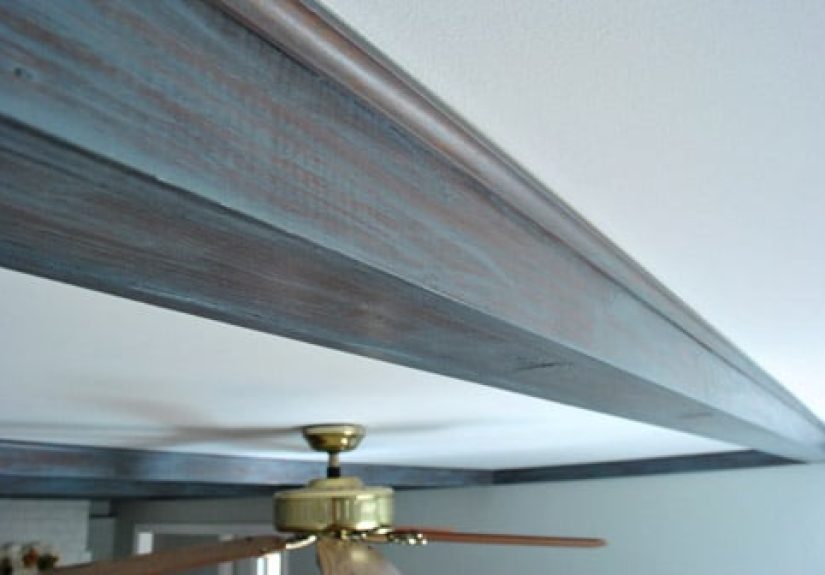
A gray-wash finish is a thin, translucent layer of gray pigment that lets wood grain show through. It’s not fully painted and not
fully stainedit’s the sweet spot in between. Done well, it:
- Reduces orange/red undertones in wood (hello, honey oak and “rustic orange” beams).
- Creates a weathered, coastal, farmhouse, or modern-rustic vibe without going full barn cosplay.
- Makes the ceiling feel taller and lighter compared to dark-stained beams.
- Plays nicely with white ceilings, warm neutrals, black accents, and natural textures.
The main idea: you’re adding just enough gray to cool the wood down while still letting knots, grain, and variation
do the heavy lifting.
Before You Start: Identify Your Beam Situation
1) Are they real wood or faux beams?
Solid wood beams can be stained, washed, sanded, and topcoated normally.
Faux beams (hollow boxes, MDF wraps, polyurethane beams) may need different prep and products. If the beam is MDF or
already factory-finished, you’ll want a bonding primer or a scuff-sand + compatible topcoat. When in doubt, do a small hidden test.
2) Bare wood, sealed wood, or previously painted?
- Bare wood: You can gray-wash directly after sanding/cleaning. Easiest path.
- Sealed (poly, varnish, shellac): You need to degloss/scuff-sand so the wash can grip, or strip to bare wood for best results.
- Painted beams: You can’t “stain” paint. You’re doing a faux finish (paint wash + glazing + dry brushing), not a true stain.
3) What wood species?
Wood species changes everything. Pine can get blotchy. Oak has open grain and loves liming/cerusing effects. Cedar can be dramatic.
And anything with strong warm undertones (pine, fir) often benefits from a cooler “toning” step before the final wash.
Tools and Materials (Ceiling Edition)
Here’s what makes overhead work less miserable:
- Drop cloths and plastic sheeting (gravity is not your friend)
- Painter’s tape (wide) + masking paper/plastic for edges
- Step ladder or small scaffold (scaffold = less neck pain)
- Vacuum with brush attachment or microfiber duster
- Degreaser or mild soap solution (for grime), plus clean water
- Sandpaper (120, 150, 180, 220) + sanding sponge/pole sander
- Tack cloth or microfiber for dust removal
- Foam brushes (2″) and a high-quality angled brush for edges
- Lint-free rags (lots of them)
- Nitrile gloves + eye protection
- Your chosen gray-wash product (method options below)
- Optional: pre-stain wood conditioner (especially for pine/softwoods)
- Optional: clear topcoat (matte water-based poly or acrylic)
Safety note: If you’re a teen or just new to ladders/finishes, ask an adult to helpespecially with working overhead,
ventilation, and any products that have strong fumes. Also: don’t “tough it out.” Take breaks. Your neck is not a rented mule.
Choose Your Gray-Wash Method (3 Reliable Options)
Option A: Paint Wash (The Most Adjustable, Most Forgiving)
A paint wash is diluted paint applied thinly, then wiped or feathered to translucency. It’s ideal when:
- You want a very light, airy gray tone.
- You need to neutralize red/orange undertones.
- You want maximum control over opacity.
Typical mix: Start around 1 part paint to 3–5 parts water for a subtle wash. Adjust as you test.
Option B: Gray Stain (More “Wood Finish,” Less “Paint”)
A water-based or oil-based gray stain penetrates the wood and reads more like a traditional finish. It’s ideal when:
- You want the grain to look natural (not “painted”).
- You’re working with bare wood and want consistency.
- You plan to topcoat for durability.
The big challenge is evennessespecially overhead. Stain can leave lap marks if it dries before you wipe/blend.
Option C: Weathered Wood Accelerator (Fast “Aged Gray” Reaction)
Products marketed as “weathered wood accelerator” react with tannins to create an aged gray look. They can be wonderfully low-effort
for the right beams, but the color depends heavily on wood type and existing tannins. Always test first.
Step-by-Step: How to Gray-Wash Ceiling Beams (The Practical Workflow)
Step 1: Prep the Room Like You Mean It
Cover floors and furniture. Tape off the ceiling line and walls if you’re not painting the ceiling afterward. Move anything precious
out of splash range. Put a drop cloth under every beam run. You may think “I’ll be careful.” The paint/stain will respond:
“That’s adorable.”
Step 2: Clean the Beams (Dust Is a Finish-Wrecker)
Vacuum or dust thoroughly. Then wipe down with a lightly damp cloth and a mild cleaner if needed. Let everything dry fully.
If beams are near a kitchen, they may have invisible greasecleaning matters more than sanding in that case.
Step 3: Sand (Enough for Adhesion, Not Enough to Hate Your Life)
- Bare wood: Sand progressively to about 180–220 grit for a smoother, more even wash.
- Previously sealed beams: Scuff-sand 150–180 grit to dull the sheen so your wash can grip.
- Flaking paint/finish: Remove loose material and feather edges smooth.
After sanding, remove dust thoroughly (vacuum + microfiber). Dust left behind becomes “texture,” and not in a cute artisanal way.
Step 4: Do a Real Test (Not a “I’ll Wing It” Test)
Test in a hidden corner or on a scrap board. Try 2–3 variations:
a lighter mix, your “middle” mix, and a slightly stronger mix. Let it dry. Lighting changes the perceived gray a lotespecially
warm bulbs at night versus daylight.
Step 5 (Recommended for Softwoods): Apply Pre-Stain Conditioner
If your beams are pine, fir, or another softwood, conditioner can reduce blotchiness and help the gray read more even.
Apply per label directions and don’t skip the drying window.
Application Instructions by Method
Method A: Paint Wash (Gray-Wash with Diluted Paint)
- Mix your wash. Start with 1:4 (paint:water) for a translucent gray. Use a flat/matte paint for the most natural look.
- Work in small sections. On ceiling beams, think “one beam face at a time” (bottom face, then one side, then the other side).
- Apply with the grain. Use a foam brush or soft brush and stretch the wash thin.
- Wipe/feather immediately. Use a lint-free cloth to remove excess and control opacity. Wipe more for lighter; wipe less for deeper.
-
Add dimension. For a realistic weathered look, do a second pass with a slightly different gray tone (cooler or warmer),
lightly dry-brushed over knots and edges. - Let dry and reassess. If it needs more, add another thin coat rather than one heavy one.
Pro tip: The best gray-wash usually comes from two thin layers, not one thick one.
Method B: Gray Stain (Water-Based or Oil-Based)
- Stir well. Don’t shakeshaking can introduce bubbles that show up as weird specks.
-
Apply a wet coat. Use a brush or staining pad, then wipe off evenly with the grain.
Overhead, keep a clean rag in your non-dominant hand and follow right behind the brush. - Keep a wet edge. Lap marks happen when one area dries before you wipe/blend the next. Work quickly in manageable sections.
- Blend immediately. If you see a line forming, re-wet the whole section and wipe again to even it out.
- Let dry fully. If you want deeper color, add another coat after the first is drythin layers win.
Method C: Weathered Wood Accelerator (Aged Gray Reaction)
- Start with bare wood. Remove existing finishes and sand as directed by the product label.
- Test first. Different woods react differently, so your “perfect gray” might become “surprise driftwood.”
- Apply evenly. Use a synthetic brush or foam brush for a consistent coat.
- Let it sit. Many products develop over 30–60 minutes (or per label), and wiping may be optional depending on the look you want.
- Topcoat carefully. Some topcoats can continue reacting and alter the final colortest your full system in a hidden area.
Should You Seal Gray-Washed Beams?
If the beams are purely decorative and out of reach, you can sometimes skip a topcoat. But sealing is smart when:
- Dust collects heavily (open-plan living rooms, ceiling fans, etc.).
- You want easier cleaning (a damp cloth without lifting pigment).
- You used a paint wash and want extra durability.
A matte water-based clear coat preserves the “dry, weathered” look better than glossy finishes.
Apply thin coats with light sanding between topcoats only (not between stain layers).
Troubleshooting: Fixes for the Most Common “Oh No” Moments
Problem: The beams look too gray (or too “painted”)
- Wipe harder while the wash is still wet to reduce opacity.
- Lightly sand after drying to soften heavy areas, then re-wash thinly.
- Add a warmer second glaze/wash to bring back a touch of natural wood tone.
Problem: Blotchiness (especially on pine)
- Use pre-stain conditioner next time (or on remaining beams).
- Try a paint wash instead of stain for more control.
- Apply a second very thin layer to even out tone rather than trying to “spot fix” aggressively.
Problem: Lap marks / streaks
- Work smaller sections.
- Keep your wiping rag ready and blend edges immediately.
- If a line forms, re-wet the whole section and wipe again to unify it.
Problem: Drips everywhere
- Use less product on the brush and stretch it farther.
- Switch to a drier “dry-brush” technique for the second pass.
- Protect floors like you’re painting above a bowl of white carpet soup.
Design Tips: Making Gray-Washed Beams Look Intentional
- Match undertones: Cool gray beams love crisp whites and black accents. Warmer grays pair beautifully with creamy whites and brass.
- Ceiling color matters: A bright white ceiling makes gray-washed beams pop. A warm off-white ceiling makes them feel softer.
- Repeat the tone: Tie beams to the room with a small echogray in a rug pattern, stone fireplace, textiles, or art frames.
- Keep the sheen low: High-gloss beams look less like “weathered wood” and more like “giant lacquered hot dogs.” Matte wins.
FAQ
Can I gray-wash beams without sanding?
If beams are bare and clean, you can often get away with minimal sanding. But if there’s any sheen (poly, varnish, wax, old grime),
sanding/scuffing dramatically improves adhesion and consistency.
Can I gray-wash painted beams?
You can’t stain paint, but you can faux-finish painted beams using layered paint washes, glazes, and dry brushing.
Start with a scuff-sand, then build thin translucent layers so the “wood-like” variation appears.
How long does it take?
For a standard room with several beams, plan for:
prep day (protect + clean + sand), finish day (apply + refine), and optional topcoat day. Dry times vary by product and humidity,
so follow labels and don’t rush.
Real-World Experiences: What People Learn After Gray-Washing Beams
If you’ve never finished anything on a ceiling before, here’s the honest truth: the technique is usually simple… and the ergonomics
are the plot twist. DIYers often go into a beam project thinking, “It’s just paint (or stain). I’ve done walls.” And then the ceiling
beams respond with, “Cool. Now do it with your arms overhead while balancing on a ladder and trying not to drip on your face.”
One common first attempt is the overly watery wash. It sounds logicalmore water should mean more translucencyuntil the mixture runs
down the beam edge and gravity makes a persuasive argument for thicker drop cloths. The practical upgrade most people land on is
dry-brushing or using a slightly thicker wash, then feathering with a rag. That “less liquid, more control” shift is
often what turns a streaky beam into a convincingly weathered one.
Another recurring lesson: tests save relationships. Gray can read blue, green, or muddy depending on lighting, ceiling color,
and the wood’s natural undertone. A swatch that looks perfect at 2 p.m. can look like “storm cloud” at 9 p.m. under warm bulbs.
The people who love their final result almost always did a hidden test patch (or three), let it dry, then decided. The people who skip
testing often discover they’ve accidentally invented a new color called “Regret With a Hint of Charcoal.”
There’s also a surprisingly emotional moment when you realize gray-washed beams aren’t supposed to look perfectly uniform. The charm comes
from the knots catching pigment differently, the grain peeking through, and the slight variation from one face of the beam to the next.
Many DIYers start out chasing a flawless, even “coat,” then end up happiest when they lean into a more natural, layered finishthin wash,
wipe back, then a second whisper-light pass to add depth.
Finally, the “future you” tip: sealing is less about shine and more about sanity. Unsealed paint-wash finishes can feel slightly dusty
or grabby when you wipe them. A matte clear coat (applied gently) can make cleaning easier later without killing the soft, weathered look.
The best experiences tend to be the projects where the finish system is planned from the start: prep, test, thin layers, and a topcoat
chosen specifically to keep the gray tone true.
Bottom line: gray-washing beams is absolutely DIY-friendlybut it rewards patience, testing, and taking breaks. Your ceiling will look
like it belongs in a magazine. Your neck will request a thank-you card.
Conclusion
Gray-washing wood ceiling beams is one of the fastest ways to modernize a room without erasing character. The winning formula is consistent:
prep well, test in real lighting, apply thin layers, and control opacity with wiping or dry-brushing. Whether you choose a paint wash for
maximum adjustability, a gray stain for a natural wood finish, or an accelerator for quick “aged gray” character, the best results come
from slow-and-steady layeringnot one heavy coat.