Table of Contents >> Show >> Hide
- What Kind of Jasmine Grows Best Indoors?
- Why Jasmine Makes a Great Houseplant
- The Best Light for Indoor Jasmine
- Temperature and Humidity: The Secret Sauce for Blooming
- How to Water Jasmine Indoors
- The Best Soil and Pot for Jasmine
- How and When to Fertilize Indoor Jasmine
- Support, Training, and Pruning
- How to Get Jasmine to Bloom Indoors
- Common Indoor Jasmine Problems and Fixes
- Can Jasmine Be Safe Around Pets?
- How to Repot and Propagate Jasmine
- Indoor Jasmine Care by Season
- Real-World Experiences With Growing Jasmine Indoors
- Conclusion
Growing jasmine indoors is one of those gardening moves that feels suspiciously glamorous. You buy one plant, set it near a bright window, and suddenly your home smells like a fancy boutique hotel with better snacks. But jasmine is not just a pretty face with a big perfume budget. It can be a rewarding indoor plant when you understand what it wants: light, support, steady moisture, decent humidity, and a little seasonal strategy.
If you have tried growing jasmine indoors before and ended up with a leafy vine that refused to bloom, do not worry. Jasmine is not being dramatic just for fun. In most cases, it is reacting to light, temperature, pruning time, or overly wet soil. Once those basics are dialed in, this fragrant climber becomes much easier to manage.
This guide breaks down everything you need to know about indoor jasmine care, from choosing the best variety to watering, pruning, feeding, repotting, troubleshooting, and getting more blooms. Whether you are new to houseplants or already own a windowsill jungle that has started demanding rent, this article will help you grow jasmine indoors with confidence.
What Kind of Jasmine Grows Best Indoors?
Before you do anything else, make sure you are actually buying a true jasmine. The name “jasmine” gets thrown around like confetti in the garden world. True jasmines belong to the Jasminum genus. These are the plants most gardeners mean when they talk about indoor jasmine.
Best jasmine varieties for indoor growing
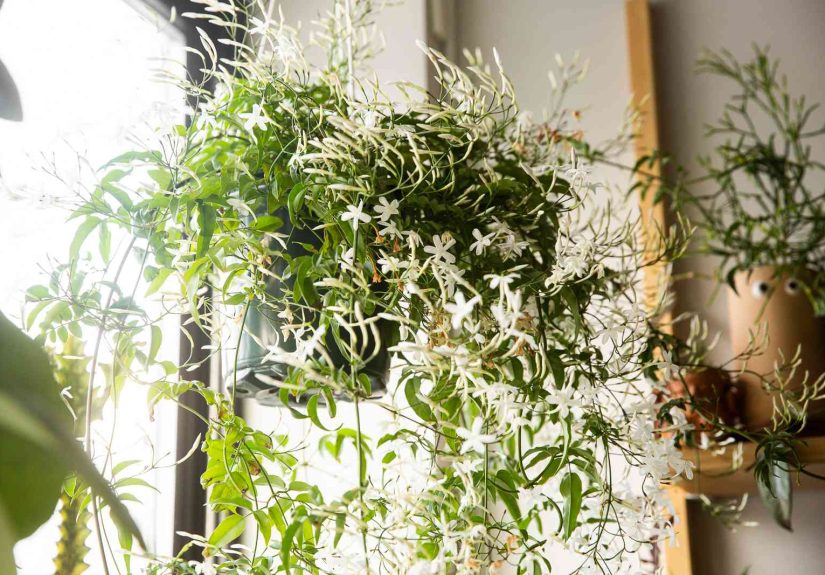
Pink jasmine (Jasminum polyanthum) is the classic indoor favorite. It is famous for pink buds that open into white, starry flowers with a rich fragrance. It grows as a twining vine and looks excellent on a hoop, trellis, or small obelisk.
Arabian jasmine (Jasminum sambac) is another strong candidate, especially if you want intensely fragrant blooms and glossy foliage. This one can be a little shrubbier and can still perform well indoors with bright light.
Common jasmine (Jasminum officinale) is also beautiful, though it is often more vigorous and may need a bit more room and regular shaping.
One important note: star jasmine is lovely and fragrant, but it is not a true jasmine. It belongs to a different genus altogether. Some gardeners grow it in containers and even indoors in bright conditions, but if your goal is classic indoor jasmine care, start with a true Jasminum species.
Why Jasmine Makes a Great Houseplant
Indoor jasmine earns its popularity honestly. First, the fragrance is incredible. It is sweet without being syrupy, noticeable without punching you in the face. Second, it gives you flowers indoors, which is always a win when the weather outside is gloomy and your patio furniture looks emotionally unavailable.
Jasmine also brings a soft, romantic look to indoor spaces. The vines can be trained around rings, hoops, or narrow trellises, making the plant feel elegant rather than messy. And because many jasmine types bloom during cooler months or late winter, they offer something many houseplants do not: seasonal perfume right when your home needs it most.
The Best Light for Indoor Jasmine
If jasmine had a dating profile, “loves bright light” would be in the first sentence. Light is the difference between a blooming plant and a green vine that just stares at you blankly.
Place jasmine in your brightest indoor spot. A south-facing or west-facing window is often best, though an east-facing window can work nicely too. The goal is strong light for several hours a day. In darker rooms, a grow light can make a major difference.
Here is the practical version: if the room feels dim to you, it probably feels dim to jasmine too. This is not a plant for a shadowy shelf in a hallway. Jasmine wants to see the sun, or at least be introduced to it regularly.
Signs your jasmine needs more light
Watch for these clues:
Long, thin growth with wide gaps between leaves. Weak stems that flop or stretch toward the window. Fewer flower buds than expected. A plant that stays green but never gets around to blooming.
Rotate the pot every week or two so the plant grows evenly instead of leaning dramatically like it is posing for a perfume ad.
Temperature and Humidity: The Secret Sauce for Blooming
Jasmine likes bright days, but it usually performs best when nights are cooler. This is especially important for types grown for winter or early spring bloom. If your plant spends all year in a hot, dry room, it may grow leaves happily but hold back on flower buds.
A comfortable daytime room temperature works well during active growth. At night, slightly cooler conditions are helpful. In many homes, a bright room that stays a little cooler than the rest of the house is ideal. Avoid placing jasmine right next to heating vents, radiators, or blasts of dry air from HVAC units.
Humidity matters too. Jasmine is not the thirstiest diva in the houseplant world, but it does appreciate more moisture in the air than many heated homes naturally provide. If leaf edges look crispy or buds drop before opening, dry air may be part of the problem.
Ways to increase humidity
Use a humidifier nearby. Set the pot on a pebble tray with water below the pot line, not touching the roots. Group it with other plants. Keep it away from hot drafts that dry the foliage out.
Misting can feel productive, but it is not a magic fix. Steadier humidity methods usually work better.
How to Water Jasmine Indoors
This is where many indoor gardeners accidentally turn jasmine into a soap opera. Too dry, and the buds shrivel. Too wet, and the roots sulk, rot, or invite fungus gnats to move in like uninvited cousins.
The sweet spot is even moisture with good drainage. Water when the top layer of the potting mix starts to feel dry. Then water thoroughly until excess drains from the bottom. Never let the pot sit in standing water for long.
Jasmine does not want to be bone dry for days, but it also does not want swamp conditions. Think “moist but airy,” not “marshland.”
Common watering mistakes
Overwatering: Yellow leaves, limp stems, sour-smelling soil, or fungus gnats can all point to too much water.
Underwatering: Dry, crunchy leaves, bud drop, and a sad, lightweight pot often mean the plant got too thirsty.
Poor drainage: Decorative cachepots are beautiful, but if water pools at the bottom and roots stay wet, your jasmine will protest.
The Best Soil and Pot for Jasmine
Use a well-draining potting mix. Jasmine likes moisture, but the roots still need air. A standard indoor potting mix improved with a bit of perlite or coarse material usually works well. The soil should hold some moisture without staying soggy.
A pot with drainage holes is non-negotiable. Jasmine is many things, but it is not a bathtub plant.
As for pot size, do not jump straight into an enormous container. A slightly snug pot is usually better than one with too much extra soil, which can stay wet for too long. When it is time to repot, move up just one size.
How and When to Fertilize Indoor Jasmine
Jasmine benefits from feeding during the active growing season, especially in spring and summer when it is pushing out vines, leaves, and eventually buds. A balanced liquid houseplant fertilizer used at a diluted rate works well for many growers.
Feed about once a month during active growth, or follow your product label at a reduced strength. Stop or greatly reduce fertilizer in winter if the plant is resting or blooming lightly under lower-light conditions.
Do not fertilize dry soil. Water first if the mix is very dry, then feed later. Otherwise, you risk stressing the roots.
Support, Training, and Pruning
Most indoor jasmine grows like it has somewhere important to be. Vining stems can get long fast, so giving the plant support helps keep it neat and attractive.
Best supports for indoor jasmine
Try a wire hoop, small trellis, bamboo teepee, or decorative obelisk. Gently tie stems as they grow, or weave them through the support. This keeps the plant compact and shows off the flowers better.
When to prune jasmine indoors
Prune after flowering. This timing matters because many jasmines bloom on older growth. If you hack the plant back at the wrong moment, you may remove next season’s buds and then spend months wondering why the plant is being petty.
After blooming, shorten long stems, remove tangled growth, and pinch tips to encourage branching. Regular light shaping keeps the plant fuller and less wild.
How to Get Jasmine to Bloom Indoors
This is the question everyone asks, and honestly, fair enough. Leaves are nice. Flowers are the headline.
To encourage blooming, focus on these five things:
1. Give it enough light
No strong light, no flower party. Simple as that.
2. Keep nights cooler
Many jasmine types set buds better when nights are cooler than daytime temperatures. A bright but cool room can be ideal.
3. Avoid overfeeding with nitrogen
Too much fertilizer can produce lush foliage and fewer flowers. In other words, your plant becomes all jacket and no tie.
4. Prune at the right time
Prune after blooming, not randomly whenever the scissors look exciting.
5. Respect the plant’s seasonal rhythm
Some jasmines need a rest period or changing conditions between seasons to bloom well. If the plant slows down in cooler months, that is not necessarily a problem. It may be preparing for the next floral performance.
Common Indoor Jasmine Problems and Fixes
Yellow leaves
This often points to overwatering, poor drainage, or inconsistent care. Check the roots and soil moisture before assuming it needs more fertilizer.
Bud drop
Sudden changes in temperature, dry air, too little light, or erratic watering can all cause buds to fall off before opening.
No flowers
Usually caused by inadequate light, lack of cool nights, mistimed pruning, or too much nitrogen.
Pests
Indoor jasmine can attract aphids, mealybugs, whiteflies, scale, or spider mites. Check leaf undersides, stems, and new growth regularly. If you catch problems early, wipe pests away or treat with insecticidal soap or horticultural oil labeled for indoor plants.
Spider mites especially love hot, dry indoor air, so good humidity and regular inspections help. Sticky leaves may signal honeydew from sap-sucking insects like scale or mealybugs.
Can Jasmine Be Safe Around Pets?
True jasmine, meaning plants in the Jasminum genus, is generally considered non-toxic to dogs, cats, and horses. Still, plant labels can be messy, and common names are famous for causing confusion. If pet safety matters in your home, always verify the botanical name rather than trusting the word “jasmine” on a tag.
How to Repot and Propagate Jasmine
Repot jasmine after flowering if the roots are crowding the container or circling the pot heavily. Move it into a container just one size larger, refresh the potting mix, and trim weak or tangled growth as needed.
If you want more plants, jasmine can often be propagated from stem cuttings. Take a healthy cutting with a few nodes, remove lower leaves, and place it in a suitable rooting medium. Keep it warm, bright, and lightly moist while roots develop.
Propagation is a nice way to turn one plant into several. It is also how otherwise reasonable people end up saying, “I only meant to keep one jasmine,” while six cuttings occupy the windowsill.
Indoor Jasmine Care by Season
Spring
Expect new growth and, depending on the variety, flowers. Prune after bloom. Start feeding again. Repot if needed.
Summer
Provide bright light, regular water, and light feeding. If your climate allows, some gardeners move jasmine outdoors for the season, but transition it gradually to avoid shock.
Fall
Ease up on fertilizer. Watch nighttime temperatures. For varieties that benefit from cooler conditions, fall is often when bud formation starts to build.
Winter
Keep the plant in bright light and away from heat blasts. Water less often than in active summer growth, but do not let the root ball dry out completely.
Real-World Experiences With Growing Jasmine Indoors
One of the most common experiences indoor gardeners report is how fast jasmine teaches patience. At first, the plant seems easy: glossy foliage, quick growth, maybe a few buds, and that promise of fragrance that makes you feel like you clearly have your life together. Then the first challenge arrives. The plant drops a few leaves after coming home. Or the buds stall. Or the vine suddenly throws itself sideways toward the nearest window like it is trying to escape and find better lighting on its own.
That experience is normal. Jasmine often needs a little time to adjust to indoor conditions. A plant moved from a greenhouse into a heated home is dealing with less humidity, different light, and a new watering rhythm. Many growers panic at this stage and start changing everything at once: more water, less water, a bigger pot, extra fertilizer, a new room, a pep talk, and perhaps a minor household committee meeting. Usually, the better move is to stabilize the basics and wait.
Another very relatable experience is discovering that jasmine blooms best in the spot you almost did not use. Maybe it is the brightest guest room, a cool enclosed porch, or a window in the laundry room that somehow gets stellar light all afternoon. Jasmine is famous for rewarding the right location more than constant fussing. Once gardeners find that sweet spot, the plant often becomes dramatically easier.
Many people also learn that indoor jasmine looks better when it is trained early. Left on its own, it can become a tangle of eager stems with big “I will organize myself later” energy. But wrap young shoots around a hoop or tie them gently to a small trellis, and the whole plant starts to look intentional and elegant. This is one of those small tasks that pays off for months.
Perhaps the best part of the indoor jasmine experience is the first strong bloom cycle. The flowers open, the fragrance builds, and suddenly the entire room feels different. It is not subtle. Guests notice it. You notice it. Even people who claim not to care about houseplants suddenly ask, “What is that smell?” in a tone usually reserved for fresh pie.
Over time, experienced growers tend to say the same thing: jasmine is not hard so much as specific. It does not need endless pampering, but it does need the right combination of light, moisture, air, and timing. Once you understand that, the plant becomes less mysterious and more cooperative. And when it blooms indoors in the middle of an otherwise dull season, it feels less like a simple houseplant success and more like a tiny domestic miracle with excellent perfume.
Conclusion
If you want a fragrant, flowering houseplant with real personality, jasmine is a strong contender. The keys to success are simple but important: choose a true indoor-friendly jasmine variety, give it bright light, keep the soil evenly moist but never soggy, provide some humidity, and do not forget that cooler nights can help trigger better blooming. Add a support, prune after flowering, and keep an eye out for pests, and you will be well on your way.
In short, jasmine indoors is absolutely doable. It is not a magic plant, and it is not impossible either. Give it the conditions it wants, and it will return the favor with graceful vines, glossy leaves, and flowers that make your whole home smell like spring decided to move in permanently.