Table of Contents >> Show >> Hide
- What “London Broil” Means (And Why Top Round Works)
- Pick the Right Top Round: A 60-Second Shopping Checklist
- The Tenderness Game Plan: Three Levers That Actually Work
- A Go-To No-Alcohol Marinade for Top Round London Broil
- Step-by-Step Prep (Do This and You’re Already Winning)
- How to Cook Top Round London Broil: Choose Your Method
- Doneness and Food Safety: The Thermometer Truth
- Resting and Slicing: Where London Broil Is Won or Lost
- Make a Quick Pan Sauce (Without Food Safety Drama)
- Serving Ideas That Make Top Round Feel Fancy
- Common Mistakes (And How to Avoid Them)
- Conclusion
- Real-World Experiences and “Wish I’d Known” Tips (Extra Notes)
“London broil” sounds like something you order in a tiny pub while wearing a trench coat and debating the weather.
In most American kitchens, though, it’s a wonderfully practical idea: take a bigger, leaner, budget-friendly cut
(often top round steak), add flavor, cook it hot and fast (broil or grill), then slice it thin against the grain
so it eats like you planned it that way all along.
Top round is lean and comes from a hard-working muscle, which is a polite way of saying it can chew back if you treat it like ribeye.
The good news: with the right prep and a thermometer, you can get a juicy, steakhouse-style dinnerwithout steakhouse-style prices.
This guide walks you through choosing the meat, tenderizing strategies, cooking methods, slicing like a pro, and fixing the most common
London-broil heartbreaks.
What “London Broil” Means (And Why Top Round Works)
London broil is less a specific cut and more a method: marinate or season a lean steak, cook it quickly under high heat (broiler or grill),
rest it, then slice thinly across the muscle fibers. Stores sometimes label different cuts as “London broil,” but top round is a classic choice
because it’s large, fairly uniform, and benefits a lot from smart slicing and doneness control.
Pick the Right Top Round: A 60-Second Shopping Checklist
Look for thickness and even shape
A top round steak around 1 to 1½ inches thick is ideal for broiling or grilling. Too thin and it can overcook before it browns;
too thick and the outside can scorch while the center lags behind.
Color and trimming
Choose meat with a fresh, deep red color and avoid packages with lots of purge (the liquid in the tray). A little exterior fat is fine, but top round
is naturally leanso your tenderness strategy matters more than fat content.
The Tenderness Game Plan: Three Levers That Actually Work
If top round had a motto, it would be: “I’m not difficult, I’m just misunderstood.” Tenderness comes from a few dependable moves:
1) Salt (Dry Brine) for juiciness
Salt isn’t just “flavor glitter.” Given a bit of time, it helps the meat hold onto moisture during cooking. If you can plan ahead,
salting the steak and resting it uncovered in the fridge for several hours (or overnight) can noticeably improve texture.
2) A balanced marinade for flavor (and a little softening)
Marinades don’t magically tenderize a thick steak all the way through, but they do add flavor and can help the surface texture.
The trick is to keep acids (like lemon juice or vinegar) moderate. Too much acid for too long can turn the outside
strangely soft, while the inside stays tough. Aim for balance: oil + salt + aromatics + a little acid.
3) Optional: A pinch of baking soda for a tender bite and better browning
Some modern recipes add a small amount of baking soda to a marinade. The idea: it can change surface pH and help limit protein bonding
so the meat stays juicier, plus it can encourage browning. It’s not mandatorybut it can be helpful with lean, tougher cuts when used lightly.
A Go-To No-Alcohol Marinade for Top Round London Broil
This is a flexible, weeknight-friendly marinade that plays well with the broiler, the grill, or a cast-iron skillet. It’s savory, not overly acidic,
and doesn’t rely on wine or beer (because great steak doesn’t need “grown-up grape juice” to taste good).
Marinade ingredients (for ~2 pounds top round)
- ¾ cup reduced-sodium beef broth
- 2 tablespoons fresh lemon juice
- 2 tablespoons olive oil
- 1 tablespoon soy sauce
- 1 tablespoon Worcestershire sauce
- 1 teaspoon kosher salt
- ½ teaspoon black pepper
- 2–3 cloves garlic, minced (optional but strongly encouraged)
- 1 teaspoon Dijon mustard or a pinch of smoked paprika (optional “bonus flavor”)
- Optional tenderizing boost: ¼ teaspoon baking soda (use lightly)
How long to marinate?
For top round, 4 to 12 hours is a sweet spot. If you’re short on time, even 2 hours helps with flavor.
If your marinade is more acidic than this one, keep it closer to the short end.
Step-by-Step Prep (Do This and You’re Already Winning)
- Trim and inspect the grain. Look at the steak and notice the direction of the muscle fibers (“the grain”). You’ll slice against this later.
- (Optional) Lightly score or prick. A few shallow scores or quick fork pricks can help the marinade contact the surface more evenly. Don’t turn it into a pincushion.
- Marinate in the fridge. Put steak and marinade in a zip-top bag or nonreactive container. Refrigerate.
- Bring toward room temp before cooking. Take the steak out about 20–30 minutes before cooking so it heats more evenly.
- Pat dry. This is huge. Wet steak steams; dry steak browns. Remove from marinade and pat very dry with paper towels.
How to Cook Top Round London Broil: Choose Your Method
Method 1: Classic Oven Broiler (Fast, Charred, and Very “London Broil”)
Broiling is basically upside-down grilling: intense direct heat from above. It’s quick, flavorful, and great when you want grill vibes
without stepping outside.
- Position the rack. Set your oven rack about 4–5 inches from the broiler element.
- Preheat the broiler. Let it heat for about 5 minutes so it’s properly fierce.
- Use the right pan. Choose a metal broiler pan, cast iron, or a foil-lined sheet pan with a rack. Avoid glass and most nonstick pans under the broiler.
- Broil. Place steak on the pan/rack. Broil on high:
- 5–7 minutes on the first side (for ~1 to 1½ inches thick)
- Flip, then broil 4–7 minutes more
Timing varies by oven and thickness, so treat time as a guideline and temperature as the truth.
- Check internal temperature. Insert an instant-read thermometer into the thickest part:
- 125–130°F for medium-rare
- 130–135°F for medium
Remember: it will rise a few degrees while resting.
- Rest 10 minutes. Tent loosely with foil. Don’t slice early unless you enjoy watching delicious juices run away.
Method 2: Grill (Best for Big Flavor and Pretty Grill Marks)
- Preheat the grill. Aim for high heat on at least one zone.
- Dry the steak well. Again: dry meat = better browning.
- Grill hot and quick. Start over direct heat for browning, about 4–7 minutes per side depending on thickness.
- Use the thermometer. Pull at 125–130°F for medium-rare tenderness, then rest.
- Rest and slice thinly against the grain.
Method 3: Cast-Iron Sear + Oven Finish (Great Control, Great Crust)
If your broiler runs “volcano hot” or you want more control, sear in cast iron, then finish in the oven.
- Preheat oven to 425°F.
- Heat cast iron until very hot. Add a thin film of oil.
- Sear. Sear the steak about 3–5 minutes per side until browned.
- Finish in the oven. Transfer the skillet to the oven for 3–8 minutes, then check temperature.
- Rest 10 minutes.
Method 4: Reverse Sear (When You Want “Even Pink” Edge-to-Edge)
Reverse sear is a slower start (low oven heat) followed by a quick sear. It’s excellent for even doneness and less overcooked “gray band.”
If your top round is on the thicker side, this method can be a lifesaver.
- Oven at 250°F. Place steak on a rack over a sheet pan.
- Slow-roast. Roast until it reaches 115–120°F internally.
- Sear fast. Sear in a ripping-hot skillet for 60–90 seconds per side.
- Rest, then slice.
Doneness and Food Safety: The Thermometer Truth
For the most tender top round London broil, many cooks aim for medium-rare to medium. Past that, this lean cut can get noticeably tougher.
A thermometer keeps you from guessingand guessing is how steak becomes jerky with better PR.
Common doneness targets (pull temps)
- Rare: 115–120°F (very red center)
- Medium-rare: 125–130°F (warm red center)
- Medium: 130–135°F (pink center)
Important safety note: U.S. food-safety guidance commonly recommends cooking whole cuts like beef steaks and roasts to
145°F and then resting at least 3 minutes. If you choose a lower doneness for texture, use best practices
(fresh meat, proper refrigeration, clean tools, and a reliable thermometer), and decide what’s appropriate for your situation.
Resting and Slicing: Where London Broil Is Won or Lost
You can marinate perfectly and nail the temperature… then ruin it with one enthusiastic “steak plank” slice in the wrong direction.
London broil depends on slicing technique.
How to slice against the grain (the easy way)
- Find the lines. Look for long muscle fibers running in one direction across the steak.
- Cut across them. Position your knife so each slice crosses those lines (perpendicular).
- Slice thin. Aim for ⅛–¼ inch slices. Thinner slices feel more tender.
- Slice on a slight bias. Angling the knife (around 30–45 degrees) increases surface area and improves the bite.
If the grain changes direction mid-steak (it happens), cut the steak in half where the grain shifts, then slice each section correctly.
Make a Quick Pan Sauce (Without Food Safety Drama)
Want that steakhouse vibe? You can turn flavor drippings into saucejust keep it safe. If you want to use leftover marinade as a sauce,
it must be brought to a full rolling boil (not a polite simmer) before serving. A simpler route is to make a quick sauce from pan drippings:
Fast optional sauce idea
- After cooking, deglaze the hot pan with a splash of beef broth.
- Scrape up browned bits, simmer 1–2 minutes.
- Whisk in a small pat of butter and a squeeze of lemon.
- Season to taste and drizzle over sliced steak.
Serving Ideas That Make Top Round Feel Fancy
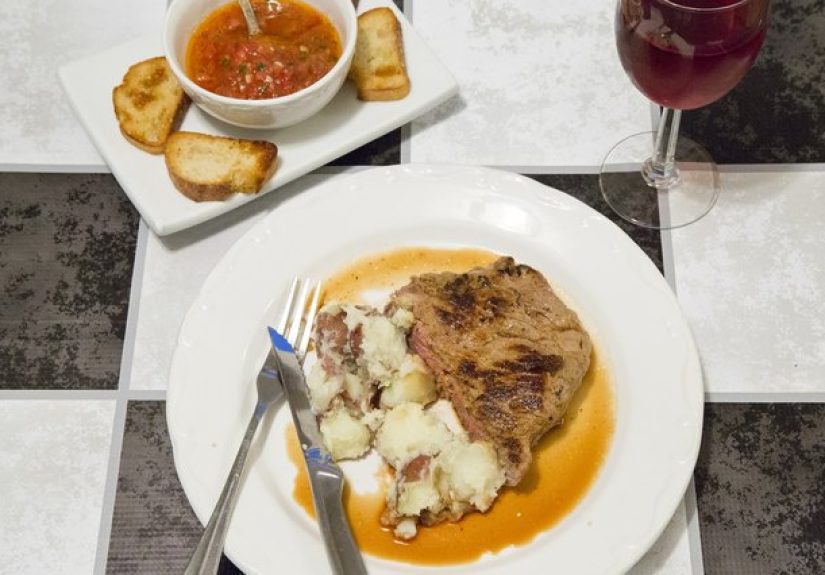
- Classic plate: sliced steak + roasted potatoes + green beans
- Sandwich night: pile thin slices onto a toasted roll with onions and a little horseradish-style sauce
- Salad upgrade: steak strips over romaine with tomatoes and a tangy vinaigrette
- Taco or rice bowl: thin slices + sautéed peppers/onions + lime + cilantro
Common Mistakes (And How to Avoid Them)
Mistake: Overcooking
Top round doesn’t have enough fat to stay plush at higher doneness. Keep it medium-rare to medium for best tenderness,
and trust the thermometer more than the clock.
Mistake: Skipping the “pat dry” step
Broilers and grills reward dry surfaces with browning. Wet steak steams and can taste oddly “boiled,” which is not the vibe.
Mistake: Too much acid, too long
Strongly acidic marinades can make the exterior mushy. Keep acids moderate and don’t treat your steak like it’s training for a citrus marathon.
Mistake: Slicing with the grain
This is the fastest path to “Why is this so chewy?” Slice thinly against the grain and suddenly top round behaves like it’s on your side.
Conclusion
Preparing top round London broil is about stacking small advantages: a balanced marinade or dry brine, high heat for browning,
a thermometer for doneness, a short rest for juiciness, and thin slicing against the grain for tenderness. Do those things and you’ll get
a flavorful, budget-friendly steak dinner that tastes like you knew what you were doing the whole time (which, after this, you will).
Real-World Experiences and “Wish I’d Known” Tips (Extra Notes)
If you’ve ever cooked London broil and thought, “This tastes great but my jaw is filing a complaint,” you’re not alone.
Most real-life London broil problems come from one of three moments: before cooking (seasoning and prep),
during cooking (heat management), or after cooking (resting and slicing). Here are the lessons home cooks
commonly run intoplus exactly what to do next time.
First, the “I marinated it all day and it’s still tough” experience. This happens because marinades mostly work on the surface.
The inside of a thicker top round steak won’t absorb a miracle potion. The fix is to use marinades for flavor and rely on
doneness + slicing for tenderness. If you want a bigger texture improvement, try a dry brine (salt ahead of time),
or keep your marinade balanced and don’t overdo the acid. Also: patting the steak dry before cooking can be the difference between
“brown and delicious” and “gray and confused.”
Second, the “my broiler smoked like a campfire” moment. Broilers are intense, and anything that drips and burns will smoke.
This is why a rack over a lined pan helps, and why sugary marinades can be risky under high broiler heat. If you love a slightly sweet flavor,
keep sugars low and add sweetness later (like a tiny spoonful in a simmered sauce) rather than letting it scorch overhead.
And yes, you really do need to watch broiling steak like it’s a toddler holding a permanent marker.
Third, the “perfect outside, raw inside” or “burnt outside, overcooked inside” dilemma. Ovens and steaks vary,
and top round is unforgiving when you guess. The real-world fix is to treat time ranges as suggestions and let a thermometer drive.
If the outside is browning too fast before the center warms up, lower the rack a notch or switch to the cast-iron sear + oven finish method.
If the center cooks but the outside looks pale, you can finish with a quick broil or a fast searjust don’t keep cooking forever hoping color
will appear without consequences.
Fourth, the “I sliced it and all the juices ran out” experience. This is a classic: you’re hungry, it smells amazing,
and patience feels like a personal attack. But resting mattersespecially for lean cuts. Ten minutes can feel long, but it’s short enough
to set the table, warm your sides, or take a photo you’ll never post. Resting helps the meat hold onto juices so each slice tastes like steak,
not like regret.
Finally, the biggest real-world difference maker: slicing. People are often shocked how much tenderness changes when they slice thinly
against the grain. If someone in your house says, “It’s tough,” before you panic, check your slices. Try cutting the steak in half where the grain shifts,
then shave thin slices on a slight angle. Many “tough steak” nights turn into “wait, this is actually great” nights in about 30 secondsno extra cooking required.
Bottom line: top round London broil rewards you for being a little strategic. You don’t need fancy equipment, just a thermometer, a sharp knife,
and the willingness to rest and slice properly. Do that, and you’ll have a reliable, repeatable steak dinner you can pull off on a weeknight
and that’s the kind of kitchen confidence you keep.