Table of Contents >> Show >> Hide
- The Short Answer: Indiana Jones Movies in Order
- Should You Watch Indiana Jones in Release Order or Chronological Order?
- Indiana Jones Movies in Release Order, Explained
- Indiana Jones Movies in Chronological Order, Explained
- Where Does The Last Crusade Opening Scene Fit?
- What Is the Best Indiana Jones Watch Order for Families, Couples, or Friends?
- Where Can You Stream the Indiana Jones Movies?
- Final Verdict: The Best Way to Watch Indiana Jones
- The Viewing Experience: What It Actually Feels Like to Watch Indiana Jones in Different Orders
- SEO Tags
If you are planning an Indiana Jones movie marathon, you have two perfectly good choices and one opti-traumatized Indy. You can watch the Indiana Jones movies in release order, which is how audiences originally met the fedora-wearing archaeologist. Or you can watch the Indiana Jones movies in chronological order, which lines up the story by when the adventures happen in Indy’s life.
Both approaches work. Neither approach will anger the movie gods. The right choice depends on what kind of viewer you are. Do you want the franchise to unfold the way Hollywood delivered it, complete with changing filmmaking styles and decades-long gaps between sequels? Go by release. Do you want the cleanest in-universe timeline, where the story moves forward from Indy’s early years to his final big-screen ride? Go chronological.
This guide breaks down both watch orders, explains where The Young Indiana Jones Chronicles fits, and helps you decide which route makes the most sense for first-time viewers, nostalgic fans, and anyone who just wants to hear that theme music and feel instantly 37% more adventurous.
The Short Answer: Indiana Jones Movies in Order
Indiana Jones Movies in Release Order
- Raiders of the Lost Ark (1981)
- Indiana Jones and the Temple of Doom (1984)
- Indiana Jones and the Last Crusade (1989)
- Indiana Jones and the Kingdom of the Crystal Skull (2008)
- Indiana Jones and the Dial of Destiny (2023)
Indiana Jones Movies in Chronological Order
- The Young Indiana Jones Chronicles / The Adventures of Young Indiana Jones (optional)
- Indiana Jones and the Temple of Doom
- Raiders of the Lost Ark
- Indiana Jones and the Last Crusade
- Indiana Jones and the Kingdom of the Crystal Skull
- Indiana Jones and the Dial of Destiny
That is the clean version. Now let’s dust off the map and actually talk about why this order matters.
Should You Watch Indiana Jones in Release Order or Chronological Order?
For most people, release order is the best way to watch Indiana Jones for the first time. It preserves the way the character was introduced, the way the mystery and mythology expanded, and the way the franchise’s tone evolved over the decades. You begin with Raiders of the Lost Ark, which is still the gold standard for adventure movies and arguably one of the best introductions to any movie hero ever. In less than two hours, you get Nazis, booby traps, a whip, a giant boulder, and a leading man who looks cool but also gets punched in the face a lot. Cinema wins.
Chronological order is fun too, especially if you already know the franchise and want the story to flow in a more natural timeline. In this version, Temple of Doom comes before Raiders because it takes place earlier. This can make Indy’s journey feel more linear, but it also means your entry point is the franchise’s weirdest, darkest, and loudest movie. That is either a feature or a bug depending on your tolerance for screaming, monkey brains, and wildly escalating peril.
So here is the practical advice:
- First-time viewers: watch by release order.
- Returning fans: try chronological order for a fresh experience.
- Completionists: add Young Indiana Jones before the movies.
- People with one free weekend and a healthy snack budget: do both eventually.
Indiana Jones Movies in Release Order, Explained
1. Raiders of the Lost Ark (1981)
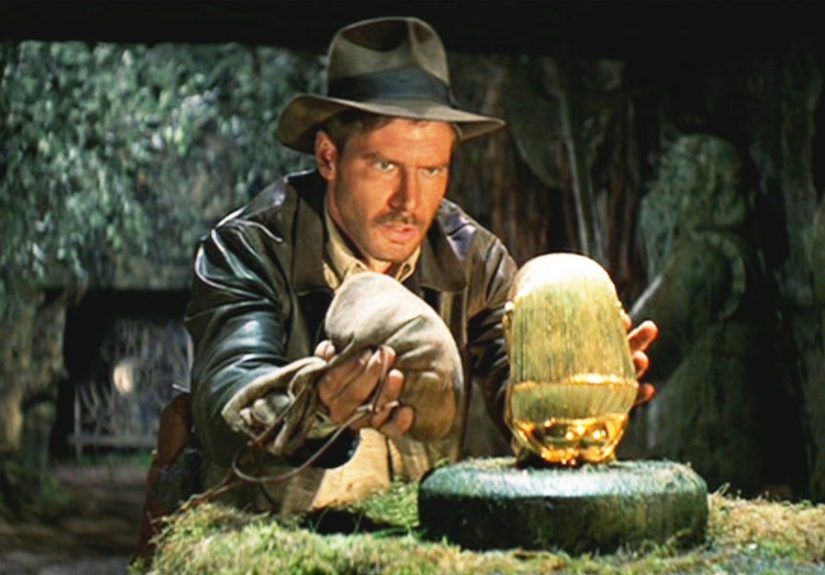
This is where the world met Indiana Jones, and it remains the most natural starting point. Set in 1936, the film follows archaeologist and professor Dr. Henry “Indiana” Jones Jr. as he races Nazis to find the Ark of the Covenant. It is fast, funny, dangerous, and astonishingly efficient storytelling. More importantly, it teaches you exactly who Indy is: brilliant but impulsive, fearless until a snake appears, and somehow always one bad decision away from getting dragged behind a truck.
If you only watch one Indiana Jones film, this is the one. It defines the franchise’s blend of old-school serial adventure, supernatural mystery, historical fantasy, and practical-action spectacle.
2. Indiana Jones and the Temple of Doom (1984)
The second released film is technically a prequel, set in 1935. But in release order, it works as a more intense follow-up that takes the formula and cranks every dial hard to the right. It is darker, stranger, and more chaotic than Raiders, which explains why fans have debated it for decades. Some love its relentless energy. Others think it feels like Raiders after three cups of coffee and one terrible idea.
Either way, it is essential viewing. It introduces Short Round, delivers some of the most memorable action in the series, and shows that Indiana Jones stories do not need to follow one neat template. Also, it proves once and for all that a rope bridge is never just a rope bridge when Indy is around.
3. Indiana Jones and the Last Crusade (1989)
Many fans consider this the most crowd-pleasing film in the franchise. Set primarily in 1938, The Last Crusade pairs Indy with his father, Henry Jones Sr., played by Sean Connery. The result is one of the best father-son dynamics in blockbuster history: affectionate, competitive, emotionally constipated, and consistently hilarious.
The movie also gives viewers a prologue set in 1912, showing a teenage Indy. That opening sometimes confuses people who are trying to sort the franchise chronologically. Yes, the beginning happens earlier than the rest of the movies. No, you should not cut it out and rewatch it later like some kind of archaeologically overcommitted film editor.
4. Indiana Jones and the Kingdom of the Crystal Skull (2008)
Nearly twenty years later, Indy returned. This fourth film jumps to 1957 and drops the character into Cold War paranoia, Soviet villains, 1950s sci-fi flavor, and a more overtly pulpy sense of absurdity. Some viewers adore it. Some argue with it like it owes them money. Nearly everyone agrees it is one of the most talked-about sequels of the 2000s.
Watching it in release order makes sense because you feel that long gap. You see an older Indy, a changed world, and a franchise consciously adapting itself for a new era. It may not be everyone’s favorite entry, but it is a meaningful chapter in the saga.
5. Indiana Jones and the Dial of Destiny (2023)
The fifth and final film brings Indy into 1969, with Harrison Ford returning one last time. This chapter leans into aging, legacy, regret, and time itself, while still making room for chases, puzzles, danger, and enough fedora-based gravitas to power a small city. It is a farewell movie, and it knows it.
By release order, Dial of Destiny lands with the most emotional weight. You are not just watching another adventure. You are watching the last page in a story that began on screen more than forty years earlier.
Indiana Jones Movies in Chronological Order, Explained
1. The Young Indiana Jones Chronicles / The Adventures of Young Indiana Jones (Optional)
If you want the full timeline, this is the earliest screen version of Indy. The series follows him as a child and teenager in the early 20th century, long before the famous whip-cracking years. It is not required to understand the films, but it adds texture to the character and shows how history, travel, and constant exposure to danger shaped him into the man who later sprints through ancient temples while making terrible but charismatic decisions.
Think of it as bonus world-building, not mandatory homework. This is still a movie guide, not a semester abroad.
2. Indiana Jones and the Temple of Doom
Chronologically, this is the first main movie. Since it is set in 1935, it comes before Raiders. Watching it first gives you a rougher, less settled Indy. He is still recognizable, but his moral code and emotional center feel a little less polished than in later adventures. That actually works well in a timeline-based viewing. It feels like you are meeting a talented but still-evolving version of the character.
3. Raiders of the Lost Ark
Now we move to 1936, and suddenly the franchise feels like it has clicked into legendary mode. In chronological order, Raiders becomes the film where Indy fully arrives as the iconic hero most audiences know and love. If Temple is the chaotic warm-up, Raiders is the masterpiece where everything locks into place.
4. Indiana Jones and the Last Crusade
Set mainly in 1938, this is the next stop. The father-son story gives the timeline emotional depth, and it broadens Indy from adventurer to family disaster with a doctorate. In chronological order, it also feels like the closing chapter of the classic 1930s trilogy, which is satisfying in a clean, elegant way.
5. Indiana Jones and the Kingdom of the Crystal Skull
Then comes the big jump to 1957. In timeline order, this feels like the return of an older hero in a new world. The tonal shift makes sense because history itself has shifted. World War II is over. The Cold War is in full swing. The old pulp-adventure world has been replaced by atomic-age paranoia and UFO-era imagination.
6. Indiana Jones and the Dial of Destiny
Finally, the story ends in 1969. In chronological order, Dial of Destiny works beautifully as the closing act of Indy’s life on screen. The adventure is still there, but the emotional focus becomes legacy: what remains after the big quests, the near-death escapes, the lost treasures, and the decades of trying to outrun time.
Where Does The Last Crusade Opening Scene Fit?
Here is one of the franchise’s fun little timeline quirks: The Last Crusade opens in 1912 with a teenage Indiana Jones. That means the earliest movie scene in the main film series is technically not in Temple of Doom at all. It is that prologue. But the rest of The Last Crusade happens in 1938, so for normal humans who enjoy movies without building corkboard timelines, the film still belongs after Raiders.
In other words, yes, the opening scene is earlier. No, you should not invent a “watch the first ten minutes now and save the rest for later” strategy unless your idea of fun is making movie night feel like a software patch.
What Is the Best Indiana Jones Watch Order for Families, Couples, or Friends?
If you are introducing the franchise to someone else, release order is usually the safest bet. It starts with the strongest introduction, keeps the momentum high, and lets the emotional impact of later entries build naturally. It is also the easiest way to understand why Indiana Jones became such a huge pop-culture icon.
If you are watching with longtime fans, chronological order can be a blast because it changes the rhythm. You notice how the world around Indy evolves, how history moves from the 1930s to the late 1960s, and how the character ages into a legend who has survived just about everything except modern paperwork and retirement.
And if you are watching with that one friend who has opinions about absolutely everything, just start the movie before they can turn the evening into a panel discussion.
Where Can You Stream the Indiana Jones Movies?
Streaming rights can move around like a golden idol on a collapsing pedestal, so availability is never forever. Still, the good news for viewers is that the main Indiana Jones film collection has been available together on Disney+, making it much easier to do a full binge without platform-hopping. That said, always check your region and the current date before you promise anyone an effortless marathon.
Final Verdict: The Best Way to Watch Indiana Jones
The best way to watch the Indiana Jones movies in order is simple:
Choose release order if you are new to the series. It gives you the strongest introduction, the best dramatic buildup, and the full effect of seeing the franchise evolve over four decades.
Choose chronological order if you already know the movies and want a story-first rewatch. It gives the saga a smoother internal timeline and highlights Indy’s progression from rough-edged adventurer to aging legend.
Either way, you end up with one of cinema’s most entertaining adventure franchises: ancient relics, historical mysteries, great scores, unforgettable villains, practical action, and a hero who looks impossibly cool while frequently getting tossed, chased, buried, punched, shot at, and generally inconvenienced by history.
Honestly, that is the dream.
The Viewing Experience: What It Actually Feels Like to Watch Indiana Jones in Different Orders
Watching the Indiana Jones movies in release order feels like stepping into a time machine built by Hollywood itself. You begin with Raiders of the Lost Ark, and everything is so confident, sharp, and iconic that it is almost unfair to the rest of cinema. Even people who have never seen the full movie somehow already know the hat, the whip, the boulder, and the fact that snakes are not exactly Indy’s comfort animal. Starting here gives the whole marathon a sense of discovery. You meet the character the way the world met him: fully formed, instantly magnetic, and just scruffy enough to feel human.
Then Temple of Doom arrives like a friend kicking the door open and shouting, “What if we made this weirder?” The experience becomes louder, darker, and more chaotic. For some viewers, that tonal shift is part of the fun. For others, it feels like the franchise briefly wandered into a haunted carnival. Either way, watching it after Raiders makes sense emotionally because you already trust the series. You are willing to go somewhere stranger because the first film earned that trust.
By the time you hit The Last Crusade, release order becomes downright cozy. Not calm, because tanks and Nazis are still involved, but cozy in the sense that the franchise knows exactly what it is doing. The humor is warmer, the emotional beats land harder, and the father-son banter gives the movie a kind of rewatchable comfort that very few adventure films manage. This is the point in the marathon where people start saying things like, “Okay, maybe this one is my favorite,” while pretending they did not say the same thing during Raiders.
Then comes the huge leap to Kingdom of the Crystal Skull, and the viewing experience changes in a way that is actually fascinating. You do not just feel the story jump forward. You feel the culture jump forward. The filmmaking is different. The energy is different. Harrison Ford is playing Indy as an older man rather than an invincible action machine with professor glasses. Even if you do not love every creative choice, the contrast is interesting. It feels like catching up with someone you knew in another decade and realizing the world changed while both of you were busy.
Dial of Destiny is even more emotional when you reach it after release order because it plays like a farewell, not just a sequel. You are not merely watching the next adventure. You are watching the closing chapter of a movie hero who has been part of film history for generations. There is real weight in that.
Chronological order creates a different experience. It feels less like watching a franchise grow and more like watching one man’s life unfold. Starting with young Indy, if you choose the series, makes the whole saga feel broader and more historical. Beginning with Temple of Doom instead gives the movies a rougher opening, but that can be rewarding. Indy feels younger in spirit, more reactive, less settled. When Raiders comes next, it almost feels like he has leveled up into his classic form.
Chronological order also makes the later jumps to 1957 and 1969 feel more poignant. You notice time passing. You feel history changing around Indy. That gives the saga a surprising emotional arc: not just adventures, but aging, adaptation, loss, and endurance. Release order is the best show. Chronological order is the most reflective journey. Neither is wrong. They just spotlight different treasures.