Table of Contents >> Show >> Hide
- What Is “Inciting Joy: Essays” (and Why the Title Sounds Like a Gentle Riot)?
- Meet Ross Gay: Poet, Professor, and Orchard Co-Conspirator
- The Big Idea: Joy Gets Deeper When It Shares a Table With Sorrow
- What the Essays Actually Do: Four Ways “Inciting Joy” Builds Its Case
- The Style: Lyric Essays, Big Feelings, and Footnotes That Throw a Parallel Party
- Why Readers Search for This Book (SEO Reality Check)
- How to Read “Inciting Joy” Without Turning It Into a Self-Improvement Chore
- A Practical “Inciting Joy” Toolkit: Things You Can Actually Try
- Conclusion: Joy Isn’t the DessertIt’s the Dinner Bell
- Joy Field Notes: 7 “Experience Experiments” Inspired by Inciting Joy (About )
If the word joy makes you picture glitter cannons, inspirational mugs, and someone whispering “live, laugh, love” like it’s a legally binding contracttake a breath.
Inciting Joy: Essays is not here to sell you toxic positivity in a trench coat. Ross Gay’s essay collection is more like a potluck:
everyone brings something real, some of it is messy, and somehow you leave nourished (and possibly crying in your car in a good way).
This article unpacks what Inciting Joy is doing under the hoodhow it treats joy as a communal practice, why grief keeps showing up with a chair and a plate,
and what readers can steal (politely) for their own lives. Expect analysis, specific examples from the book’s recurring subjects, and a few practical takeaways that don’t require
buying a $70 “mindfulness lamp.”
What Is “Inciting Joy: Essays” (and Why the Title Sounds Like a Gentle Riot)?
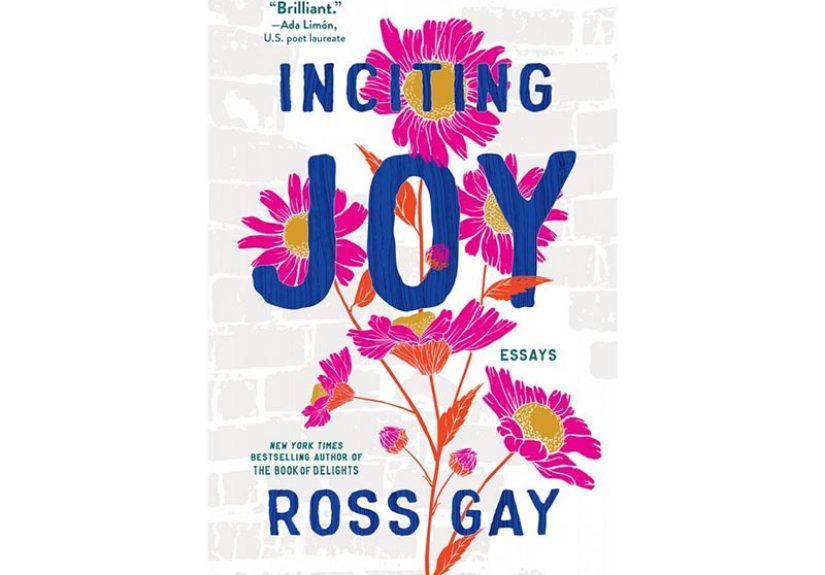
Inciting Joy: Essays is an essay collection by poet and teacher Ross Gay that explores what sparks joyand what joy sparks in return.
The title matters: “inciting” is a word we usually reserve for trouble. Gay reclaims it for something that can be just as disruptive:
a joy that refuses to be private, polished, or separated from the world’s pain.
The essays roam through lived territorypickup basketball, dancing, skateboarding, music, teaching, gardens, masculinity, illness, and griefoften circling back to a central claim:
joy isn’t a solo achievement. It’s more like a shared ecosystem. You don’t “win” joy. You participate in it.
Meet Ross Gay: Poet, Professor, and Orchard Co-Conspirator
Ross Gay is known for writing that feels both lyrical and conversational, like your funniest friend decided to become a careful philosopher without losing the jokes.
He’s the author of The Book of Delights and multiple poetry collections, and he’s also connected to community workmost notably, involvement with a “free fruit for all”
community orchard project in Bloomington, Indiana. That detail is more than a charming biography bullet: it’s a preview of the book’s worldview.
In Gay’s universe, joy is grownliterally and metaphoricallythrough attention, generosity, and relationships that keep going even when things hurt.
He’s skeptical of anything that turns joy into an individual performance, especially if it’s sponsored by hustle culture and a calendar app that yells at you.
The Big Idea: Joy Gets Deeper When It Shares a Table With Sorrow
One of the most consistent themes across reviews, interviews, and reader responses is that Gay doesn’t treat joy as the opposite of grief.
He treats them like relatives who don’t always get along but keep showing up to the same family reunion anyway.
The essays argue, in different ways, that joy can become more availablemore honestwhen we stop pretending sorrow disqualifies it.
This matters because “joy” is often marketed as a personal mood upgrade: hydrate, meditate, buy the candle, ascend.
Gay pushes against that. He suggests joy is braided into the ways we carry each otherespecially during sickness, loss, fear, and the long background hum of living in a messy world.
What the Essays Actually Do: Four Ways “Inciting Joy” Builds Its Case
1) Joy as Practice, Not a Personality Trait
A repeated move in the collection is turning joy into something you practicelike you practice a sport, a dance step, or being the kind of friend who texts back.
That word “practice” matters because it replaces judgment with motion. You can practice badly. You can practice tired. You can practice again tomorrow.
This framing also gently exposes how unequal “access” to delight can be. Time, safety, money, and community shape what we’re able to notice and enjoy.
The point isn’t to shame ourselves for struggling; it’s to notice what conditions support joyand how we might build more of them together.
2) Joy as a Group Project (Pickup Basketball, Dancing, Skateboarding)
Gay loves shared ritualsspaces where people coordinate without total control. Pickup basketball becomes a miniature democracy:
strangers negotiate rules, bodies, risk, fairness, ego, and belonging in real time. Dancing becomes a way to be a person in a room with other people, without needing to “achieve” anything.
Skateboarding in public space becomes a collision between joy and the policing of who gets to take up room.
In other words, the essays aren’t just saying “community is nice.” They’re examining how communal joy changes behavior:
it makes room for cooperation, improvisation, apology, repair, and the sweet miracle of laughing with people you didn’t know an hour ago.
3) Joy as Care Work (Teaching, Witnessing, Being With the Sick)
Some of the book’s emotional backbone comes from essays that deal with mortality and the vulnerable work of showing up.
Gay writes about his father’s illness and death, and about grief not as a private tunnel but as something that connects us to other grieverspast and present.
It’s a reframing that can feel startling: grief as a kind of dark solidarity, and joy as one of the ways we survive it together.
The teaching-related reflections push a similar ethic: instead of “fixing” each other, what if we witnessed each other?
What if learninglike livingworked better when we stopped pretending we can be neatly sorted into “fine” and “not fine”?
That kind of care is not sentimental. It’s structural. It changes how power moves in a room.
4) Joy as Resistance and Solidarity (Not a Detour From Reality)
The collection also looks directly at injustice, polarization, and environmental destructionnot to wallow, and not to escape, but to argue that joy can be a connective force.
A serious joy can help people resist isolation. It can make solidarity less abstract. It can keep us from being emotionally conquered by a culture that profits from our despair.
This is where the title’s “incitement” really kicks in: joy doesn’t just happen to us. It can move through us, pulling us toward each other.
In that sense, joy becomes a public emotionone that can help people keep showing up when the news is exhausting and the future feels like a group text with 87 unread messages.
The Style: Lyric Essays, Big Feelings, and Footnotes That Throw a Parallel Party
Part of what makes Inciting Joy work is the way it sounds. The prose moves like a mind that’s both playful and precise.
It can be breezy, then suddenly tender, then unexpectedly analyticaloften in the span of a page.
Gay is willing to be digressive because the digressions are the point: joy is rarely linear.
And yes, the book uses craft tricks that make “essay” feel less like homework. One standout technique: footnotes that don’t behave like footnotes.
Sometimes they run alongside the main narrative like a second conversation happening at the same tablemore proof that the book is obsessed (affectionately) with multiplicity.
Why Readers Search for This Book (SEO Reality Check)
People don’t usually Google “joy essays” because everything is going great. They search because they’re tired, grieving, angry, lonely, numbor just suspicious that life got reduced to errands.
Common search intent looks like:
- “Inciting Joy: Essays summary” What is it about, really?
- “Inciting Joy Ross Gay themes” What does it argue about joy and grief?
- “Books like The Book of Delights” More writing that’s observant, funny, and human.
- “Joy and grief quotes” People want language for the mix of feelings they already have.
If that’s you: the book doesn’t promise to fix your life. It offers something bettercompanionship, clarity, and a few doorways back into connection.
How to Read “Inciting Joy” Without Turning It Into a Self-Improvement Chore
Read it in sprints, not marathons
These essays are rich. Treat them like strong coffee or really good hot sauce: you don’t need to chug the bottle to prove you’re serious.
One essay (or even a section) can be plenty for a sitting.
Underline the verbs
Gay isn’t just describing joy; he’s tracking what people do when joy shows up: share, notice, linger, repair, laugh, grieve, forgive, invite, dance, cook, pass the ball.
If you want actionable takeaways, verbs are your best friends.
Talk about it with someone who will not weaponize “positivity”
This is a fantastic book-club pick, especially if your group is willing to discuss joy as an ethical and communal issuenot as a new way to blame individuals for being sad.
A Practical “Inciting Joy” Toolkit: Things You Can Actually Try
Here are grounded, non-cheesy practices inspired by the book’s recurring ideasdesigned for real life, where your schedule is crowded and your nervous system occasionally thinks email is a predator.
Make one “shared space” appointment per week
Joy often appears in places where people casually coordinate: a pick-up game, a community garden, a volunteer shift, a dance class, a reading series, a neighborhood walk.
Choose one recurring shared space and show up regularly enough that you become “part of the scene.” Belonging likes repetition.
Practice “micro-generosity”
Not grand gestures. Small ones: bring extra fruit, offer a ride, share a playlist, return a shopping cart that isn’t yours, compliment someone’s work in public.
Tiny generosity has compound interestespecially when it creates trust.
Let grief connect you, instead of isolating you
If you’re grieving, consider one reachable act of connection: text a friend who also lost someone, join a support group, tell one true story about the person you miss.
The goal isn’t “closure.” The goal is to remember you’re not the only human who has ever been wrecked by love.
Grow something, even if it’s stubborn
A plant on a windowsill counts. So does basil that keeps dying and coming back like it has student loans.
Gardening is a quiet lesson in patience, interdependence, and timethree things modern life tries to sell back to you at premium prices.
Conclusion: Joy Isn’t the DessertIt’s the Dinner Bell
Inciting Joy: Essays argues that joy isn’t a private reward for “doing life correctly.” It’s a relational forcesomething that can emerge when we pay attention,
share resources, make room for one another, and refuse to pretend sorrow cancels our capacity for delight.
Ross Gay’s great trick is that he never makes this feel like a lecture. He makes it feel like being invited.
If you want a book that’s intelligent without being cold, funny without being flimsy, and tender without being naive, this one belongs on your shelf
(or on your nightstand, where it can gently bully you into taking a breath).
Joy Field Notes: 7 “Experience Experiments” Inspired by Inciting Joy (About )
Below are experiential mini-experimentsthings readers can do to test the book’s ideas in the wild. They’re designed to create conditions where joy is more likely to appear,
not to force joy to perform on command (because joy is not a circus seal, and you are not the ringmaster).
Experiment 1: The Shared-Ritual Drop-In
Pick a public, low-stakes ritual and join it once: a community garden workday, a local open mic, a pick-up game, a volunteer shift, a library event.
Go with the goal of participating, not impressing. Notice how quickly strangers become “people” once you’re making something togetherhauling mulch, clapping for a poem, passing a ball.
The tiny negotiations (“Are we playing to 11?” “Do you want the mic stand higher?”) are the building blocks of belonging.
Experiment 2: The “Extra” Offering
Bring something small and extra into your dayan extra snack, a spare umbrella, an extra portion of whatever you cookedand offer it without ceremony.
You’re not trying to be a saint. You’re testing a hypothesis: micro-generosity creates micro-connection, and micro-connection is a doorway to joy.
The secret is that the offering changes you too; it interrupts scarcity-brain for a moment and reminds you that life is occasionally abundant.
Experiment 3: Grief in the Open Air
If you’re carrying grief, try moving one piece of it from “sealed container” to “shared air.”
Tell a trusted person a specific memory. Say the name you avoid saying. Let someone witness one true detail.
The point isn’t to make grief smaller. The point is to make it less lonely. Many people report that the first flicker of relief isn’t happinessit’s recognition:
“Oh. You understand.” That recognition is a cousin of joy.
Experiment 4: The Attention Rehearsal
For seven days, write down one delight that happened without you earning it: light through a window, a good joke, a stranger holding the door, the smell of rain.
Keep it simple. You’re training attention, not creating literature. This practice isn’t denial of hardship; it’s a refusal to let hardship monopolize the narrative.
Experiment 5: The “Unfixing” Conversation
Have one conversation where you do not try to solve the other person. Ask, “Do you want ideas, or do you want company?”
Then do what they ask. Witnessing is underrated. Many relationships are starved not for advice but for presence.
When people feel held, they often become more capable of changeironically making “fixing” less necessary.
Experiment 6: Grow One Thing (On Purpose)
Plant something edible if you canherbs are perfect. If you can’t, grow anything green.
Track the daily reality: water, light, neglect, recovery, weird new leaves. This is an embodied lesson in time and care.
And if you end up sharing that basil with someone else, congratulations: you’ve reenacted the book’s argument in plant form.
Experiment 7: Dance Like a Person, Not a Brand
Put on a song you love and move for three minutes in private. No choreography, no mirror, no performance.
This is a nervous-system reset disguised as silliness. If you feel ridiculous, you’re doing it rightridiculousness is often the first guard dog protecting joy.
Do any two of these experiments and you’ll likely notice the book’s central point from the inside: joy shows up more reliably when life becomes less solitary,
when attention becomes less automated, and when care becomes something you both give and receive.