Table of Contents >> Show >> Hide
Some vacation homes whisper “relax.” This Texas retreat sings it in every shade of blue.
Tucked into the Hill Country near Hunt, this getaway was designed as an easygoing escape for a young family,
with Austin-based BANDD/DESIGN layering blues, neutrals, and warm woods to create a space that feels like a
boutique hotel and a beloved lake house at the same time.
If you love coastal style but don’t happen to live anywhere near an actual beach, this house is proof that
you can still get those breezy, blue-sky vibes in the middle of Texas. The secret? A thoughtful blue color
palette, lots of texture, and just enough playful pattern to keep things fun.
A Hill Country Retreat With a Coastal Soul
The owners wanted a place where kids could drop their bags, run straight outside, and only come back in
when they were hungry. That meant the design couldn’t be precious. Instead, the team leaned into
durable fabrics, performance rugs, and finishes that can handle sunscreen, snacks, and the occasional
muddy paw print.
The overall palette takes its cues from sky, water, and weathered driftwood: soft blue-greens, inky navy,
pale stone, and warm tan. Designers and color experts often recommend this combo for vacation homes,
because it instantly sets a calm, collected mood while staying versatile enough to work with changing
decor over time.
Blues That Feel Like Fresh Air
Blue is the star of the show here, but it never feels one-note. From a distance, the house reads as “soft
blue vacation home,” yet up close you can spot a full spectrum: chalky powder blue on bunk bedding,
teal cabinetry in the mudroom, and deep blue-green tiles in the bathroom shower. Layering multiple tones
like this is a pro trick for making blue feel intentional and sophisticated, not flat or overly matchy.
Designers also balanced those cool tones with plenty of warmth: honey-stained beams, leather seating, woven
shades, and brass lighting. This mix keeps the home from feeling chilly or overly coastal-cartoon.
Instead, the blues work like a backdrop for family life, much like the sky outside the big windows.
The Heart of the Home: An Easygoing Living Room
Walk into the main living area and you’re greeted by soaring ceilings, wood beams, and a wall of windows
framing classic Texas Hill Country views. The room leans neutral at first glance, with a large tan sectional
and creamy walls, but the details are all about blue. Pillows, throws, art, and an ocean-inspired rug pull
in shades ranging from denim to midnight.
This is a textbook example of how to design a relaxed yet polished blue living room:
- Start with a neutral base. A pale rug and light walls keep the space bright.
- Add blue on at least two major surfaces. Here, it appears in textiles and in nearby cabinetry, which designers say is key to making blue feel like a deliberate choice instead of a random accent.
- Mingle textures. Linen, leather, knits, and woven baskets create depth so the palette never feels flat.
The living area also opens to the kitchen and dining spaces, a layout many Texas and coastal homes
embrace because it keeps the energy flowing during long weekends and holidays. The result is a
great room that can handle everything from movie marathons to big family brunches.
A Kitchen Dressed in Moody Blues
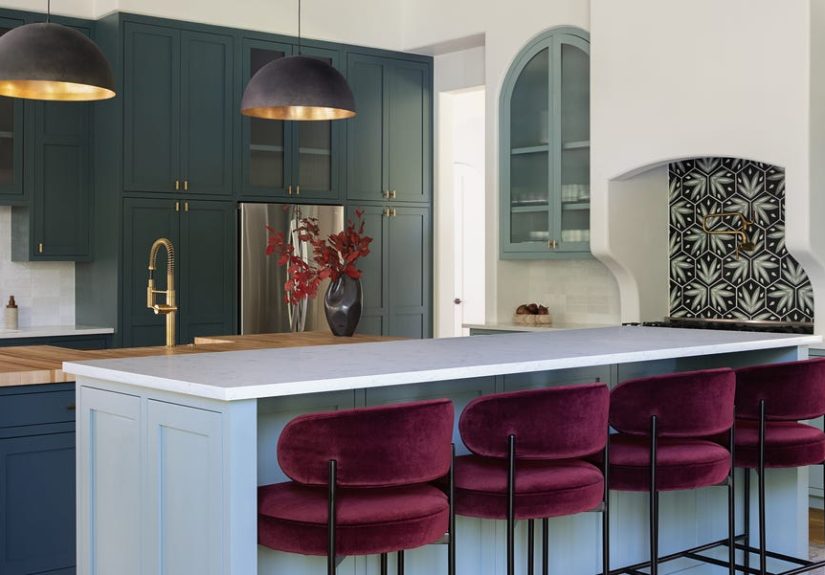
The kitchen carries the blue story in a bolder, moodier way. Deep blue-green cabinets anchor the room,
paired with a clean white countertop and backsplash. In photos of the real home, a patterned range hood
and arches around the pantry add architectural interest without sacrificing function.
Using strong blue on cabinetry is a popular trend in coastal and vacation properties because it adds
character while still feeling timeless. Experts recommend pairing saturated blues with warm metals and
natural wood so the room doesn’t feel too formal or cold. Think brass pendants, oak barstools, and
a vintage-style runner underfoot.
And then there’s the breakfast bar: upholstered stools in a rich berry tone that play beautifully with
the blues instead of competing with them. This is a reminder that “dreamy blues” doesn’t mean “no other
color allowed.” A few smart contrasts can make the blues feel even more vibrant.
Bunk Rooms, Mudrooms, and the Joy of Practical Design
Beyond the main living spaces, this vacation home really earns its stripes in the “real life” rooms:
bunk areas, mudrooms, and bathrooms. In a family-focused retreat, these are the workhorses, so the designers
treated them with as much care as the showpiece living room.
A Bunk Room Built for Sleepovers
The bunk room features built-in beds painted in a soft, stormy blue that feels like dusk over the river.
Patterned bedding and reading sconces at each bunk turn it into a sleepover paradise. Using a slightly
deeper blue here makes the space cozy, while white ceilings and trim keep it from feeling like a cave.
Designers often recommend darker blues in sleeping spaces because they psychologically cue relaxation and
restfulness.
A Mudroom That Actually Works
The mudroom is pure vacation-house genius: tall blue built-ins with cubbies for bags and hats, plus hooks
for towels and jackets. A patterned wallpaper inside each cubby adds a playful surprise and prevents the
blue cabinetry from feeling too serious. Here, function leads, but style follows very closely behind.
Bathrooms With Spa-Level Calm
In the bathrooms, the designers swapped obvious coastal motifs (no seashell soap dishes here) for tone and
texture. One standout shower uses glossy teal tiles that catch the light like moving water, framed by
simple black windows and pale flooring. This nod to the nearby river feels sophisticated and modern, a good
example of how to bring in blue without relying on literal beach decor.
Design Lessons From a Blue Texas Vacation Home
You might not be planning a Hill Country getaway of your own (yet), but this house offers plenty of ideas
you can steal for any home where you want that relaxed, vacation-ready feel.
1. Treat Blue as a Neutral
Designers increasingly treat blue as a “new neutral” because it pairs beautifully with white, beige,
wood tones, and even warmer accents like coral or rust.
In this home, blue shows up on cabinets, built-ins, tiles, textiles, and art, yet the spaces still read as
calm and flexible. If you’re nervous about committing, start with a single roommaybe your living room or
guest bedroomand build from there.
2. Mix Several Shades of Blue
One of the most common mistakes with blue interiors is using just one shade everywhere, which can look flat
or dated. Experts suggest using a range of tones (navy, sky, teal, slate) and repeating them across the home
so your spaces feel connected but not copy-pasted.
This Texas vacation home nails that ideano two rooms use blue in exactly the same way, but the palette flows
seamlessly from one space to the next.
3. Balance Cool Blues With Warm Textures
Blue on its own can skew chilly, especially in large, open-plan rooms. Pairing it with warm woods,
woven textures, and brass or gold finishes is key to keeping things inviting. Think oak floors, rattan
light fixtures, leather sofas, and a few cozy throws tossed just-so across the sofa.
4. Skip the Theme, Keep the Feeling
While this home is clearly inspired by water and sky, it doesn’t slide into “beach theme” territory.
There are no anchor motifs, starfish everywhere, or novelty signs. Instead, the feeling of the coast
comes through in the color palette, breezy fabrics, and openness of the floor plan. That approach makes
the design feel grown-up and timeless, even as the kids race through in flip-flops.
5. Plan for Real Life (and Real Mess)
Vacation homes work hardest on weekends and holidaysexactly when everyone is least interested in fussing
over stains. This house leans heavily on performance fabrics, washable rugs, and finishes that can handle
spills and sandy feet. Designers of coastal and family homes consistently recommend these low-maintenance
materials so you can actually relax in the spaces you’ve invested in.
Living With Dreamy Blues: Real-Life Experience
So what is it actually like to stay in a Texas vacation home filled with dreamy blues?
Imagine arriving late on a Friday, after work and school and one too many “are we there yet?” questions.
You open the front door and everything instantly feels slowerthe light is softer, the air smells like trees
and river water, and that blue-and-neutral living room is there to collect your bags, your worries, and your
week.
Guests often describe blue-forward interiors as “settling” spaces. There’s research behind that: color therapy
experts point out that blue is linked to calm, clarity, and lowered heart rate, which may help explain why
blue bedrooms and living rooms are so popular in vacation homes and spas.
In practice, that translates into little momentslingering over coffee on a pale-blue banquette, napping on
a navy sofa while sun filters through the windows, or showering in a teal-tiled bathroom that feels like a
private spa after a day on the river.
From a usability standpoint, living with lots of blue also makes decision-making easier. Once you commit to a
core palette, it becomes surprisingly simple to add art, textiles, or accessories. In a house like this, you
can grab a striped throw from a local shop, bring home a watercolor of the river, or swap in seasonal pillows,
and everything blends in because it all lives somewhere on the sky-to-water spectrum.
Owners and designers of similar coastal-inspired Texas homes note that guests tend to relax faster in blue
spaces than in stark white or very dark interiors.
There’s less pressure for everything to stay pristine; a scuffed floorboard or a sand-speckled rug just feels
like part of the story. Kids can spread out puzzles on the coffee table, and adults can leave paperbacks and
sunscreen by the windows without worrying they’re “ruining the look.”
Another benefit of a blue-forward vacation home is flexibility across seasons. In summer, the colors read cool
and breezy, especially when paired with crisp white bedding and light curtains. In cooler months, you can lean
into deeper navies and indigos, add a few burgundy or rust accents, and suddenly the same house feels like a
cozy winter retreat. Interior stylists often highlight this adaptability as one reason blue dominates
year-round home tours and trend reports.
Maybe the best endorsement, though, comes from the way a house like this changes your routine. Mornings start
with opening the curtains to a wash of blue sky that echoes the rug under your feet. Afternoons are for dripping
swimsuits hung in that hardworking blue mudroom and snacks spread out on the kitchen island. Evenings might
end with a board game on the living room rug, the sky outside fading from bright Texas blue to soft, inky navy
that matches the pillows on the sofa.
Over time, those repeated experiencesthe calm of the colors, the softness of the textiles, the ease of
low-maintenance materialstrain your brain to associate the house with rest. That’s the magic of a well-designed
vacation home: it’s not just beautiful in photos; it actively nudges you toward a slower, more present version
of yourself. In this Texas retreat, the dreamy blues are doing exactly that, one long weekend at a time.
Whether you’re planning a new build, refreshing a guest room, or just daydreaming about your future getaway,
there’s a lot to learn from this Texas vacation home. Start with one blue room, one relaxed rug, one woven
basket by the door. Before you know it, you may find that your homeno matter where it isfeels a little more
like a peaceful escape.