Table of Contents >> Show >> Hide
- Mexican Sauce 101: Cooking Sauces vs. Table Sauces
- The Flavor Blueprint: What Most Mexican Sauces Have in Common
- The Techniques That Make Mexican Sauces Taste “Real”
- Major Families of Mexican Cooking Sauces
- Table Sauces and Condiments: The Bright Side of the Sauce Universe
- Pairing Cheat Sheet: Which Sauce Goes With What?
- How to Taste and Adjust Like a Sauce Whisperer
- Storage and Food Safety (Because Nobody Wants a Salsa Science Experiment)
- Shortcuts That Still Taste Legit
- A Simple Starter Plan: Three Sauces That Teach You Everything
- Kitchen Experiences: What Learning Mexican Sauces Feels Like (And Why It’s Addictive)
- SEO Tags
Mexican cuisine doesn’t “use sauces” so much as it lives in them. A taco without salsa is a good taco having a very quiet day. A chicken thigh without a cooking sauce is fine… but it could also be wearing a glossy coat of mole and feeling unstoppable.
If you’ve ever wondered why Mexican food tastes like it has a plan (and your weeknight dinner sometimes tastes like it had a meeting that could’ve been an email), the answer is often sauce. Sauces in Mexican cooking are not only condiments; they’re flavor systemsbuilt from chiles, aromatics, acids, herbs, seeds, nuts, and technique.
This guide breaks down the two big sauce categories you’ll meet in Mexican cooking: cooking sauces (made to simmer with food) and table sauces (made to hit your tastebuds fast and bright). You’ll learn the building blocks, the main families, and the “taste-and-fix” logic that makes sauce-making feel less like chemistry homework and more like delicious control.
Mexican Sauce 101: Cooking Sauces vs. Table Sauces
Cooking sauces: deep, cohesive, and built for heat
Cooking sauces are designed to be warmed, simmered, or braised with the main ingredient. They’re usually blended smoother, thicker, and more structured, because they must coat, cling, and hold up to heat. Think:
- Mole (a whole category of complex sauces)
- Adobo (chile-forward, often with vinegar and herbs)
- Pipián / mole verde (seed-thickened sauces, often pepitas)
- Cooked red sauces used for enchiladas, tacos, or stews
These are sauces that taste like they’ve been thinking about you all day.
Table sauces: fresh, punchy, and meant to be adjusted bite by bite
Table sauces are served alongside food and applied right before eating. They can be raw, lightly cooked, blended, chunky, oily, creamy, or all of the above depending on region and style. Think:
- Salsa roja and salsa verde (many versions)
- Pico de gallo (fresh chopped salsa)
- Salsa macha (chile-oil-and-nut style condiment)
- Avocado salsas, crema-based sauces, and more
These are sauces with opinions. They don’t whisper. They announce themselves.
The Flavor Blueprint: What Most Mexican Sauces Have in Common
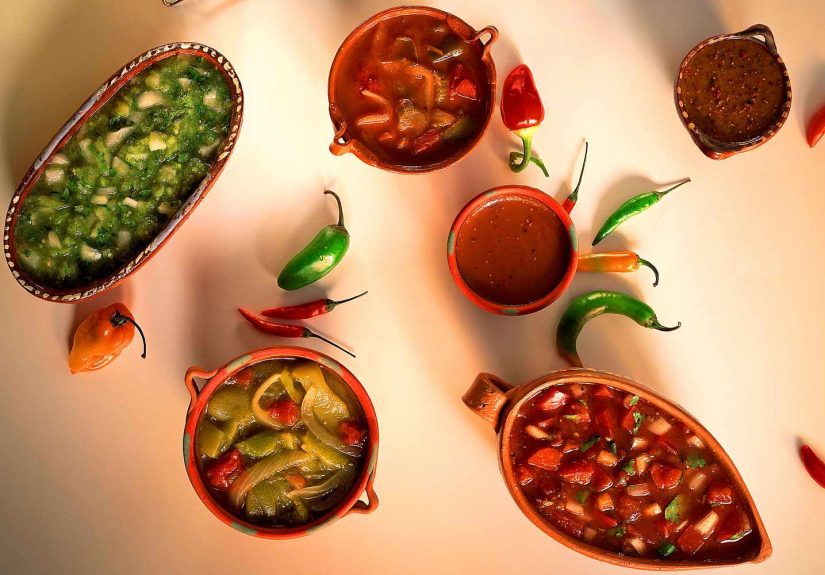
Mexican sauces look wildly differentfrom bright green tomatillo salsa to near-black mole negrobut many share the same core architecture. If you learn the blueprint, you can recognize (and improvise) sauces with confidence.
1) Chiles: not just heatflavor, color, and aroma
Chiles are the backbone. Fresh chiles (like jalapeño or serrano) tend to taste greener and sharper; dried chiles (like ancho or guajillo) bring deeper, fruitier, earthier notes. Different chiles also build different colorsbrick red, mahogany, or burnt orangewithout needing food coloring magic.
Pro tip: Heat level isn’t fixed. Seeds and inner membranes carry a lot of heat, but the chile flesh often carries the most flavor. You can dial the fire up or down without sacrificing character.
2) Aromatics: the “soup base” of sauce world
Onion, garlic, and sometimes scallions are common starters. They round out the sharp edges of chiles and help sauces taste savory rather than just spicy. Roasting or charring aromatics adds sweetness and complexity.
3) Acid: the brightness switch
Lime juice and vinegar are the usual suspects. Acid makes sauces taste more vivid and “finished.” Without it, many salsas can taste flatlike they got dressed but forgot shoes.
4) Herbs and seasonings: freshness and identity
Cilantro is common in table salsas; oregano (Mexican oregano in particular) shows up in many cooked sauces and adobos. Some regional sauces use herbs like epazote or hoja santa for a distinctive, almost licoricey herbal lift.
5) Thickeners: how sauces become saucy
Not every sauce needs thickening, but many classic cooking sauces do. Common thickeners include:
- Nuts and seeds (pepitas, sesame) for body and richness
- Stale bread or tortillas in some moles for structure
- Masa or ground corn in certain regional sauces
6) Fat: for aroma delivery and that “restaurant gloss”
Fat carries aroma and rounds out bitterness. Some sauces start by frying chiles or aromatics; others (like salsa macha) are essentially a chile-infused oil condiment with crunchy bits. A small amount of fat can make a sauce taste dramatically more complete.
The Techniques That Make Mexican Sauces Taste “Real”
Ingredients matter, but technique is the difference between “tastes fine” and “why am I standing over the bowl with a chip at midnight?” Here are the big moves.
Roasting or charring (comal, broiler, skillet, grill)
Charring tomatillos, tomatoes, onions, garlic, and chiles adds sweetness, smoke, and complexity. It also slightly dries the surface so flavors concentrate. If you don’t own a comal, a broiler or hot skillet can get you the same goal: blistered, browned edges and softened interiors.
Toasting dried chiles and spices (briefly!)
Toasting wakes up aroma, but it’s a quick relationship: a few seconds too long and you get bitterness. Toast, then move onlike you’re saving your sauce from a dramatic monologue.
Soaking dried chiles
Many dried-chile sauces begin with chiles rehydrated in hot water until pliable, then blended. Straining is common for smooth sauces, especially if you want a restaurant-style texture.
Blending and simmering
Blending builds texture. Simmering helps flavors merge. Many cooked sauces start “bright and separate” and turn “deep and unified” after 10–30 minutes of gentle heat.
Major Families of Mexican Cooking Sauces
Salsa roja: the red workhorse (and its cooked cousins)
Salsa roja simply means “red sauce,” but it’s a whole universe. Many versions start with roasted tomatoes or rehydrated dried chiles (or both), then blend with garlic, onion, and salt. A quick simmer turns raw sharpness into a rounder, more cohesive sauceperfect over tacos, eggs, grilled meats, or as a base for enchiladas.
Flavor profile: savory, chile-forward, sometimes smoky, sometimes brightdepending on the chile mix and roasting.
Salsa verde: tomatillo-based green sauces
Salsa verde usually relies on tomatillos for tartness and body. The method changes the personality:
- Charred/broiled salsa verde tastes smoky and deep.
- Boiled salsa verde tastes brighter and more “green.”
- Raw salsa verde can taste extra sharp and fresh, especially when balanced with lime and salt.
Some versions turn creamy with blended avocado or a little dairy, which tames heat and adds richness.
Adobo: the bold, versatile chile sauce
In Mexican cooking, “adobo” often refers to a dried-chile sauce blended with aromatics, herbs, and a tangy element like vinegar. It’s used as a marinade, a braising base, or a cooking sauce. It can be earthy, smoky, and fragrantespecially when built from chiles like ancho and guajillo with spices like cumin and oregano.
Where it shines: pork, chicken, roasted vegetables, beans, and anything that needs a “big hug” of flavor.
Mole: not one saucean entire philosophy
Mole is a category of complex sauces that can include multiple chiles, spices, nuts, seeds, sweet elements (like dried fruit), and sometimes chocolate. It’s famous for balance: savory, sweet, bitter, spicy, toasted, and aromatic notes all in one sauce.
Some moles are celebratory and time-intensive, but modern kitchens also use smart shortcuts (like prepared pastes or condensed bases) to get mole on the table faster. The important thing is the balance: mole shouldn’t taste like chocolate sauce on chicken. It should taste like a carefully negotiated peace treaty between many flavors.
Pipián / mole verde: seed-thickened sauces with richness
Pipián often centers on toasted seedsespecially pepitas (pumpkin seeds)blended into a thick, nutty sauce. Pipián rojo uses red chiles; pipián verde leans green with tomatillos, green chiles, and herbs. The result is a sauce that feels rich and “coating,” with a gentle nuttiness that makes chicken, turkey, squash, and greens taste like they showed up overdressed (in a good way).
Table Sauces and Condiments: The Bright Side of the Sauce Universe
Table sauces are how you personalize each bite. They’re also how Mexican meals become interactive: pass the salsa, debate the heat, and watch someone sweat proudly while saying, “It’s not that spicy.”
Pico de gallo (salsa fresca): chopped, crunchy, and fresh
Pico de gallo is typically a fresh, chopped mixtureoften tomato, onion, chile, cilantro, lime, and salt. It’s chunkier and less juicy than many blended salsas, making it perfect for topping tacos, grilled meats, and beans without turning everything into soup.
Blended table salsas: smooth, spoonable, and snackable
Many restaurant-style table salsas are blended (fully or partially). They can be tomato-based (red) or tomatillo-based (green), and they often use roasted ingredients for extra depth. Texture matters here: a salsa can be silky enough to coat a chip, yet still feel fresh.
Salsa macha: the chile oil condiment with crunch
Salsa macha is an oil-based condiment often made with dried chiles, garlic, and sometimes nuts and seeds. The ingredients are typically toasted or fried, then combined with oil to create a rich, spicy, smoky sauce with texture. If you like chili crisp, salsa macha will feel familiarbut it tends to be nuttier and more chile-forward in a distinctly Mexican direction.
Try it on: eggs, tacos, roasted vegetables, noodles, pizza, or anything that would benefit from “spicy crunch energy.”
Avocado salsas, crema, and pickled heat
Not all table sauces are chile bombs. Avocado-based salsas add creaminess and mellow heat. Mexican crema (or a crema-style sauce) adds tang and richness. Pickled jalapeños and escabeche-style vegetables bring acidity and bitegreat for cutting through rich meats and fried foods.
Pairing Cheat Sheet: Which Sauce Goes With What?
There are no sauce police, but here’s a helpful starting mapespecially if you’re building a meal and want the sauce to do the heavy lifting.
| Food | Great Sauce Matches |
|---|---|
| Grilled chicken | Pipián verde, salsa verde, adobo |
| Pork (roasted, pulled, or grilled) | Adobo, salsa roja, mole (depending on style) |
| Eggs (scrambled, fried, or rancheros-style) | Salsa roja, salsa verde, salsa macha |
| Roasted vegetables | Pipián, salsa verde, creamy avocado salsa |
| Tortilla chips | Chunky table salsa, pico de gallo, roasted tomatillo salsa |
| Beans and rice | Salsa roja, salsa macha, adobo (small amounts go far) |
How to Taste and Adjust Like a Sauce Whisperer
Sauce-making becomes easy when you stop asking “Is it perfect?” and start asking “What does it need?” Here’s the fix-it logic:
If it’s too spicy
- Add fat (a little oil, crema, avocado) to soften heat.
- Add sweetness in tiny amounts (a pinch of sugar, a bit of roasted onion, or sweet tomato).
- Increase volume with more base ingredients (more tomatillos, tomatoes, or stock).
If it tastes flat
- Add salt (often the real issue).
- Add acid (lime or vinegar) to brighten.
- Add toasted notes (a bit more char, or a quick toast of spices next time).
If it’s bitter
- You may have over-toasted chiles or spices. Balance with a touch of sweetness and fat.
- Straining can remove harsh bits and tough skins.
If it’s too thin
- Simmer to reduce and concentrate.
- Add a thickener (pepitas, nuts, tortilla piece, or a small spoon of masadepending on sauce style).
Storage and Food Safety (Because Nobody Wants a Salsa Science Experiment)
Fresh salsas are usually meant to be refrigerated and enjoyed within days. Cooked sauces can last longerespecially if they’re simmered well and handled cleanly.
Important: If you’re canning salsa for shelf storage, use a tested, science-based canning recipe and follow safe procedures. It’s not considered safe to can an “original” salsa recipe without tested acidity and processing guidance.
For refrigerator storage, keep salsas in clean containers and use clean utensils (double-dipping is how you turn “salsa night” into “mystery fermentation”). If you do properly can salsa using tested methods, store jars in a cool, dry, dark place and refrigerate after opening.
Shortcuts That Still Taste Legit
Let’s normalize shortcuts that respect flavor. Many professional kitchens and home cooks use prepared bases, then make them their own.
- Mole paste: Start with a quality mole paste, then adjust with stock, a touch of chocolate (if appropriate), salt, and maybe a little toasted sesame.
- Roast in batches: Roast tomatoes/tomatillos, onions, garlic, and chiles once, then blend different combinations for multiple sauces.
- Freeze sauce portions: Freeze in small containers or ice cube trays so you can “add sauce” to a weeknight meal without starting from scratch.
A Simple Starter Plan: Three Sauces That Teach You Everything
If you want the fastest path to sauce confidence, learn these three. They cover the core techniques and flavors:
1) Charred salsa verde
Broil tomatillos, onion, garlic, and chiles until blistered; blend with cilantro, lime, and salt. You’ll learn roasting, balancing acid, and controlling texture.
2) Salsa roja (roasted tomato + chile)
Roast tomatoes and chiles (fresh or dried-based approach), blend with garlic and onion, then simmer briefly. You’ll learn how heat changes flavor and how simmering “rounds” sauce.
3) Salsa macha
Toast or fry dried chiles, garlic, and nuts/seeds, then combine with oil and salt. You’ll learn the power of fat as a flavor carrierand you’ll suddenly want to put salsa on foods that have never met a tortilla.
Kitchen Experiences: What Learning Mexican Sauces Feels Like (And Why It’s Addictive)
Most people don’t fall in love with Mexican sauces because they read a chart. They fall in love the first time a sauce changes the whole meal. It’s the moment you realize a taco isn’t just “meat in a tortilla”it’s a platform. The sauce is the headline, and everything else is supporting cast.
Your first salsa verde experiment often begins with tomatillos that look like tiny green lanterns in papery jackets. You peel and rinse them, and suddenly your kitchen smells like clean citrus and green apples. Then you char them under the broiler andboomnow it smells smoky, sweet, and a little rebellious. You blend everything, dip a chip, and the flavor hits with that tart snap. It’s bright enough to wake up a sleepy Tuesday, but deep enough to feel like you cooked on purpose.
Then you try a red sauce, and it teaches a different lesson: patience. A roasted tomato salsa can taste sharp and separate at firstlike the ingredients are still standing in different corners of the room. But after a brief simmer, everything comes together. The tomatoes sweeten, the chile heat behaves, and the sauce tastes “connected.” That’s when you start thinking like a sauce-maker: roast for sweetness, blend for texture, simmer for harmony.
And then there’s molethe sauce that humbles you and then rewards you. Even if you take a shortcut with a prepared paste, you still get to practice the most important mole skill: balancing. A little stock loosens it. A pinch of salt sharpens it. A tiny touch of sweetness (or chocolate, if the style calls for it) rounds it out. The first time you spoon mole over chicken and realize it tastes savory, toasted, and complexnot dessertyou understand why people treat it like a celebration sauce.
Table sauces bring a different kind of joy: personalization. Someone at the table wants “medium.” Someone else wants “I can see time.” Pico de gallo gives you crunch and freshness; salsa macha gives you smoky, nutty heat with texture. You start noticing how sauce changes the same bite: one taco becomes three different tacos depending on what you spoon on top.
The most fun part is that sauce-making turns you into a better cook everywhere, not just in Mexican food. You learn how char adds sweetness, how acid makes flavors pop, how fat carries aroma, how salt doesn’t just make things saltyit makes them taste like themselves. And once you’ve got a few sauces in your fridge, weeknight cooking becomes suspiciously easy. Eggs? Sauce. Rice bowl? Sauce. Roasted vegetables? Sauce. Leftover chicken? Definitely sauce. You’ll start keeping “emergency salsa” the way other people keep emergency chocolate. (No judgment. Actually, full judgment: that’s excellent planning.)