Table of Contents >> Show >> Hide
- What Is the Kay Bojesen Monkey?
- The Story Behind the Monkey
- Why the Kay Bojesen Monkey Became an Icon
- Materials, Sizes, and Finishes
- How to Style a Kay Bojesen Monkey at Home
- Is the Kay Bojesen Monkey Worth It?
- Tips for Buying One
- Extended Experience: Living With a Kay Bojesen Monkey
- Conclusion
- SEO Tags
Some home accessories politely wait in the background. The Kay Bojesen Monkey does not. It hangs, lounges, grins, and somehow manages to look both mischievous and impossibly refined at the same time. That is a rare trick in the world of home décor, where many objects are either too serious for a family room or too playful for a well-designed one.
The magic of the Kay Bojesen Monkey is that it lives comfortably in both worlds. It is a Danish design icon, a collectible wooden figurine, a charming gift, and a conversation starter that never seems to run out of jokes. Put one on a bookshelf and it looks curated. Hang one from a hook and it looks like it is plotting a tiny escape. Place it in a nursery and it feels sweet; place it in a living room full of designer furniture and it still fits right in.
That combination of warmth, craftsmanship, and personality is exactly why the Kay Bojesen Monkey has remained relevant for decades. In a market flooded with “must-have” décor that becomes old news by next season, this wooden monkey keeps doing the impossible: staying timeless without becoming boring. If anything, it gets better with age, like a good leather chair or a family recipe that mysteriously improves when someone says, “I eyeballed it.”
What Is the Kay Bojesen Monkey?
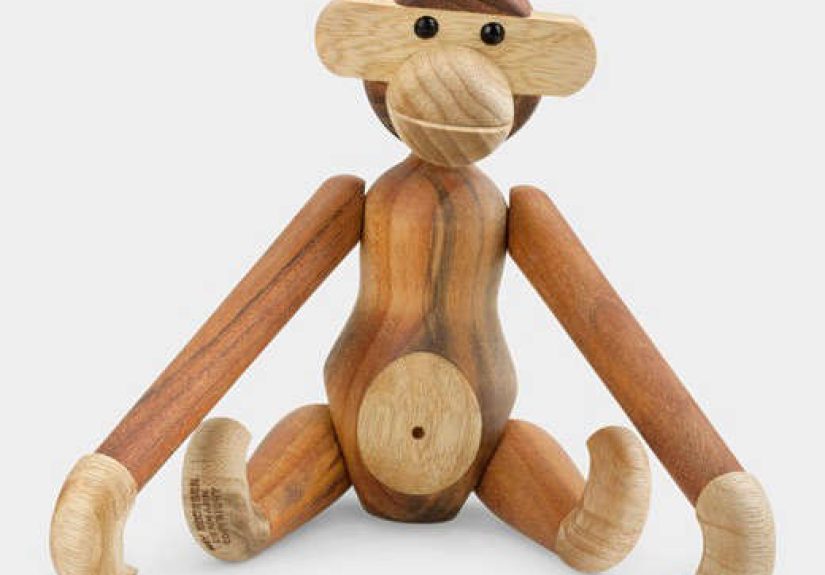
The Kay Bojesen Monkey is a wooden figurine created by Danish designer Kay Bojesen in 1951. Today, it is widely recognized as one of the most beloved examples of Scandinavian design. At first glance, the monkey looks simple: rounded limbs, a smiling face, long arms, curled feet, and a body made from contrasting wood tones. But that simplicity is exactly the point. This is the kind of design that appears effortless only because every proportion has been thought through with almost sneaky precision.
Unlike mass-market decorative animals that exist mainly to fill shelf space, the Kay Bojesen Monkey has real design heritage. It was not created to be a trendy gimmick. It came from a designer known for bringing humor, humanity, and function into wooden objects. The result is a piece that feels alive without becoming cartoonish. It has charm, but not the sugar-rush kind. It has personality, but not the kind that overwhelms a room.
That balance helps explain why the monkey appeals to so many kinds of buyers. Design lovers appreciate the history. Parents love the warmth and whimsy. Gift-givers see it as meaningful rather than disposable. Collectors appreciate the craftsmanship, the materials, and the different sizes and finishes. Even people who do not know the full story can usually sense that this is not just another decorative object. It has presence.
The Story Behind the Monkey
One of the best things about the Kay Bojesen Monkey is that its origin story is not some overly polished brand fairy tale. It began with a practical idea: a coat rack for a children’s room. The monkey’s long arms were meant to help bring the hook down to a child’s height, while the legs could hold clothing and accessories. In other words, one of the most famous wooden monkeys in design history started as a clever solution for everyday life.
That origin matters because it explains why the monkey never feels random. Its shape was not dreamed up just to look cute in photographs. The long arms, hooked hands, and expressive stance all come from a function-first concept. That is very Scandinavian design in spirit: useful, simple, beautiful, and just playful enough to keep life from feeling like a spreadsheet.
Over time, the monkey moved beyond its functional roots and became a true design object. But it never lost the friendly attitude that made it approachable in the first place. That is why it still feels inviting instead of intimidating. Some luxury décor says, “Please admire me from a distance.” The Kay Bojesen Monkey says, “Relax, I’m just hanging around.”
Why the Kay Bojesen Monkey Became an Icon
It Makes Modern Design Feel Human
Many iconic design objects earn their status through strict minimalism. They are elegant, yes, but sometimes about as emotionally warm as an airport terminal. The Kay Bojesen Monkey does something different. It keeps the clean lines and material honesty associated with Danish modern design, but adds humor and friendliness. That makes it easier to love and easier to live with.
Its famous smile is a big part of that appeal. Kay Bojesen believed that the lines of a product should “smile,” and the monkey clearly got the memo. It is polished without being cold, playful without being childish, and expressive without looking overdesigned. In short, it has emotional intelligence, which is more than can be said for some houseplants and a surprising number of office chairs.
It Works in Almost Any Room
Very few decorative objects can move from nursery to office to living room without looking misplaced. The Kay Bojesen Monkey can. In children’s spaces, it reads as warm and imaginative. In adult interiors, it becomes a sculptural accent with history behind it. In eclectic homes, it adds a wink of humor. In minimalist spaces, it prevents the room from taking itself too seriously.
This versatility has helped it remain relevant in American interiors, too. U.S. design retailers and publications often position it as a gift-worthy object and a collectible accent, and that framing makes sense. It is not just something you buy because you need to fill an empty shelf. It is something you buy because it adds character.
It Grows With the Owner
One reason the monkey is often described as a lifetime gift is that it changes meaning over time. As a child, it can feel like a cheerful companion. As an adult, it becomes a nostalgic design piece. Later, it may become an heirloom that carries memory as much as aesthetic value. That is a powerful quality in a world where so many home goods are built to be replaced rather than remembered.
Materials, Sizes, and Finishes
If you are shopping for a Kay Bojesen Monkey, you will quickly notice that this is not a one-version-fits-all design. The monkey is commonly sold in four standard sizes: mini, small, medium, and large. That size range is a major reason the piece has broad appeal. A mini monkey is an easy entry point for someone who wants the design without committing major shelf space or budget. A medium or large monkey, on the other hand, behaves more like a sculptural statement piece.
Materials and finishes also shape the buying experience. The classic version is often associated with teak and limba, a combination that gives the monkey its recognizable contrast between darker wood and lighter facial and body details. Other versions use oak, smoked oak, beech, and special painted finishes. Vintage-inspired mini editions in color have helped introduce the monkey to buyers who want the same iconic silhouette with a slightly fresher or more playful look.
Because wood is a natural material, no two monkeys are exactly alike. Grain, tone, and subtle variation are part of the charm. That means the monkey does not feel factory-flat. It feels individual. In fact, that small dose of unpredictability may be one reason collectors become attached to particular pieces. The monkey is a design object, but it also feels personal.
How to Style a Kay Bojesen Monkey at Home
The best way to style a Kay Bojesen Monkey is to avoid overthinking it. This is not an object that needs a spotlight and a dramatic introduction. It usually looks strongest when it appears naturally integrated into a room.
On a Shelf
A bookshelf is the classic move for a reason. The monkey adds shape and personality among books, ceramics, and framed art. It can break up rows of rectangular objects and soften a rigid arrangement. If your shelves are looking too perfect, the monkey is basically interior design’s equivalent of unbuttoning the top collar.
In a Nursery or Kid’s Room
The monkey’s roots in children’s design make it a natural fit for nurseries and playrooms. It brings warmth without relying on loud color or cartoon branding. That makes it a good choice for parents who want a children’s space that still feels aesthetically calm and well designed.
As a Gift on Display
Because the monkey is often given for major milestones, many owners display it in a way that highlights its sentimental value. It may sit beside wedding photos, baby keepsakes, or graduation gifts. In that context, it becomes more than décor. It becomes a marker of a moment.
Is the Kay Bojesen Monkey Worth It?
If you are asking whether the Kay Bojesen Monkey is worth it, the honest answer depends on what you want from a design object. If you want a cheap decorative accent that can be swapped out next season, this is probably not the right category. But if you value craftsmanship, history, emotional appeal, and long-term design relevance, the monkey makes a strong case for itself.
Its value lies in a mix of material quality and cultural staying power. It is not just famous because it is old. Plenty of old designs are forgotten. The monkey survives because it still works visually, emotionally, and stylistically. It does not feel trapped in the 1950s. It feels current precisely because it never tried too hard to be current in the first place.
It also holds up well in the American design market because it sits at an interesting intersection: upscale enough to feel special, approachable enough to be gifted, and playful enough to avoid becoming precious. That is a tricky balance, and the monkey nails it.
Tips for Buying One
- Choose your size based on placement. Mini and small work well on shelves and desks, while medium and large versions have more sculptural presence.
- Think about finish. Teak and limba give you the classic look, while oak, smoked oak, and painted versions offer a more tailored or contemporary feel.
- Buy from reputable retailers. Because this is a recognized design icon, purchasing through established sellers helps with authenticity and quality confidence.
- Expect natural variation. Differences in wood grain and tone are part of the product’s appeal, not defects.
- Buy for the long term. This is a piece that makes the most sense when viewed as a lasting object rather than an impulse accessory.
Extended Experience: Living With a Kay Bojesen Monkey
What is the experience of owning a Kay Bojesen Monkey actually like? In practical terms, it is simple: you place it somewhere in your home, and then it quietly becomes one of the most noticed objects in the room. Not because it is flashy, but because it has that rare design quality of seeming to communicate with people without saying a word. Guests notice it. Kids react to it. Design-minded friends usually smile in recognition. Even people who cannot name it tend to respond to it immediately.
That response comes from the monkey’s unusual mix of discipline and play. Up close, it feels carefully made and materially satisfying. The wood grain gives it warmth. The smooth finish makes it feel polished. The shape is balanced enough to read as sculpture, but never so formal that it feels untouchable. From across the room, it works as a silhouette. Up close, it rewards attention with small details and subtle expression.
There is also a strange emotional effect that happens when you live with one for a while. Because the monkey has a face, a pose, and a sense of movement, people start treating it as if it has a tiny personality. They adjust its position. They change where it hangs. They move it seasonally. Around the holidays, some owners give it accessories or place it among festive decorations. In everyday life, it can become part of the room’s identity rather than just one more item in it.
That is where the monkey separates itself from generic wooden décor. A generic carved animal might be pleasant for a week, then disappear into the background. The Kay Bojesen Monkey tends to remain visible in your mind. It becomes a familiar presence. It can be funny one day, elegant the next, and oddly comforting after that. It is hard to explain unless you have lived with an object that manages to feel both designed and companionable.
Owners also tend to appreciate how well the monkey ages visually. Wood has a way of settling into a space, and the monkey benefits from that natural mellowing. Rather than looking tired, it often looks more integrated over time. In rooms full of newer purchases, it can become the piece that anchors everything and makes the space feel more collected than decorated.
Another part of the ownership experience is the story you get to tell. This is not an anonymous object from a big-box shelf. It comes with a real design history, a recognizable maker, and a strong place in Scandinavian design culture. That story adds depth, especially for people who enjoy interiors with meaning behind them. It is the kind of object that rewards curiosity. The more you learn about it, the more satisfying it becomes.
And then there is the gift factor. Receiving a Kay Bojesen Monkey feels different from receiving standard décor because it suggests intention. Someone did not just buy “a cute thing.” They chose a design classic with warmth, humor, and staying power. That is why the monkey often turns into a keepsake. It may start as a gift for a nursery, a wedding, a graduation, or a new home, but it usually ends up as something the owner imagines keeping for years.
In that sense, the experience of owning a Kay Bojesen Monkey is not only about aesthetics. It is about living with an object that adds charm without clutter, history without stiffness, and personality without trying too hard. That is a difficult combination to achieve, and it is exactly why this wooden monkey continues to earn its place in homes around the world.
Conclusion
The Kay Bojesen Monkey is more than a famous wooden figurine. It is a lesson in why good design lasts. It began with a functional idea, evolved into a beloved design icon, and continues to feel relevant because it offers something many modern products do not: soul. It is sculptural, warm, witty, and deeply livable.
If you want a piece of Scandinavian décor that can bridge generations, soften a modern room, and still make people grin, the Kay Bojesen Monkey earns its reputation. It is not just cute. It is clever. Not just collectible, but emotionally durable. And in a world packed with objects that beg for attention, this one simply hangs around and wins people over anyway.