Table of Contents >> Show >> Hide
- What Is a Tulu Rug?
- Madeline Weinrib's Interpretation of the Tulu Rug
- Why Madeline Weinrib's Rugs Became Design Favorites
- The Materials: Angora, Wool, and Natural Dyes
- Design Style: Ancient Craft Meets Modern Luxury
- How to Style Madeline Weinrib's Tulu Rug
- Why Designers Love Tactile Rugs
- The Handmade Difference
- Madeline Weinrib and the Artisan Connection
- Is Madeline Weinrib's Tulu Rug Worth It?
- Care Tips for a Tulu Rug
- Buying Considerations
- Experience: Living With a Rug Like Madeline Weinrib's Tulu Rug
- Conclusion
Madeline Weinrib’s Tulu Rug is the kind of home object that refuses to sit quietly in the corner. Yes, technically it is a rug. It lies on the floor, behaves like a rug, and will not ask to borrow your car. But visually and texturally, it feels closer to a small interior-design event: soft, shaggy, artisanal, slightly glamorous, and wonderfully unbothered by the idea that luxury must always be stiff, shiny, or beige.
At its heart, the rug connects two worlds: the old-world craft of Anatolian Tulu weaving and Madeline Weinrib’s distinctly modern eye for color, pattern, scale, and mood. Tulu rugs have long been admired for their plush pile, tactile presence, and earthy, almost nomadic character. Weinrib’s version takes that heritage and gives it a contemporary wink: smoky neutrals, infused pinks, softened tones, and a look that can warm up a minimalist loft just as easily as it can make a traditional living room loosen its tie.
This is not a rug for people who want the floor to disappear. This is a rug for people who understand that texture is a decorating superpower.
What Is a Tulu Rug?
A Tulu rug is a traditional Anatolian carpet known for its thick, plush, shag-like surface. The word is often associated with long-pile Turkish rugs woven for warmth, comfort, and practical use. Historically, these rugs were not merely decorative. They were useful objects in nomadic and rural life, valued for insulation, softness, and durability.
Traditional Tulu rugs often come from regions of Turkey, especially Central Anatolia. Many examples are made with wool or angora goat hair, giving them a lustrous, cloud-like quality. The look can vary from simple and neutral to boldly geometric, but the common denominator is touch. A good Tulu rug practically begs you to take off your shoes, cancel your errands, and rethink your relationship with flooring.
Madeline Weinrib’s Interpretation of the Tulu Rug
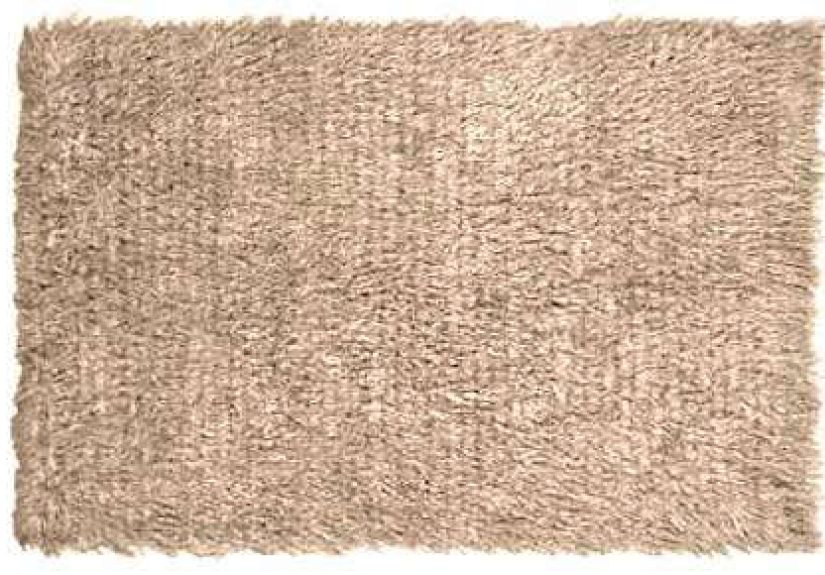
Madeline Weinrib’s Tulu Rug is rooted in Anatolian craft but filtered through her refined, painterly sensibility. Her Tulu carpets have been described as made in Anatolia from shorn angora of nomadic goats, using natural vegetable dyes and hand-knotting techniques. Because the rugs are piece-dyed and handmade, tonal variation is part of the charm. In other words, small irregularities are not flaws; they are the rug politely reminding you that it was made by human hands, not spat out by a machine having a bad Tuesday.
Weinrib’s genius has always been her ability to modernize tradition without flattening it. She does not treat global craft as a costume. Instead, she studies it, collaborates with artisans, adjusts palette and scale, and creates pieces that feel both historically aware and completely at home in a contemporary interior.
Why Madeline Weinrib’s Rugs Became Design Favorites
Madeline Weinrib entered the design world as an artist, and that background matters. Her rugs often feel less like products and more like compositions. She became widely known for bold, graphic carpets, ikat textiles, flat-weaves, and handmade pieces that brought global pattern into American interiors with a fresh point of view.
Her work gained momentum through ABC Carpet & Home, the legendary New York design destination founded by her grandfather Max Weinrib. But Madeline’s voice was her own. She helped make traditional forms feel exciting again by using unexpected color, crisp pattern, and a willingness to let handmade texture remain visibly handmade.
That is one reason the Tulu rug fits so naturally within her body of work. It is deeply tactile, rooted in craft, and visually strong without shouting. It is the design equivalent of someone with excellent taste who does not need to mention it every four minutes.
The Materials: Angora, Wool, and Natural Dyes
The standout feature of Madeline Weinrib’s Tulu Rug is its material richness. Angora goat hair, often referred to as mohair when processed, is prized for softness, sheen, and resilience. When used in a rug, it creates a surface that catches light beautifully and adds dimension to a room.
Natural vegetable dyes also contribute to the rug’s appeal. Unlike flat synthetic color, natural dyes can create depth and movement. A smoky neutral may contain subtle warmth. A pink may feel infused rather than painted on. A pale tone can shift slightly depending on daylight, lamplight, and the furniture around it.
Because these rugs are handmade, each one carries tonal nuances. That matters in interior design. A mass-produced rug often looks exactly the same from every angle. A handmade Tulu rug has life. It changes. It breathes. It may even look smugly superior next to your machine-made bath mat, but frankly, it has earned the right.
Design Style: Ancient Craft Meets Modern Luxury
Madeline Weinrib’s Tulu Rug works because it balances opposites. It is ancient in spirit but modern in presentation. It is luxurious but relaxed. It is visually soft but still makes a statement. That balance is why designers often turn to textured rugs when a space feels too rigid.
Picture a room with clean white walls, a low sofa, a black metal coffee table, and one dramatic Tulu rug underfoot. Suddenly the space has warmth. The sharp edges relax. The room no longer looks like it might ask you to use a coaster under your coaster.
Now imagine the same rug in a layered, bohemian bedroom with linen bedding, vintage wood, ceramic lamps, and stacks of books. It still works. In fact, it thrives. The Tulu’s texture can bridge styles because it does not depend on a loud pattern to be interesting. Its appeal comes from fiber, pile, color, and atmosphere.
How to Style Madeline Weinrib’s Tulu Rug
1. Use It as the Soft Anchor in a Living Room
In a living room, a Tulu rug can act as the tactile center of the space. Place it beneath a coffee table and allow the front legs of the sofa and chairs to rest on it. This creates a cohesive conversation area while letting the rug’s plush texture remain visible.
2. Pair It With Modern Furniture
The contrast between a shaggy handmade rug and sleek modern furniture is especially effective. Mid-century chairs, sculptural tables, and clean-lined sofas all benefit from the softness of a Tulu. The result feels collected rather than decorated by algorithm.
3. Let It Warm Up Neutral Rooms
If your room is mostly white, cream, gray, or taupe, a Tulu rug adds depth without disrupting the calm. Weinrib’s softer palettes are particularly useful here because they bring nuance rather than noise.
4. Try It in a Bedroom
A Tulu rug beside or under a bed is a small daily luxury. Your feet land on something soft in the morning, and suddenly the day begins with better manners. Use a larger rug under the bed or smaller pieces on either side for a layered effect.
5. Avoid Overcrowding the Texture
Because a Tulu rug already has strong texture, let nearby materials create contrast. Smooth leather, polished wood, linen, plaster, metal, or glass can help the rug stand out. Too many shaggy or fuzzy surfaces in one room can make the space feel like it is slowly turning into a sweater.
Why Designers Love Tactile Rugs
Texture is one of the most underrated tools in interior design. Color gets applause. Pattern gets attention. But texture does the emotional heavy lifting. It tells a room how to feel.
A plush rug can make a formal room more inviting. It can soften an industrial loft. It can make a modern apartment feel less like a showroom and more like a home. Madeline Weinrib’s Tulu Rug succeeds because it adds touchable luxury without feeling precious. It is elegant, but not fragile in personality. It is sophisticated, but it still looks like it would be fun at dinner.
The Handmade Difference
One of the most important things to understand about a handmade rug is that variation is part of the value. With a hand-knotted, naturally dyed Tulu, no two pieces are perfectly identical. The color may shift slightly. The pile may have subtle movement. The surface may show the rhythm of the maker’s hand.
For buyers accustomed to factory-perfect goods, this can require a mindset shift. Handmade rugs are not about sterile uniformity. They are about character. They carry the story of material, maker, region, and process. That story is precisely what makes them more compelling than a generic floor covering ordered in a panic at midnight.
Madeline Weinrib and the Artisan Connection
Throughout her career, Madeline Weinrib has been closely associated with global craft traditions. She has worked with artisans in places such as India, Morocco, Turkey, Uzbekistan, and beyond, often translating historic techniques into pieces that appeal to contemporary collectors and decorators.
Her approach is especially relevant now, when many consumers are tired of disposable decor. A rug like the Tulu is not about chasing a micro-trend. It belongs to a slower design philosophy: buy fewer things, choose better things, and let your home develop a memory.
Weinrib closed her original textiles business in 2018 after roughly two decades, citing the pressure of mass production and knockoffs. Yet her design work continued through selected collaborations and limited-edition projects. That makes her rugs feel even more collectible. They represent a design era, a point of view, and a commitment to craft that still resonates.
Is Madeline Weinrib’s Tulu Rug Worth It?
For the right buyer, yes. A Madeline Weinrib Tulu Rug is not just a decorative accent; it is a statement of taste, texture, and craft appreciation. It works especially well for people who want interiors with soul rather than rooms that look copied and pasted from a furniture catalog.
That said, it is not the best choice for every situation. A high-pile rug may not be ideal under dining chairs, in muddy entryways, or in homes where every snack becomes confetti. It performs best in spaces where its texture can be appreciated and maintained: living rooms, bedrooms, reading corners, studios, or low-traffic lounges.
Care Tips for a Tulu Rug
Because Tulu rugs are plush and often made with special fibers, care should be gentle and consistent. Shake out small rugs when possible, rotate them occasionally, and vacuum carefully without using an aggressive beater bar. Spills should be blotted quickly, never rubbed like you are trying to erase a crime scene.
For deeper cleaning, professional rug cleaning is the safest route. Handmade rugs, natural dyes, and angora fibers deserve specialized attention. A beautiful rug can last for years when treated well, but it will not thank you for experimental cleaning hacks involving vinegar, internet confidence, and emotional panic.
Buying Considerations
Before buying a Madeline Weinrib Tulu Rug or any vintage-inspired Tulu carpet, consider size, pile height, color variation, and placement. Measure the room carefully. Think about furniture layout. Ask whether the rug will be the main event or a supporting texture.
Also pay attention to authenticity and condition. If purchasing through a gallery, dealer, auction house, or resale marketplace, request detailed photos and information about materials, origin, wear, and cleaning history. Handmade rugs age beautifully, but condition matters.
Experience: Living With a Rug Like Madeline Weinrib’s Tulu Rug
Living with a rug like Madeline Weinrib’s Tulu Rug changes the way a room behaves. The first thing you notice is not just how it looks, but how it slows the space down. A hard floor says, “Keep moving.” A plush Tulu says, “Stay a while. Maybe sit on the floor. Maybe become the kind of person who owns good olives.”
In a living room, the experience is immediate. Guests tend to notice the rug before they notice smaller accessories. They may not know the term “Tulu,” and they may not be able to explain angora goat hair or Anatolian weaving, but they understand softness. People instinctively respond to texture. A Tulu rug makes a room feel less staged and more inhabited.
One of the most enjoyable things about this kind of rug is how it interacts with light. In the morning, the pile may look soft and matte. By late afternoon, it may catch warmer tones and reveal subtle shifts in the dye. At night, under lamps, it becomes moodier and more intimate. This is where handmade rugs separate themselves from flat, printed floor coverings. They do not just sit there; they participate.
There is also a practical emotional benefit. A textured rug can make a room feel finished even when the rest of the decor is simple. You do not need fifteen throw pillows, three trays, and a decorative ladder that no one asked for. The rug carries enough personality to let the room breathe. Pair it with a good sofa, a few meaningful objects, and decent lighting, and the space feels intentional.
Of course, owning a plush rug also teaches responsibility. You become aware of shoes, crumbs, pets, and that one friend who treats red wine like a performance medium. But this is not necessarily a downside. Good objects encourage better habits. You start rotating the rug. You vacuum more thoughtfully. You stop pretending that every cleaning problem can be solved with frantic scrubbing.
In a bedroom, the experience is quieter but even more luxurious. A Tulu rug underfoot in the morning feels indulgent in the best way. It adds warmth without requiring a full redesign. Even a neutral bedroom gains depth when the floor has texture. The rug becomes part of the daily ritual: wake up, step down, feel softness, briefly believe life is under control.
The best part is that Madeline Weinrib’s Tulu Rug does not feel trend-dependent. It may appear in modern interiors, eclectic apartments, traditional homes, and gallery-like spaces, but it does not belong exclusively to any one style. That flexibility makes it a smart long-term design piece. You can change the sofa, repaint the walls, move apartments, or decide that you are suddenly “into ceramics,” and the rug will probably still work.
Ultimately, the experience of living with a Tulu rug is about atmosphere. It gives a room softness, history, and a little bit of drama. Not loud drama. Not reality-TV drama. More like elegant, well-traveled drama with excellent lighting. That is the appeal of Madeline Weinrib’s design world: it respects craft, understands beauty, and knows that a home should feel collected, personal, and alive.
Conclusion
Madeline Weinrib’s Tulu Rug is more than a plush floor covering. It is a meeting point between Anatolian textile tradition and modern American design sensibility. With its angora-rich texture, natural dye variations, handmade character, and unmistakable warmth, it offers a powerful reminder that interiors are not only seen; they are felt.
For homeowners, collectors, and design lovers, this rug represents the best kind of luxury: tactile, thoughtful, artisanal, and full of personality. It can soften a modern room, enrich a neutral palette, and bring a sense of crafted history into everyday life. In a world full of fast decor, Madeline Weinrib’s Tulu Rug feels refreshingly slow, soulful, and impossible to ignore.