Table of Contents >> Show >> Hide
- What “Motherlover” actually is (and why it’s still famous)
- The secret sauce: sincerity turned up to an irresponsible level
- Why the casting makes it 10x funnier
- The rushed, high-wire energy you can feel through the screen
- How “Motherlover” changed the vibe of Mother’s Day humor
- Mother’s Day was always a little commercial… and that’s part of the joke
- How to reference “Motherlover” without making Mother’s Day weird in real life
- Why “Motherlover” still lands in 2026
- Extra: Real-world experiences inspired by “Motherlover”
- 1) The “do not send this to Mom” group-chat ritual
- 2) The nostalgia watch-party moment
- 3) The “this is too well-produced” reaction
- 4) The Mother’s Day brunch pressure valve
- 5) The “my mom would actually laugh at this” rare exception
- 6) The “don’t worry, I got you a real gift” disclaimer
- 7) The evergreen lesson: holidays don’t have to be perfect
- Conclusion
Mother’s Day is supposed to be simple: call your mom, show up with flowers, maybe don’t forget the card this time. But somewhere between “brunch reservation panic” and “why are there 9,000 pink candle options,” the holiday quietly became a pressure-cooker of wholesome expectations.
And then a three-minute comedy song kicked the door open, slid across the floor in shiny shoes, and said: “What if we honored moms… in the worst possible way… with complete sincerity?”
That song was “Motherlover”the Saturday Night Live Digital Short that turned Mother’s Day into a weirdly iconic pop-culture moment. Not because it taught anyone how to be a better child. Not because it offered gift ideas. But because it nailed something incredibly real: sometimes the most loving thing you can do on a holiday is laugh at how awkward holidays can be.
What “Motherlover” actually is (and why it’s still famous)
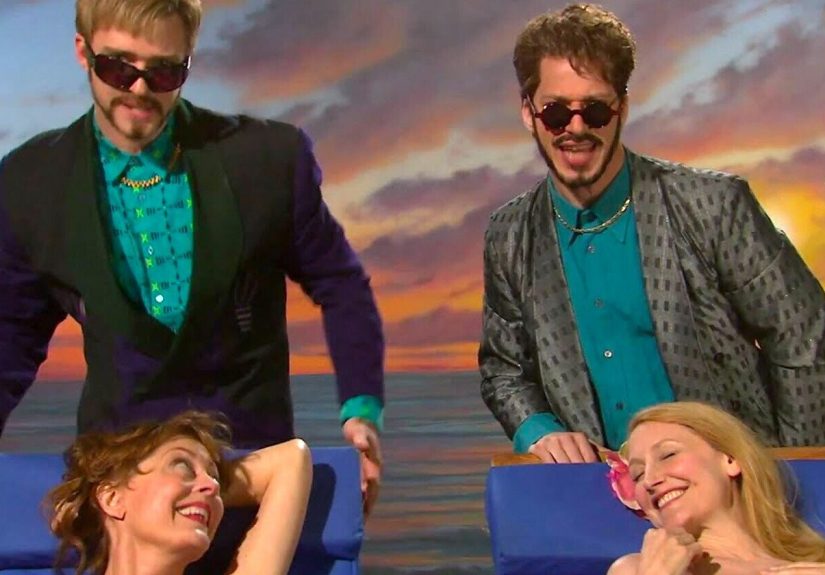
“Motherlover” is a musical comedy short created by The Lonely Island, featuring Justin Timberlake, originally airing on SNL in May 2009. It’s a pseudo-sequel to their earlier viral hit “Dick in a Box,” using the same glossy, throwback R&B stylesmooth vocals, dramatic poses, and the kind of earnest slow-jam intensity usually reserved for candlelit vows.
The twist: instead of serenading romantic partners, the guys decide the ultimate Mother’s Day gift is… wildly inappropriate. The entire premise is intentionally wrong. But the performance is intentionally right: they sing like they mean it, like this is the sweetest plan they’ve ever had.
That contrast is the whole engine. “Motherlover” is built on a comedy superpower: taking a terrible idea and dressing it up like a heartfelt tradition. The result isn’t just shock valueit’s a meticulously constructed joke about how we perform sincerity for holidays, even when we’re winging it.
The secret sauce: sincerity turned up to an irresponsible level
If you’ve ever watched a romantic R&B video from the ‘90s and thought, “This man is singing like rent is due and love is the landlord,” you understand why “Motherlover” works. The song commits. The vocals commit. The choreography commits. Nobody is playing it like a goofy sketch that will disappear after Saturday night.
That commitment matters because it turns the viewer into a co-conspirator. You’re not laughing because someone is mugging at the camera or telegraphing punchlines. You’re laughing because the characters believe their own nonsense. They’re treating Mother’s Day like it has rulesand then they “follow” those rules into absolute chaos.
It’s also an oddly sharp parody of holiday logic. Mother’s Day comes with a script: be thoughtful, be grateful, be sentimental. “Motherlover” is what happens when someone tries to follow that script with the confidence of a man who once bought a last-minute gift at a gas station and still thinks he nailed it.
Why the casting makes it 10x funnier
A huge reason “Motherlover” became legendary is the moms themselves. Susan Sarandon and Patricia Clarksonboth known for serious, dramatic workshow up and play their roles with total conviction. They don’t smirk. They don’t signal that they’re “above” the joke. They act like this is just another day at the office… if the office had slow-motion struts and deeply questionable Mother’s Day plans.
That straight-faced acting does two important things:
- It grounds the absurdity. When respected actors play it straight, the world of the sketch feels real enough for the joke to land harder.
- It flips the power dynamic. The guys think they’re running the show, but the moms’ confidence becomes the funniest surprise. The short isn’t laughing at them; it’s laughing at the situation.
In other words, the humor isn’t “ha-ha, moms.” The humor is “ha-ha, human beings are complicated, and holidays make people act strange.” That’s why it feels less mean and more mischievous.
The rushed, high-wire energy you can feel through the screen
Part of the charm of classic SNL Digital Shorts is that they feel like miracles pulled off under ridiculous time constraints. “Motherlover” has that high-wire vibe: it moves fast, hits its beats, escalates, and gets out before the joke wears out.
Behind that speed is a familiar SNL reality: writing, recording, and shooting can happen in a brutally short window. That pressure often creates a certain creative intensitybig swings, bold choices, and a willingness to commit fully because there simply isn’t time to overthink it.
And “Motherlover” absolutely swings. It has the confidence of something that either becomes iconic or becomes the sketch people politely pretend they never saw. There is no in-between.
How “Motherlover” changed the vibe of Mother’s Day humor
Most Mother’s Day comedy falls into predictable buckets:
- “My mom is embarrassing and I love her.”
- “Being a mom is hard, please send coffee.”
- “Brunch is chaos.”
“Motherlover” swerved into a different lane: Mother’s Day as a pop-culture event with its own weird mythology. It didn’t replace the usual traditions; it added an alternate universe traditionthe kind you reference in group chats, at parties, or when you’re trying to make your friends laugh while everyone waits for the check to split evenly.
That matters because the modern version of Mother’s Day is already half tradition, half performance. We don’t just celebrate; we document. We don’t just call; we post. We don’t just buy flowers; we buy flowers that match the aesthetic of the kitchen backsplash. “Motherlover” is basically the perfect satire for an era where holidays often feel like content.
Mother’s Day was always a little commercial… and that’s part of the joke
Here’s the ironic twist: Mother’s Day started as a sincere effort to honor mothers, and it quickly became a magnet for marketing. That tensionreal gratitude vs. corporate glosshas been baked into the holiday for generations. So when “Motherlover” dresses up a ridiculous plan in glossy, romantic packaging, it’s parodying more than R&B videos. It’s parodying the way Mother’s Day itself gets “sold” to us.
The short weaponizes the same emotional soundtrack you might hear in a heartfelt commercial, then uses it to deliver a premise that is obviously not a normal Mother’s Day gift. That contrast is what makes it feel like a cultural commentary disguised as a joke disguised as a slow jam.
How to reference “Motherlover” without making Mother’s Day weird in real life
Let’s be practical for a second: “Motherlover” is funny, but it is not a universal Mother’s Day greeting card. Your mom might be hilarious. Your mom might love edgy comedy. Your mom might also want peace on her special day, not a link that makes her ask, “Why did you send me this?”
So here’s a safe, socially functional guide:
When it works
- You’re quoting it with friends who already know it.
- You’re doing an SNL-themed watch party.
- You’re talking about iconic internet-era comedy songs.
When to reconsider
- You’re sending it to a family group chat with grandparents who still call YouTube “the YouTubes.”
- You’re trying to apologize for forgetting a Mother’s Day gift.
- You’re not 100% sure your mom’s comedy taste includes “bold choices.”
The best way to honor moms in the spirit of the short is actually pretty sweet: be genuine, do something thoughtful, and save the chaos for your friends who signed up for it.
Why “Motherlover” still lands in 2026
Comedy ages like milk, wine, or a banana left in a carit depends. Some jokes are trapped in their era. But “Motherlover” holds up because it isn’t just referencing a moment; it’s riffing on human behavior that hasn’t changed:
- We panic about gifts.
- We overcompensate with big gestures.
- We crave traditionsbut we also crave an escape hatch from taking traditions too seriously.
And importantly, the short doesn’t feel cynical. It’s ridiculous, yes, but it’s also weirdly affectionate. It understands that Mother’s Day is full of loveand full of awkward performanceand it gives us permission to laugh at the performance without laughing at the love.
That’s why “Motherlover” didn’t just become a sketch people remember. It became part of the holiday’s cultural background noise: the thing you reference when Mother’s Day gets too precious, too corporate, or too stressful, and you need a reminder that the world is allowed to be silly.
Extra: Real-world experiences inspired by “Motherlover”
Because “Motherlover” has lived online for so long, it’s collected a strange little trail of modern Mother’s Day experiencesmoments that aren’t official traditions, but feel oddly familiar if you’ve spent any time in group chats, nostalgia spirals, or internet comedy culture.
1) The “do not send this to Mom” group-chat ritual
Every May, someone inevitably brings it up. It starts innocently: “What’s the funniest Mother’s Day song?” Then someone else drops, “I mean…” and you can almost hear the collective digital inhale. The link appears. Half the group reacts with laughing emojis, the other half reacts with, “ABSOLUTELY NOT,” as if the song itself is a mischievous gremlin trying to climb into the family Facebook page. The shared understanding becomes the joke: it’s funny precisely because it’s not something you’re supposed to treat like a normal holiday message.
2) The nostalgia watch-party moment
At some point, an SNL Digital Short marathon becomes the background entertainment at a hangoutusually late, usually after someone says, “Remember when videos were just… weird?” “Motherlover” hits differently in that setting. You’re not watching it as a shock sketch; you’re watching it as an artifact from the early viral era, when a comedy song could suddenly become a shared reference point for millions of people who didn’t know each other and yet somehow all got the same joke.
3) The “this is too well-produced” reaction
New viewers often have the same response: “Wait, why does this sound like an actual R&B track?” That’s part of the fun. It doesn’t feel like a throwaway parody; it feels like someone set out to make a genuinely catchy song and then accidentally built a comedy premise into it. That mismatchhigh production value plus ridiculous ideacreates a special kind of laughter: the laugh of someone impressed and horrified at the same time.
4) The Mother’s Day brunch pressure valve
Mother’s Day brunch can be lovely. It can also be a crowded room full of people trying very hard to be cheerful while the restaurant staff fights for their lives. In that environment, people look for pressure valvestiny bits of humor that keep the day from turning into a performance review of your love. “Motherlover” becomes a secret handshake among siblings, cousins, or friends who are off-duty for one second. A quick quote, a raised eyebrow, a “we’re not doing that, obviously,” and suddenly the vibe loosens.
5) The “my mom would actually laugh at this” rare exception
Every once in a while, someone has a mom with the exact right comedic tastesomeone who enjoys edgy jokes and understands parody. In those families, the song becomes a legend, not a taboo. It’s still not a standard greeting, but it’s a reference that says, “We have the kind of relationship where we can joke and still be affectionate.” The humor doesn’t replace real love; it rides alongside it.
6) The “don’t worry, I got you a real gift” disclaimer
Even among friends, “Motherlover” gets paired with reassurance. People love a little chaos, but not the kind that causes actual emotional damage. So the joke often comes with a wink: “This is not a suggestion.” It’s comedy with guardrailsbecause the whole point is that the premise is absurd, not that anyone should act it out.
7) The evergreen lesson: holidays don’t have to be perfect
Underneath the ridiculousness, the biggest “experience” people take from “Motherlover” is relief. It reminds you that a holiday can be meaningful without being flawless, and sincere without being stiff. You can honor your mom with real gratitude and still roll your eyes at the marketing avalanche. You can show up, be present, and laugh at the fact that Mother’s Day sometimes feels like everyone is auditioning to be the Best Child in America.
That’s the weird magic of “Motherlover.” It’s not a Mother’s Day tradition the way flowers are. It’s a Mother’s Day tradition the way memes are: unofficial, chaotic, and surprisingly durable.
Conclusion
“Motherlover” didn’t make Mother’s Day less lovingit made it less uptight. By pairing glossy R&B sincerity with an obviously inappropriate premise, it exposed the funny side of holiday pressure, commercialization, and performative sentiment. It’s a sketch that still resonates because it understands the modern truth: sometimes the best way to celebrate something meaningful is to laugh at how hard we try to make it perfect.