Table of Contents >> Show >> Hide
- Why Closets Get Messy (Even When You’re a Decent Human)
- The Closet Makeover Game Plan (What I Did, Step by Step)
- The “Zones” That Made My Closet Finally Make Sense
- The Closet Tools That Actually Helped (Without Turning It Into a Plastic Jungle)
- Closet Makeover Mistakes I Avoided (By Making Them First in My Head)
- How I Keep It Organized Now (The Part No One Posts in Before-and-After Photos)
- The Result: A Closet That Works Like a System (Not a Surprise Attack)
- Extra: What It Felt Like Living With the New Closet (My 500-Word “Real Life” Add-On)
I used to believe my closet was “fine.” Not good, not organized, just… fine in the way a
mystery container in the back of the fridge is “fine.” If you don’t open it, it can’t hurt you, right?
Wrong. Closets are patient. Closets wait. Closets whisper, “See you Monday morning when you’re late.”
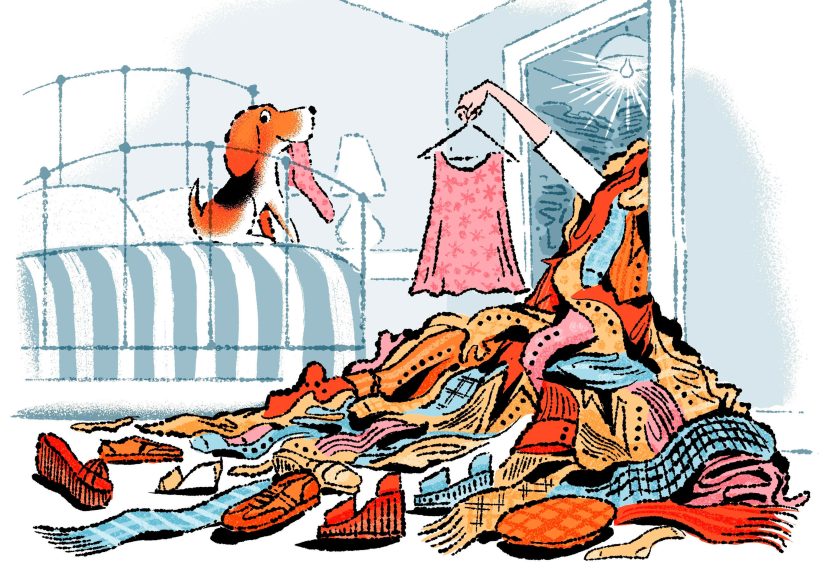
The breaking point came when I tried to pull out one sweater and accidentally started a fabric landslide.
A scarf hit the floor. A belt slithered out like it was escaping prison. Somewhere in the chaos, I found a
single sock that was definitely not mine. That’s when I realized: this wasn’t a closet. This was a textile
haunted house.
Why Closets Get Messy (Even When You’re a Decent Human)
A messy closet usually isn’t a character flaw. It’s a system flaw. Most closets become clutter magnets for a few
predictable reasons:
- Decision fatigue: You make a hundred tiny choices a day. “Fold or fling?” often loses to “fling.”
- No zones: When everything lives everywhere, nothing ever lives anywhere.
- Storage mismatch: You’re storing sweaters like they’re dresses and shoes like they’re emotions: repressed and piled up.
- Fantasy wardrobe syndrome: You keep clothes for a life where you attend galas, hike mountains, and star in rom-com montages… all on Tuesday.
The good news: a closet makeover doesn’t require a reality show budget or a power drill you’re afraid of.
What it requires is a plan that matches how you actually live.
The Closet Makeover Game Plan (What I Did, Step by Step)
Step 1: I Emptied Everything (Yes, Everything)
I know. This is the part where people suddenly remember they have “an appointment.” But pulling everything out is
the fastest way to see the truth. Also, it forces you to clean the closet instead of just reorganizing dust into
nicer shapes.
I took everything out, wiped down shelves, vacuumed the floor, and cleaned the corners where lint goes to retire.
If you only do one “extra” thing during a closet makeover, do this. A clean closet feels like a reset button.
Step 2: I Decluttered Like a Grown-Up (Not Like a Dragon Hoarding Treasure)
Here’s the rule that saved me: keep what fits your life right now. Not the life you had in 2019.
Not the life you might have after you “start doing Pilates.” The current you deserves clothes that fit, feel good,
and get worn.
I used three bins: Keep, Donate/Sell, and Trash/Recycle. Then I asked
myself brutally practical questions:
- Have I worn this in the last season?
- Would I buy this again today?
- Does it fit comfortablyor am I keeping it as a motivational threat?
- Is it in good condition (no mystery stains, no broken zippers, no “it’s basically fine if I stand still”)?
If you’re stuck on “I might wear it,” borrow a trick that’s popular with organizers:
the reverse-hanger method. Turn hangers backward, then flip them when you wear an item. After a set
time (a season works great), the untouched items are basically telling on themselves.
Step 3: I Sorted by Category (Then by Frequency)
Once I decided what stayed, I grouped everything by category: tops, jeans, dresses, workout gear, pajamas, coats,
shoes, bags, accessories. This was the moment I realized I owned enough black T-shirts to outfit a small theater
crew.
Then I did the smarter sort: frequency of use. My everyday items needed the best real estate:
eye-level shelves and the easiest hanging space. Formalwear and seasonal pieces? Up high or tucked away.
Step 4: I Measured My Space (Because Guessing Is How You End Up With Regret Bins)
Before buying a single organizer, I measured: closet width, rod height, shelf depth, and the weird corner where
nothing fits but somehow everything ends up. A five-minute measuring session saved me from purchasing bins that
would have lived on the floor like rejected furniture.
Quick tip: write measurements on a note in your phone. Future you will feel oddly powerful in the storage aisle.
The “Zones” That Made My Closet Finally Make Sense
The biggest change wasn’t the bins. It was the layout. I built zones that match how I get dressedfast, half-awake,
and occasionally dramatic.
1) The Prime Zone (Your Daily Drivers)
This is where I put the clothes I wear constantly: work staples, favorite jeans, reliable jackets, and the shoes I
actually reach for. If your closet is small, this zone matters even more. The goal is to make the “easy outfit”
easy.
2) The Seasonal Zone (Weather Has a Calendar, So Should Your Closet)
Off-season items went into clear bins on the top shelf (or under-bed storage if you’re short on space). Sweaters
don’t need to bully summer dresses for six months. Give everyone a turn.
3) The Shoe Zone (Aka: The Floor Is Not a Shelf)
Shoes were a major reason my closet looked chaotic. I switched to a simple shoe strategy:
- Everyday shoes: a low-profile rack where I can see them.
- Occasion shoes: stored in labeled bins (so they don’t multiply in the dark).
- Boots: upright storage or bins so they stop flopping over like tired giraffes.
If you’re fighting for inches, over-the-door organizers and vertical shoe storage can be game-changers.
4) The Accessories Zone (Small Stuff Needs a Home or It Will Form a Cult)
Belts, scarves, hats, and jewelry are tiny… until they become a pile. I used hooks, small bins, and dividers to
keep accessories separated. The point is visibility. If you can’t see it, you’ll buy another one and then you’ll
have two “perfect” black belts that you still can’t find.
The Closet Tools That Actually Helped (Without Turning It Into a Plastic Jungle)
Matching Slim Hangers: The Unsung Hero
Switching to matching slim hangers instantly made the closet look calmer and created more space. It’s not magic.
It’s geometry. Bulky hangers waste room and make clothes fight each other like siblings in the back seat.
Slim, uniform hangers also make it easier to scan what you own.
Bins and Baskets: Containment Beats “Organized Piles”
Bins are basically boundaries. I used them for categories like gym gear, beach stuff, scarves, and “random but
useful.” Clear bins helped for things I forget exist; baskets looked nicer for open shelves. Bonus points for
labelingbecause labels turn “Where is it?!” into “Oh. There it is.”
Vertical Space: I Finally Used the Top Shelf on Purpose
The top shelf used to be a chaotic attic where things went to disappear. Now it’s reserved for seasonal storage
and rarely used items. I added stackable bins and kept a small step stool nearby. Going upward is one of the
easiest ways to make a closet makeover feel like a true upgrade.
Over-the-Door Storage: The Sneaky Extra Closet You Already Own
Closet doors are underrated real estate. Over-the-door racks and pockets can store shoes, belts, bags, or cleaning
toolsespecially useful in small closets. The trick is to keep it curated, not crammed, so it doesn’t become a
second mess.
Lighting: Because Shadows Are Where Clutter Thrives
I added simple LED lighting (the easy, battery-operated kind). Suddenly, I could actually see what I ownedlike a
brand-new feature I should’ve had this whole time. Better lighting makes it easier to keep things tidy because you
notice mess faster.
Closet Makeover Mistakes I Avoided (By Making Them First in My Head)
- Buying organizers before decluttering: That’s just buying expensive boxes for clutter.
- Organizing by “aesthetic” only: If it’s pretty but inconvenient, it won’t last.
- Keeping “someday” clothes in the prime zone: Prime zone is for what you wear, not what you negotiate with.
- Overstuffing: A little breathing room prevents the closet from immediately boomeranging back to chaos.
How I Keep It Organized Now (The Part No One Posts in Before-and-After Photos)
The 60-Second Reset
Once a day (usually at night), I take one minute to put things back in their zones. One minute sounds laughable
until you realize it prevents the weekend-long disaster cleanup.
The “One In, One Out” Rule (Light Version)
I’m not militant about it, but if I buy a new everyday item, I try to donate or retire one that fills the same
role. This keeps the closet from becoming a storage unit for impulse shopping.
A Seasonal Mini-Audit
At the start of a new season, I do a quick scan: anything damaged gets repaired or removed, anything unworn goes
into a “maybe” bin, and anything I’m clearly over gets donated. It’s not a full purgejust maintenance.
The Result: A Closet That Works Like a System (Not a Surprise Attack)
The best part of my closet makeover isn’t that it looks nicer (it does). It’s that mornings are smoother. I don’t
have to dig. I don’t have to re-buy things I already own. I can see my options, which makes getting dressed faster
andoddlyless stressful.
If you’re staring at your own messy closet right now, here’s the big takeaway:
you don’t need more spaceyou need clearer rules for the space you have. Zones. Visibility.
Containment. And a system that fits the life you actually live.
Extra: What It Felt Like Living With the New Closet (My 500-Word “Real Life” Add-On)
The first week after my closet makeover, I kept opening the door just to admire itlike a museum visitor who
couldn’t believe admission was free. It was shockingly calming. I didn’t expect a closet organization project to
affect my mood, but it did. There’s something deeply comforting about seeing your stuff neatly parked where it
belongs, instead of watching it pile up like a tiny fabric-based protest.
The funniest part? I discovered my “closet mess” wasn’t really about being messy. It was about being rushed. Most
of my bad habits happened in micro-moments: I’d hang a shirt on the nearest hanger instead of the right one. I’d
toss a belt on a shelf because I couldn’t find the belt loop I swore I owned. I’d shove shoes into a corner because
I didn’t want to bend down after a long day. Once the zones were set up properly, those shortcuts stopped being
necessary. The closet didn’t demand extra effort; it demanded less.
I also learned that “pretty organization” is overrated if it’s not practical. I tried folding a few items in a
perfectly aesthetic way… and immediately hated it. So I adjusted. Some things are filed and folded. Some things
are stacked. Some things live in bins because my brain likes “open lid, drop item, close lid, feel accomplished.”
My closet looks good, but more importantly, it works with my personality. That’s the secret sauce no one puts on a
label.
There were a couple surprises along the way. One, matching hangers are wildly satisfying. Two, lighting matters
more than you thinkwhen you can actually see the back of a shelf, you stop losing items in the darkness like a
confused archaeologist. Three, the “maybe” pile is a trap unless you set a deadline. I gave myself one month: if I
didn’t reach for those items, they left. Having a timer turned emotional debates into simple decisions.
The biggest real-life change is laundry day. Before the makeover, clean clothes would sit in a basket because
putting them away felt like a chore plus a puzzle. Now, every category has a home. Hanging takes minutes. Folding
takes minutes. And because I can see everything, I’m less likely to forget what I ownwhich has dramatically
reduced my “I need a new one” shopping impulses. The closet makeover paid me back in time and in fewer accidental
duplicates.
Most importantly, when life gets chaotic (and it does), the closet doesn’t have to join the chaos. If it starts to
drift, I can fix it with a five-minute reset because the system is already there. That’s the goal: not perfection,
just a closet that’s on your side.