Table of Contents >> Show >> Hide
- What Happened in the NYC Election Results 2025?
- Why This Race Became a National Obsession
- The Affordability Message Was the Engine
- What the Results Say About Young Voters
- Why Cuomo’s Loss Matters
- Could NYC Really Flip the Nation’s Fate?
- The Public Safety Question Is Not Going Away
- Business, Taxes, and the “Can This Work?” Problem
- What Republicans May Take From the Result
- What Democrats May Learn From the Race
- The Experience Section: Lessons From Watching the 2025 NYC Election
- Conclusion
Note: Factual election details were verified using the NYC Board of Elections results summary and reporting from AP, NPR, CBS News, and national 2025 election coverage.
The 2025 New York City election results are in, and the political earthquake did not arrive quietly. It showed up wearing comfortable shoes, carrying a rent bill, scrolling TikTok, and asking why groceries now require the confidence of a Wall Street trader. New York City has elected Zohran Mamdani as its next mayor, and whether Americans love the outcome, fear it, or are still trying to pronounce every candidate’s name before breakfast, one thing is clear: this was not just another local race.
New York City is not a normal city in American politics. It is a media capital, financial engine, cultural loudspeaker, immigrant gateway, and political testing lab rolled into one very expensive apartment. When voters there choose a mayor on a platform centered on affordability, rent, buses, child care, public safety, and working-class frustration, national strategists pay attention. They may pretend they are calmly “reviewing the data,” but somewhere in Washington, a consultant definitely spilled coffee on a polling memo.
What Happened in the NYC Election Results 2025?
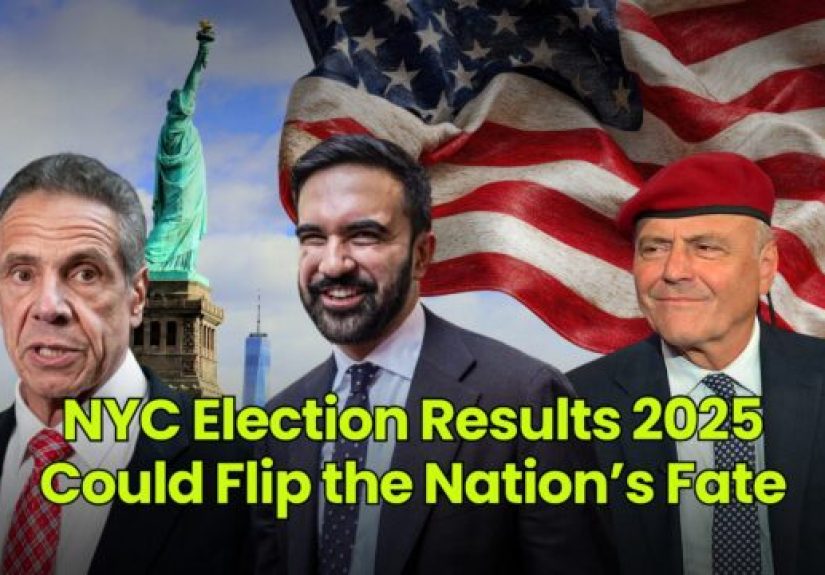
The headline is simple: Zohran Mamdani won the 2025 New York City mayoral election. He defeated former New York Gov. Andrew Cuomo, who ran as an independent after losing the Democratic primary, and Republican Curtis Sliwa. Final election result trackers showed Mamdani at about 50.8% with more than 1.1 million votes, Cuomo at about 41.3%, and Sliwa around 7.0%.
That vote total matters because it was not a sleepy, “Did anyone remember Election Day?” kind of contest. More than two million New Yorkers cast ballots, making it the city’s biggest mayoral turnout in decades. In an era when many local elections feel like secret meetings attended by the most dedicated civics nerds, NYC voters turned this one into a political blockbuster.
Mamdani’s win was historic on several fronts. He became New York City’s first Muslim mayor, the first mayor of South Asian heritage, and one of the youngest people to lead the city in modern history. That is not just trivia for a campaign poster. In a city where identity, class, immigration, and neighborhood loyalties are woven into daily life, the symbolism carried real weight.
Why This Race Became a National Obsession
At first glance, a mayoral race should be local. Potholes, schools, police staffing, trash collection, housing permits, and bus routes are not usually the stuff of national destiny. But New York City has a way of turning local debates into national arguments. The 2025 race became a proxy war over the future of the Democratic Party, the limits of progressive politics, and whether affordability can beat experience, celebrity, and institutional power.
Mamdani ran as a democratic socialist with a message that was laser-focused on the cost of living. His campaign talked about freezing rents for rent-stabilized apartments, fare-free buses, universal child care, city-run grocery stores, and higher taxes on the wealthy and large corporations to help pay for the agenda. Supporters heard a practical answer to daily financial pain. Critics heard a budget spreadsheet screaming for help.
Cuomo represented experience, name recognition, and a more centrist case for governance. He argued that New York needed tested leadership, especially on crime, management, and public safety. Sliwa, known for his long public career and colorful style, appealed to voters who wanted a tougher public-safety message and a sharper break from Democratic control.
That three-way contrast made the race bigger than City Hall. It asked a question both parties are still wrestling with: are voters angrier about ideology, or are they angrier about the price of surviving Tuesday?
The Affordability Message Was the Engine
In campaigns, “affordability” can become a bland word, like “innovation” or “community.” Everyone says it. Few explain it. Mamdani’s campaign gave the word a front door, a MetroCard, a daycare bill, and a grocery receipt. That made the message feel less like a policy paper and more like a group chat full of exhausted New Yorkers saying, “Seriously, how are we supposed to live here?”
Rent was central. New York’s housing crisis has been building for years, and voters do not need a white paper to understand it. They understand it when a lease renewal arrives. They understand it when roommates become a financial necessity long after college. They understand it when a family earning a decent income still feels one emergency away from being priced out.
Transportation also played a role. Fare-free buses may sound like a wonky transit proposal, but it speaks to a simple idea: make daily life cheaper and easier. For working-class New Yorkers, students, caregivers, and service workers, every fare counts. A few dollars saved per day becomes real money by the end of the month.
Child care was another powerful issue. In many American cities, child care costs feel like a second rent payment with finger paint. By making universal child care part of the conversation, the campaign connected economic policy to family life, workforce participation, and the daily grind of parents trying to do everything without cloning themselves.
What the Results Say About Young Voters
One of the biggest lessons from the 2025 NYC election results is that young voters are not politically asleep. They are awake, annoyed, online, and apparently willing to stand in line if the campaign speaks their language. Mamdani’s rise was powered by a strong digital strategy, volunteer energy, and an optimistic style that contrasted with the gloomier tone of many traditional campaigns.
Young voters did not just respond to personality. They responded to pressure. Many are working hard but feel locked out of the basic milestones older generations once treated as normal: stable housing, manageable bills, children without financial panic, and a future that does not require winning the lottery or marrying into a brownstone.
For national politics, this is the warning flare. Young voters may not show up for every candidate who posts a video with background music and a font that looks vaguely cool. They show up when the message matches their lived reality. The lesson is not “do more social media.” The lesson is “say something that sounds like you know what rent is.”
Why Cuomo’s Loss Matters
Andrew Cuomo’s defeat was not just a personal setback. It was a signal that name recognition and executive experience no longer guarantee dominance, especially when voters are in a mood to punish the old political order. Cuomo entered the race with a famous last name, a long record, and deep familiarity among New Yorkers. But familiarity can cut both ways. Sometimes voters see experience. Sometimes they see baggage with better lighting.
Cuomo’s independent run after losing the Democratic primary also turned the general election into a test of whether moderate and anti-Mamdani voters could consolidate. They did not do enough. Mamdani kept a broad enough coalition together, while Cuomo’s comeback argument could not overcome the energy behind the affordability-first campaign.
For Democrats nationally, this may deepen the argument between the party’s progressive and centrist wings. Progressives will say the result proves bold economic populism can win. Centrists will answer that New York City is not America, and that what works in Queens may not work in a swing district in Pennsylvania, Arizona, or Georgia. Both sides have a point, which means the argument will continue loudly, probably on cable news, definitely with too many panels.
Could NYC Really Flip the Nation’s Fate?
The phrase sounds dramatic, but the idea is not silly. New York City does not decide national elections by itself. However, it often previews national debates. The 2025 result could influence how candidates talk about affordability, housing, transit, public safety, taxes, and generational change heading into the next major election cycle.
The most important national takeaway is that cost-of-living politics may be stronger than traditional left-versus-center labels. Voters may disagree about socialism, policing, taxes, and government expansion. But many agree that life has become too expensive. Any party that can explain that pain clearly, then offer a believable solution, has an advantage.
That word “believable” is doing heavy lifting. Winning a campaign is one thing. Governing New York City is another. City Hall is where big promises meet budget limits, state approval, union negotiations, agencies, courts, landlords, activists, tabloids, and the ancient municipal monster known as “implementation.” If Mamdani delivers visible improvements, his win becomes a model. If the agenda stalls or backfires, critics will use it as a cautionary tale.
That is why the stakes feel national. The race did not just elect a mayor. It created a live experiment watched by progressives, moderates, Republicans, business leaders, unions, housing advocates, and voters far beyond the five boroughs.
The Public Safety Question Is Not Going Away
Affordability may have powered Mamdani’s victory, but public safety remains one of the hardest tests ahead. New Yorkers want lower costs, but they also want safe subways, functional streets, responsive emergency services, and confidence that disorder will not become the city’s background music.
During the campaign, critics questioned whether Mamdani’s approach to policing and public safety would be practical. His supporters argued that safety should include housing, mental health response, community investment, and preventionnot just enforcement. This debate is not unique to New York. Cities across the country are wrestling with the same issue: how to reduce crime and disorder without returning to policies many residents see as harmful or unfair.
The political danger is obvious. If New Yorkers feel less safe, opponents will blame the mayor’s ideology. If residents feel both safer and less financially crushed, the administration will gain credibility. Public safety may become the scoreboard on which many skeptical voters judge the new mayor’s broader agenda.
Business, Taxes, and the “Can This Work?” Problem
Every bold agenda eventually meets the same question: how do you pay for it? Mamdani’s proposals, including child care, bus service, and public grocery options, require funding, management, and cooperation beyond campaign applause. Raising taxes on wealthy residents and corporations may be popular with parts of the electorate, but New York also depends on a high-income tax base and a business community that can make life difficult when it feels threatened.
That does not mean ambitious policy is impossible. New York has done big things before. It has also tripped over much smaller things, sometimes spectacularly. The city is a place where dreams are enormous and paperwork is somehow even larger.
The success of the new administration will depend on whether it can translate slogans into phased, measurable programs. Voters may forgive slow progress if they see competence. They are less forgiving when big promises turn into confusion. The campaign won the argument emotionally. Governing requires winning it operationally.
What Republicans May Take From the Result
Republicans are likely to use Mamdani’s victory as a national talking point. They may frame him as the face of a Democratic Party moving too far left. That strategy is predictable because it is politically useful. In swing areas, tying local Democrats to a democratic socialist mayor of New York City may become a campaign shortcut.
But Republicans also face a challenge. If their only response to affordability politics is to call it radical, they risk sounding dismissive to voters who are genuinely struggling. The smarter Republican response would be to offer a competing affordability plan: housing supply, tax relief, public safety, deregulation, energy costs, and wage growth. Voters who cannot afford rent may not be satisfied with a lecture on ideology alone.
In other words, Mamdani’s win gives Republicans a target, but it also gives them homework. The cost-of-living crisis is not a New York-only issue. It is national. Any party that ignores it does so at its own risk.
What Democrats May Learn From the Race
For Democrats, the lesson is more complicated than “move left.” The 2025 election night included victories by different kinds of Democrats in different places. Mamdani’s win showed the strength of progressive energy in New York City. Other Democratic wins around the country suggested that moderate candidates can also perform well when they focus on competence, economic concerns, and opposition to unpopular Republican policies.
So the real lesson may be: fit the message to the voters, but make the message concrete. Mamdani did not win because he used vague language about “kitchen-table issues.” He named the kitchen table, priced the groceries on it, and asked why the bus to get there cost extra.
National Democrats may study his campaign’s discipline. It did not bounce between fifteen disconnected themes. It returned again and again to affordability. That repetition can be powerful when it feels authentic rather than robotic. The campaign made voters believe it understood the central problem of their lives. That is the kind of political advantage money cannot always buy.
The Experience Section: Lessons From Watching the 2025 NYC Election
Watching the 2025 NYC election unfold felt like watching a city argue with itself in public, which is basically New York’s unofficial Olympic sport. But beneath the noise, the race offered several real-world lessons for voters, campaigners, writers, and anyone trying to understand American politics without needing three espressos and a spreadsheet.
The first experience-based takeaway is that people respond to language that sounds like their daily life. “Economic inequality” is accurate, but “I cannot afford rent, groceries, transit, and child care at the same time” is personal. The Mamdani campaign succeeded because it converted big policy ideas into everyday pressure points. That is a lesson for anyone communicating with the public: start where people already feel the problem.
The second lesson is that energy beats inevitability. Cuomo had the résumé, the name, and the aura of someone who had already occupied the center of New York politics. But campaigns are not museum exhibits. Voters do not always reward the most familiar figure. They often reward the candidate who makes them feel that the future can change. That feeling is powerful, especially among younger voters who are tired of being told to wait patiently while the cost of living sprints ahead like it stole something.
The third lesson is that online enthusiasm only matters when it becomes offline action. Social media helped Mamdani gain attention, but attention alone does not win elections. Volunteers, door knocking, turnout operations, community events, endorsements, and neighborhood-level trust still matter. The internet may create the spark, but someone still has to knock on doors in the rain. Democracy, unfortunately, does not come with a skip button.
The fourth lesson is that voters can hold two thoughts at once. Many New Yorkers were excited by bold affordability ideas while also wondering how the city would pay for them. That is not hypocrisy; it is adulthood. People want ambition, but they also want competence. They want change, but they do not want chaos. Any mayor who wins on big promises has to respect that balance.
The fifth lesson is that local elections are no longer truly local. A mayoral race in New York City can become a symbol in national politics almost overnight. Cable news, social platforms, donors, activists, and party strategists all rush in to interpret the result. Sometimes they overinterpret it. New York is unique. But unique places can still reveal universal pressures, and affordability is about as universal as it gets.
Finally, the 2025 NYC election shows that political “fate” is not flipped by one candidate alone. It is flipped when voters decide that old answers no longer satisfy new problems. Mamdani’s victory may become a blueprint, a warning, or a little bit of both. The real outcome will be written not only in the election results, but in the lived experience of New Yorkers after the campaign confetti is swept off the floor.
Conclusion
The NYC election results 2025 are more than a local political update. They are a signal that voters are hungry for answers on affordability, housing, transportation, child care, and the future of urban life. Zohran Mamdani’s victory marks a historic change for New York City and a major test for progressive governance in America’s most visible metropolis.
Will it flip the nation’s fate? Not automatically. One city cannot rewrite American politics overnight. But New York has placed a very large, very loud, very well-lit experiment on the national stage. If the new administration turns campaign promises into results, it could reshape how candidates across the country talk about economic pain. If it struggles, opponents will use it as proof that bold promises are easier to make than to manage.
Either way, the 2025 NYC mayoral election has already changed the conversation. The message from voters was not subtle: make life livable, or make room for someone who says they will.