Table of Contents >> Show >> Hide
- The Viral Clip That Started a Phone-War
- So… What Phone Was It Actually?
- Why the Video Looked So Unreal (Even on a ‘Not Brand-New’ Phone)
- How the iPhone 13 Pro Max Can Pull Off This Look
- Why People Got It Wrong Online (And Why That’s Normal)
- Want Concert Footage That Looks Like This? Here’s the Playbook
- The Bigger Story: Celebrity Culture Meets Camera Culture
- Experiences: The Great “Guess That Phone” Game (Extra )
- Conclusion
Somewhere in the world, a $100,000 camera rig is quietly sobbing into its pelican case.
Because a short clip of Rihanna performing at a billionaire family’s wedding festivities went viraland the internet
immediately decided the biggest mystery wasn’t the guest list, the private concert, or the “how is this real life?”
vibe. Nope. The comment section grabbed its magnifying glass and shouted:
“WHAT PHONE IS THAT?!”
This is the modern era in one sentence: a global superstar sings in front of elite guests, and we’re all doing
CSI: Smartphone. People zoomed in on pixels, argued over stabilization like it’s a Supreme Court case,
and turned a party video into a tech championship match: iPhone vs. Android, with “Team Actually I’m Here For The Music”
getting exactly zero minutes of airtime.
Let’s unpack what happened, what phone likely shot the footage, why it looks so ridiculously clean,
and what you can learn from itwhether you’re filming a concert, a wedding, or your friend trying (and failing)
to look cool on a dance floor.
The Viral Clip That Started a Phone-War
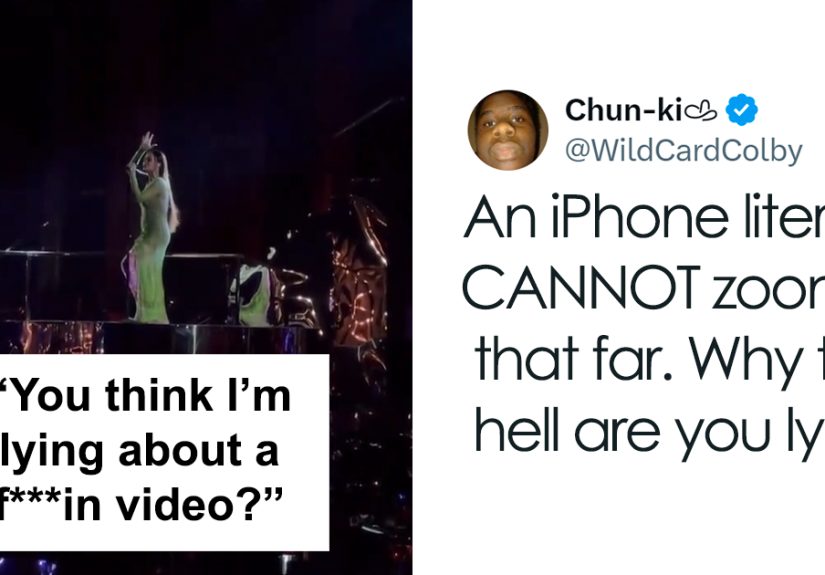
The footage making the rounds shows Rihanna performing at a lavish pre-wedding celebration for Anant Ambani and Radhika Merchant
in Jamnagar, Indiapart of the larger Ambani wedding festivities that drew a headline-grabbing mix of tech leaders,
business figures, and celebrities.
But the “viral ingredient” wasn’t just Rihanna returning to a full concert-style set at a private event.
It was the camera move: the video starts with a crisp, close-looking view of Rihanna on stage,
then zooms back so far the stage basically becomes a shiny postage stamp in the distance.
The internet’s collective jaw hit the floor, and the conspiracy board came out:
“That zoom is insane.” “No way that’s a phone.” “This is the greatest ad for [insert brand here].”
To be fair, people weren’t completely wrong to be suspiciousbecause “close-up clarity from far away”
is exactly the kind of thing smartphone marketing loves to brag about. It’s also the kind of thing that can look
like wizardry if you don’t think about lighting, distance, and the difference between optical zoom and digital zoom.
So… What Phone Was It Actually?
According to the person who filmed and posted the clip, the footage was recorded on an iPhone 13 Pro Max.
That detail matters because it instantly flips the script: the internet was debating the newest “superzoom” phones,
but the source (and even metadata context shared around the clip) pointed to a model released years earlier.
If you’re thinking, “Waithow can an older phone make video that looks this good?”
Congratulations. You have just discovered the secret truth of modern smartphone cameras:
the conditions matter as much as the device.
Why the Video Looked So Unreal (Even on a ‘Not Brand-New’ Phone)
1) Stage lighting is basically a cheat code
Concert stages are built for cameras. Strong, directional lighting and high-contrast color washes make the subject pop,
and big stages tend to be brighter than you think. That means your phone isn’t struggling in darkness; it’s working in
a controlled, high-light environment where it can keep ISO low and detail high.
In other words: the phone wasn’t “seeing in the dark.” It was seeing in a professionally lit scene designed to look good
from far away, in real life and on video.
2) Telephoto zoom isn’t magicit’s math (and stabilization)
The iPhone 13 Pro Max has a dedicated telephoto camera and can reach 3x optical zoom (plus additional
digital zoom). Optical zoom uses a real lens/camera module to get you closer without just cropping the image.
That’s the difference between “wow, detail!” and “why do I suddenly have 18 blurry squares where a face should be?”
It also has optical image stabilization, including sensor-shift stabilization on the wide camera and stabilization on telephoto.
Stabilization matters because zoom magnifies not only your subjectbut also your shaky hands, your breathing,
and that one friend who keeps bumping into you while yelling the lyrics.
3) Good compression can hide bad decisions
Here’s a sneaky reality: social platforms compress video, sometimes aggressively. If the clip was uploaded,
re-uploaded, screen-recorded, and re-posted, it can change perceived sharpness in weird ways.
Compression can smooth noise and make footage look “cleaner” at the cost of fine detail.
Then people watch it on a phone screen, not a giant monitor, and it looks even better.
4) “Zooming out” can look more impressive than “zooming in”
The viral moment wasn’t just “look how close it is.” It was “look how far away they were.”
Humans are bad at intuitively judging distance on videoespecially when you can’t see the space between camera and stage.
The reveal made everyone assume the camera must have been doing something outrageous.
But a lot of that “outrageous” feeling comes from perspective: a bright stage, a stable shot,
a decent optical zoom, and a clean line of sight. Put those together and your phone suddenly looks like it has superpowers.
How the iPhone 13 Pro Max Can Pull Off This Look
The iPhone 13 Pro Max’s camera system was designed to make video look polished with minimal effort:
optical zoom options, strong stabilization, and robust HDR video capabilities.
On paper, it supports 3x optical zoom in (with additional digital zoom), plus high-quality 4K HDR video recording.
In real life, the “secret sauce” is that it can produce stable, bright footage without constant hunting or wobbling.
Also, remember: a clip can look “cinematic” for reasons that have nothing to do with Hollywood.
Longer focal lengths (telephoto) compress depth, making backgrounds appear closer and subjects pop.
That’s one reason zoomed shots can feel more “pro” than wide shotseven before you edit anything.
Why People Got It Wrong Online (And Why That’s Normal)
Confirmation bias: we see what we want to see
If someone already believes “Android phones zoom better,” they will interpret the video as proof.
If someone is on Team iPhone, they’ll claim it’s obvious Apple did it.
The clip becomes a Rorschach test for your upgrade cycle.
Smartphone marketing trained us to over-index on zoom
“100x Space Zoom” style campaigns made everyone think zoom is the ultimate camera flex.
So when a video surprises people, they jump to zoom as the explanationeven when lighting, stabilization,
and optics are doing most of the heavy lifting.
Most people don’t separate optical zoom from digital zoom
Optical zoom: a dedicated lens/camera module capturing real detail.
Digital zoom: cropping and enlarging what you already captured (plus some computational cleanup).
Both can be useful. One is “camera,” the other is “calculator.”
The funniest part? The clip can be impressive while also not being a miracle. It can be both:
a good phone camera and great conditions.
Want Concert Footage That Looks Like This? Here’s the Playbook
Pick your position like a photographer, not like a fan
If you’re dead center with a clear line of sight, your footage improves instantly.
Side angles can be cool, but they often introduce haze, obstruction, and uneven lighting.
The best phone in the world can’t film through a tall guy’s head.
Use optical zoom first, digital zoom last
If your phone has a dedicated telephoto lens (or multiple zoom steps), use those “native” zoom levels.
If you push beyond optical zoom, accept the tradeoff: you’ll lose real detail and gain “looks okay on social media” detail.
Lock exposure and focus when the lighting is stable
Stage lighting can trick your camera into pumping brightness up and down.
Many camera apps let you lock focus/exposure with a long-press.
Do that when the lighting looks good and you’ll avoid the “my phone is panicking” flicker.
Stabilize yourself like you’re in a spy movie
Bring your elbows in, brace against a railing, hold your phone with two hands, and exhale slowly.
If you’ve ever laughed at a “how to breathe” tip, try filming a zoomed shot while someone bumps you.
Suddenly, breathing advice feels very premium.
Clean your lens (yes, really)
Pocket lint is the silent killer of “why is this blurry?” A quick wipe can make your footage look
like you upgraded phones. It’s the cheapest camera upgrade on Earth.
The Bigger Story: Celebrity Culture Meets Camera Culture
This whole mini-drama says something bigger about how we experience famous moments now.
We don’t just watch; we analyze. We don’t just enjoy; we reverse-engineer.
We treat a viral clip like a product demo, a flex, and a mystery puzzle all at once.
And honestly? That’s kind of charming. People weren’t just hyped because Rihanna performed.
They were hyped because the video felt like a “you are there” portalproof that a tiny rectangle in your hand
can capture a moment that used to require pro gear (or at least a friend who owns a gimbal and never stops talking about it).
The best takeaway isn’t “buy this phone.” It’s “conditions + technique + decent optics = wow.”
Phones are getting better every year, but the fundamentals still rule.
Experiences: The Great “Guess That Phone” Game (Extra )
If you’ve ever posted a crisp video from a concert, you’ve probably felt this firsthand:
the clip takes off, and suddenly strangers care more about your camera than your experience.
The comments start rolling in like you’re running a secret lab. “What phone is this?” “What settings?”
“Did you use a gimbal?” “Is this edited?” Meanwhile, you’re thinking, “I was just trying to capture the chorus
without crying in public.”
The Rihanna wedding-clip debate mirrors a common social media pattern: people assume
great footage must come from the newest, most expensive device. But “good-looking video” often comes from
boring, repeatable behaviors. You stand where the light works. You don’t shake the phone like you’re mixing a cocktail.
You don’t crank digital zoom to the moon and then act surprised when the image turns into modern art.
Another familiar experience is the “screen-size illusion.” A clip that looks insanely sharp on your phone
can look merely “pretty good” on a laptop. Then you upload it, the platform compresses it, and the internet argues anyway.
Some people will swear it’s proof that Brand X destroys Brand Y, even though the clip’s real advantage
was that you had a clean line of sight and the stage lighting was doing half the job.
There’s also the emotional side of it: filming is a weird balance between being present and being prepared.
You want to enjoy the moment, but you also want a souvenir you’ll actually rewatch.
The best “phone video people” tend to do a few things consistently: they start recording a beat early,
they hold steady during the best part, and they don’t constantly zoom in and out like they’re controlling a drone.
They let the moment breatheand their footage looks calmer, more intentional, and (ironically) more impressive.
Finally, the internet’s phone-detective obsession is a reminder that people want shortcuts:
“Tell me the phone and I’ll get the result.” But the Rihanna clip is a better lesson than that.
Even a great camera can’t fix bad positioning, shaky hands, or terrible lighting.
And a “not-new” phone can still look shockingly good when the scene is bright, the subject is well-lit,
and the filmer knows how to hold steady and use the right zoom.
The real flex isn’t just owning a deviceit’s knowing how to use it.
Conclusion
People couldn’t figure out what phone shot the Rihanna wedding footage because the video hit the sweet spot:
excellent lighting, a stable hand, and a camera system capable of clean telephoto-style results.
Once the filmer clarified it was an iPhone 13 Pro Max, the story became even more interesting:
it wasn’t a futuristic superzoom miracleit was a reminder that great footage is often
tech + conditions + technique, not just “the newest phone wins.”
So the next time you see a viral clip that looks impossibly crisp, take a breath before you start a phone-war.
Ask the quieter questions: How bright is the scene? How stable is the shot? Is it optical zoom?
And did someone finally wipe their lens?