Table of Contents >> Show >> Hide
- What “Signal” Means in the Jieldé Universe
- Why the Red Jielde Signal Desk Lamp Is a Design Power Move
- Key Features and Specs You Should Actually Care About
- The Red Finish: More Than “Just Paint”
- How to Style a Red Jielde Signal Desk Lamp Without Overdoing It
- Light Quality Tips: Make the Lamp Work Like a Pro
- Sustainability: Why This Lamp Fits a “Buy Once, Keep Forever” Mindset
- Care and Maintenance: Keep It Looking Sharp
- How to Spot an Authentic Jieldé Signal Lamp (and Avoid Regret)
- Buying Advice: Choosing the Right Red Jieldé Signal Desk Lamp for Your Space
- Real-World Experiences With a Red Jielde Signal Desk Lamp
- Conclusion
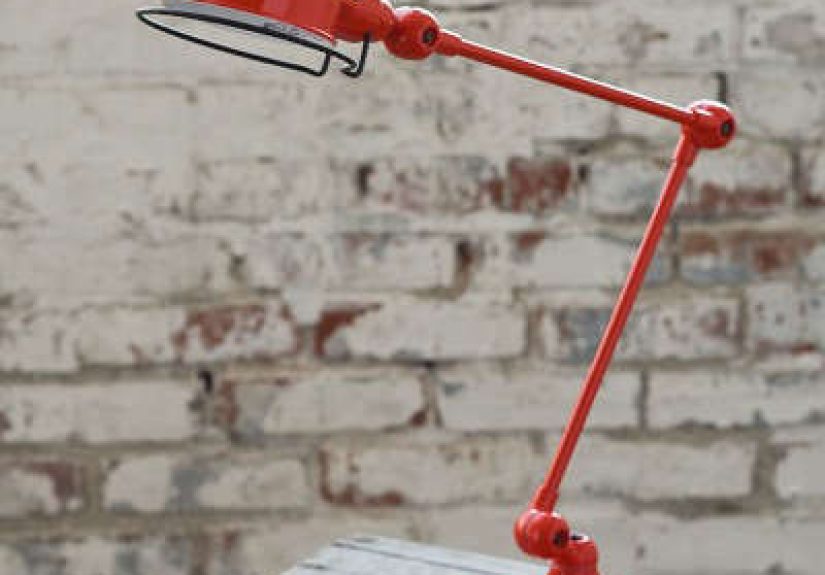
Some desk lamps are polite background characters. The Red Jielde Signal Desk Lamp is not that.
It’s the kind of light that shows up, clears its throat, and announces, “Yes, I’m here to workand look fantastic doing it.”
With its crisp industrial silhouette, fully articulated arms, and a red finish that reads like a design exclamation point,
the Jieldé (often spelled “Jielde” in searches) Signal line has become a go-to for people who want task lighting that feels
both functional and collectible.
In this guide, we’ll break down what makes the Signal desk lamp special, why the red version is such a crowd-pleaser,
how to style it without turning your office into a spaceship (unless that’s your vibe), and what to check before buying
so you end up with the real dealnot a flimsy impersonator in a trench coat.
What “Signal” Means in the Jieldé Universe
Jieldé’s story begins with a simple (and extremely relatable) problem: a creator needed better light. The brand traces back
to Jean-Louis Domecq’s mid-century push for lighting that was robust, precise, and built for real worknot just mood lighting
for dramatic eyebrow raises. Today, the Signal collection is often described as a more compact, refined sibling to the brand’s
heavier industrial styles: cleaner lines, a lighter visual footprint, and still very much “I can aim light exactly where I want.”
The Signal SI333 is a popular desk-friendly model because it hits the sweet spot: enough reach to be useful,
enough structure to feel substantial, and enough style to earn compliments from people who usually don’t notice lamps
(these people existsomehow).
Why the Red Jielde Signal Desk Lamp Is a Design Power Move
Red doesn’t whisper. It edits your whole room.
A red desk lamp isn’t just “a lamp in a color.” It’s an anchor point. In a neutral officewhite walls, oak desk, gray chair
a red Jieldé Signal becomes the focal point that makes everything else look intentional. It adds energy without needing extra clutter:
no more buying five motivational posters and pretending you love them.
A classic industrial shape + bold color = instant character
The Signal’s geometry (arms, joints, and that tidy shade) leans industrial. Red softens the severity and adds warmth,
which is why it works in more than just loft apartments with exposed brick and a resident houseplant named “Kevin.”
Key Features and Specs You Should Actually Care About
Specs can be boringuntil you buy a lamp that can’t reach your keyboard without doing a slow-motion faceplant.
Here’s what matters most on a Red Jielde Signal Desk Lamp (commonly the SI333).
Articulated arms that behave
The SI333 is known for two articulated arms that let you adjust height and reach for different taskstyping, sketching,
reading, or hovering dramatically over a notebook like a detective in a crime movie.
A major appeal is that the lamp can twist and pivot at the joints to direct light where you need it, without making the
whole structure feel wobbly.
A shade that aims like a spotlight (but won’t interrogate you)
The reflector/shade is designed to orient easily, so you can keep light off your eyes while putting it directly on your work surface.
That’s the difference between “productive” and “squinting while pretending you’re fine.”
Materials built for long-term ownership
Many versions are described as metal-forward and durability-mindedthink enameled steel for the body, with robust joints designed
to handle frequent repositioning. This is a lamp made for people who adjust lighting constantly, not people who set it once in 2017 and
never touch it again.
Dimensions: desk-friendly, not desk-devouring
Depending on the retailer and region, the SI333 is commonly listed with two arms around 11.8 inches each, a base about
6.25 inches in diameter, and a compact shade around 4 inches widenumbers that translate into:
“it fits on your desk without stealing your coffee’s parking spot.”
Bulb base and wattage: don’t guessverify
One of the most important practical notes: bulb standards can vary by region and certification.
Some US-sold versions list an E12 bulb base with a max wattage around 40W, while other specs (including
brand-provided care notes on certain pages) reference E14 with a lower max wattage (commonly 25W).
Translation: before you hit “Buy,” check the exact listing and spec sheet for the version you’re purchasing.
The Red Finish: More Than “Just Paint”
The red you see on a Jieldé Signal isn’t typically a shy tomato wash. It’s a confident, industrial-style red that often appears in
standardized color systems on product listings. For shoppers who care about matching (or intentionally clashing) finishes,
this can be helpful: you can coordinate with other reds in your space, from accessories to cabinetry hardware.
If you’re the type who cares about undertones: a strong “signal red” tends to pop against cool grays, crisp whites, and black metal.
Against warm woods (walnut, oak), it creates a classic workshop-meets-studio vibe.
How to Style a Red Jielde Signal Desk Lamp Without Overdoing It
1) The “clean modern” setup
Put the lamp on a simple desk (light wood or matte black), keep the rest minimal, and let the red do the heavy lifting.
Pair with one other red accentone. A notebook, a pen cup, a small print. Stop there. The goal is “editorial,” not “emergency exit sign.”
2) The “creative studio” setup
The Signal lamp shines (literally) in maker spaces: drafting tables, sewing corners, music stations, model-building desks.
The articulated arms let you aim light precisely, and the industrial geometry looks right at home among tools and materials.
3) The “bedside but make it cool” setup
Yes, a desk lamp can be a bedside lamp. The trick is placement:
aim the shade downward for reading, and position the lamp so the base is stable and the arm doesn’t collide with your headboard.
Red adds warmth and personality to bedrooms that otherwise drift into “hotel beige.”
Light Quality Tips: Make the Lamp Work Like a Pro
Choose the right color temperature
- 2700K–3000K: warm, cozy, best for reading and relaxing (bedrooms, living spaces).
- 3500K: neutral, great for general desk work without feeling clinical.
- 4000K: crisp, task-forward, best for studios and detailed work (but can feel “office-y”).
Pick a bulb shape that plays nicely with the shade
A smaller globe or candle-style bulb may sit better inside a compact shade, while a larger bulb can create glare or awkward shadows.
If you’re sensitive to glare, look for a bulb labeled “frosted” or “opal” to soften the light.
Sustainability: Why This Lamp Fits a “Buy Once, Keep Forever” Mindset
Sustainability isn’t just bamboo toothbrushes and guilt. Sometimes it’s choosing objects you won’t replace every two years.
A Jieldé Signal desk lamp is often positioned as a long-term piece: metal construction, sturdy joints, and a design that doesn’t date quickly.
It’s the opposite of disposable décor.
Durability is a sustainability feature
Lamps that survive moves, desk rearrangements, and daily adjusting reduce the odds you’ll toss them and buy another.
Plus, when a product is designed to be maintainedcleaned, tightened, re-bulbedit encourages ownership instead of replacement.
Local production and short supply chains (relative to mass production)
The brand emphasizes workshop-based manufacturing near Lyon and local sourcing for key steps like foundry work, machining, and painting.
That kind of supply approach can reduce transport complexity compared with ultra-fragmented global manufacturingthough, of course,
any imported product still has shipping impacts.
Care and Maintenance: Keep It Looking Sharp
You don’t need a ceremonial cleaning ritual. Keep it simple:
- Dust regularly with a soft, dry cloth to keep the finish looking clean.
- Check joint tension occasionally; if the lamp starts to droop, tightening the joints restores stability.
- Replace bulbs safely: turn it off, let it cool, then swap the bulb with the correct base and max wattage for your model.
For red finishes specifically: avoid abrasive cleaners. If you want that glossy red to stay “wow” instead of “why,”
treat it like you’d treat a nice appliance finishgentle and low-drama.
How to Spot an Authentic Jieldé Signal Lamp (and Avoid Regret)
The popularity of iconic lighting inevitably attracts “inspired by” copies. Some are decent. Some are… not.
If you’re investing in a Red Jielde Signal Desk Lamp, here’s what to look for:
1) A numbered identity
Many authentic Jieldé lamps are described as coming with a unique serial number, reinforcing the idea of individual production rather than anonymous mass output.
2) Solid joints, not squeaky compromises
The joints should feel engineered, not flimsy. The lamp should hold its position without you needing to negotiate with it.
If the head droops like a sad flower the second you let go, that’s not “patina”that’s a problem.
3) Finish quality
A true red Signal lamp tends to have an even finish with consistent color and sheen. Look for clean edges,
a well-assembled shade, and paint that doesn’t look like it was applied during a bumpy car ride.
Buying Advice: Choosing the Right Red Jieldé Signal Desk Lamp for Your Space
Ask yourself three questions
- What’s the task? Reading, keyboard work, detailed craft, general ambianceeach favors a different bulb and placement.
- How much reach do you need? A compact desk might want tighter articulation; a large worktable can use more extension.
- Do you want the red to match or contrast? Red looks sharp with black, white, gray, and natural woodchoose the pairing intentionally.
Desk placement tip
Put the base on the opposite side of your dominant hand when possible.
If you’re right-handed, placing the lamp on the left reduces shadow-casting while writing or drawing (and vice versa).
It’s a small change that feels like a life upgrade.
Real-World Experiences With a Red Jielde Signal Desk Lamp
Because a lamp isn’t just specsit’s a daily companion in the trenches of email, homework, design work, late-night reading,
and the occasional “I will reorganize my whole life at 2 a.m.” moment. Here are common real-world experiences owners and design lovers
often share when living with a Red Jielde Signal Desk Lampespecially the SI333-style format.
The first impression: “This feels like equipment.”
One of the most consistent reactions is how substantial the lamp feels right out of the box.
The all-metal vibe reads less like décor and more like a toolsomething built to do a job.
Even before you plug it in, the joints and arm segments signal (sorry) that the lamp was meant to be adjusted repeatedly,
not posed once and forgotten.
Daily use: the joy of aimable light
People who do task-heavy workediting, sketching, sewing, model-building, even serious journalingoften notice how quickly they start using the lamp’s range.
The arms make it easy to move from “tight spotlight on a notebook” to “broader wash across a keyboard” without dragging the base around.
And because the shade can be directed, you can reduce glare on screens (which is basically the modern version of workplace happiness).
The red factor: it becomes your desk’s personality
The red finish tends to become a signature. In a neutral room, it’s the “one bold choice” that makes the space feel designed.
People frequently describe it as a conversation-starter on video calls, tooone of those objects that quietly says,
“Yes, I care about details,” without you needing to own a single decorative ladder.
If you’re worried red will be “too much,” the experience is often the opposite: because the lamp’s form is clean and industrial,
the color reads confident rather than chaotic. It feels intentionalespecially when you echo it once elsewhere (a book spine, a small tray, a single print).
The lamp becomes the anchor, and everything else can relax.
Living with articulation: small adjustments, big payoff
The best part of an articulated lamp is also the part that surprises people: you use it more than you think.
Morning? Angle it toward a planner. Afternoon? Pull it back for a wider work surface. Night? Aim it low for reading without lighting up the whole room.
Over time, the lamp becomes part of your workflowlike adjusting your chair or moving your keyboardrather than a static object.
Maintenance reality: it’s refreshingly un-fussy
Owners commonly report that upkeep is straightforward: dust it, keep the finish clean, and if the joints loosen over time,
tightening brings it right back to “holds position like a champ.” That’s a quietly satisfying experience in a world where plenty of products
respond to minor wear by giving up entirely.
Long-term vibe: the lamp grows with you
The most “real” experience is how flexible the lamp feels across life changes. Desk moves. Room swaps. New apartment.
Different job. Different hobbies. The lamp still works, still looks good, and still earns its space.
The red doesn’t stop being fun, eitherif anything, it becomes more iconic as your style evolves around it.
Conclusion
A Red Jielde Signal Desk Lamp isn’t a throwaway trend pieceit’s functional industrial design with personality.
If you want a lamp that can aim light precisely, hold up to daily adjustments, and add a confident pop of color without screaming for attention,
the red Signal is a smart (and genuinely enjoyable) choice. Just be sure to confirm the bulb base and electrical spec for the exact version you’re buying,
then let the lamp do what it does best: make workspaces feel sharper, brighter, and a little more alive.