Table of Contents >> Show >> Hide
- What Is Rogaine, Exactly?
- Does Rogaine Work for Eyebrows?
- Who Might Be a Good Candidate?
- Is It Safe to Use Rogaine on Eyebrows?
- How to Use Rogaine on Eyebrows (Carefully)
- What Results Can You Expectand How Long Do They Last?
- How to Avoid Common Mistakes
- Alternatives That May Work Better (Depending on the Cause)
- FAQ: Quick Answers About Rogaine for Eyebrows
- Bottom Line
- Real-World Experiences: What People Commonly Report (About )
Eyebrows have gone from “barely there” to “main character energy” in the last decade. So when they start thinning,
people get… creative. Enter Rogaine for eyebrowsa trend that lives somewhere between “smart hack”
and “please don’t drip that into your eyeball.”
This guide breaks down what’s real, what’s hype, and how to use it as safely as possible if you and your dermatologist
decide it’s worth a try.
What Is Rogaine, Exactly?
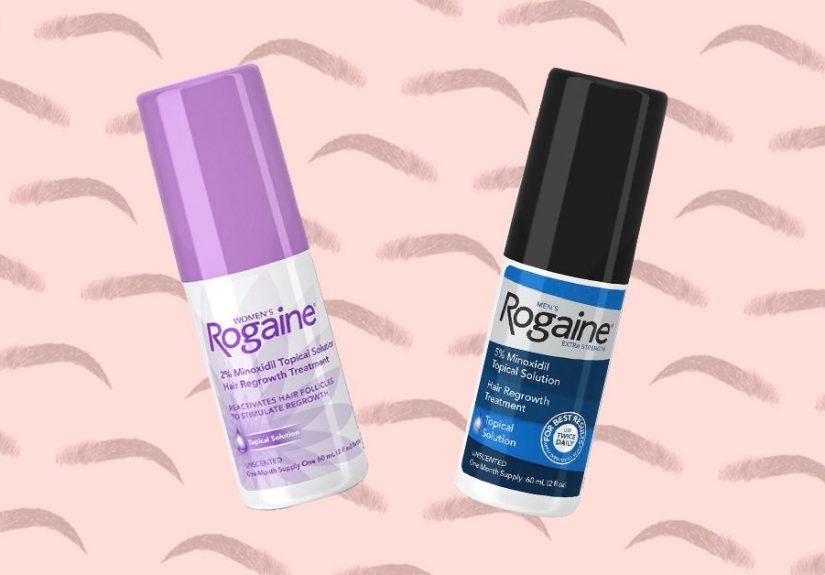
Rogaine is a brand name for topical minoxidil, an over-the-counter medication best known for helping
with certain types of scalp hair loss (like male- and female-pattern thinning). It’s been around long enough that it
has earned a permanent seat at the “pharmacy aisle hall of fame.”
Here’s the catch: Rogaine is FDA-approved for scalp usenot eyebrow use. Putting it on eyebrows is
considered off-label (meaning it’s not the officially approved area, even if some clinicians may use
it that way in practice).
Does Rogaine Work for Eyebrows?
Potentiallyfor the right person, in the right situation. The evidence for eyebrow growth is smaller
than the mountain of data we have for scalp hair, but it’s not nothing.
What the research suggests
There are clinical studies suggesting that low-strength topical minoxidil (often 2%) can improve
eyebrow density in people with eyebrow hypotrichosis (aka sparse brows). Results in studies typically show noticeable
changes after consistent use over weeks to a few monthsthink “slow-burn improvement,” not “overnight Disney brows.”
Why it might help
Minoxidil is thought to support hair follicles by shifting more hairs into the growth phase and keeping them there
longer. In plain English: it can encourage follicles that are still alive and capable of growing to do their job more
enthusiastically.
When it probably won’t help much
- Scarring hair loss (where follicles are permanently damaged)
- Areas with no follicles left from trauma or long-term scarring
- Untreated medical causes (thyroid issues, inflammatory skin conditions, autoimmune disease)
If your eyebrow thinning is sudden, patchy, itchy, scaly, or paired with hair loss elsewhere, treat that like a
“don’t DIY this” sign and get evaluated first.
Who Might Be a Good Candidate?
Rogaine for eyebrows tends to make the most sense when follicles are still present but growth is sluggishlike a
coffee machine that technically works, but needs a motivational speech.
Examples where it may be worth discussing
-
Overplucking recovery: If you lived through the early-2000s “pencil brow” era and your brows never
fully forgave you. - Age-related thinning: Brows can thin over time and hairs may become finer.
- Post-stress or post-illness shedding: Sometimes hair cycles get disrupted after major stressors.
Examples where you should involve a clinician early
- Alopecia areata (autoimmune; can affect brows and lashes)
- Hypothyroidism or other endocrine issues (classically can affect the outer third of brows)
- Eczema, psoriasis, seborrheic dermatitis around the brow area
- Trichotillomania (hair-pulling disorder)
Is It Safe to Use Rogaine on Eyebrows?
“Safe” lives on a spectrum here. Topical minoxidil is widely used on scalps, but the eyebrow region is close to the
eyes and more likely to get irritated. The official labeling for minoxidil products emphasizes avoiding eye contact
and not applying to other body areas. That matters because eyebrows are… famously not your scalp.
Common side effects people report
- Redness, itching, dryness, flaking (irritation is the #1 complaint)
-
Contact dermatitis (often linked to ingredients/solvents in solutions, like propylene glycol,
rather than minoxidil itself) - Unwanted facial hair (especially if product spreads beyond the brow)
Less common but more serious concerns
-
Systemic effects like dizziness, palpitations, or swelling are uncommon with proper topical use,
but risk rises with over-application, broken skin, or occlusion. -
Eye exposure can cause significant irritationthis is not the “learn by experience” moment you
want in your life.
Pregnancy and breastfeeding
If you’re pregnant, trying to conceive, or breastfeeding, treat eyebrow minoxidil as a “talk to your clinician first”
situation. Data is limited, and medical guidance depends on your specific scenario (dose, area applied, infant age,
and risk tolerance).
How to Use Rogaine on Eyebrows (Carefully)
If you’re going to try this, the goal is simple: use the smallest effective amount and keep it out of your eyes.
More product does not equal more brows; it just equals more chances to grow hair on your cheekbone like it’s auditioning
for a beard.
Step 1: Pick the “least annoying” formulation
-
Foam is often tolerated better because it may be less irritating for some people than solution formulas
(solutions can contain solvents linked to irritation/allergy in some users). -
Lower strength (often 2%) is commonly mentioned for facial/off-label use in clinical contexts, but
clinicians vary in practice. Stronger isn’t automatically better near sensitive skin.
Step 2: Patch test like a responsible adult
Apply a tiny amount to a small area of skin near (but not on) the brow region for a couple days. If you get intense
redness, swelling, burning, or rashdon’t proceed.
Step 3: Apply at night, on clean, dry skin
- Wash your face and let the brow area dry completely.
- Put a tiny amount on a clean cotton swab (think: “barely there,” not “paint roller”).
- Swipe it along the brow where you want growth, focusing on the skin at the base of hairsnot the hairs themselves.
- Keep at least a small buffer from the eyelid margin. If it’s close enough to migrate into your eye, it will.
- Wash your hands immediately after.
- Let it dry fully before skincare layers that might smear it around.
Step 4: Start low and slow
Many people start with once daily application. If there’s no irritation after a couple weeks, some
clinicians may suggest increasing frequency, but eyebrow use isn’t standardized the way scalp directions are.
Consistency matters more than aggressiveness.
Step 5: Track results like it’s a mini science project
- Take a photo in the same lighting every 2–4 weeks.
- Expect changes graduallyoften over 8–16 weeks, sometimes longer.
-
If you get significant irritation, scaling, or redness: stop and reassess. You don’t “push through” inflammation
on your face.
What Results Can You Expectand How Long Do They Last?
Eyebrow hair cycles are shorter than scalp cycles, which means brow density can change fasterbut it also means you
may need sustained use to keep gains.
Timeline (typical expectations)
- Weeks 1–4: Mostly “nothing dramatic,” maybe some dryness or itch if you’re sensitive.
- Weeks 6–12: Early improvement in fullness may appear, especially in mild thinning.
- Months 3–4+: More noticeable density changes for responders.
Do you lose progress if you stop?
Often, yes. With minoxidil, stopping can lead to a gradual return toward your baseline over time. Think of it like
watering a plant: you don’t have to hold a pep rally forever, but you can’t ghost it either.
How to Avoid Common Mistakes
Mistake #1: Using way too much
Using more than a tiny amount increases the chance of irritation and unwanted hair growth outside the brow line.
Minimalism wins here.
Mistake #2: Applying to broken or inflamed skin
If the skin is irritated, sunburned, abraded, or actively inflamed, hold off. Absorption can increase and reactions
can intensify.
Mistake #3: Letting it migrate
Apply with precision. Avoid layering oily products immediately over it (they can spread product). Keep it away from
your pillowcase until fully dry.
Mistake #4: Ignoring the “why” behind brow loss
If your brows are thinning because of thyroid issues, eczema, psoriasis, alopecia areata, or hair pulling, eyebrow
minoxidil alone may not solve the underlying problem. It’s like repainting a wall while the pipe is still leaking.
Alternatives That May Work Better (Depending on the Cause)
1) Treat the underlying condition
If eyebrow thinning is driven by inflammation, hormone imbalance, infection, or autoimmune disease, targeted medical
treatment is often the most effective “growth serum.”
2) Prescription options for certain diagnoses
-
Alopecia areata: Dermatologists may use treatments such as corticosteroids (sometimes injections)
or newer systemic options (including JAK inhibitors in appropriate cases). - Bimatoprost: FDA-approved for eyelash hypotrichosis; sometimes used off-label for brows under medical guidance.
3) Cosmetic solutions (instant gratification)
- Brow pencils, pens, powders, tinted gels
- Microblading or nano brows (choose reputable providers)
- Eyebrow transplant for select candidates
4) Habit-focused care if pulling is the issue
If trichotillomania is involved, behavioral therapy approaches (like habit reversal training) can be the real game-changer.
Growth products can help visually, but they won’t stop the underlying compulsion.
FAQ: Quick Answers About Rogaine for Eyebrows
Can I use men’s 5% Rogaine on my eyebrows?
Some people do, but higher strength can increase irritation and unwanted facial hair risk. Because eyebrow use is off-label,
it’s smarter to discuss strength and schedule with a clinicianespecially if you have sensitive skin.
What if it gets in my eye?
Rinse thoroughly with cool tap water. If irritation persists or you have pain/vision changes, seek medical care.
This is why precise application matters.
Will it make my eyebrows shed first?
Scalp minoxidil can be associated with temporary shedding early on as hair cycles shift. Not everyone experiences it,
and eyebrow shedding reports are more anecdotal than well-studied. If shedding is dramatic or patchy, pause and get evaluated.
How long should I try it before deciding it doesn’t work?
A fair trial is usually 3–4 months of consistent use, unless you develop side effects.
Is it safe if I have heart disease?
Product labeling advises asking a doctor if you have heart disease. Don’t self-experiment near your eyes without medical guidance.
Can I use it with makeup?
Yes, but wait until the product fully dries. Applying makeup too soon can smear it into places you don’t want hair growth.
Bottom Line
Rogaine for eyebrows can work for some peopleespecially when brow thinning is mild and follicles are still viable.
But because it’s off-label and close to the eyes, the safest approach is careful application, conservative dosing,
and a low threshold for stopping if irritation shows up.
If your brow loss is patchy, sudden, inflamed, or associated with other symptoms, don’t just throw minoxidil at it.
Figure out the cause first. Your eyebrows deserve a plan, not a panic.
Real-World Experiences: What People Commonly Report (About )
Let’s talk about what tends to happen in real life, because eyebrow growth is one of those things that sounds simple
until you’re three weeks in, staring at your brows like they owe you money.
Week 1–2: A lot of people report feeling… basically nothing. The most common “early storyline” isn’t
growthit’s skin drama. Mild itching or dryness can pop up quickly, especially with solution formulas. Some users
switch to foam after a few days because it feels less irritating. This is also when many realize they’ve been using too much.
If you can see wet product sitting on the brow like morning dew, that’s a sign to scale back.
Week 3–6: This is when patience gets tested. Some people swear they see tiny new hairs (often described as
“peach fuzz”), while others see nothing and start doom-scrolling “rogaine eyebrows before and after.” A very common mistake
here is changing five variables at onceadding serums, oils, aggressive exfoliation, and then wondering why the skin is irritated.
The people who do best tend to keep it boring: clean application, small amounts, consistent schedule.
Week 6–12: For responders, this is the sweet spot. Reports often shift from “Is this doing anything?” to
“Wait… my tail end looks less tragic.” Many describe improved density first in the areas that were thin but not totally bare.
It’s also common to notice that new hairs can look finer at first. That’s normalearly regrowth often shows up as softer,
lighter hairs before they mature.
Common annoyance: Unwanted hair. People who apply too widely (or rub their face after applying) sometimes
notice extra fuzz above or below the brow. The good news is that this usually improves when the product is used more precisely
(and any unwanted hair can be removed). The not-so-fun news: you may have to learn the art of “cotton swab precision”
like you’re painting a tiny masterpiece.
Month 3–4+: This is where the most realistic success stories live. The common pattern is subtle-but-real:
brows look fuller in photos, makeup applies more evenly, and sparse areas look less “gappy.” People often say the biggest lesson
is consistencyskipping days frequently tends to stall progress. Another frequent comment: once results appear, many move to a
maintenance approach (for example, less frequent use), because daily application forever feels like having a tiny eyebrow subscription.
Important reality check: If the root issue is untreated (alopecia areata, thyroid problems, chronic dermatitis,
hair pulling), real-world experiences are often disappointing until that underlying driver is addressed. In those cases, minoxidil
might be a supporting actor, not the hero. The best “experience reports” usually come from people who matched the method to the cause.