Table of Contents >> Show >> Hide
- What Is Mămăligă? (And Why It’s Not “Just Polenta”)
- Ingredients
- Best Cornmeal to Use (So Your Pot Doesn’t Betray You)
- Step-by-Step: How to Make Mămăligă on the Stovetop
- Texture Options: Spoonable vs Sliceable (Choose Your Own Adventure)
- Serving Ideas the Romanian Way
- Troubleshooting (Because Cornmeal Has Opinions)
- Make-Ahead, Storage, and Reheating
- FAQs
- Romanian Cornmeal Porridge (Mămăligă) Recipe Card
- Kitchen Stories: The 500-Word Mămăligă Experience
- Conclusion
If you’ve ever stood over a pot of bubbling cornmeal, stirring like you’re auditioning for a nautical-themed CrossFit class, congratulations: you’ve already met mămăligă (mah-muh-LEE-guh). This traditional Romanian cornmeal porridge is comfort food with two personalitiessoft and creamy when served hot, or firm enough to slice when cooled. It’s simple, humble, and shockingly good at making “just a side dish” become the star of the table.
In this guide, you’ll get a reliable, weeknight-friendly Romanian cornmeal porridge (mămăligă) recipe, plus the smart technique tweaks that reputable U.S. food sites love to emphasize: the right liquid-to-cornmeal ratio, lump prevention, and how to reheat leftovers so they don’t turn into edible drywall.
What Is Mămăligă? (And Why It’s Not “Just Polenta”)
Mămăligă is a Romanian staple made by simmering cornmeal with water (sometimes milk or stock), salt, and often a little butter. You’ll hear it compared to Italian polentaand that’s not wrongbut in many Romanian homes, mămăligă commonly leans thicker and can be served as a bread substitute alongside stews, roasted meats, or saucy dishes. It also loves dairy: sour cream, brined cheeses (like feta-style), and butter tend to show up to the party.
The magic is that mămăligă adapts. Want it spoonable like a creamy bowl of grits? Easy. Want it firm so you can slice it, pan-fry it, and pretend you invented cornmeal French toast? Also easy. Same ingredientsdifferent ratios and timing.
Ingredients
For Classic Mămăligă (firm-but-creamy, Romanian-style)
- 4 cups water (or 3 cups water + 1 cup milk for extra richness)
- 1 to 1 1/4 cups medium-grind yellow cornmeal (not sweet cornbread mix)
- 1 1/4 teaspoons kosher salt (adjust to taste)
- 2 tablespoons butter (optional, but strongly encouraged for happiness)
Optional (but highly traditional) toppings and add-ins
- Sour cream (or Greek yogurt in a pinch)
- Brined cheese (feta-style), farmer cheese, or ricotta
- Cracked black pepper, fresh herbs (dill is a vibe), or garlic butter
- Fried eggs or sautéed mushrooms
- Stew or braise (anything with sauce loves mămăligă)
Best Cornmeal to Use (So Your Pot Doesn’t Betray You)
For a great mămăligă recipe, the cornmeal grind matters almost as much as the stirring. Here’s the quick, practical breakdown:
- Medium-grind cornmeal: The sweet spot for most home cookscreamy, not gritty, still sturdy enough to set.
- Coarse/stone-ground: More rustic flavor and texture, often needs more liquid and a longer cook time.
- Instant/quick-cooking: Works when you’re in a hurry, but the flavor and texture can be less satisfying. (Not forbiddenjust less “old-world cozy.”)
If you’re shopping and see “polenta,” don’t panic. In U.S. grocery stores, polenta is often just cornmeal labeled for a particular texture. What you want is plain cornmeal/polenta without added sugar, leavening, or “cornbread mix” extras.
Step-by-Step: How to Make Mămăligă on the Stovetop
This method is designed to be lump-resistant and flexible. If you can whisk and you can simmer, you can make mămăligă.
- Bring the liquid to a boil.
In a heavy-bottomed pot, bring 4 cups water (or your water-milk combo) to a boil. Stir in the salt. Salting early helps the cornmeal taste like itselfin a good way. - Rain in the cornmeal (don’t dump it).
Reduce heat to medium. While whisking, slowly pour in the cornmeal in a thin stream. Think “gentle snowfall,” not “cornmeal landslide.” Keep whisking for 30–60 seconds until smooth. - Simmer low and stir smart.
Lower the heat to a gentle simmer. Switch to a sturdy spoon. Stir frequently (every 30–60 seconds at first), scraping the bottom so it doesn’t stick. After the first 5 minutes, you can stir every 1–2 minutes. - Cook until thick and tender.
Cook 12–20 minutes for medium-grind; longer for coarse cornmeal. It should taste cooked (not raw), look glossy, and pull slightly from the sides of the pot. - Finish with butter (optional, but let’s be real).
Stir in the butter until melted. Taste and adjust salt. If you want it extra creamy, a spoonful of sour cream or a handful of cheese folded in at the end is very on brand.
Texture Options: Spoonable vs Sliceable (Choose Your Own Adventure)
The most common frustration with Romanian cornmeal porridge is expecting one texture and getting another. Here’s how to steer the ship:
Spoonable, creamy mămăligă
- Use more liquid: about 5 cups liquid per 1 cup cornmeal (adjust for grind)
- Cook gently: lower heat helps it turn creamy instead of scorching
- Finish rich: butter, milk, or cheese makes it luxurious
Firm, sliceable mămăligă (sets like a soft loaf)
- Use less liquid: about 4 cups liquid per 1 1/4 cups cornmeal (or cook longer to evaporate)
- Cook longer: let it thicken until it’s very sturdy
- Set it: spread into a lightly buttered pan or bowl, cool, then slice
Pro tip: if you’re unsure, aim slightly creamier. You can always cook a bit longer to thicken, but rescuing a pot that’s too thick can feel like negotiating with wet concrete.
Serving Ideas the Romanian Way
A good mămăligă recipe is like a blank canvasexcept this canvas is edible, warm, and quietly judging you for not adding sour cream.
1) With cheese and sour cream
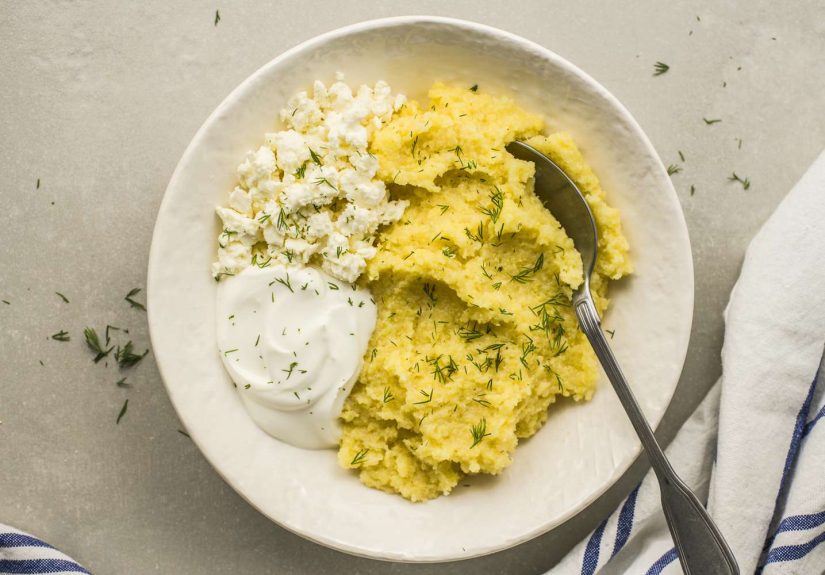
The classic move: spoon hot mămăligă into bowls and top with generous dollops of sour cream plus crumbled brined cheese. Add black pepper and maybe dill. It’s creamy-salty-tangy perfection.
2) Under a stew or braise
Treat it like a sauce magnet. Anything tomato-y, mushroomy, wine-braised, or paprika-rich will feel right at home. If your main dish has gravy, mămăligă will gladly volunteer as tribute.
3) Breakfast mode
Warm mămăligă + fried egg + salty cheese = the kind of breakfast that makes cereal feel personally attacked.
4) Leftover glow-up: pan-fried squares
Pour leftovers into a shallow dish, cool until firm, slice, then pan-fry in a little butter or oil until crisp. Serve with eggs, sautéed greens, or a spoonful of marinara. Suddenly, yesterday’s porridge is today’s snack hero.
Troubleshooting (Because Cornmeal Has Opinions)
- Lumps happened: Whisk vigorously while adding cornmeal. If lumps still form, whisk harder for 30 seconds, then simmer; many lumps soften as it cooks. In extreme cases, a brief blitz with an immersion blender can smooth it out.
- Too thick: Stir in hot water (or hot milk) a splash at a time until loosened.
- Too thin: Keep simmering and stirring; it thickens as moisture evaporates. If needed, sprinkle in a little extra cornmeal while whisking (slowly!) and cook a few more minutes.
- Gritty texture: Coarse cornmeal may need more cook time and more liquid. Low heat + patience is the fix.
- Sticking/scorching: Use a heavy pot, lower the heat, and scrape the bottom as you stir. If it scorches, don’t scrape the burned layer into the restjust carefully transfer the good portion to a clean pot.
Make-Ahead, Storage, and Reheating
Mămăligă thickens as it coolsthis is normal, not a betrayal. Store leftovers airtight in the fridge for up to 4 days.
- To reheat creamy: Warm in a saucepan over low heat with splashes of water or milk, stirring until smooth.
- To reheat firm slices: Pan-fry, air-fry, or bake until warmed through and crisp at the edges.
FAQs
Is mămăligă gluten-free?
Yescornmeal is naturally gluten-free. Just make sure your cornmeal is labeled gluten-free if cross-contamination is a concern.
Can I make it with stock?
Absolutely. Chicken or vegetable stock adds savory depth. If you’re serving it with a stew, stock can make the flavors feel extra cohesive.
Do I really have to stir the whole time?
Not nonstopbut frequent stirring prevents lumps and sticking. If you want a lower-effort approach, keep the heat very low, cover partially, and stir every few minutes. Your future self (and your biceps) will thank you.
Romanian Cornmeal Porridge (Mămăligă) Recipe Card
Ingredients
- 4 cups water (or 3 cups water + 1 cup milk)
- 1 to 1 1/4 cups medium-grind yellow cornmeal
- 1 1/4 teaspoons kosher salt
- 2 tablespoons butter (optional)
- To serve: sour cream + crumbled brined cheese + black pepper (optional)
Instructions
- Bring water (or water-milk mix) to a boil in a heavy pot. Stir in salt.
- Reduce heat to medium. While whisking, slowly pour in cornmeal in a thin stream until smooth.
- Lower heat to a gentle simmer. Stir frequently, scraping the bottom, until thick and tender (12–20 minutes for medium grind).
- Stir in butter if using. Taste and adjust salt. Serve hot with sour cream and cheese, or let cool to slice.
Kitchen Stories: The 500-Word Mămăligă Experience
There’s a very specific moment when you make mămăligă where your kitchen starts to feel like it’s giving you a hug. It usually happens right after the cornmeal goes inwhen the pot shifts from “this is just salted water” to “something cozy is happening.” Steam rises, the mixture turns sunshine-yellow, and suddenly you’re not just cooking dinner; you’re performing a tiny, edible ritual.
The first few minutes are the most dramatic. Cornmeal is polite until it’s not. One second it’s swirling calmly, the next it’s thickening like it has somewhere important to be. You whisk, you stir, you check the bottom of the pot like a cautious detective. And then you realize: this is the whole game. Mămăligă rewards attention, but not panic. Low heat, steady stirring, and a little patience turn “grainy porridge potential” into “creamy comfort food reality.”
What’s fun is how customizable the experience becomes once you’ve made it once. On some nights you’ll crave it softserved hot in bowls, topped with sour cream that melts into silky rivers and salty cheese that tastes like it’s been waiting its whole life for warm cornmeal. On other nights, you’ll intentionally cook it thicker, because you’re already thinking ahead to tomorrow’s leftovers: neat slices that crisp in a pan and become the perfect platform for eggs, mushrooms, or whatever is hanging out in your fridge pretending it’s not about to expire.
And let’s talk about the “stirring workout” myth. Yes, you stir. But it’s not a punishment; it’s a rhythm. It’s the kind of repetitive kitchen motion that makes you slow down. People often describe the process as calminglike the cooking version of a good playlist where you stop skipping songs and just let it play. The smell is mild and sweet, like warm corn, and the sound of the spoon scraping the pot becomes oddly satisfying (until you remember to lower the heat and save yourself from scorched edges).
If you serve mămăligă to guests, you’ll notice something charming: the table gets quieter for a minute. Not because everyone is being politebecause everyone is busy eating. It’s hearty without being heavy, neutral enough to match bold stews, yet flavorful enough to stand alone with butter and salt. It’s also a natural “family-style” food: big spoon, big bowl, pass the toppings, build your perfect bite. Even picky eaters tend to come around once they realize it’s basically a cozy cornmeal base designed to carry the flavors they already love.
The best part? Mămăligă makes ordinary meals feel intentional. A random Tuesday stew feels like a tradition. A fried egg feels like a brunch plan. Leftovers feel like strategy. And every time you make it, you get slightly better at reading the potthe thickness, the sheen, the moment it’s ready. Eventually, you won’t measure as much. You’ll just know. That’s when you’ve officially joined the cornmeal club. Membership fee: one wooden spoon and a willingness to stir like you mean it.
Conclusion
A great Romanian cornmeal porridge (mămăligă) recipe is less about fancy ingredients and more about smart technique: the right cornmeal, a gentle simmer, and stirring that prevents lumps and sticking. Make it creamy, make it firm, top it with sour cream and cheese, or slide it under a saucy stewmămăligă is one of those simple dishes that feels both comforting and surprisingly special. And if you end up eating the leftovers straight from the pan-fry stage? That’s not a mistake. That’s culinary wisdom.