Table of Contents >> Show >> Hide
- Meet the Artist Behind the “World, But Make It Cute” Concept
- Why “Countries as Characters” Works So Well Online
- The 10 Pics: A Tour of Adorable Country Cartoons
- 1) Mexico: Sugar-Skull Sweetness With a Side of Cactus
- 2) Kenya: Beadwork, Bold Contrast, and a Lion Cub You Want to Adopt
- 3) Mongolia: Fur, Sky Colors, and a Quiet Kind of Tough
- 4) Native American Girl: Profile Pose, Powerful Symbols
- 5) Girl From the North: Cozy Survival Mode, But Make It Precious
- 6) Japan: Kimono Elegance Meets Shiba Chaos
- 7) Hawaii: Ukulele Vibes, Tropical Friends, and Maximum “Aloha” Energy
- 8) India: Jewelry, Gesture, and a Cobra That’s Somehow Not Scary
- 9) Russia: Folk Patterns, Bagels, and a Rooster With Main-Character Energy
- 10) Ukraine: A Floral Crown, Bright Ribbons, and a Goose Sidekick
- The Secret Sauce: Cute Doesn’t Have to Mean Shallow
- How to Create Your Own “Country Character” Without Getting Dragged in the Comments
- Conclusion: Why These 10 Pics Stick With You
- The Experience: What It Feels Like to Meet the World in 10 Cartoon Faces (Extra )
Somewhere on the internet, a Russian illustrator looked at the entire planet and basically said:
“What if every country was a tiny, lovable character you’d want to high-five… and also maybe feed snacks?”
The result is a set of bright, big-eyed portraits that turn different places into charming cartoon “people,”
each one packed with visual cluestraditional clothing, iconic animals, familiar foods, and little cultural
winks that make you go, “Oh! I know where she’s from.”
The series is sweet, funny, and strangely effective at making you feel like you’ve traveled without leaving
your chair. It’s also a masterclass in how to do “country personifications” without getting trapped in the
boring old lane of flags-with-faces. Instead, these are characters with personalityeach one telling a mini
story in a single image.
Meet the Artist Behind the “World, But Make It Cute” Concept
The project is known as The Beauty of the World, created by Russian illustrator Lera Kiryakova.
The premise is simple: she draws girls inspired by different countries (and regions/cultures), translating
recognizable elements into a soft, animated stylerounded features, expressive eyes, and props that feel like
visual punchlines. You don’t need a caption to understand the gist. Your brain connects the dots instantly:
“This is Japan,” “That’s Mexico,” “Yep, definitely Hawaii,” and so on.
What makes the set pop is the balance between detail and restraint. Each character usually carries just a
handful of “identity signals”a hairstyle, a garment silhouette, an accessory, and one strong supporting
symbol (often an animal). Too many symbols and the image becomes a costume rack. Too few and you lose the
“Aha!” moment. Kiryakova keeps it right in the sweet spot.
Why “Countries as Characters” Works So Well Online
Humans have been personifying places forever. We give nations mascots, symbols, and “faces” to make big,
complicated identities feel relatable. In the U.S., “Uncle Sam” is the classic example of turning a country
into a recognizable character. Online, memes like “countryballs” show that people still love the idea of
countries behaving like personalities.
Kiryakova’s twist is that she’s not making political commentary or dunking on anyone for laughs. The tone is
affectionate. The characters feel like friendly introductionslike the world’s most adorable exchange program.
It’s the kind of art you share because it’s joyful, and because it quietly invites curiosity: “Wait, what’s
that bird?” “Is that outfit traditional?” “Why that animal?” Congratulations: you’re learning, but your brain
thinks it’s just scrolling.
The 10 Pics: A Tour of Adorable Country Cartoons
Below are ten standout portraits from the serieseach one a tiny story that uses costume, color, and props to
say “This place” without yelling it through a megaphone.
1) Mexico: Sugar-Skull Sweetness With a Side of Cactus
Mexico’s portrait leans into festive, iconic imagery: bright flowers in the hair, a Día de los Muertos-inspired
sugar-skull face paint style, and a little cactus that says “desert sunshine” without needing a postcard. The
character cradles a small monkey, which adds warmth and playful energylike the drawing itself is laughing.
It’s cute, colorful, and instantly recognizable in that “I’ve seen this vibe in movies, photos, and festival
imagery” way.
2) Kenya: Beadwork, Bold Contrast, and a Lion Cub You Want to Adopt
Kenya’s character is all about striking shapes and texturebeaded jewelry, patterned elements, and a confident,
grounded expression. The real scene-stealer is the sleepy lion cub in her arms. It’s a perfect storytelling
shortcut: wildlife as national association, but rendered gently rather than as a dramatic safari poster.
The overall feel is protective, proud, and calmlike “Yes, I’m adorable, but also I run this.”
3) Mongolia: Fur, Sky Colors, and a Quiet Kind of Tough
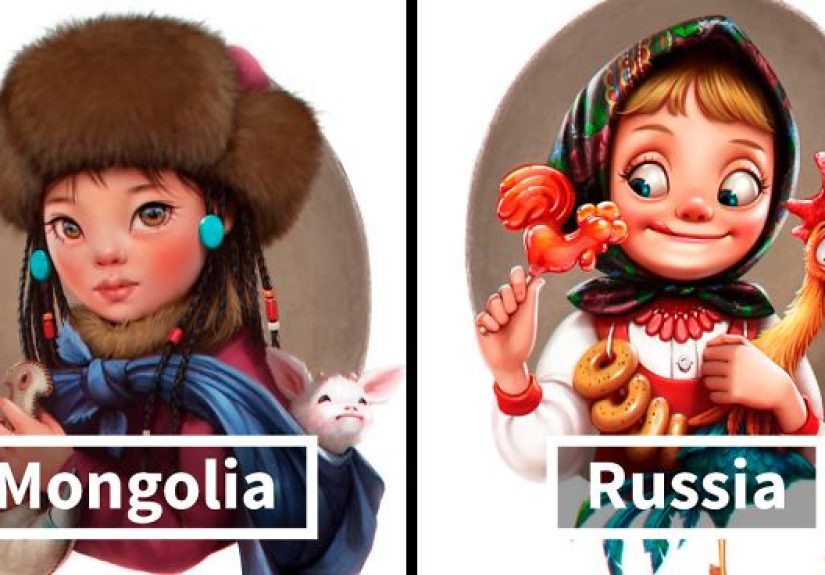
Mongolia’s portrait brings in cold-weather textures and practical warmth: a thick fur hat, layered clothing,
and cool tones that feel like open air and wide horizon. Small detailslike distinctive jewelry and the sense
of traditional craftgive it personality. A little animal companion peeks out, softening the mood and making
the character feel like she stepped out of a winter storybook.
4) Native American Girl: Profile Pose, Powerful Symbols
This portrait shifts the framing: a side-profile view with strong graphic shapesheadband, feathers, and a
shield-like element behind her. The character feels serious and dignified, with face paint and accessories that
read as ceremonial rather than “costume-y.” A raccoon companion adds a playful note, and the overall composition
feels intentionalless “tourist souvenir” and more “illustrated homage.”
5) Girl From the North: Cozy Survival Mode, But Make It Precious
The “Girl from the North” is bundled in a massive fur hoodso fluffy it practically has its own weather system.
She hugs a husky pup like it’s the world’s warmest hot-water bottle and holds a large fish that signals
northern life and practicality. The mood is wholesome and resilient: cute, yesbut also clearly built for real
cold, real distance, and real “I can handle this” energy.
6) Japan: Kimono Elegance Meets Shiba Chaos
Japan’s character wears a stylized kimono with delicate patterning and a dreamy color fade. Her hair is arranged
in tidy buns with decorative elements, and the scene includes a Shiba Inu being fed with chopsticks. The dog’s
expression is pure comedylike it’s living its best life and also maybe plotting a sushi heist. It’s a gentle,
funny snapshot of “refined tradition + modern pop-cute energy.”
7) Hawaii: Ukulele Vibes, Tropical Friends, and Maximum “Aloha” Energy
Hawaii’s portrait is loud in the best way: flower in the hair, beachy accessories, shells, and a ukulele mid-song.
A colorful parrot (wearing a lei, because of course it is) leans in like a backup vocalist who refuses to miss a
chorus. The whole drawing practically plays music. It feels like sunshine, ocean air, and a vacation you didn’t
budget for but suddenly need.
8) India: Jewelry, Gesture, and a Cobra That’s Somehow Not Scary
India’s character is all expressive hands and ornamentbindi, nose ring, layered jewelry, and a sari-like drape
with strong color. A cobra rises nearby, and instead of making the scene tense, it becomes part of the character’s
poiselike a symbol woven into a dance pose. The portrait captures a sense of rhythm and tradition through
silhouette and gesture, not just through “stuff.”
9) Russia: Folk Patterns, Bagels, and a Rooster With Main-Character Energy
Russia’s portrait features a headscarf with folk-style patterning and a cozy, cold-weather feel. The character’s
rosy cheeks and playful grin match the props: a rooster (dramatic, proud, and absolutely aware it’s being drawn)
plus bagel-like rings and a candy rooster motif that feels like a nostalgic nod. It’s charming in a “grandma’s
kitchen, but animated” waywarm, familiar, and surprisingly funny.
10) Ukraine: A Floral Crown, Bright Ribbons, and a Goose Sidekick
Ukraine’s character wears a vivid floral wreath with long ribbons and traditional-looking embroidered details.
She’s holding a goose like it’s the world’s most stubborn purse dog. The contrast is delightful: elegant folk
styling paired with a hilariously expressive bird. It’s the kind of image that makes you smile twiceonce for the
beauty, once for the goose’s attitude.
The Secret Sauce: Cute Doesn’t Have to Mean Shallow
Turning cultures into “one image” is risky because it can slide into stereotypesoversimplified shortcuts that
flatten real people into a single costume or cliché. The best versions of this trend avoid that trap by doing
three things:
- Research first, stylize second. The drawing should be built from real reference, not vague memory.
- Choose symbols with care. “Iconic” is fine; “mocking” is not. The vibe should be admiration, not parody.
- Leave room for complexity. One illustration can’t represent everyone, so it should feel like a doorway, not a verdict.
Kiryakova’s portraits generally succeed because they communicate affection. The faces are gentle. The props are
whimsical. And the tone doesn’t say “This is what this place is.” It says, “Here’s a cute introductiongo explore
more if you’re curious.”
How to Create Your Own “Country Character” Without Getting Dragged in the Comments
Want to try this style yourself? Here’s a simple framework that keeps the design strong and the intention respectful.
Step 1: Pick Three Anchors (Not Thirty)
Choose one clothing element, one object/animal, and one color or pattern theme. That’s it. You’re building a
character, not packing a suitcase.
Step 2: Use Real Reference (Photos, Textiles, Museum Collections)
Reference helps you avoid “generic world costume” syndrome. Look for authentic silhouettes, materials, and
details that people actually wear or use.
Step 3: Make a Person, Not a Label
Expression matters. A smirk, a curious glance, a proud stancethose choices make the character feel human. If the
drawing is only symbols, it reads like a brochure. If it’s a person plus symbols, it reads like a story.
Step 4: Get Feedback Early
If you’re depicting a culture that isn’t yours, ask someone from that culture what feels accurate and what feels
off. Treat it like good editing, not like a courtroom drama.
Conclusion: Why These 10 Pics Stick With You
These illustrations work because they’re immediate and warm. They let you recognize countries through visual
storytellingclothing, animals, gestures, textureswithout turning the world into a punchline. Each portrait feels
like a tiny invitation: to travel, to learn, to appreciate, or at least to smile at a goose with a personality.
In a feed full of hot takes, it’s genuinely refreshing to find art that says, “Hey. The world is big. People are
different. Isn’t that kind of wonderful?”
The Experience: What It Feels Like to Meet the World in 10 Cartoon Faces (Extra )
If you’ve ever fallen into the classic “I’ll scroll for five minutes” trap and then resurfaced forty-five minutes
later holding your phone like it’s a life raft, this kind of art is the reason. Not because it’s complicatedquite
the opposite. It’s because it delivers a tiny emotional payoff every time your brain recognizes a place.
That recognition is weirdly satisfying. It’s the same feeling as hearing the first two notes of a song you love:
your brain goes, “I KNOW THIS,” and rewards you with a sprinkle of dopamine like you just solved a mystery.
The fun part is how fast it happens. You don’t need a geography degree. You just see a hintflowers, a pattern,
a specific animal, a familiar foodand your mind starts filling in the rest. It’s basically a visual version of
“Name that tune,” except instead of songs, it’s cultures and places. And instead of bragging rights, you get a
Shiba Inu eating sushi and looking smug about it.
There’s also a travel-daydream effect. One portrait can kick up memories of movies you’ve watched, foods you’ve
tried, festivals you’ve seen photos of, or trips you swear you’ll take “someday” (the international sibling of
“I’ll start working out on Monday”). You might look at the Mexico illustration and suddenly remember a documentary
about Día de los Muertos, or the first time you tried a spicy dish that made you question your life choicesin a
good way. You see Hawaii and you can almost hear the ukulele. You see the “Girl from the North” and your shoulders
tense up like you personally just walked into wind that has opinions.
What’s sneakyand kind of greatis that the drawings can nudge you into curiosity without being preachy. You might
start Googling a clothing item, an animal, or a pattern because you want to know the real story behind the symbol.
That’s how art becomes a gateway: not by lecturing you, but by making you care enough to ask a question.
And honestly, sometimes the experience is simply joy. The characters are cute. The animals are cuter. The props
have personality. The goose looks like it’s about to file a complaint. The rooster looks like it’s running for
office. The lion cub looks like it needs a nap and a tiny therapist. In a world where everything feels loud, these
portraits are a soft moment that says, “Heretake a breath. The planet is big, and it can be charming.”