Table of Contents >> Show >> Hide
- Quick Answer (Because You’re Busy)
- What Exactly Is Sabudana?
- Sabudana Nutrition: Mostly Starch, Not Much Else
- Why Blood Sugar Cares About Sabudana
- So… Is Sabudana “Bad” for Diabetes?
- When Sabudana Can Make Sense (Yes, Really)
- How to Eat Sabudana More Diabetes-Friendly
- Sample Carb Math (So It’s Less Guessy)
- Better Swaps When You Want the Same Comfort (But Less Spike)
- Who Should Be Extra Careful With Sabudana?
- Bottom Line
- Real-World Experiences (500+ Words): What People Notice With Sabudana
Sabudana has a talent for showing up at the worst possible timeusually when you’re hungry, it’s delicious,
and your blood sugar would really prefer you didn’t. If you’ve ever stared at a bowl of fluffy sabudana
khichdi (or a sweet sabudana kheer) and wondered, “Is this going to treat my glucose like a trampoline?”
you’re in the right place.
Let’s talk honestly (and without the food-police energy): sabudana isn’t “evil,” but it is a highly
refined starch that can raise blood sugar quickly if you eat it the usual way people eat iti.e., a lot.
The good news: with planning, portions, and smart pairings, some people with diabetes can still fit it in
occasionally.
Quick Answer (Because You’re Busy)
Sabudana is usually not the best everyday choice for diabetes because it’s mostly fast-digesting
carbohydrate with very little fiber or protein. That combo often leads to quicker blood sugar spikes. But
small portions, paired with protein/fat/fiber (think peanuts, yogurt, veggies),
and counted as part of your carb budget, can make sabudana an occasional food for some people.
What Exactly Is Sabudana?
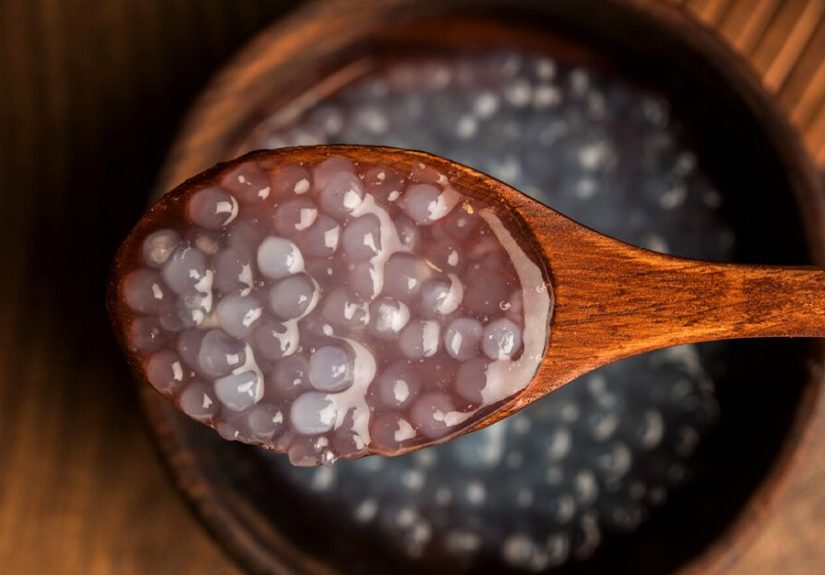
Sabudana (often labeled “tapioca pearls”) is made from the starch extracted from cassava root. In many kitchens,
it’s the MVP of fasting foods and comfort dishes because it cooks into those soft, chewy pearls that feel like
a warm hug with excellent posture.
You may also hear it called “sago,” but quick clarification: in some places “sago” refers to starch from sago
palm, while in many stores “sago” and “tapioca pearls” get used interchangeably. Nutrition-wise, what matters
most is the same: these pearls are primarily starch.
Sabudana Nutrition: Mostly Starch, Not Much Else
Here’s the headline: sabudana is essentially concentrated carbohydrate. It’s typically low in protein, low in
fat, and very low in fiber. That means it doesn’t slow down digestion the way beans, whole grains, or veggies
do.
Why the “low fiber” part matters
Fiber acts like speed bumps for glucose absorption. When a carb-heavy food is low in fiber, it can digest faster,
sending glucose into the bloodstream more quickly. Sabudana’s “smooth ride” digestion is exactly what can create
a sharper rise in blood sugar.
Calories aren’t the whole story (but they’re not nothing)
Sabudana can be surprisingly easy to overeat because it’s light, fluffy, and doesn’t always feel filling. A bowl
can turn into a second bowl before your brain gets the memo.
Why Blood Sugar Cares About Sabudana
Diabetes management is basically the art of matching carbohydrates (and how fast they digest)
with your body’s available insulin (or your medication plan). Sabudana is a carbohydrate that often behaves like
a “quick-release” fuel source.
Glycemic index vs. glycemic load (in plain English)
Glycemic index (GI) tells you how fast a carb-containing food tends to raise blood sugar compared
to pure glucose. Glycemic load (GL) considers both the GI and the portion size you eat.
Translation: you can take a high-GI food and make the impact smaller by eating a smaller portion and pairing it
wisely.
Tapioca/sabudana is commonly categorized as a high-GI food. That doesn’t automatically mean
“never,” but it does mean “treat it like a carb that can hit fast.”
Cooking changes starch behavior
When you soak and cook sabudana, the starch granules gelatinizebasically becoming easier for your body to break
down. That’s great for texture. For blood sugar, it can mean “hello, glucose.”
So… Is Sabudana “Bad” for Diabetes?
If diabetes nutrition had one universal rule, it would be: there are no universal rules. (Yes,
that’s a rule about rules. Welcome to nutrition.)
For many people with diabetes, sabudana is best described as:
“Possible, but not a free-for-all.”
It’s not nutrient-dense compared to higher-fiber carbs, and it may spike blood sugar more than you’d like.
But if you love it culturally, socially, or emotionally (food is allowed to be joyful!), you can sometimes make
it work with strategy.
Reasons sabudana can be tricky
- High carb concentration in a small volume (easy to overshoot your carb target).
- Low fiber (less braking power on glucose absorption).
- Often cooked with added carbs or fats (sugar in kheer, deep-frying, sweetened beverages).
- “Sneaky portions”: a “small bowl” can still be a big carb load.
When Sabudana Can Make Sense (Yes, Really)
There are a few scenarios where sabudana might fit better:
- You plan for it. You account for the carbs the way you would for rice, bread, or pasta.
- You pair it. Adding protein/fat/fiber can reduce how fast glucose rises.
- You keep the portion modest. Not “I can see the bottom of the bowl,” but “this is a measured amount.”
- You learn your personal response. Two people can eat the same dish and get very different glucose curves.
How to Eat Sabudana More Diabetes-Friendly
1) Start with portion control that’s actually measurable
Sabudana is the kind of food where eyeballing is a trap. Measure either the dry pearls before soaking
or the cooked amount you serve yourself. Then treat it like a counted carb.
A practical approach:
pick a carb “budget” for the meal (for example, a lot of diabetes meal plans use 15-gram “carb choices”),
then decide how much of that budget you want sabudana to take up.
2) Build a “speed bump” around it
If you eat sabudana alone, it’s like sending glucose to your bloodstream on an express train. Add these “speed bumps”:
- Protein: Greek yogurt, eggs, tofu, paneer (if it fits your plan), or a lean protein side.
- Healthy fats: peanuts, almonds, a small amount of oil, avocado (yes, it’s everywhereno, you don’t need a sponsor).
- Fiber: non-starchy veggies mixed in (peppers, spinach, carrots, green beans), plus a salad on the side.
3) Upgrade the recipe (without ruining the vibes)
You don’t have to turn sabudana into a sad diet punishment. Try these tweaks:
-
Sabudana khichdi: keep sabudana as the “accent,” not the whole orchestra.
Add lots of vegetables, use a moderate amount of oil, and include peanuts for crunch + fat + a bit of protein. -
Sabudana kheer: consider a smaller serving, reduce added sugar, and use unsweetened milk.
Add chia or crushed nuts for texture and slower digestion. (Still a treatjust a smarter one.) - Avoid sugary sides: pairing sabudana with sweet tea, juice, or dessert is basically a glucose group project.
4) Time it with activity (if your clinician says it’s okay)
A walk after a carb-heavy meal can help some people reduce post-meal glucose spikes. Even 10–20 minutes of gentle
movement may make a difference. If you use insulin or medications that can cause lows, talk with your clinician
about the safest way to time carbs and activity.
5) Use your meter/CGM like a food detective
One of the most useful real-life strategies is “test and learn.” If your care team has you monitoring, you can
compare your glucose before and about 1–2 hours after a sabudana meal to see how your body responds. That’s not
about perfectionit’s about data.
Sample Carb Math (So It’s Less Guessy)
Exact carb counts depend on brand, pearl size, cooking method, and what you add. But the pattern is predictable:
sabudana is primarily carbohydrate, and servings add up quickly.
Example framework (illustrative, not a medical prescription):
- Goal: Keep the meal to a set number of carb choices (e.g., 3 choices = 45g carbs).
- Plan: Use sabudana for 1–2 choices (15–30g carbs) and “spend” the rest on fruit or dairyor skip those and load up on veggies/protein.
- Plate strategy: half plate non-starchy veggies, quarter plate protein, quarter plate sabudana dish (measured).
If you’re not sure where to start, begin with a smaller serving than you normally eat, balance it
with protein/veg, and see what your glucose does.
Better Swaps When You Want the Same Comfort (But Less Spike)
Sometimes you don’t want “a replacement.” You want comfort. Fair. Here are swaps that often work better for
blood sugar because they bring more fiber/protein to the party:
- Chia pudding (for a “pearls” vibe with more fiber)
- Steel-cut oats (more fiber than refined starches)
- Quinoa (higher protein and fiber than tapioca pearls)
- Lentil-based dishes (fiber + protein powerhouse)
- Vegetable upma with limited semolina and extra veggies + protein
Who Should Be Extra Careful With Sabudana?
Sabudana may be harder to fit in if you:
- Have frequent post-meal glucose spikes or a higher A1C you’re actively working to lower
- Have gestational diabetes (where tighter post-meal targets are often used)
- Are on insulin or certain medications and struggle with matching carbs accurately
- Are trying a lower-carb approach recommended by your clinician
None of this means “never.” It means “use a plan, not hope.”
Bottom Line
Sabudana can be a delicious cultural staplebut for diabetes, it’s best treated like a refined starch:
limit portions, pair wisely, and count it as a meaningful carb.
If you want the most honest answer: sabudana isn’t a “best choice,” but it can be an “occasional choice”
when you build a smarter plate around it.
Real-World Experiences (500+ Words): What People Notice With Sabudana
Let’s get out of the textbook for a minute and into the stuff people actually notice in day-to-day life. While
everyone’s diabetes is different (and your meter/CGM is the final boss of truth), there are some common patterns
people report when sabudana enters the chat.
The “It Didn’t Look Like That Much” spike
A classic experience: someone serves what feels like a modest bowl of sabudana khichdi, maybe because it’s light
and fluffy and doesn’t look dense like rice or pasta. Then the post-meal number shows up like, “Surprise! I’m a
high-carb food wearing a soft sweater.” This happens because sabudana is concentrated starch, and a “small bowl”
can still represent a large carb loadespecially if it’s the main event rather than a side.
Recipe matters more than people expect
People often notice very different glucose responses depending on how the dish is built:
sabudana cooked with lots of peanuts and vegetables may land better than a plainer version. Similarly, sweet
sabudana kheer made with generous sugar (or sweetened condensed milk) tends to hit harder than a smaller portion
made with less added sugar and more texture from nuts or seeds.
The “aha” moment for many is realizing they don’t necessarily need to ban a beloved foodthey need to stop eating
it alone. Pairings change the curve.
Fasting days and festival meals can be the trickiest
Sabudana is popular during fasting traditions, and people frequently describe a very specific scenario:
they haven’t eaten much earlier, they’re hungry, and they eat a larger portion quickly. When you’re very hungry,
you tend to eat faster and eat moretwo things that can worsen post-meal spikes. Add the emotional joy of a special
day, and portion control becomes… aspirational.
A strategy many find helpful is planning the plate ahead of time: decide your sabudana portion first, then build
the rest of the meal around protein and non-starchy vegetables (or at least a protein side like yogurt/eggs). Some
people also find that eating slowly and taking a short walk afterward noticeably improves their post-meal trend.
The “boba effect” (aka sabudana’s mischievous cousin)
Tapioca pearls also show up in bubble tea, and people who monitor glucose often report that boba drinks can be a
double-whammy: pearls plus sweetened tea/milk plus syrups. Even if the drink doesn’t taste “that sweet,” it can
contain a lot of fast-digesting carbohydrate. A common experience is thinking, “I’ll just have a drink,” and then
realizing it counted as a full carb-heavy snack (or more).
When people still want boba, they often do better choosing unsweetened or lightly sweetened options, smaller sizes,
and treating it as a planned carb servingnot an “extra.”
Using your meter as a personal food lab
One of the most empowering experiences people describe is running a simple experiment: eating a measured sabudana
portion one day with minimal add-ons, then trying the same portion another day paired with protein and vegetables.
The difference in the post-meal curve can be eye-opening. This shifts the mindset from “I’m failing” to “I’m learning.”
And that’s a far more sustainable way to live with diabetes.
The biggest takeaway from real-world stories is consistent: sabudana is easiest to fit in when it’s treated like a
counted, planned carbohydratesupported by smart pairings and realistic portions. Not forbidden. Not free. Just…
managed.