Table of Contents >> Show >> Hide
- Why Founder-Led Sales Works So Well at First
- Why It Stops Scaling
- The Signs You Are Ready to Move Beyond Founder-Led Sales
- What Laura Connell Gets Right About the First Big Sales Hire
- How to Build a Sales Motion That Survives Without Founder Superpowers
- The Founder’s New Job After the Handoff
- Common Mistakes When Scaling Beyond Founder-Led Sales
- What This Looks Like in Practice
- Experience from the Trenches: What the Transition Often Feels Like
- Conclusion
In the early days of a startup, founder-led sales feels almost unfairly powerful. The founder knows the product better than anyone, tells the story with conviction, improvises pricing like a jazz musician with a spreadsheet, and can turn a customer call into a product roadmap meeting before lunch. It works because it is direct, fast, and gloriously messy.
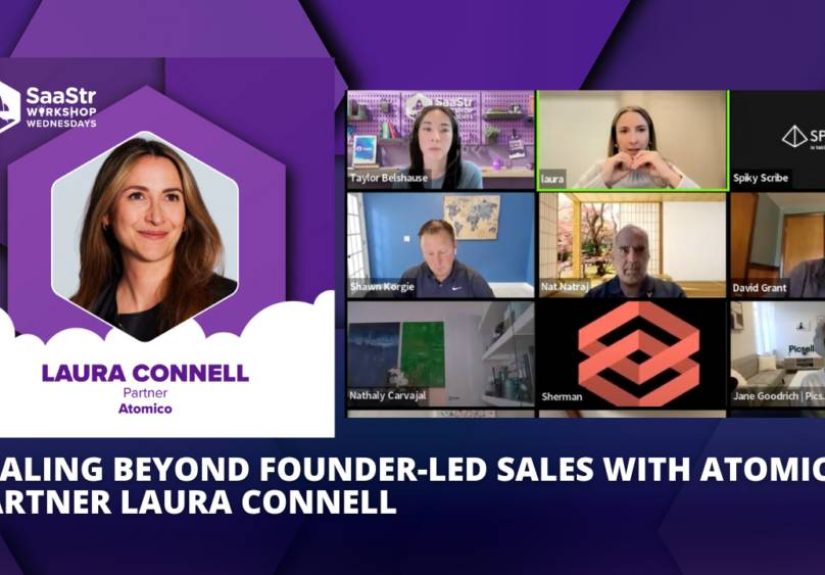
But then success creates a new problem. More leads show up. Bigger accounts ask harder questions. Customers want consistency, not charisma on demand. The founder’s calendar starts looking like a hostage situation. That is where Laura Connell, Atomico Partner, offers a useful reality check: founder-led sales is a strength in the beginning, but it becomes a bottleneck if the company wants to scale beyond a handful of wins and into a repeatable go-to-market machine.
This is the real challenge behind scaling beyond founder-led sales. It is not about removing the founder from revenue. It is about changing the founder’s job. Instead of being the whole sales engine, the founder becomes the architect of a system that other people can run well, consistently, and without requiring a dramatic last-minute cameo in every deal.
Why Founder-Led Sales Works So Well at First
Founder-led sales is not a mistake. It is often the smartest way to begin. Early customers are not just buying software, services, or infrastructure. They are buying belief. They want to know why this product exists, what problem it solves, and whether the team behind it will actually listen when reality punches the roadmap in the face.
Founders are uniquely qualified for that phase. They have unmatched product knowledge. They carry natural credibility, especially in technical or complex categories. They also gather raw customer insight faster than anyone else because every conversation sharpens the company’s messaging, positioning, packaging, and priorities. In plain English: founder-led sales is where companies learn what customers really mean, not just what they politely say on Zoom.
That is why many of the best startup playbooks recommend founders win the earliest customers themselves. Not forever. Just long enough to prove demand, tighten the ideal customer profile, and discover which parts of the pitch are landing and which ones belong in a shallow grave behind the office.
Why It Stops Scaling
The problem is not that founder-led sales stops working. The problem is that it keeps working just well enough to hide its limitations.
At a certain point, the founder becomes the system. That sounds heroic until you realize systems should not need coffee, sleep, or emergency calendar triage. A founder can close important deals, rescue complicated conversations, and inspire the room. What they cannot do indefinitely is create predictable pipeline coverage, consistent qualification standards, structured handoffs, reliable forecasting, onboarding discipline, retention alignment, and scalable coaching across a growing team.
Laura Connell’s core point is that the path to a bigger company requires founders to scale themselves across functions, and sales is usually one of the biggest constraints. Said differently: if every meaningful deal still depends on founder magic, the company does not yet have a sales motion. It has a talented founder with a very full inbox.
This gets even more obvious with larger customers. Enterprise buyers tend to love visionary founders, but they also look for evidence that the company has matured operationally. If the founder is still in every stage of every deal, prospects may quietly wonder whether the company has built real commercial infrastructure or is still running on hustle, hope, and screen shares.
The Signs You Are Ready to Move Beyond Founder-Led Sales
1. You can describe your best customer with painful specificity
If your answer to “Who is this for?” is still “Basically everyone with a browser,” you are not ready. You need a tighter ideal customer profile, a clearer use case, and a better understanding of the buyer, champion, pain point, urgency, and budget path.
2. Your message works often enough to teach it
Not perfectly. Just consistently. If the founder can explain the value proposition but nobody else can repeat it successfully, the company has storytelling talent but not messaging discipline.
3. You know the rough shape of the sales process
How do leads enter? What qualifies them? What objection patterns show up? What proof matters? How long does the cycle run? Where do deals stall? You do not need enterprise bureaucracy. You do need a repeatable path.
4. The founder’s time is now more valuable elsewhere
Once a company has real traction, the founder’s highest-leverage work shifts toward strategy, recruiting, product direction, capital allocation, and culture. If sales is swallowing every good hour in the week, scaling the company gets harder precisely because revenue is going better.
What Laura Connell Gets Right About the First Big Sales Hire
One of the most practical ideas associated with Connell’s advice is also one of the most refreshing: do not automatically jump to the flashy CRO profile. Many startups make this mistake because a senior title feels like progress. It also photographs nicely for LinkedIn.
But a startup that is still translating founder intuition into process often does better with a hungry VP of Sales or an adaptable sales leader who is willing to build, test, coach, and learn. Early-stage sales leadership is not about inheriting a polished machine. It is about creating one without throwing a tantrum every time a process does not exist yet.
The best early leaders tend to combine curiosity, resilience, ambition, intelligence, and mission alignment. They ask great questions. They do not panic in ambiguity. They can roll up their sleeves without acting like the job is beneath them. And they care enough about the company’s mission to sell in a way that strengthens the brand instead of chasing revenue with the moral flexibility of a late-night infomercial.
How to Build a Sales Motion That Survives Without Founder Superpowers
Define the narrowest viable ICP
Many startups delay scale by trying to sound bigger than they are. Resist the temptation. A narrow ICP makes everything easier: better messaging, better demos, better qualification, better case studies, and better referrals. Broad markets are seductive, but precision wins earlier.
Turn founder instincts into a documented playbook
This is where many handoffs fail. The founder says, “Our sales process is intuitive.” That is usually another way of saying, “It lives inside my head like a haunted attic.”
Document the basics: target personas, top pains, discovery questions, deal stages, common objections, pricing guardrails, proof points, and red flags. The goal is not to create a 94-page monument to jargon. The goal is to make success teachable.
Create leading indicators, not just closed-won vanity
Founders often overfocus on closed revenue because it is clean, exciting, and board-friendly. But scaling sales requires earlier signals: conversion rates by stage, demo quality, time to first meaningful value, sales cycle length, pipeline health, retention trends, expansion potential, and rep ramp time. If you only measure the finish line, you will miss the cracks in the bridge.
Keep product, sales, and customer success tightly connected
The best companies do not treat sales as a separate species. Early commercial learning should flow back into product, onboarding, support, and pricing decisions. That is one reason the classic “sales learning curve” idea remains so relevant: scaling revenue is not just about hiring more reps, but about teaching the whole company how customers buy, adopt, and stay.
Design compensation that does not reward future regret
This is another area where Laura Connell’s guidance is sharp. If reps are rewarded only for net new contract value, some will predictably optimize for signatures instead of lasting success. That can look great for a quarter and ugly for a year.
A smarter model ties at least part of incentives to customer quality, retention, renewals, or expansion. The principle is simple: if sales wins when customers lose, the company is building revenue on a trapdoor.
The Founder’s New Job After the Handoff
Moving beyond founder-led sales does not mean disappearing from customers. It means showing up differently.
The founder still matters in big moments: strategic accounts, category storytelling, executive relationships, product vision, and high-stakes negotiations. But instead of personally dragging every deal over the finish line, the founder becomes a force multiplier. They refine the narrative, sharpen the market thesis, recruit great talent, remove friction, and coach leaders on what the company is really trying to become.
That is a hard emotional transition. Letting go of direct sales can feel like losing the most immediate proof that the company is alive. Founders often trust their own instincts more than anyone else’s, and honestly, in the beginning, they are usually right to do so. But scale demands a different kind of confidence: the confidence to build capability in others.
Common Mistakes When Scaling Beyond Founder-Led Sales
- Hiring too early: Bringing in expensive sales leadership before there is a real sales motion usually creates frustration, finger-pointing, and expensive lessons.
- Hiring too senior: A leader optimized for a mature organization may struggle in a startup where process is still being invented in real time.
- Keeping everything in the founder’s head: If the founder cannot explain why deals close, nobody can replicate the success.
- Confusing activity with repeatability: More meetings do not equal a system. More reps do not equal scale.
- Ignoring retention: Revenue growth without customer success is just churn wearing nicer clothes.
- Overcorrecting: Founders should not vanish from sales overnight. The handoff works best as a deliberate transition, not a dramatic escape.
What This Looks Like in Practice
The most effective transition usually happens in phases. First, the founder proves demand and learns the customer. Then the company codifies what is working. Next, an early sales leader helps turn that knowledge into team habits, basic operating rhythm, and repeatable execution. Over time, the founder moves from lead seller to strategic closer and narrative owner.
That sequence matters. Skip the learning phase and the team scales confusion. Skip the documentation phase and the team scales inconsistency. Skip the leadership phase and the founder becomes the permanent bottleneck. None of those are especially fun outcomes, unless your favorite hobby is explaining missed targets with interpretive dance.
The bigger lesson from Laura Connell’s perspective is that scaling sales is really about scaling the company’s ability to learn, hire, and align. Great sales teams are not built by copying the founder. They are built by translating what made the founder effective into a system with the right people, incentives, culture, and guardrails.
Experience from the Trenches: What the Transition Often Feels Like
Across startups, the move beyond founder-led sales rarely feels neat and ceremonial. It usually feels awkward, slightly humbling, and deeply necessary.
At first, founders often experience a strange kind of grief. They miss the adrenaline of live customer calls, the instant feedback, and the emotional satisfaction of personally winning business. There is also a control problem. When the founder has always sold the product, every other version of the pitch sounds a little wrong, a little off-brand, or a little too dependent on phrases like “leveraging synergies,” which should frankly require a permit.
Then comes the awkward middle stage. A new sales leader joins. The founder says they want to delegate, but still jumps into calls, rewrites follow-up emails at midnight, and “helpfully” changes pricing logic during late-stage negotiations. The leader feels half-empowered. The founder feels half-relieved. Nobody feels fully sane.
But this stage is not failure. It is a normal transition. The companies that get through it best are the ones that talk openly about roles. What kinds of deals still need founder involvement? What can the sales leader own fully? Which product questions need a standard answer? Which pricing exceptions are actually okay, and which ones will quietly blow up margins later?
Another common experience is discovering that the founder was never just selling the product. They were selling certainty. Customers trusted them because they could connect the market problem, the product vision, the roadmap, and the company’s conviction in one breath. When a founder realizes that, the next job becomes obvious: teach the team how to sell that same clarity without sounding rehearsed.
Teams also learn that handoff is not about reducing founder presence to zero. In many successful companies, the founder remains very visible in top-tier deals, key customer relationships, annual events, strategic renewals, and category evangelism. The difference is that founder involvement becomes selective and high-leverage instead of constant and operational.
One more hard-earned lesson: scaling sales exposes culture problems fast. If the company has fuzzy values, inconsistent messaging, weak onboarding, or tension between product and commercial teams, sales will magnify all of it. Revenue growth is wonderfully good at revealing where the pipes leak.
And yet, when the transition works, it is one of the most important moments in a startup’s life. Meetings improve. Forecasts become less fictional. Customer handoffs get smoother. The founder gets time back to build the company, not just chase the quarter. The team starts winning deals because of a system, not because one extraordinary person was available at 4:30 p.m. on Thursday.
That is the real promise of scaling beyond founder-led sales. It is not the end of founder influence. It is founder influence, finally multiplied.
Conclusion
Founder-led sales is one of the most effective early-stage growth tools a startup has. It compresses learning, sharpens positioning, and helps win the first believers. But if a company wants durable growth, it cannot rely forever on founder availability as a commercial strategy.
Laura Connell’s framing is useful because it treats the transition honestly. Founders should stay close enough to the customer to shape vision, messaging, and major deals. But they also need to build a team, playbook, and incentive structure that makes revenue repeatable. The goal is not to replace founder energy. It is to operationalize it.
Do that well, and the company does not lose its edge as it scales. It finally earns the right to keep it.