Table of Contents >> Show >> Hide
- What “No Bank Access” Really Means
- Why the Number Fell to a Record Low
- Why Millions of Households Still Stay Unbanked
- Who Is Most Affected by Lack of Bank Access?
- Bank Accounts Are Up, but Underbanking Still Tells the Real Story
- The Digital Shift Is Real, but It Is Not a Magic Wand
- Why This Trend Matters for the Economy
- What Needs to Happen Next
- Final Takeaway
- Experiences Behind the Numbers: What This Looks Like in Real Life
Note: This article preserves the requested title. For precision, the latest FDIC survey found that the unbanked rate fell further to 4.2% in 2023, while 4.5% was the previous record low in 2021.
For a country that can order tacos, taxis, and tiny sweaters for dogs with one tap, basic banking access still matters more than ever. That is why the headline number grabs attention: a record-low share of U.S. households has no bank account. On the surface, that sounds like a victory lap with confetti, balloons, and maybe one overenthusiastic PowerPoint deck. In reality, it is both good news and a reminder that millions of families still live outside the financial mainstream.
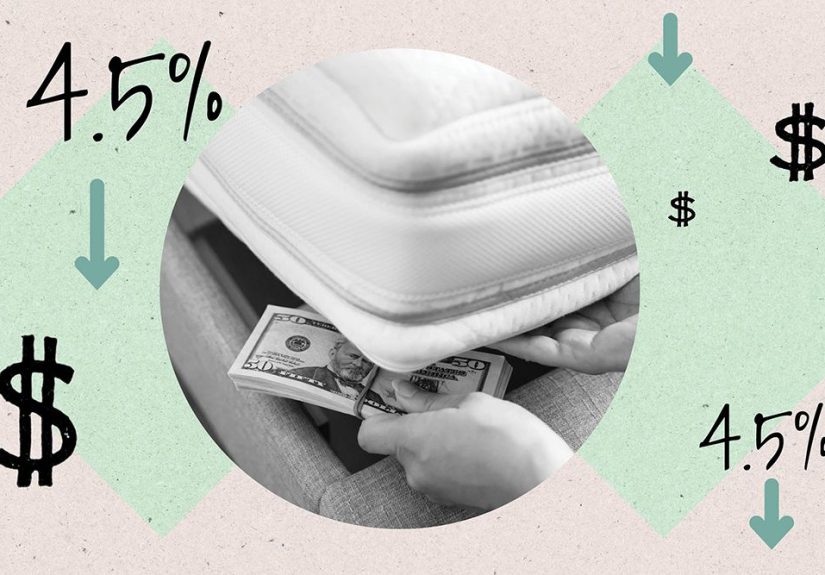
The big story is clear. America has made real progress in reducing the number of households without a checking or savings account. The FDIC’s earlier benchmark of 4.5% marked a record low in 2021, and newer data show the rate moved even lower in 2023. That trend says something important: more households are getting connected to the formal banking system. But the celebration should come with a footnote in bold. A lower unbanked rate does not mean every family now has easy, affordable, trustworthy access to financial tools that actually fit real life.
This matters because a bank account is not just a place to park money. It is often the front door to direct deposit, bill pay, emergency savings, lower-cost transactions, mainstream credit, and the small but very real dignity of not having to pay extra just to use your own paycheck. When a household remains unbanked, everyday money tasks tend to become slower, more expensive, and more stressful.
What “No Bank Access” Really Means
In plain English, an unbanked household is one where no one has a checking or savings account at a bank or credit union. That is different from being underbanked, which describes households that do have an account but still rely on nonbank products and services for core financial needs. Think check cashing, money orders, payday loans, pawn loans, remittance services, or prepaid cards filling gaps that the bank account is not covering well enough.
That distinction matters because the unbanked number is only part of the picture. Even as the unbanked share has dropped, a much larger group remains underbanked. In other words, some households are technically inside the banking system but still keeping one foot outside the door, just in case the fees, delays, or account rules decide to misbehave.
So yes, the headline is encouraging. But the broader story is about financial inclusion, not just account ownership. A bank account that is too expensive, too confusing, too easy to overdraft, or too hard to access may exist on paper while failing in practice.
Why the Number Fell to a Record Low
Several long-term changes help explain the decline in unbanked households. First, digital banking has become normal rather than novel. Mobile banking is now a primary access point for many households, and that shift matters because it reduces some of the friction tied to branch visits, transportation, and limited hours. For millions of consumers, the bank is no longer “that building downtown that closes before I get off work.” It is an app.
Second, more financial institutions and public-interest coalitions have pushed low-cost, no-surprise account options into the market. Safer accounts with fewer overdraft risks, simpler fee structures, and easier onboarding have helped lower barriers for households that historically felt shut out. When opening an account no longer feels like signing a peace treaty with hidden fees, people are more likely to give banking another shot.
Third, the labor market and payments ecosystem have changed. Direct deposit, gig work payments, peer-to-peer apps, digital wallets, and instant-transfer expectations have made banking access more practical and, in some cases, more necessary. Households that want faster wage access, online bill pay, or smoother benefit delivery often find that having an account reduces friction.
Fourth, outreach has improved. Community groups, local governments, banks, credit unions, and financial empowerment initiatives have spent years trying to close the gap. Not every program is glamorous, but financial inclusion rarely needs glamour. Sometimes it just needs a decent account, a clear explanation, and someone who does not talk like a terms-and-conditions robot.
Why Millions of Households Still Stay Unbanked
If banking access has improved, why are millions still unbanked? Because the barriers are stubborn, personal, and often expensive. The most commonly cited reason remains not having enough money to meet minimum balance requirements. That is a brutal catch-22: when money is tight, the system designed to help manage money can feel out of reach precisely because money is tight.
Trust is another major factor. Some households avoid banks because of past overdraft experiences, unexpected fees, account closures, or a simple belief that the system is not built for them. That mistrust is not abstract. It is often learned the hard way, usually after someone gets hit with a fee that feels wildly out of proportion to the original mistake. Nothing says “welcome to mainstream finance” quite like losing $35 over a tiny timing error.
Documentation and screening issues also matter. Consumers with past account problems, negative records in account-screening databases, unstable housing, or identification challenges may find it difficult to open a new account even when they want one. In some regions, especially rural communities and parts of the South, physical access is still a genuine concern because banking deserts remain real. If the nearest branch is far away and broadband is unreliable, digital-first optimism can ring a little hollow.
And then there is the speed issue. Some researchers have argued that the problem is not just physical access to banks but whether bank products move at the speed modern life demands. If a household needs funds immediately, waiting for payments to clear can push people toward alternative services that are faster, even when they are more expensive.
Who Is Most Affected by Lack of Bank Access?
The households most likely to remain unbanked are not randomly distributed across the population. Lower-income households face the highest barriers. So do many Black, Hispanic, Native, less-educated, disabled, and single-parent households. Federal surveys and banking research consistently show that the burden of financial exclusion falls heaviest on groups already dealing with income volatility, discrimination, health-related challenges, or fewer local financial options.
That does not mean every household in those groups is unbanked, and it does not mean the issue can be reduced to one single cause. But the pattern is remarkably consistent: the same communities that face the highest economic stress are often the same communities asked to navigate the most fragile financial pathways.
This is why the national average can be a bit sneaky. A record-low national rate sounds broad and reassuring, yet local disparities remain sharp. One city can show strong banking access while another still struggles with branch availability, account affordability, and trust. The national trend line slopes downward, but the lived experience is not evenly distributed.
Bank Accounts Are Up, but Underbanking Still Tells the Real Story
The underbanked population deserves much more attention than it usually gets. These households have accounts, but they still use nonbank products for essential transactions or borrowing. That suggests a mismatch between what traditional accounts offer and what many consumers actually need.
For example, a household may receive wages into a bank account and still turn to a money order for rent, a prepaid card for budgeting, a cash app for speed, or a check-cashing service because accessing deposited funds feels inconvenient or unpredictable. That is not financial irrationality. It is financial improvisation.
In 2023, nonbank online payment services were used by about half of all households, showing just how mainstream alternative transaction tools have become. At the same time, underbanked households were more likely than fully banked households to use these tools in ways that substitute for core banking functions. Translation: even with an account, many consumers are still assembling a patchwork system from multiple services because no single option does everything well.
That should be a warning sign for banks and policymakers. The mission is not simply to get people into an account once. The mission is to provide products that people keep, trust, and genuinely prefer over pricier alternatives.
The Digital Shift Is Real, but It Is Not a Magic Wand
Mobile banking has transformed how Americans access their accounts. Over the past decade, it has surged from a secondary convenience into a primary banking channel for many households. That change has unquestionably helped broaden access. Mobile tools can reduce travel burdens, simplify balance checks, support faster payments, and help households manage money on the go.
But digital inclusion is not the same thing as financial inclusion. A smartphone helps, but it does not erase overdraft anxiety, unpredictable fees, poor customer service, or weak broadband. It does not solve distrust. It does not automatically fix the needs of older consumers, people with disabilities, rural households, or those who still rely on cash for everyday life.
In fact, some research suggests that digital access now plays a growing role in financial inclusion outcomes. Areas with stronger digital connectivity often see better inclusion gains. That is promising, but it also means the banking gap increasingly overlaps with the digital gap. When people lack affordable devices, reliable internet, or comfort with online tools, the modern banking system can still feel like a locked door with a touchscreen.
Why This Trend Matters for the Economy
A lower unbanked rate is more than a neat statistic for financial headlines. It affects how households weather emergencies, how quickly wages move, how safely benefits are delivered, and how much money families lose to transaction fees over time. Households with stable banking access are often better positioned to build savings, establish credit history, and reduce reliance on high-cost financial products.
There is also a broader economic effect. When more consumers can access safer, lower-cost financial tools, spending becomes more efficient, payroll systems work better, and communities become less dependent on costly alternatives that drain cash from already tight budgets. Financial inclusion is not charity. It is infrastructure.
Still, progress should not invite complacency. The newer data show improvement, but the Federal Reserve’s consumer surveys also remind us that access gaps remain persistent among lower-income adults and historically underserved groups. A lower number is progress. It is not mission accomplished.
What Needs to Happen Next
1. Keep expanding low-cost, transparent accounts
Households are more likely to open and keep accounts when the products are simple, affordable, and hard to misuse accidentally. Minimum balance barriers, surprise fees, and confusing disclosures remain deal-breakers. Consumers should not need detective skills to understand a basic checking account.
2. Make faster payments and fund availability more reliable
Speed matters. When households live paycheck to paycheck, slow access to deposited money is not a minor inconvenience. It is a budgeting crisis. Faster, more predictable access to funds can reduce dependence on higher-cost alternatives.
3. Address trust head-on
Trust cannot be marketed into existence with cheerful app screenshots. It has to be earned through better account experiences, fairer fee practices, clearer policies, and customer support that treats people like humans rather than suspicious pop-up windows.
4. Reduce barriers tied to documentation and past account problems
Second-chance accounts, practical identification solutions, and smarter screening practices can help households re-enter mainstream banking. A single bad chapter should not become a permanent exile from the financial system.
5. Treat branch access and digital access as complementary, not competing
Some communities need more digital tools. Others still need physical banking options. The answer is not “branches versus apps.” It is designing systems that reflect how people actually live, work, travel, and get paid.
Final Takeaway
The headline about a record-low share of U.S. households without bank access is genuinely encouraging. It signals meaningful progress after years of effort by regulators, banks, community groups, local programs, and technology shifts. More households are connected to mainstream financial tools than before, and that matters.
But the deeper lesson is not just that the unbanked number fell. It is that access is only the first step. Real inclusion means affordable accounts, usable technology, faster payments, reasonable policies, and enough trust for households to believe the banking system works for them rather than against them.
So yes, progress deserves applause. Maybe even the nice applause, not the polite conference-room kind. But millions of households are still navigating life without full banking access, or with one foot in and one foot out. Until the system becomes easier, fairer, and more responsive, the story is not finished. It is simply moving in the right direction.
Experiences Behind the Numbers: What This Looks Like in Real Life
Statistics are helpful, but they do not stand in line at the grocery store on a Friday night. People do. And the experience of being unbanked or underbanked often looks less like a dramatic financial collapse and more like constant low-grade friction. It is death by a thousand tiny inconveniences, each one holding out its hand for a fee.
Imagine a worker who gets paid by paper check, cashes it at a storefront service, and loses a slice of every paycheck just to turn hours worked into spendable money. That household may avoid a bank not because it loves paying extra, but because a past overdraft fee or account closure made banking feel risky. The check-cashing fee is painful, sure, but it is predictable. And for families living close to the edge, predictable pain can feel safer than unpredictable penalties.
Now picture a single parent using a prepaid card, a money app, and cash at the same time. Rent gets paid one way, utilities another, groceries another. It may look chaotic from the outside, but inside that routine is a system built around control. The parent may worry that a traditional account could trigger fees, delays, or holds at exactly the wrong moment. The patchwork setup is not elegant, but elegance is rarely the first priority when survival is the assignment.
Then there is the rural consumer whose nearest branch is far enough away to qualify as a road trip if snacks are involved. Digital banking sounds great until the internet drops, the app freezes, or identity verification asks for one more document that is hard to upload on a weak connection. In these cases, “just use mobile banking” can sound a bit like telling someone to solve a flat tire by believing in innovation harder.
Older adults often face a different version of the problem. Some prefer in-person banking, not because they are anti-technology, but because they trust a face more than a screen. As teller access declines and digital channels dominate, they may feel pushed into systems that are unfamiliar or stressful. The result is not always full exclusion, but it can be partial disengagement, where people keep accounts yet avoid using them in the most efficient ways.
Young adults can experience the issue from the opposite direction. They may be comfortable with apps, instant transfers, and digital wallets, but less interested in traditional accounts that seem built for a previous era. If their financial life already runs through payment apps and debit tools, a bank account can feel optional right up until they need direct deposit, credit history, or a safer place to build savings.
These experiences reveal the real lesson behind the “record low” headline. Progress is real, but so is adaptation. People without strong banking access are not financially inactive. They are often highly resourceful, constantly stitching together solutions from whatever tools are available. The challenge for the banking system is to become the easiest, safest, and most trustworthy option in that mix. When that happens, more households will not just open accounts. They will actually want to keep using them.