Table of Contents >> Show >> Hide
- The Ball Was Fancy, But The Logic Was Cheap
- Why “Protecting The Aesthetic” Sounded So Bad
- There Is A Big Difference Between A Dress Code And Social Exclusion
- The Reality Check Wasn’t Really About The Ball
- Why This Story Felt So Familiar To So Many People
- When Hosts Care Too Much About Optics
- Could The Host Have Handled It Better? Absolutely
- The Deeper Lesson: Friendship Is Not A Styling Exercise
- Experiences Related To This Story That People Recognize Immediately
- Conclusion
There are few modern phrases more revealing than “she would ruin the aesthetic.” It sounds polished, curated, maybe even a little luxe. But strip away the satin gloves, candlelight, and moody playlist, and what it usually means is much simpler: I cared more about the look of the night than the feelings of a person I claimed to care about.
That is why this viral friendship drama hit such a nerve. On the surface, it was about an extravagant ball, formalwear, and one host’s carefully planned vision. Underneath, it was about exclusion, status, and the dangerous little lie that cruelty becomes classy if you package it in velvet.
The story feels deliciously dramatic because it has everything the internet loves: a glamorous event, a social slight, a wounded friend, and a host who thought the comments section would applaud her commitment to the vibe. Instead, she got the digital equivalent of being booed out of a ballroom. And honestly? That brutal reality check was overdue.
The Ball Was Fancy, But The Logic Was Cheap
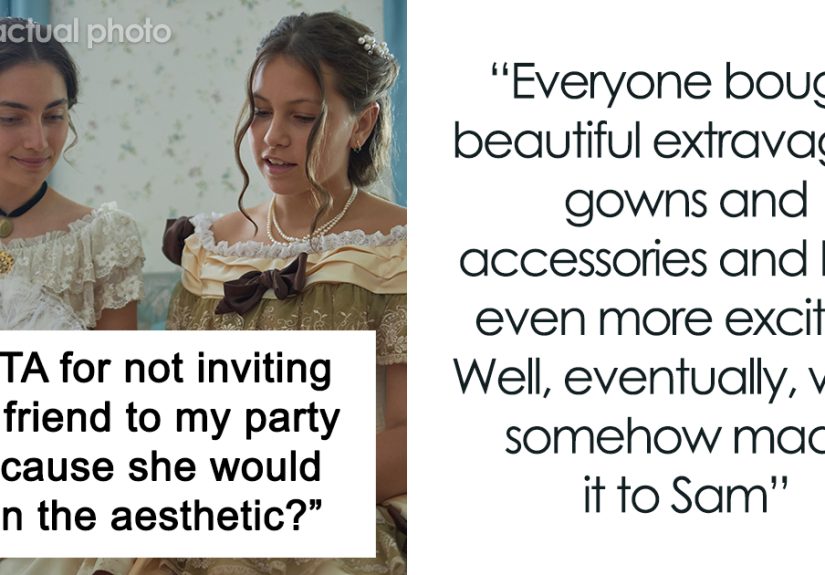
In the now widely discussed scenario, a woman planned an extravagant ball for her book club crowd and chose not to invite one of her close friends because she assumed the friend would not dress up properly and would “ruin the aesthetic.” The host framed her decision as practical. She had worked hard. The event had a formal theme. Everyone else would understand the assignment. Why invite someone who might show up and throw off the whole visual fantasy?
There is a surface-level argument here that sounds reasonable for about twelve seconds. Hosts are allowed to set a dress code. Guests are not entitled to an invitation. Formal events do come with expectations. If you are throwing a black-tie ball and someone insists on arriving in sneakers and a graphic tee, that does affect the tone of the evening.
But that is not where people turned on the host. They turned on her because she never actually gave her friend the dignity of a choice.
Instead of saying, “I’m hosting a very formal, dressy event, and I’d love for you to come if you’re into the theme,” she made a private judgment call. She decided, on her friend’s behalf, that this person would not rise to the occasion. Then she excluded her. Then she seemed surprised that the friend was hurt. That is not elegance. That is control wearing costume jewelry.
Why “Protecting The Aesthetic” Sounded So Bad
Let’s be fair for a moment: aesthetics are not evil. Humans love beauty, ritual, and spectacle. We like matching invitations, candlelit tables, dramatic gowns, themed playlists, and the deeply irrational thrill of pretending our apartment is actually a minor European palace. A good aesthetic can make an event feel magical.
But the problem begins when the aesthetic stops being the setting and starts becoming the morality of the event.
Once that happens, people are no longer guests. They become props. Friends are no longer people with quirks, feelings, budgets, insecurities, and lives. They become visual assets or visual liabilities. And the minute someone starts sorting loved ones into categories like fits the vibe and wrecks the look, the event has already become emotionally tacky, even if the table linens are stunning.
That is what made this situation feel so cold. The host did not merely want everyone to respect the theme. She appeared to value the image of belonging over actual belonging. She wanted the fantasy of intimacy without the inconvenience of imperfect people. Unfortunately, that is not friendship. That is casting.
There Is A Big Difference Between A Dress Code And Social Exclusion
Dress codes are reasonable
A host can absolutely say an event is black tie, formal, cocktail, masquerade, Regency-inspired, literary, whimsical, or even “please wear something dramatic enough to make a chandelier nervous.” Clear expectations are helpful. In fact, they save guests from confusion.
Micromanaging people is where it gets ugly
Problems start when a host moves from communicating the dress code to pre-rejecting people they think will not embody it well enough. That shift matters. One is event planning. The other is social gatekeeping.
And yes, there is a social class layer here too. Not everyone has a closet full of formalwear. Not everyone can drop money on a gown, tux, shoes, accessories, hair, makeup, transport, and a gift just because someone wants their party to look like a period drama with better lighting. A gracious host understands that. A performative host pretends not to notice.
If the excluded friend had been invited and declined because the dress code was not her thing, that would have been normal adult life. If she had been invited and asked what was appropriate, that would have been a chance for warmth. If she had admitted she did not own anything suitable, a real friend might have said, “No problem, let’s figure it out.”
Instead, the host skipped all of those humane options and went straight to preemptive embarrassment. That is why the internet read her as shallow. She was not protecting the event from disrespect. She was protecting herself from the possibility that someone else might not look as polished as she imagined.
The Reality Check Wasn’t Really About The Ball
The backlash was brutal because the comments section understood something the host apparently missed: when you exclude a friend for image reasons, the wound does not stay attached to that one night. It rewrites the friendship.
Suddenly the friend is not thinking, I missed a party. She is thinking, This person studies me. This person ranks me. This person thought I would embarrass her.
That is not a small misunderstanding. That is a relationship fracture.
And once that idea settles in, it contaminates everything. Past conversations feel different. Future invitations feel suspect. Compliments start sounding fake. Trust shrinks. A person who used to feel safe now feels assessed.
That is the real reason stories like this explode online. Nearly everyone has lived some version of it. Maybe not at a masked ball with dramatic gowns and literary references, but definitely at a wedding, birthday dinner, girls’ trip, office event, prom after-party, or group chat where someone quietly decided another person did not fit the image. The details change. The sting does not.
Why This Story Felt So Familiar To So Many People
Most readers were not reacting to the specific event. They were reacting to a pattern they recognized instantly.
It is the friend who invites you to “casual drinks” but somehow posts a ten-person dinner you were never told about.
It is the destination birthday where everyone is expected to wear coordinated neutrals, but one person is left out because she is “not really that type of energy.”
It is the wedding planner language that sneaks into everyday life until every gathering starts sounding like a brand campaign.
It is the exhausting culture of optimization that says your life must not only be lived, but styled, documented, filtered, and approved by an invisible audience.
The host in this story may have thought she was creating a magical evening. What many people saw instead was a symptom of a larger social disease: the tendency to confuse curation with character.
When Hosts Care Too Much About Optics
There is nothing wrong with wanting a beautiful event. Truly. Candles are innocent. Satin is innocent. Color palettes have done nothing wrong. The issue is not beauty. The issue is when beauty becomes more important than hospitality.
A good host asks, “How do I make people feel welcome?”
A bad host asks, “How do I make people look good in photos?”
A good host gives guests enough information to feel prepared.
A bad host gives guests enough pressure to feel auditioned.
A good host understands that the best memories usually come from laughter, generosity, surprise, and emotional ease.
A bad host believes the event succeeds only if every human being present behaves like coordinated décor.
This is the part some people miss: hospitality is not proven by expense. It is proven by how safe people feel in your presence. You can have a five-star venue and still be a terrible host if your guests feel judged, managed, or silently graded.
Could The Host Have Handled It Better? Absolutely
Very easily, in fact.
Option 1: Be direct and kind
She could have sent a warm invitation that clearly explained the theme, formality level, and dress expectations. Something like: “I’m throwing a very dressy book-themed ball, and I know it’s extra, but I’d love to have you there if that sounds fun.” That gives the friend dignity and information.
Option 2: Offer support instead of assumptions
If she truly worried her friend did not have the right clothes, she could have helped. Borrowing outfits, suggesting affordable options, sharing inspiration, or simply clarifying that effort matters more than perfection would have transformed the whole dynamic.
Option 3: Accept that not every guest will be a movie extra
Even at the most polished event, not everyone will look identical. Some people will be more glamorous. Some will be more understated. Some will interpret the theme loosely. That is called having guests, not mannequins.
The mature solution was never exclusion. It was communication.
The Deeper Lesson: Friendship Is Not A Styling Exercise
At its core, this drama reveals a question people do not ask often enough: Do you want relationships, or do you want social scenery?
Because those are not the same thing.
Real friendship is messy. Sometimes your funniest friend overdresses. Sometimes your coolest friend hates themes. Sometimes your favorite person arrives in an outfit that makes no sense whatsoever but tells a fantastic story over dessert. That is life. That is community. That is what makes gatherings memorable.
If every person at your event matches the wallpaper but one of your friends goes home feeling humiliated, congratulations: the room looked amazing and the evening was emotionally bankrupt.
The brutal reality check here was not that the internet can be mean. The brutal reality check was that lots of people instantly recognized this behavior for what it was. Not refined. Not aspirational. Not iconic. Just mean, with better lighting.
Experiences Related To This Story That People Recognize Immediately
What makes this kind of story so sticky is that most people have not just read it, they have felt it.
Maybe it was not an extravagant ball. Maybe it was a wedding shower where one friend was quietly left off the guest list because she was “a little unpredictable.” Maybe it was a birthday dinner where everyone got the memo to wear black except the one friend who found out through Instagram afterward. Maybe it was a holiday party where someone joked, “Oh, we thought this wouldn’t really be your scene,” which is one of those sentences that somehow sounds polite while landing like a brick.
There is also the painfully modern version of this experience: the group chat aesthetic spiral. Someone starts with a fun theme. Then there is a Pinterest board. Then outfit suggestions. Then color rules. Then photo references. Then somehow the gathering is no longer about being together but about producing evidence that everyone was together beautifully. At that point, the event starts functioning like a campaign launch instead of a memory in the making. One person cannot afford the look, another does not feel comfortable in it, another is too embarrassed to say she has nothing “worthy,” and before long somebody is excluded without anyone technically saying the quiet part out loud.
People also recognize the friend-side experience of being judged before they are known. That hurt is specific. It is one thing if a host says, “This is a formal event, and here’s the dress code.” It is another thing entirely if a host decides, without asking, that you are too casual, too awkward, too unpolished, too outside the brand identity of the evening. The message is not just you were not invited. The message is I have already imagined you failing in my world.
And once someone receives that message, it can stick for years. People remember who made them feel out of place. They remember who made them feel like a risk to the atmosphere. They remember who chose optics over loyalty. A party lasts a few hours. Social humiliation has a much better memory.
On the flip side, people also remember the hosts who handled these moments beautifully. The friend who said, “Come exactly as you are, and if you want to dress up, I’ll help.” The cousin who created a theme but made room for budget realities. The bride who cared less about matching tones and more about making sure everyone at the table felt included. The person who understood that hosting is not an exercise in curating identical humans; it is the art of making different humans feel comfortable in the same room.
That is why the viral ball story keeps bouncing around the internet. It is not just juicy. It is familiar. It presses on a common fear almost everyone has at some point: not that they will be underdressed, but that someone they trust is privately embarrassed by them. That fear can turn even a pretty invitation into an emotional minefield.
So yes, the dresses matter a little. The music matters. The candles matter. The velvet drapes, the masks, the shoes, the grand staircase, the moody champagne tower, all of that can be wonderful. But what people carry home from an event is rarely the centerpiece. It is the feeling. Were they welcomed? Were they seen? Were they respected? Or were they merely tolerated if they photographed well?
That is the experience hidden inside stories like this one. And that is why so many readers did not just judge the host. They recognized her.
Conclusion
The woman at the center of this story probably believed she was defending standards. In reality, she was defending a fantasy. And fantasies built on exclusion usually collapse the second real feelings enter the room.
If you are hosting something formal, glamorous, themed, dramatic, literary, candlelit, or gloriously over-the-top, great. Be extra. Be theatrical. Live your ballroom dream. But remember the first rule of true elegance: people should leave feeling cherished, not measured.
Because the surest way to ruin an aesthetic is not an underdressed guest. It is revealing that your version of beauty has no room for grace.