Table of Contents >> Show >> Hide
- What Is the SMI Wooden Drafting Table?
- Why the SMI Wooden Drafting Table Stands Out
- Who Should Buy the SMI Wooden Drafting Table?
- Comfort and Ergonomics: Why an Angled Table Still Matters
- How the SMI Wooden Drafting Table Compares to Modern Alternatives
- Potential Drawbacks to Consider
- Final Verdict: Is the SMI Wooden Drafting Table Worth It?
- Experiences Related to the SMI Wooden Drafting Table
If your current desk squeaks, wobbles, and behaves like it was assembled by three exhausted raccoons, the SMI Wooden Drafting Table may feel like a very welcome upgrade. This is the kind of drafting table that looks like it belongs in a serious studio, an architecture classroom, or the home workspace of someone who owns more pencils than forks. It is not trying to be trendy. It is trying to be useful, durable, and ready for real work.
That is exactly why the SMI Wooden Drafting Table still gets attention. In a market full of glass tops, lightweight frames, and multiuse desks that promise the moon and deliver a paperclip, this model leans into old-school drafting furniture values. Think solid wood character, a smooth work surface, practical storage, and an angled top that actually helps you work instead of just looking artsy in product photos.
For artists, designers, illustrators, students, and even hybrid workers who want a desk with more personality and purpose, the SMI Wooden Drafting Table offers a compelling mix of form and function. It has the visual warmth of traditional studio furniture, but its features are built around a modern truth: people work better when their tools are comfortable, organized, and sturdy enough to stay put.
What Is the SMI Wooden Drafting Table?
The SMI Wooden Drafting Table is a professional-style wooden drafting desk designed for drawing, drafting, sketching, planning, and other tabletop work that benefits from an adjustable surface. Older and current product descriptions consistently position it as a studio-ready or classroom-ready piece, which tells you a lot about its identity. This is not a decorative “creative corner” table. It is a work table.
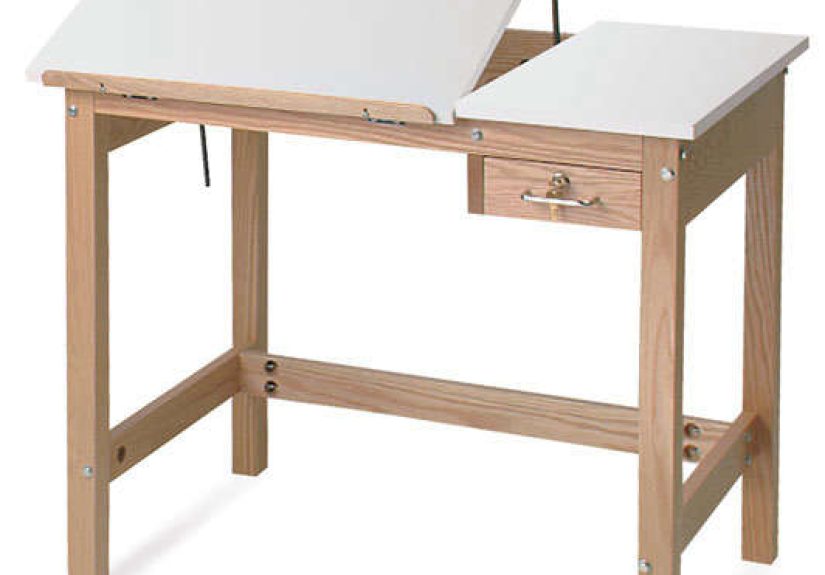
Its construction is one of its biggest selling points. The frame is solid oak, and the design emphasizes rigidity rather than flimsy convenience. The top is made from medium-density Fiberesin board covered in white melamine, which gives the working surface a clean, smooth, practical finish. Translation: it is built to handle rulers, paper, boards, tools, and the occasional dramatic sigh during a tough project.
Another detail that makes this table stand out is the drawer. The SMI Wooden Drafting Table includes a locking solid wood drawer with an oak front, a feature that feels delightfully serious. It suggests the table was designed for people who actually keep supplies nearby and would rather not store their drafting tools in a coffee mug or random kitchen bowl.
Why the SMI Wooden Drafting Table Stands Out
1. Solid oak construction gives it genuine studio credibility
A lot of drafting desks look capable until you lean on them. Then they suddenly reveal the confidence of a folding card table at a family reunion. The SMI Wooden Drafting Table avoids that problem by using a solid oak frame and a construction style intended to add rigidity. That matters because detailed drawing, inking, technical drafting, and measured layout work all benefit from a stable surface.
Stability is not glamorous, but it is a huge part of user experience. A sturdy table helps you draw cleaner lines, work with less distraction, and feel more confident pressing into the surface with tools, hands, or materials. In other words, the table is doing its job so you can do yours.
2. The melamine work surface is practical, smooth, and easy to live with
White melamine may not sound poetic, but it is extremely practical. It creates a bright work surface that reflects light well, helps with visibility, and typically cleans up more easily than unfinished wood. That is especially useful if your projects involve graphite, charcoal dust, markers, tape residue, or general creative chaos.
For drafting and drawing, a smooth top matters. It supports paper and boards evenly, helps tools glide more predictably, and feels better for long working sessions. While some artists love the romance of raw wood, many professionals prefer a surface that is less “rustic cabin” and more “please let my straightedge sit flat.”
3. One-piece and two-piece top options add flexibility
One of the smartest things about the SMI Wooden Drafting Table is that it has been offered in more than one top configuration. The one-piece version gives you a broad tilting work surface, which is great if your focus is mainly analog work and you want a dedicated drafting plane. Some descriptions also note a dust cover with this version, which adds a nice practical touch.
The two-piece version is especially appealing for modern users because it combines a tilting section with a fixed, level surface. That flat section can hold books, a laptop, a monitor, reference materials, or a cup of coffee that you absolutely should not place near your final drawing but probably will anyway. This split-top setup helps bridge the gap between traditional drafting and contemporary digital workflow.
4. The locking drawer is more useful than it sounds
People often underestimate storage until they do not have it. Then the ruler disappears, the eraser migrates, the fineliners vanish, and suddenly you are conducting a household investigation over one missing triangle. A built-in locking drawer solves part of that problem by giving you a designated place for essential tools.
It also helps the table feel self-contained. Instead of functioning like “a desk plus seven nearby piles,” the SMI Wooden Drafting Table works as a more complete workstation. That is a small feature with a big daily payoff.
Who Should Buy the SMI Wooden Drafting Table?
Artists and illustrators
If you draw for hours at a time, an angled work surface can be a game changer. It helps bring the work closer to eye level and reduces the tendency to hunch over a flat desk like a gargoyle with deadlines. For artists who use paper, boards, pads, or mixed media, the SMI Wooden Drafting Table offers the kind of support that makes longer sessions feel more manageable.
Architecture, design, and drafting students
This table makes sense for students who need a reliable drafting setup at home. It feels more substantial than budget models and more purpose-built than generic office desks. If your coursework includes technical drawing, scaled layouts, portfolio prep, or model-planning sketches, the SMI design philosophy is right on target.
Teachers, classrooms, and studio programs
Product listings have long described tables like this as a fit for classrooms and well-equipped studios, and that tracks. The durable materials, practical storage, and clear work surface all support educational use. In a classroom environment, furniture needs to do more than look good; it needs to survive repeated use by people who may not treat it as lovingly as a home studio owner would.
Hybrid workers who want a warmer, more creative workstation
Not everyone buying a drafting table is drafting skyscrapers. Some people just want a desk that feels better for sketching, note-taking, creative planning, journaling, or screen-plus-paper workflows. The SMI Wooden Drafting Table can appeal to that crowd too, especially the two-piece version. It has enough structure for serious work and enough character to elevate a home office beyond “sad rectangle and charging cables.”
Comfort and Ergonomics: Why an Angled Table Still Matters
One of the best arguments for a drafting table is not aesthetic. It is ergonomic. Workplace guidance from major U.S. ergonomics sources consistently emphasizes neutral positioning, relaxed shoulders, reduced strain, and frequent posture changes. A drafting table can help support that when it is adjusted thoughtfully.
A flat desk is fine for many tasks, but extended drawing or close-detail work on a flat surface often leads to neck bending, rounded shoulders, and wrist awkwardness. An adjustable drafting surface helps bring the work into a more comfortable line of sight. That does not magically fix posture by itself, but it can reduce the urge to fold your body like a lawn chair over your project.
For the best setup, pair the SMI Wooden Drafting Table with a supportive stool or chair at the correct height. Keep the work surface at an angle that lets you see clearly without lifting your shoulders. If you use a monitor, position it so you are not constantly twisting or looking too far down. And yes, take breaks. Your spine is not a decorative element.
How the SMI Wooden Drafting Table Compares to Modern Alternatives
Today’s drafting-table market is crowded with metal frames, tempered glass tops, electric bases, compact hobby stations, and all-in-one craft desks. Many of those options are excellent for tight budgets, small apartments, or users who need maximum adjustability in a lighter package. So where does the SMI Wooden Drafting Table fit?
It fits in the category of traditional wooden studio furniture. Its strength is not being flashy or ultra-techy. Its strength is that it feels substantial, focused, and durable. Compared with lightweight craft stations, it offers more studio presence. Compared with electric tables, it offers a more classic furniture look. Compared with glass-top desks, it feels warmer, quieter, and less likely to make every tool clink like a dramatic sound effect.
That said, it will not be the perfect choice for everyone. If you need a very small footprint, ultra-fast adjustment, or a minimal modern look, newer metal-frame models might make more sense. But if you want a table that looks and behaves like a genuine drafting table, the SMI has a clear identity.
Potential Drawbacks to Consider
No honest review should pretend every product is perfect, and the SMI Wooden Drafting Table has a few trade-offs. First, a solid wood drafting table is usually heavier and less apartment-friendly than lightweight alternatives. That is great for stability, less great when you decide to “just move it a little” and immediately regret your life choices.
Second, traditional drafting furniture can require more space. This is not usually a tiny corner desk. It is meant to function as a dedicated work area. If your workspace is very limited, make sure the footprint suits your room before falling in love with the oak charm.
Third, some buyers may prefer built-in modern extras such as cable management, power integration, or electric height adjustment. The SMI approach is more classic than tech-forward. That is part of its appeal, but it is worth knowing in advance.
Final Verdict: Is the SMI Wooden Drafting Table Worth It?
The SMI Wooden Drafting Table is worth a serious look if you want a classic drafting desk with real studio credibility. Its solid oak frame, white melamine work surface, locking drawer, and configurable top design all point to one thing: this table was made for work, not just decoration.
It is especially appealing for artists, illustrators, design students, architects, teachers, and creative professionals who want a stable, dedicated surface for analog or hybrid workflows. It also has a visual warmth that many contemporary drafting desks simply do not offer. The table looks smart, but more importantly, it looks ready.
In a world where too many desks try to do everything and end up doing nothing particularly well, the SMI Wooden Drafting Table succeeds by staying true to its purpose. It is sturdy. It is practical. It is thoughtfully designed. And it has just enough old-school seriousness to make you feel a little more professional the moment you sit down to work. Or stand up to work. This table is flexible like that.
Experiences Related to the SMI Wooden Drafting Table
Using a table like the SMI Wooden Drafting Table tends to change the rhythm of a workspace in ways that are easy to notice after a few days. The first experience many people describe is simple: the room starts to feel more intentional. A regular desk says, “I answer emails here.” A wooden drafting table says, “Something is being made here.” That shift matters more than it sounds because furniture affects behavior. When the work surface is angled, bright, and obviously built for drawing or planning, people tend to approach their work with more focus.
Another common experience is relief from the constant small annoyances of working flat. Sketching on a normal desk often means leaning forward too much, adjusting paper constantly, and losing that comfortable line of sight. With the SMI table, the angled surface can make drawing feel more natural. Your materials are easier to see, your arms are positioned more comfortably, and the table encourages a posture that feels more active than slumped. Nobody suddenly becomes an ergonomic superhero, but many users notice they can work longer before feeling stiff and cranky.
The drawer also changes daily habits. Instead of getting up repeatedly to grab a pencil, eraser, scale, brush pen, or measuring tool, you begin keeping those items in one dedicated place. That sounds minor until you realize how much momentum is lost every time you break concentration. A built-in drawer can make the entire work process smoother. It becomes part of a routine: open drawer, set tools out, work, reset, close drawer. There is something satisfying about that loop. It feels orderly without being precious.
For hybrid users, the two-piece top experience is especially practical. One section can hold analog work while the fixed area keeps a laptop, keyboard, books, or reference materials within reach. This creates a surprisingly efficient workflow for people who bounce between hand sketching and digital tasks. You can review notes, glance at a reference image, make hand corrections, and return to the screen without turning your workspace into a clutter museum.
There is also a less obvious emotional experience: the table can make work feel more serious in a good way. Not stressful, just grounded. The oak frame, furniture-grade finish, and overall sturdiness give the impression that the workspace is permanent rather than temporary. That can be motivating for students building discipline, artists trying to draw more consistently, or professionals who want a studio setup that supports their identity.
Of course, the experience is not all romance and perfect pencil lines. A substantial wooden drafting table takes up real space, and moving it is nobody’s favorite cardio. But that same weight often becomes part of the appreciation. The table stays put. It does not feel disposable. Over time, that reliability becomes one of its best qualities. You stop noticing the furniture because it stops getting in the way, and that is usually the highest compliment a work table can earn.