Table of Contents >> Show >> Hide
- Why South Korea’s Carrier Looked So Much Like a Royal Navy Ship
- What the Original CVX Plan Was Supposed to Be
- Why Seoul Wanted a Carrier in the First Place
- The Case Against the Carrier
- Then the Program Started Zigzagging
- What a Korean Carrier Would Mean for the Indo-Pacific
- So, Does It Really Look Like a Royal Navy Carrier?
- Experiences Around the Story: What This Carrier Debate Feels Like in Real Strategic Life
- Conclusion
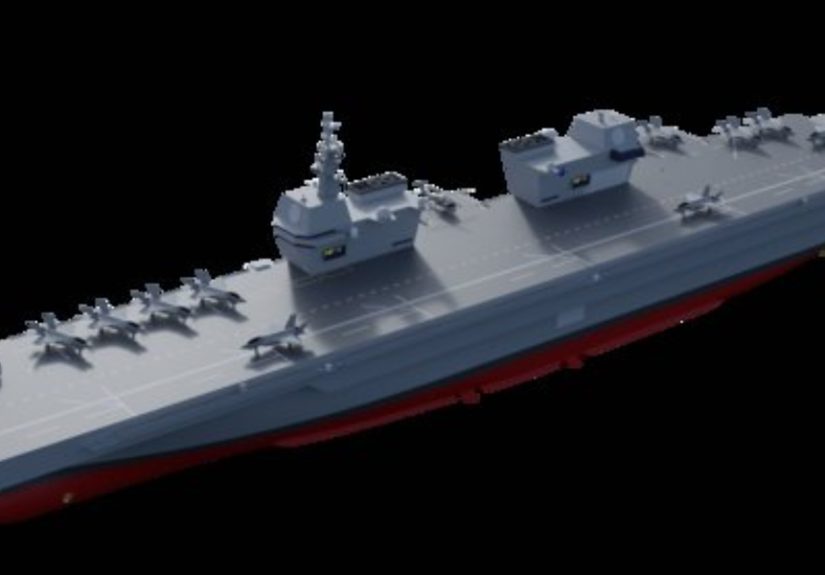
Sometimes a warship shows up in a concept rendering and immediately makes defense watchers do the Leonardo DiCaprio pointing meme. That is exactly what happened when South Korea’s future aircraft carrier design began circulating. The silhouette looked strikingly familiar: a wide flat deck, a clean modern profile, and most importantly, the now-famous twin-island layout that made many people say, “Wait, is that Britain’s Royal Navy carrier wearing a Korean name tag?”
The comparison is not random, and it is not just internet overenthusiasm doing cartwheels. South Korea’s carrier concepts really did echo features associated with the Royal Navy’s Queen Elizabeth-class carriers. But the resemblance is only the first chapter of the story. The bigger story is why Seoul wanted a carrier at all, why the plan kept changing, why critics hated it, why supporters would not let it die, and why the final answer may be less “classic mini-carrier” and more “floating aviation hub for a messy century.”
In other words, this is not just a tale about a ship that looks British. It is a story about South Korea’s changing security strategy, its world-class shipbuilding industry, and the uncomfortable reality that in Northeast Asia, the ocean is never just scenery.
Why South Korea’s Carrier Looked So Much Like a Royal Navy Ship
The visual similarity came down to one feature above all: the twin islands. Most aircraft carriers have a single island superstructure. South Korea’s concept used two. That instantly invited comparisons to HMS Queen Elizabeth and HMS Prince of Wales, the Royal Navy’s flagship carriers. In carrier design, twin islands are not just there to look cool in artist renderings, though they absolutely do that. They can separate navigation and flying control functions, free up deck space, and reflect engineering choices tied to propulsion and exhaust management.
Popular Mechanics highlighted how unusual that arrangement looked in a Korean context, noting that the setup had been pioneered in high-profile fashion by the Royal Navy’s new carriers. Defense News went further and reported that one Hyundai Heavy Industries proposal featured a ski-jump style ramp akin to the Queen Elizabeth class, plus British consultancy links through Babcock, a member of the U.K. Aircraft Carrier Alliance. That is the defense-industrial version of saying, “No, really, Britain was definitely in the group chat.”
At the same time, the Korean design was never a copy-and-paste operation. Some concepts lacked the ski jump. Others looked more like an aviation-centric amphibious ship than a true medium carrier. Popular Mechanics also noted differences from the British carriers, including a flight deck shape that in some respects looked closer to the U.S. Navy’s America-class amphibious assault ships. So yes, the ship looked a bit Royal Navy. But it also looked like South Korea was trying to combine British inspiration, American operational logic, and Korean industrial ambition into one very expensive floating argument.
What the Original CVX Plan Was Supposed to Be
South Korea’s carrier effort is commonly associated with the CVX program, a light-carrier concept tied to the Republic of Korea Navy’s desire for fixed-wing naval aviation. Early reporting described a domestically built carrier of roughly 30,000 to 35,000 tons, with plans to operate short takeoff and vertical landing aircraft, especially the F-35B. That mattered because the F-35B can operate from shorter decks without catapults, which makes it the default choice for countries that want sea-based jet aviation without building a gigantic American-style supercarrier.
For a while, the project looked serious. Defense News reported that the government had tentatively earmarked funding and that the concept aimed for service entry in the early 2030s. The same reporting described shipbuilder proposals that could carry significant numbers of aircraft, including fighters and helicopters. The War Zone noted in 2020 that South Korea’s evolving amphibious-ship plan was becoming aviation-centric and would lack a well deck, making it much more like a light carrier than a traditional amphibious assault vessel.
That shift was important because it revealed what the navy actually wanted: not just a big deck for helicopters, but a platform that could launch jets, survive in a contested region, and give Seoul options beyond land-based airpower. In strategic terms, that is a very different animal. In budget terms, it is the kind of animal that eats through spreadsheets for breakfast.
Why Seoul Wanted a Carrier in the First Place
At first glance, some outsiders wondered why South Korea would want a carrier when its main enemy sits just across a land border. That is a fair question. After all, carriers are usually associated with expeditionary warfare, distant crises, or global sea control. South Korea, by contrast, lives under the permanent shadow of North Korean artillery, missiles, submarines, and now increasingly ambitious naval modernization.
But the carrier argument was never only about North Korea. It was also about geography, maritime trade, alliance politics, and regional competition. South Korea is a heavily trade-dependent economy. Sea lines of communication matter. Offshore islands matter. The Yellow Sea matters. The East China Sea matters. So does the uncomfortable fact that China’s naval power has grown quickly while Japan has expanded the role of its own large-deck aviation ships.
FPRI argued that South Korea’s carrier interest reflected overlapping concerns about China, Japan, maritime outposts, and regional balance. USNI reported that supporters saw value in multinational missions with the U.S. Navy and partners, and in missions beyond a strict peninsula-only mindset. Breaking Defense later echoed a related point from the deterrence angle: if Korean airfields are vulnerable, a carrier can provide aviation from standoff range and complicate an enemy’s targeting picture.
That logic is easy to summarize: if your runways can be hit, putting some of your airpower at sea starts to look less like vanity and more like insurance. Expensive insurance, yes. But insurance all the same.
The Case Against the Carrier
Of course, the opposition was never hard to find. Critics argued that a light carrier would be costly, vulnerable, and poorly matched to South Korea’s most urgent defense needs. USNI reported in 2022 that the carrier program lost funding in the budget proposal as Seoul prioritized its “three-axis” deterrence strategy against North Korea, including missile defense, preemptive strike capacity, and retaliatory capabilities. Submarines and missiles seemed more useful for the threats immediately at hand.
The War Zone summarized the criticism neatly: instead of building a prestige platform, South Korea could invest in advanced submarines and other assets more relevant to deterring Pyongyang. Skeptics also questioned whether a light carrier operating a small air wing would be survivable in an era of dense anti-ship missile threats, satellites, drones, and long-range precision weapons. A carrier is powerful, but it is also very hard to hide. And a ship that costs billions tends to attract enemy attention the way free pizza attracts college students.
There was also the aircraft issue. The CVX concept was closely linked to the F-35B, but South Korea’s defense choices did not move in a straight line. Defense News reported in 2022 that the defense acquisition agency backed buying more F-35A conventional takeoff aircraft, a move that raised more doubts about the carrier’s practical path. Breaking Defense also covered discussion of a navalized KF-21 concept, but that idea remained highly speculative and far from deployment-ready.
So the criticism was not merely ideological. It was practical. What aircraft would fly from the ship? What missions would justify the cost? How would the carrier survive in wartime? And was this truly a strategic necessity, or just a glossy brochure with engines?
Then the Program Started Zigzagging
Like many major defense programs, South Korea’s carrier story did not unfold in a neat upward line. It looked more like a heartbeat monitor after three cups of espresso. One year the program looked promising. Then funding disappeared. Then analysts debated whether it would return in altered form. By 2025, some U.S. defense commentary suggested the concept still had supporters and strategic logic, while other reporting indicated Seoul was increasingly interested in unmanned or drone-centric alternatives.
That uncertainty matters because the article title makes it sound as if South Korea has already rolled a finished new carrier out of the shed. Reality is much messier. The Queen Elizabeth-like concept was real. The CVX ambition was real. The funding doubts were real. The strategic rationale was real. But the final form of the platform has remained unsettled.
That does not make the story less important. It actually makes it more interesting. South Korea appears to be grappling with a question many middle and upper-tier naval powers now face: if carriers are useful but vulnerable, and drones are promising but not yet a total replacement, what kind of large-deck ship makes sense for the 2030s and 2040s?
What a Korean Carrier Would Mean for the Indo-Pacific
Even a modest South Korean carrier would carry strategic weight beyond its aircraft count. It would symbolize that Seoul is thinking not only about homeland defense but also about regional maritime influence, coalition operations, and sea-based flexibility. That matters in a region where China continues to expand naval capability, Japan is normalizing carrier-like aviation at sea, and the United States still relies heavily on allied access and interoperability.
CSIS has written about South Korea’s shipbuilding strength and its growing relevance to broader maritime cooperation. Reuters and AP have repeatedly documented the ongoing importance of U.S. carrier deployments to Busan and trilateral exercises involving South Korea and Japan. That larger context helps explain why the carrier debate never fully disappears. Aircraft carriers are not just ships; they are floating statements about who expects to matter at sea.
National Defense argued in 2025 that, from one perspective, a South Korean carrier could strengthen burden sharing and alliance resilience. Whether or not one agrees with that conclusion, it points to the larger strategic subtext. Washington wants capable allies. Seoul wants more strategic autonomy. China and North Korea keep generating reasons for maritime planners to lose sleep. Put all of that together, and the pressure for some kind of aviation-capable capital ship does not magically vanish.
So, Does It Really Look Like a Royal Navy Carrier?
Yes, visually and conceptually, the resemblance was real enough to be more than a throwaway headline. The twin islands were the giveaway. British consultancy ties reinforced the impression. Some designs even incorporated features explicitly compared to the Queen Elizabeth class. If a casual observer mistook an early Korean concept image for a British cousin, that would be understandable.
But the better conclusion is this: South Korea was not trying to become Britain. It was trying to solve a Korean problem with a globally informed design. That meant borrowing useful ideas wherever they existed, whether from the Royal Navy’s layout, America’s F-35B ecosystem, or Korea’s own shipbuilding muscle.
And that is what makes the story compelling. The resemblance may have sparked attention, but the strategic debate is the real headline. South Korea’s carrier vision was never about style alone. It was about whether a country with a dangerous neighbor, major shipyards, heavy trade dependence, and alliance obligations should put fast jets to sea. That question has not gone away. It has just become more complicated, more modern, and a lot more drone-shaped.
Experiences Around the Story: What This Carrier Debate Feels Like in Real Strategic Life
Following the South Korea carrier story can feel like standing on a pier in Busan while three different futures sail by at once. One future is classic naval aviation: a flat deck, F-35Bs, and a sleek light carrier that gives Seoul a mobile runway when land bases are under pressure. Another future is the submarine-and-missile path, where stealth, deterrence, and survivability beat the romance of a big-deck ship. The third future is the drone-heavy model, where unmanned aircraft, loitering munitions, and networked sensing replace some of the old carrier script without throwing the whole book overboard.
For defense planners, the experience is probably less cinematic than outsiders imagine. It is not all admiral hats and dramatic music. It is questions, tradeoffs, and headaches. If you build the carrier, you need aircraft, escorts, training pipelines, maintenance expertise, deck-handling procedures, logistics, and doctrine. If you do not build it, you still need answers for sea control, distant contingencies, and the possibility that fixed air bases could be targeted early in a crisis. There is no cheap button labeled “strategic clarity.”
For shipbuilders, though, the carrier debate must feel like the ultimate engineering temptation. South Korea has some of the best shipbuilding capacity in the world. Building another destroyer or submarine is important, but building a carrier is different. It says your industrial base is capable of entering one of the hardest clubs in military manufacturing. It is the maritime version of saying, “Yes, we can make the hard stuff too.” Even when the politics wobble, that industrial confidence does not disappear.
For military observers, the carrier conversation also reveals how much Asia has changed. A generation ago, aircraft carriers in the region mostly meant the United States. Now China has them, Japan has moved toward them, and South Korea has clearly wanted some version of the capability even if the exact blueprint keeps changing. The region’s naval competition no longer looks like a single orchestra. It sounds more like several bands warming up at the same time, in neighboring parking lots, with very expensive instruments.
For ordinary taxpayers, the experience is more ambivalent. A carrier is impressive, but so is the bill. Citizens naturally ask whether the money would be better spent on missile defense, submarines, aircraft, cyber capabilities, or domestic priorities. That tension is not trivial. In democracies, prestige alone is never enough. A platform has to fit a strategy, and a strategy has to survive public scrutiny.
And for allies, especially the United States, the experience is mixed in a productive way. A more capable South Korean navy can mean stronger burden sharing, more operational options, and a more resilient maritime coalition. But it also raises questions about command relationships, mission priorities, and how far Seoul wants to project power beyond the peninsula. Greater capability is usually welcome. Greater capability plus strategic ambiguity can still make planners reach for antacids.
That is why the South Korean carrier story remains so fascinating. It is not just about whether one ship looks like another ship. It is about what nations learn from each other, what they borrow, what they adapt, and what they ultimately decide is worth paying for. The mockups may resemble the Royal Navy, but the debate itself is unmistakably Korean: practical, contested, technologically ambitious, and deeply shaped by a neighborhood where the sea has become an extension of national survival.
Conclusion
South Korea’s new aircraft carrier concept earned headlines because it looked like a Royal Navy ship, and that comparison was not unfair. The twin-island design, the British connection, and the overall silhouette made the resemblance obvious. But the more important story is what the design represented: South Korea’s attempt to figure out how to project airpower at sea in one of the world’s most dangerous maritime neighborhoods.
Whether the final result is a traditional light carrier, a hybrid aviation ship, or a drone-heavy command vessel, the strategic logic behind the debate is not going away. Seoul still faces North Korean threats, a more assertive China, a changing alliance environment, and a maritime domain that keeps getting more crowded and more contested. In that environment, the question is no longer whether sea-based aviation matters. The question is what kind of sea-based aviation South Korea can afford, protect, and actually use.
And that is why this story matters. Because sometimes a warship that looks familiar is really a sign that an entire region is becoming something new.