Table of Contents >> Show >> Hide
- Not the Titanic Movie You Expect, but the One That Got There First
- Dorothy Gibson Was Already a Star Before the Iceberg
- How Saved from the Titanic Was Made at Breakneck Speed
- Why Audiences Couldn’t Look Away
- The Movie Is Gone, Which Somehow Makes It Even More Powerful
- The Strange Legacy of a Tiny Silent Film
- Related Experiences: What This Story Feels Like to Modern Readers and Viewers
- Conclusion
- SEO Tags
If your brain instantly jumps to James Cameron, a sweeping score, and a door that launched a thousand internet arguments, fair enough. But the first Titanic movie was not a late-1990s mega-production with studio notes, global marketing, and a three-hour runtime. It was a silent short made in 1912, rushed into theaters while the world was still reeling from the sinking itself. And its star was not just playing a survivor. She was one.
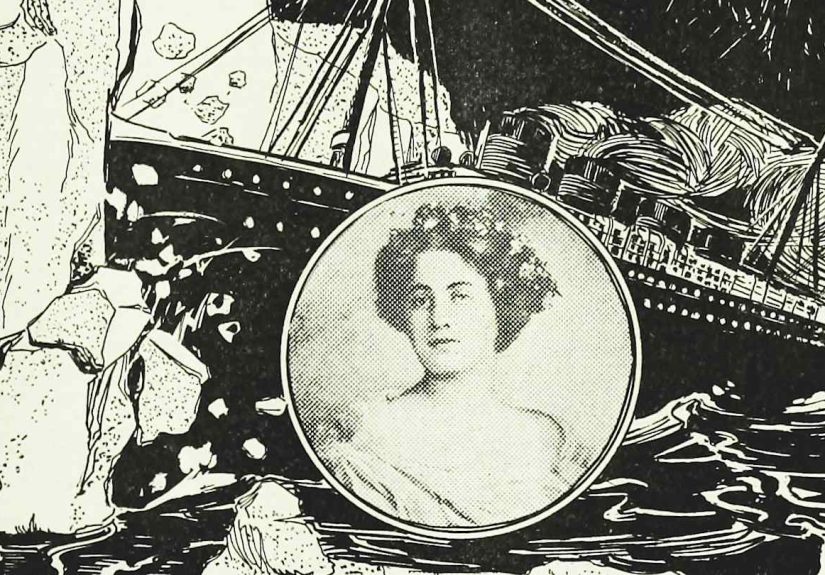
That star was Dorothy Gibson, a 22-year-old silent-film actress who had escaped the disaster with her mother. Within weeks, she was back in front of a camera, reenacting a version of the trauma for audiences who could not stop reading, talking, and grieving over the loss of the RMS Titanic. The film was called Saved from the Titanic, and even more than a century later, it remains one of the strangest, fastest, and most haunting responses to a tragedy in movie history.
It is also a perfect early-Hollywood story, except it happened before Hollywood had fully become Hollywood. There was ambition, opportunism, speed, spectacle, and a deep blur between reality and performance. In other words, cinema got to work almost immediately. Which is either fascinating, unsettling, or both. Probably both.
Not the Titanic Movie You Expect, but the One That Got There First
When people call Saved from the Titanic the first Titanic movie, that is mostly right, but it comes with a little silent-era asterisk. Newsreel footage tied to the disaster reached theaters even earlier. The distinction that really matters is that Saved from the Titanic was the first dramatic film built around the sinking. It was not simply reportage. It turned catastrophe into narrative almost instantly.
That matters because it established a pattern that later Titanic movies would keep using: take a real disaster, build an emotional storyline around it, and let audiences process history through individual experience. In that sense, this tiny silent film did not just arrive first. It quietly handed later filmmakers a blueprint.
And yes, the turnaround was almost absurdly fast. The ship sank in April 1912. The film reached audiences in mid-May. Even in an era of one-reelers, that was a sprint. Today we are used to “ripped from the headlines” entertainment. In 1912, the headlines were barely cold.
Dorothy Gibson Was Already a Star Before the Iceberg
Dorothy Gibson was not a random passenger swept into history. Before boarding the Titanic, she was already known to moviegoers and magazine readers. She had worked as a model and was becoming one of the recognizable faces of early American screen culture. In the pre-studio-system years, that kind of visibility mattered. She was part of the new idea that audiences might follow not just films, but performers.
Then history barged in with all the subtlety of an iceberg at sea.
Gibson and her mother, Pauline, were returning to New York from Europe aboard the Titanic. On the night of the collision, Gibson later recalled hearing a long, sickening sound. She and her mother eventually got into Lifeboat 7, one of the first lifeboats launched. From there, she watched the disaster unfold in the darkness. That image alone feels almost too cinematic, which may be one reason the public could not stop staring at the story afterward.
But the emotional reality was not cinematic in the glamorous sense. It was terrifying, disorienting, and deeply traumatic. Gibson was not gathering “material.” She was surviving. That is what makes the film she later made so eerie. It was not a performer imagining disaster. It was a survivor replaying it while the memory was still raw.
How Saved from the Titanic Was Made at Breakneck Speed
From rescue to screenplay in almost no time
After the rescue ship Carpathia brought survivors to New York, the public’s appetite for information was enormous. Newspapers chased details. Newsreels rushed to capitalize. Producers understood, with startling clarity, that the Titanic was not just news. It was already becoming legend.
Gibson’s producer and companion, Jules Brulatour, helped push that speed. After success with Titanic-related newsreel material, a dramatized film followed quickly. Gibson sketched out a story and played a fictionalized version of herself, “Miss Dorothy,” recounting the disaster after returning home. The plot framed the tragedy through domestic emotion, anxious relatives, and a romantic thread. If that sounds familiar, congratulations: you have identified one of the most durable habits in Titanic cinema.
Authenticity became the selling point
The most extraordinary production detail was also the most unsettling one. Gibson reportedly wore the same clothes she had worn on the night of the sinking. That gave the film a level of authenticity modern productions would kill for and modern therapists would probably object to strenuously. It turned wardrobe into evidence.
The movie was shot at Éclair’s studio in Fort Lee, New Jersey, and partly on a vessel in New York Harbor. It ran roughly ten minutes, which was standard for the time. This was not a feature film in the modern sense. It was a one-reel emotional shockwave, assembled fast and aimed straight at a grieving public.
That speed is one reason the story still fascinates film historians. Saved from the Titanic captures early cinema doing what it often did best and worst at once: moving quickly, borrowing from the news, and packaging emotion into spectacle before anyone had much time to decide whether that was art, exploitation, tribute, or some morally messy combination of all three.
Why Audiences Couldn’t Look Away
To a modern audience, the idea of releasing a Titanic drama so soon after the sinking can sound almost surreal. To 1912 audiences, it also sounded a little scandalous. But scandal has never exactly been bad for ticket sales.
Part of the appeal was obvious. The disaster had stunned the world. People wanted names, details, testimony, visuals, meaning. Another part was newer: moving pictures felt like an uncanny way to bring recent events back to life. Early cinema still carried a kind of technological magic. The screen could resurrect what newspaper columns could only describe.
Reviews and publicity emphasized realism and emotional power. Gibson’s presence was the hook. She was not merely an actress in a disaster story; she was a witness with marquee value. The movie promised audiences proximity to the event itself, or at least the closest thing show business could provide. It was grief with a ticket booth.
At the same time, critics and observers could already see the ethical problem. Was this a memorial, or was it commercial opportunism dressed as one? The answer, honestly, was yes. Early disaster media had not yet invented a better way to handle tragedy than to sell it, narrate it, dramatize it, and call the result public interest. If that sounds uncomfortably modern, well, history sometimes skips the costume change.
The Movie Is Gone, Which Somehow Makes It Even More Powerful
Here is the cruel twist: the first dramatic Titanic film is now a lost film. No known print survives. What remains are still photographs, ads, trade-paper descriptions, and the historical chill that comes from knowing the movie existed and then vanished.
Its disappearance is usually linked to the 1914 Éclair studio fire in Fort Lee, which destroyed vast amounts of early film material. Silent cinema was notoriously fragile. Prints decayed, burned, got discarded, or simply failed to survive an industry that had not yet learned to treat itself as history. The result is that Saved from the Titanic now exists as a movie people can discuss, describe, and analyze without actually watching.
That may be one reason the film has such a ghostly hold on the imagination. It is a movie about a disaster that became a cultural phantom almost immediately. A survivor reenacted the most famous maritime catastrophe of her age, and the artifact itself then slipped into absence. The story became history; the movie became rumor with documentation.
For film history, that loss is huge. This was not just any early short. It was a foundational example of disaster cinema, celebrity culture, trauma performance, and hybridized fact-and-fiction storytelling. It also captured a moment when audiences were still figuring out what movies could do with public tragedy. That is a big thing to lose in ten minutes of nitrate.
The Strange Legacy of a Tiny Silent Film
Even though Saved from the Titanic is gone, its fingerprints are everywhere. It showed that the shipwreck could be retold not just as transportation history or engineering failure, but as intimate melodrama. It pushed the audience toward a survivor’s point of view. It framed the disaster with romance and family feeling. Later films, from the 1953 Titanic to Cameron’s 1997 blockbuster, would keep circling similar choices.
More than that, Gibson’s film revealed how quickly tragedy can become narrative. The Titanic was still a fresh wound, but it was already hardening into symbol: class drama, technological hubris, moral test, celebrity spectacle, national trauma, cautionary tale. The movie did not invent those meanings, but it helped put them into popular visual form.
And then there is Dorothy Gibson herself, who may be the most haunting part of the whole story. She stands at the intersection of survivor testimony, performance, publicity, and personal shock. Soon after the film’s release, she stepped away from movie life. That decision makes sense. It is one thing to survive history. It is another to perform it before strangers for a nickel.
So the first Titanic movie was not merely fast. It was revealing. It showed that from the very beginning, the Titanic was never just a shipwreck in popular memory. It was also a story machine.
Related Experiences: What This Story Feels Like to Modern Readers and Viewers
One experience tied to this story is the eerie feeling of looking at a film you cannot actually see. With Saved from the Titanic, modern audiences do not get the movie itself; we get the outline, the stills, the ads, and the historical echo. That changes the experience completely. Instead of watching the film, you imagine it. You reconstruct it in your head from fragments. In a strange way, that may make it more intimate. You do not consume the artifact the way a 1912 audience did. You chase it like a rumor through archives, reviews, and production stills, which makes the whole thing feel both scholarly and ghostly.
Another experience is realizing how familiar the media cycle feels, even from more than a century ago. Today, we are used to documentaries, dramatizations, hot takes, think pieces, and prestige retellings arriving at warp speed after major events. It is tempting to think that kind of response belongs to the internet age. Then you meet Dorothy Gibson’s movie, and suddenly 1912 feels less quaint than expected. The tools were different, but the instinct was the same: people wanted to understand the tragedy immediately, and the culture industry moved with astonishing speed to package that understanding.
There is also the emotional experience of seeing authenticity become a performance. Gibson did not simply act in a disaster picture; she used her own recent survival as its emotional engine. For modern readers, that can create a powerful double reaction. On one hand, it feels moving. Who better to embody the event than someone who lived it? On the other hand, it feels uncomfortably close to exploitation. The same detail that gives the film its historical force also makes it ethically complicated. That tension is part of the experience. You do not just admire the story; you argue with it in your own mind.
A fourth experience is watching later Titanic films differently once you know this history. Suddenly the love-story structure in later movies does not feel like a modern invention. It feels inherited. The disaster-plus-romance formula was there almost from the start. Learning that can make the entire Titanic film tradition look less like a series of isolated retellings and more like one long conversation about how cinema handles catastrophe. The ship sinks, the characters love, the audience cries, and history gets translated into feeling. Different budgets, same emotional machinery.
Finally, there is the experience of confronting why the Titanic refuses to fade. The Dorothy Gibson story makes that clear in a way few other details can. This was not merely a maritime accident recorded in official reports. It was immediately turned into memory, performance, commerce, myth, and visual culture. The first Titanic movie arrived before the century had even had time to decide what the disaster meant. That is why the story still lands. It forces us to think about grief, spectatorship, technology, and the uneasy human habit of turning unbearable events into stories we can sit with in the dark.
Conclusion
The first Titanic movie was not lavish, long, or technically immortal. It was short, silent, rushed, and lost. Yet it may be one of the most revealing Titanic films ever made. Saved from the Titanic showed how quickly cinema learned to transform real disaster into emotional narrative, and Dorothy Gibson’s involvement gave the film an intensity that later productions could imitate but never fully duplicate.
That is why the story still matters. It is not just an odd footnote before the “real” Titanic movies begin. It is the beginning of the tradition itself: the first attempt to turn the sinking into drama, the first proof that audiences would gather to watch private terror become public story, and the first sign that the Titanic would keep sailing through popular culture long after the ship itself was gone.
In other words, the world did not wait decades to mythologize the Titanic. It barely waited a month.