Table of Contents >> Show >> Hide
- Why France Makes Time Look Like Art
- What Exactly Is a “Feather Clock”?
- The Mechanics, Without the Migraine
- A Quick Style Tour: French Clocks That Set the Mood
- Where the Feather Motif Comes From (Hint: Fashion Knew First)
- How to Evaluate a French Feather Clock (Without Getting Hustled)
- Care and Keeping: Make It Last Longer Than Your New Year’s Resolutions
- Styling a Feather Clock in a Modern Home
- Conclusion: Time Still FliesBut It Can Do It in Style
- Experiences: Living With “Time Flies” at Home (Extended)
Time is famously rude. It shows up uninvited, rearranges your plans, and somehow always leaves before you do.
So if we can’t stop time, we can at least make it look good while it sprints pastpreferably with a little French flair
and, yes, a few feathers.
A “feather clock from France” sounds like a whimsical object you’d find in a Paris apartment where the croissants are
always warm and the houseplants have better skincare than you. But the idea is more than poetic branding. It’s a design
sweet spot where French decorative arts (gilded bronze, enamel dials, sculptural cases) meet feather motifs that have
long signaled lightness, movement, and that delicious, slightly dramatic feeling that life is happening right now.
In this guide, we’ll unpack what a French feather clock can be (and isn’t), why France has a reputation for turning
timekeeping into theatre, how to judge quality without becoming that person who carries a loupe to brunch, and how to
live with one in a modern home without treating it like a fragile museum relic. At the end, you’ll also get a longer,
experience-focused sectionbecause clocks are functional, but the best ones are also emotional support objects with
excellent posture.
Why France Makes Time Look Like Art
France didn’t just build clocks; it staged them. French clocks often sit at the intersection of engineering and
decorative arts, where the mechanism is expected to do its job, but the case is expected to charm the room. In many
French examples, the “clock” is really a collaboration: metalworkers, cabinetmakers, sculptors, enamellers, and
clockmakers all contributing to a single object whose mission is to keep time and keep company.
This isn’t a new habit. Paris developed into a major center of clock- and watchmaking, and the craft was shaped by
wider social currentstrade, taste, religion, and the movement of skilled makers. The result was a deep bench of
technical talent and a design culture that treated domestic objects like miniature monuments.
If that sounds grand for something that sits on a mantel, remember: a clock is the one household object that
literally tells you what your life is doing. No pressure.
What Exactly Is a “Feather Clock”?
Let’s make the term useful. A “feather clock” isn’t a standardized category like “regulator” or “cartel clock.”
It’s a design conceptone that can show up in several legitimate forms:
1) Feather imagery in the case design
Think sculpted plumes, winged motifs, birds, quills, or airy botanical forms that read like feathers. In French
decorative clocks, this might appear in rococo scrollwork (where everything is joyfully over-curved) or in neoclassical
compositions (where feathers may look more like intentional symbols than decorative confetti).
2) Feather-inspired dial or hands
Some modern designers literally use feather shapes for hands, or print a feather pattern on the dial. Antique clocks
typically won’t use actual feathers for functional hands (because the laws of physics are humorless), but feather-like
hands and plume motifs can be faithful to period styles.
3) Feathers as a material accent
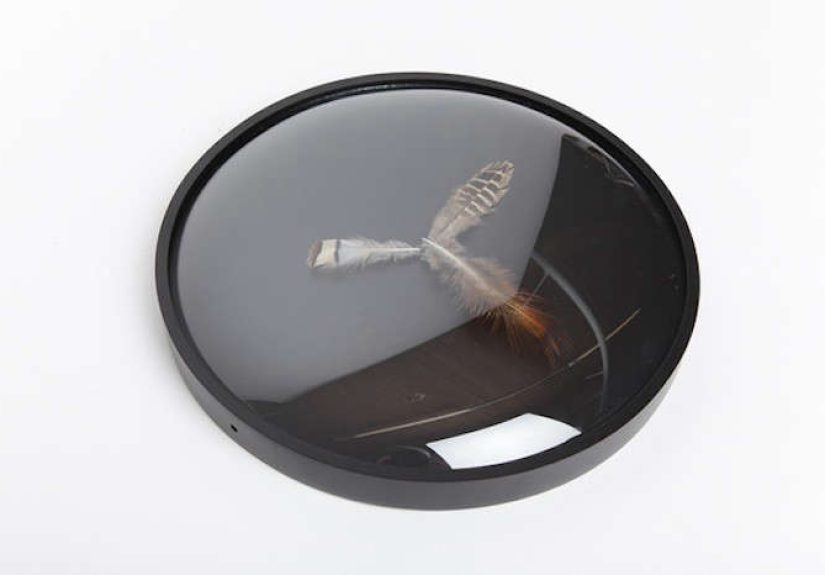
This is where the fantasy becomes realcarefully. Feathers might appear as a decorative flourish in contemporary pieces,
or in mixed-media art clocks. If you’re hunting for an antique, be cautious: actual feather appliqués can be later
additions or restorations. That’s not automatically bad, but it changes how you evaluate originality, condition, and
long-term care.
Bottom line: a feather clock from France is best understood as a French clock whose design language evokes lightness,
flight, and motioneither symbolically (motifs) or materially (accent). The concept pairs beautifully with France’s
long tradition of sculptural timepieces, where the clock isn’t shy about being the main character.
The Mechanics, Without the Migraine
You don’t need to become a horologist to appreciate a clock, but a little mechanical literacy helps you buy smarter and
care better. Most traditional mechanical clocks share a few foundational ideas:
Power source: stored energy, released slowly
Mechanical clocks store energyoften via weights or springsand release it in controlled steps. That “controlled steps”
part is the whole game. Without control, a clock would simply… enthusiastically unwind itself into unemployment.
The escapement: the bouncer at the club
The escapement is the mechanism that regulates the flow of energy from the power source to the timekeeping element.
It’s why the clock ticks instead of panics. In plain English: it meters out motion in consistent bites, turning stored
energy into a steady rhythm.
The oscillator: pendulum or balance
Many classic clocks rely on a pendulum or balance system as the “heartbeat,” providing regular timing intervals.
Once you understand that a clock is basically “stored energy + regulated release + steady heartbeat,” you’ve got the
essence.
The reason this matters for our feather clock story is simple: feathers scream “light” and “float,” while clock
mechanics demand stability. The best feather-inspired clocks succeed because they contrast the airy with the precise:
a visual suggestion of flight paired with a mechanism designed to be stubbornly consistent.
A Quick Style Tour: French Clocks That Set the Mood
French clocks span many styles, but a feather clock concept fits particularly well into a few families. Here’s a tour
of the most relevant looks, plus how feathers can “belong” in each.
Rococo drama: the cartel clock era
“Cartel clocks” are wall clocks designed to hang directly on the wall, often highly ornate. French rococo examples can
look like they were designed by someone who thought “restraint” was a rumor. You’ll see rich gilding, scrolling forms,
and sculptural figuressometimes with birds, hunting themes, or mythological scenes that practically beg for feather
motifs.
A wonderful example of the genre’s spirit appears in museum records: a French rococo-style cartel clock topped with a
figure of Diana, complete with hunting references and a lively decorative program. Whether your feather clock uses
literal bird elements or simply plume-like scrolls, rococo is the style that says, “Time is a performance, darling.”
Neoclassical & Empire: feathers as symbols
Move into neoclassical and Empire tastes and the vibe changes: fewer frothy curls, more deliberate symbolism.
Feathers can appear as quills (knowledge), wings (victory or transcendence), or formal plume arrangements that feel
architectural rather than frilly.
French decorative clocks also explored historical revival styles with confidencesometimes with the subtlety of a
marching band. An Egyptian Revival mantel clock case shaped like an Egyptian pylon is a perfect reminder: French clock
cases weren’t just housings; they were narratives.
Boulle, marquetry, and the “serious furniture” clock
On the more furniture-forward side, French tall-case clocks and regulators can feature marquetry and gilt bronze mounts
with a disciplined, luxurious feel. Here, feather motifs tend to work best as fine detailing rather than bold statement:
a discreet plume on a dial, a winged ornament, or a subtle engraved flourish.
Automata and musical whimsy: when clocks show off
France also loved mechanical spectacle. Some decorative clocks integrate musical elements or automaton-like storytelling,
blurring the line between timekeeper and entertainment. In this world, a feather theme feels completely at homebecause
if your clock already plays music or hosts tiny moving parts, why not let it flirt a little?
Where the Feather Motif Comes From (Hint: Fashion Knew First)
Feathers have long been shorthand for elegance, movement, and statusespecially in fashion and accessories. By the early
twentieth century, ostrich feather fans were iconic evening accessories, prized for their softness, volume, and dramatic
silhouette. A feather fan is essentially “portable atmosphere,” which is a concept France has never resisted.
This matters because decorative arts cross-pollinate. The same tastes that celebrate feather fans, plumed hats, and
airy textiles also influence interior objects. A clock that borrows feather languagewhether through engraved plumes,
feather-like hands, or a winged figurefits naturally into a lineage where decoration is part of social storytelling.
A feather clock from France, then, isn’t a random novelty. It’s a design translation: taking the feather’s cultural
meaning (lightness, elegance, transience) and giving it a permanent jobmarking the hours. Irony? Yes. Beautiful irony.
The best kind.
How to Evaluate a French Feather Clock (Without Getting Hustled)
Whether you’re buying an antique French clock with feather motifs or a modern French-inspired feather clock, your goal
is the same: separate charming design from shaky construction. Here’s a practical checklist.
1) Identify what’s original vs. what’s added
Feather accents can be integral (cast into the case, engraved on the dial) or applied later (glued-on trims, replaced
hands, decorative overlays). Integral design elements tend to be more convincing and more durable. Later additions can
be fine, but ask yourself: do they match the clock’s style language, or do they look like a craft project that got
emotionally attached?
2) Look for coherent materials
Traditional French decorative clocks commonly feature combinations like gilt bronze (ormolu), marble, enamel dials, and
carefully finished cases. You don’t need a lab to notice qualitycrisp casting, clean transitions, and well-fitted
components usually show up in the overall “presence” of the piece.
3) Movement credibility matters
For antiques, the movement is the engine. You want evidence of competent workmanship and serviceability. Even if you’re
not opening the clock, you can ask about last service, running duration, strike function (if any), and whether parts
have been replaced. If the seller answers every question with “It’s vintage,” that’s not an answer. That’s a mood.
4) Provenance and documentation help (even a little)
Museum-style object records show how seriously documentation is taken for clocks: materials, dimensions, maker names,
and context. In the market, anything that supports authenticitymaker marks, retail labels, service recordsadds
confidence and can protect resale value.
5) Condition: treat feathers like you treat friendshipsgently
If your feather clock uses literal feathers (common in contemporary art clocks, rarer in antiques), factor in fragility.
Feathers dislike sunlight, humidity swings, dust, and enthusiastic pets. If your feather motif is sculpted or engraved,
you still want to check for corrosion, loose mounts, dial cracks, and signs of over-cleaning.
Care and Keeping: Make It Last Longer Than Your New Year’s Resolutions
Mechanical clocks are durable when maintained, but they’re not “set it and forget it” objects. Think of them more like a
classic car that only needs occasional attentionexcept it doesn’t leak oil on your driveway (unless it’s very dramatic).
Basic care tips
- Keep it stable: Avoid placing it where it will be bumped, tilted, or vibrated. Level matters for many movements.
- Mind the environment: Moderate temperature and humidity help both mechanics and finishes.
- Dust smartly: Use soft tools and avoid forcing dust into crevices. For feather materials, use extremely gentle methods.
- Service like an adult: If it’s an antique mechanical clock, periodic professional servicing is healthier than waiting for a crisis.
And please: don’t spray “multi-surface cleaner” into a clock because you’re feeling productive. That’s not cleaning.
That’s choosing chaos.
Styling a Feather Clock in a Modern Home
A feather clock is a conversation piece, but it shouldn’t shout over your life. The easiest way to style it well is to
decide what role it plays:
Option A: The statement object
Give it space. Place it on a mantel, console, or shelf with breathing room and minimal clutter. Pair with a mirror, a
single vase, or a small stack of books. Let the clock be the reason people stop mid-sentence and go, “Wait… what is that?”
Option B: The curated accent
If the clock is smaller or more subtle, let it nest into a vignette: a framed print, a small sculpture, and a candle.
Feather motifs pair beautifully with soft textures (linen, velvet), warm metals, and natural woods.
Option C: The “French logic” approach
French interiors often succeed by mixing eras: a modern sofa with an antique object that looks like it has opinions.
A feather clock thrives in this environment because it bridges lightness (feather language) and tradition (clock form).
Conclusion: Time Still FliesBut It Can Do It in Style
A feather clock from Francewhether an antique French decorative clock with plume and bird motifs, or a contemporary
piece inspired by French designturns timekeeping into something you can feel. It reminds you that hours aren’t just
units; they’re scenes. And if time insists on flying, at least let it fly past something beautiful.
Choose a piece with coherent craftsmanship, care for it with patience, and let it do what great objects do best:
quietly improve your daily life while looking like it belongs in a story.
Experiences: Living With “Time Flies” at Home (Extended)
Imagine you bring your feather clock home on a rainy afternoonthe kind where the sky looks like it’s buffering. You
set the box down, open it carefully, and discover the first surprise: clocks have weight. Even the ones that look airy.
That’s the magic trick. The feathers (or feather motif) promise lightness, but the object itself feels grounded, like it
has been practicing dignity for decades.
The first “experience” is the sound. Not all clocks are loud, but a good mechanical tick has personality. It’s not the
anxious chirp of a phone notification. It’s a steady, low-stakes reminder that time is moving whether you refresh your
email or not. Some people find that comforting. Others find it motivational. Either way, it’s a healthier relationship
with time than doomscrolling at midnight, which is basically timekeeping’s evil twin.
Then comes the ritual: setting it. You align the hands, adjust the placement, and learn that “slightly to the left” is
sometimes the difference between “works beautifully” and “is offended.” If the clock is mechanical, you may wind it and
realize winding a clock is oddly calminglike making a promise to the next week of your life. You’re saying, “I’ll be
here. I intend to keep going.” Yes, it’s dramatic. No, you shouldn’t stop.
Over time, the feather theme starts to do its real work. Feathers are visual shorthand for motion, and you notice it
most on days that feel stuck. The clock becomes a gentle nudge: even when the day is slow, time is still traveling.
That can be annoying… or freeing. If time is moving anyway, you might as well do one small thing that matters.
And the best part? People talk about it. Not in the “nice clock” way, but in the “why does your clock look like it’s
about to recite poetry?” way. Guests ask where it’s from. They ask what the feather means. Suddenly you’re discussing
design history, French style, and the strange comfort of analog objectswhile everyone slowly backs away from their
phones like they’re trying not to startle a deer.
Eventually, you build a little routine around it. You notice the light changes across the dial in the morning. You
dust it carefully (not aggressivelythis is not a gym workout). You learn which angles make the feathers look like
they’re floating. You realize the clock is doing something modern tech rarely does: it creates a tiny, repeatable
moment in your day that feels intentional.
When daylight saving time (or travel) forces you to reset it, it’s not just a chore. It’s a pause. You touch time,
literally, and that’s weirdly grounding. In a world where minutes vanish into apps and tabs, adjusting a physical clock
feels like taking responsibility for your own paceeven if, five minutes later, you’re still late. (Progress is a
journey. So is running after a bus.)
That’s the lived experience of a feather clock: it turns time from a faceless system into a small companion. It won’t
fix your schedule. It won’t answer your emails. But it will do something quietly valuableit will make you notice the
passage of time with a little more grace, and a little less panic. Time flies. Your clock just makes it look elegant.