Table of Contents >> Show >> Hide
- What Are Australia’s Cardboard Drones?
- Why Would Anyone Make a Drone Out of Cardboard?
- How Ukraine Uses the Corvo PPDS
- Were Cardboard Drones Used in Attacks on Russian Airfields?
- Why Australia’s Role Matters
- What Makes These Drones Different From Regular UAVs?
- The Bigger Lesson: Cheap Drones Are Rewriting the Rules
- Limitations of Cardboard Drones
- Why the Story Captures So Much Attention
- Experience Notes: What the Cardboard Drone Story Teaches
- Conclusion
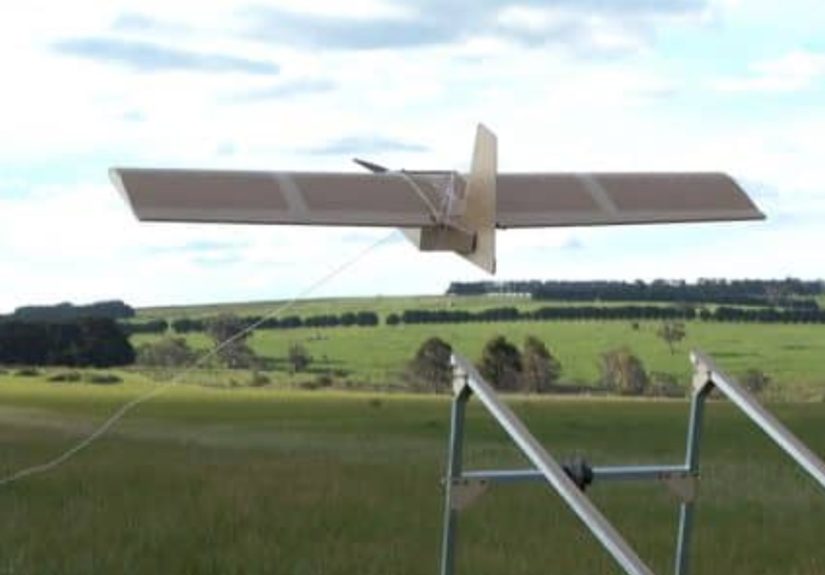
In the great museum of “things that sound fake but are not,” Ukraine’s Australian cardboard drones deserve their own glass caseright between “inflatable tanks” and “military logistics powered by spreadsheets and caffeine.” These drones are not toys, not hobby-shop leftovers, and definitely not the kind of paper airplane you folded during a boring math class. They are low-cost, flat-packed unmanned aircraft known as the Corvo Precision Payload Delivery System, or PPDS, made by Australian defense company SYPAQ.
The phrase “cardboard drone” is catchy, but it needs a little unpackingmuch like the drone itself. The aircraft is commonly described as cardboard because its body uses lightweight board material, often reported as waxed foamboard or cardboard-like construction. That makes it cheap, portable, and surprisingly useful in a war where drones are consumed at a rate that would make any accountant quietly leave the room.
For Ukraine, the appeal is obvious: a drone that can be shipped flat, assembled quickly, fly long distances, carry a modest payload, and perform missions that would otherwise risk soldiers, vehicles, or expensive aircraft. For Russia, the appeal is considerably lower.
What Are Australia’s Cardboard Drones?
The drone at the center of the story is the Corvo PPDS, developed by Melbourne-based SYPAQ Systems in cooperation with the Australian Army. It was originally created as a low-cost, expendable aircraft for delivering small supplies to troops in places where traditional logistics are too dangerous, too slow, or too noisy. Think of it as a flying delivery box with military-grade brains and much worse customer-service reviews from enemy air defenses.
The Corvo PPDS arrives in a flat-pack form, meaning it can be shipped compactly and assembled in the field with minimal tools. Its basic design includes a lightweight airframe, a motor, avionics, and a payload bay. Once assembled and programmed, it can fly autonomously toward a set location. According to SYPAQ, the aircraft can travel up to about 120 kilometers, or roughly 75 miles, and land by itself.
That range is especially important in Ukraine. Many frontline areas are saturated with artillery, electronic warfare, drones, counter-drones, mines, and surveillance systems. Sending a human team to deliver a radio battery, medical kit, ammunition, or camera into a dangerous zone may be a bad idea. Sending a cheap unmanned aircraft that can be replaced is often the smarter option.
Why Would Anyone Make a Drone Out of Cardboard?
Because war is expensive, and sometimes the cheapest object in the sky creates the biggest headache on the ground.
Modern warfare has shown that drones are not just premium aircraft with polished carbon fiber bodies and marketing brochures full of dramatic sunset photos. They are also disposable tools. Ukraine and Russia have both lost huge numbers of drones since the full-scale invasion began in 2022. Small quadcopters, first-person-view drones, loitering munitions, long-range attack drones, reconnaissance aircraft, and interceptor drones are now part of everyday battlefield life.
In that environment, a cardboard-style drone makes sense for three major reasons: cost, logistics, and radar visibility.
Cost Matters in a Drone War
A low-cost drone changes the math of war. If a drone is cheap enough, losing it is not a strategic disaster. That does not mean waste is acceptable, but it does mean commanders can use the aircraft for risky missions without gambling a million-dollar platform. A cardboard-style drone can be treated more like ammunition than like an aircraft. That is a big mental shift.
Traditional military drones may be powerful, but they can also be expensive, maintenance-heavy, and vulnerable to sophisticated air defense systems. Ukraine’s battlefield has punished slow, predictable, or electronically noisy drones. Cheap expendable systems give Ukrainian units more options, especially when the mission is simple: look, deliver, distract, or strike.
Flat-Pack Logistics Are Not a Joke
The Corvo PPDS is delivered flat-packed, which means many drones can be transported in a small space. That is a major advantage for Ukraine, where logistics convoys are targets and storage space near the front is precious. A drone that arrives like military IKEAminus the cheerful furniture showroom and plus the possibility of explosionscan be moved, hidden, assembled, and launched more easily than a bulky aircraft.
This also helps with international supply. Australia can ship “capability bricks” of drones that take up less room than fully assembled aircraft. In a long war, boring details like box size, storage, and assembly time become very exciting to the people who keep armies moving.
Low Radar Signature Helps
Cardboard and foamboard materials are less reflective to radar than metal. The drone still has parts that can be detectedsuch as the motor, battery, propeller, and electronicsbut the airframe itself is less visible than a conventional metallic structure. That does not make it magically invisible. It is not a wizard with wings. But it can make detection harder, especially when flying low, in groups, or in cluttered environments.
This matters because Russian forces use a mix of radar, electronic warfare, guns, missiles, and visual spotting to detect and destroy drones. Anything that reduces detectability, cost, or electronic emissions can improve survival odds.
How Ukraine Uses the Corvo PPDS
The Corvo PPDS was designed for delivery, but Ukrainian forces are famous for treating technology like a menu rather than a manual. If something flies, rolls, floats, or can carry a camera, Ukrainian engineers and soldiers will probably find three new uses for it by breakfast.
Reports indicate that Ukrainian troops have adapted the drones for intelligence, surveillance, and reconnaissance missions. One especially clever modification involves mounting small action cameras, such as GoPro-style cameras, inside holes cut into the aircraft. Instead of streaming video back in real timewhich creates an electronic signal that enemies might detectthe drone can fly a pre-programmed route and capture footage at a specific moment. That reduces radio emissions and makes the aircraft harder to track.
This is a very Ukrainian solution: cheap, practical, field-modified, and mildly offensive to anyone who believes military equipment should remain exactly as the manufacturer intended.
The drones can also support logistics. A payload capacity around three kilograms may not sound dramatic, but three kilograms can mean medical supplies, batteries, ammunition, communications gear, small tools, or emergency equipment. On the battlefield, small payloads can have large consequences. A blood bag, radio battery, or spare part delivered at the right moment can matter more than a warehouse full of supplies sitting safely in the rear.
Were Cardboard Drones Used in Attacks on Russian Airfields?
This is where the story gets more dramaticand where careful wording matters. Ukrainian and international reports have linked Australian cardboard drones to attacks on Russian targets, including a reported strike on the Kursk airfield in 2023. Ukrainian sources claimed that multiple Russian aircraft and air defense systems were damaged in that operation. Some reports identified Corvo-type cardboard drones as part of the attack, while Ukraine did not officially reveal every technical detail.
That uncertainty is normal in wartime. Governments do not usually publish a friendly step-by-step guide titled “How We Hit Your Airbase.” Still, the reported use of low-cost drones in attacks against valuable aircraft highlights the brutal economics of modern conflict. If a relatively cheap drone can help damage or destroy a fighter jet worth tens of millions of dollars, the cost-benefit ratio is almost cartoonish. It is like trading a paperclip for a pickup truck, except the paperclip flies and the pickup truck is on fire.
Whether used directly as strike drones, decoys, reconnaissance platforms, or part of a larger drone swarm, the Corvo PPDS fits Ukraine’s broader strategy: use flexible, affordable systems to overwhelm, confuse, and stretch Russian defenses.
Why Australia’s Role Matters
Australia may be far from Ukraine geographically, but the cardboard drone story shows how modern defense support is not limited to tanks, artillery shells, or missiles. Sometimes the most valuable contribution is a small, odd-looking system that solves a specific battlefield problem.
SYPAQ’s drones were supplied as part of Australian support for Ukraine. The project also demonstrates the value of defense innovation partnerships. The Corvo PPDS was not born as a glamorous superweapon. It came from a practical military challenge: how to deliver small payloads cheaply and safely to remote or dangerous areas. Ukraine then became the ultimate testing ground, where theory meets mud, jamming, artillery, and soldiers who will absolutely cut a hole in your drone if it improves the mission.
The feedback loop matters. Reports suggest that SYPAQ adjusted software and development based on Ukrainian battlefield use. That is how modern defense innovation increasingly works: design, deploy, learn, improve, repeat. The old model of spending fifteen years perfecting a system before it meets reality is being challenged by a war where a drone design can become outdated in weeks.
What Makes These Drones Different From Regular UAVs?
The Corvo PPDS is not trying to be a luxury drone. It is not competing with high-end military platforms that fly for dozens of hours, carry advanced sensors, or launch precision missiles. Its strength is simplicity.
First, it is lightweight. A lighter airframe means easier transport, easier launch, and lower material cost. Second, it is modular enough for field adaptation. Third, it can fly autonomously, reducing the operator’s workload after launch. Fourth, it can be used in missions where recovery is optional. A reusable drone is nice. A drone cheap enough to abandon when necessary is sometimes better.
That combination gives Ukraine something extremely useful: a tool that can be scaled. In drone warfare, quantity has a quality of its own. One expensive drone can be impressive. Hundreds of cheap drones can be a problem that never stops arriving.
The Bigger Lesson: Cheap Drones Are Rewriting the Rules
The cardboard drone is part of a much larger transformation. Ukraine has turned drone warfare into a national survival industry. The country uses drones for artillery spotting, trench attacks, supply drops, mine detection, naval strikes, air defense, long-range attacks, and battlefield surveillance. Russia has done the same on its side, producing and importing drones at huge scale.
By 2026, drones are no longer an interesting side story in the war. They are one of the main characters. Ukraine has developed long-range attack capabilities and interceptor systems, while Russian drone barrages remain a major threat to Ukrainian cities and infrastructure. The sky over the battlefield is crowded with machines that are cheaper than missiles but dangerous enough to change tactics.
The Corvo PPDS shows that innovation does not always look futuristic. Sometimes it looks like a brown flat-pack aircraft held together with practical engineering and battlefield urgency. The future of war may include artificial intelligence, satellites, lasers, and hypersonic weaponsbut it also includes cardboard, rubber bands, glue, and a soldier saying, “Yes, but what if we put a camera here?”
Limitations of Cardboard Drones
Of course, cardboard-style drones are not miracle machines. They have limits. They are not heavily armored. They can be affected by weather, though wax coating helps. They carry small payloads. They can be shot down. They may be vulnerable to jamming depending on mission profile and navigation method. And because they are relatively simple, they are not ideal for every mission.
But limitations do not make them useless. A disposable rain poncho is not a winter coat, but you are still happy to have one in a storm. The Corvo PPDS is valuable because it fills a niche: low-cost autonomous delivery and reconnaissance in dangerous areas. In a war of attrition, niche tools can become strategic assets when used at scale.
Why the Story Captures So Much Attention
People love this story because it breaks expectations. Military technology is supposed to sound expensive, metallic, classified, and slightly intimidating. “Cardboard drone from Australia” sounds like something invented by a bored scout troop with access to a defense budget.
But that is exactly why it matters. The war in Ukraine has shown that clever adaptation often beats polished complexity. A consumer drone with a grenade can threaten a tank. A sea drone can damage a warship. A cardboard aircraft can collect intelligence or reportedly contribute to strikes against high-value targets. The lesson is not that cardboard is magical. The lesson is that cheap, adaptable systems can exploit gaps in expensive defenses.
Experience Notes: What the Cardboard Drone Story Teaches
The experience surrounding Ukraine’s use of Australian cardboard drones offers several practical lessons for anyone interested in defense, technology, logistics, or innovation under pressure. The first lesson is that “good enough” can be better than “perfect but unavailable.” On a battlefield, a drone that can be delivered this month, assembled near the front, and used immediately may be more valuable than a sophisticated system that arrives next year after twelve committees and three glossy procurement slideshows.
The second lesson is that logistics can be a weapon. People often focus on explosions, range, speed, and payload, but packaging matters. A flat-packed aircraft can be shipped in bulk, hidden more easily, moved by small teams, and stored without needing a hangar. That sounds boring until you remember that every large vehicle, warehouse, and supply route near a war zone is a potential target. Compactness becomes survivability.
The third lesson is that soldiers will always modify tools. The Corvo PPDS may have been designed for delivery, but Ukrainian troops reportedly adapted it for reconnaissance by adding cameras and changing mission profiles. This is not misuse; it is battlefield evolution. The people closest to the problem often understand the solution fastest. A design that allows field improvisation has a major advantage over one that treats users like they are not allowed to touch the settings menu.
The fourth lesson is economic. A cheap drone forces the enemy to make bad choices. Should defenders use an expensive missile against a low-cost aircraft? Should they reveal radar positions? Should they waste time tracking decoys? Should they ignore it and risk damage? None of those options are pleasant. That is the quiet power of low-cost unmanned systems: they create decision fatigue.
The fifth lesson is psychological. The idea that a cardboard-like drone can threaten serious military assets is embarrassing for traditional thinking. It reminds commanders that status does not stop shrapnel, and expensive equipment is not automatically safe from cheap weapons. In war, dignity is not armor.
Finally, the cardboard drone story shows why Ukraine has become a laboratory for modern warfare. Not in a cold or abstract sense, but in a painful, urgent, real-world way. Every new drone, counter-drone system, jamming method, camera mount, antenna trick, and software update is tested under extreme conditions. Australia’s Corvo PPDS entered that environment as a practical delivery drone and became part of a much larger story about adaptation, affordability, and survival.
That is why the phrase “cardboard drone” should not make anyone laugh for too long. Smile, yes. Make the paper-airplane joke, absolutely. But then pay attention. Ukraine’s use of Australian cardboard drones is not a quirky footnote. It is a sign of where warfare is going: cheaper, faster, more improvised, more autonomous, and far less impressed by traditional ideas of what military power is supposed to look like.
Conclusion
Ukraine’s use of cardboard drones from Australia is one of the clearest examples of how modern warfare rewards creativity as much as firepower. The Corvo PPDS is simple, flat-packed, affordable, and adaptable. It can deliver supplies, support reconnaissance, reduce risk to soldiers, and reportedly contribute to operations against high-value targets. It is not invincible, and it is not a replacement for larger military systems, but it is exactly the kind of tool that thrives in a war defined by drones, attrition, and rapid innovation.
The big takeaway is not that cardboard is the new steel. The takeaway is that smart design, low cost, and battlefield adaptability can turn humble materials into serious military capability. In Ukraine, even a flat-packed drone with a cardboard reputation can become a strategic headache.