Table of Contents >> Show >> Hide
- Why Probes Matter More Than You Think
- Start With the Basics: Upgrade the “Default” Probe
- Upgrade the Ground Connection: Your “Noise” Might Be a Wire You Chose
- Choose the Right Probe Type for the Job
- Meter Leads and Test Probes: Upgrade for Safety and Sanity
- Specs That Actually Matter (And the Ones That Mostly Impress People at Lunch)
- Practical Upgrade Paths (Based on What You Actually Do)
- Specific Examples: What Changes When You Upgrade?
- Maintenance and Habits That Make Your Upgrades Pay Off
- How to Decide What to Buy First
- Field Notes: Real-World Experiences When You Upgrade Your Test Probes (Extra)
- 1) The Day the Square Wave Finally Looked Like a Square Wave
- 2) The “Noise” That Disappeared When You Shortened the Ground
- 3) The First Time a Differential Probe Saved an Afternoon
- 4) The Meter Lead Upgrade That Made You Faster (Not Just Safer)
- 5) The Current Probe Moment: “Oh, That’s What Inrush Looks Like”
If your measurements look like modern art (and not the kind that sells), your scope or meter might be fineyour probes might be the
tiny gremlins sabotaging the truth. Upgrading test probes is one of the fastest ways to get cleaner waveforms, safer meter work,
and fewer “why is it doing that?” moments. Think of it like swapping dull kitchen knives for sharp ones: suddenly you’re not
wrestling the tool, you’re actually cooking.
This guide breaks down what “upgrade” really means (hint: it’s not just “more expensive”), which probe types solve which problems,
what specs matter, and how to build a probe kit that makes you faster, safer, and dramatically less cranky at 11:57 PM.
Why Probes Matter More Than You Think
Test probes aren’t neutral bystanders. Oscilloscope probes and meter leads become part of the circuitadding resistance, capacitance,
and inductance that can distort what you’re trying to measure. That distortion shows up as rounded edges, ringing that wasn’t really
there, noise that mysteriously disappears when you change the ground lead, and “it worked yesterday” energy.
The Three Classic Measurement Traps
- Loading: Your probe steals a little signal (or a lot), especially at high frequency or high-impedance nodes.
- Ground inductance: Long ground leads can turn fast edges into a bouncy castle.
- Wrong probe for the job: Measuring a floating high-side node with a ground-referenced setup can create errorsor worse.
Start With the Basics: Upgrade the “Default” Probe
Many oscilloscopes ship with perfectly usable passive probes. But “usable” is not the same as “optimal,” especially when you’re chasing
fast edges, switching noise, or small signals. The goal isn’t to buy the fanciest probeyou want the right probe for your bandwidth,
signal amplitude, and circuit impedance.
10X Passive Probes: The Everyday Upgrade That Actually Upgrades
If you do one thing: get a solid 10X passive probe set and use it correctly. A 10X probe typically reduces circuit loading compared
to 1X, improves usable voltage range, and is the default choice for general-purpose work.
- Why 10X helps: Higher effective input resistance and lower effective capacitance than a 1X setup (less loading).
- Tradeoff: The signal is attenuated by 10, so small signals may require more vertical sensitivity on the scope.
- Pro tip: Leave your probe in 10X unless you have a specific reason not to. (1X is not a personality trait.)
Don’t Skip Compensation: It’s Not Optional, It’s Physics
Passive probes use compensation to keep square waves square instead of turning them into sad ramps or pointy hats. If your probe
compensation is off, your rise time, overshoot, and pulse width measurements can be wrongeven at surprisingly low frequencies.
- Connect the probe to the scope’s calibration square-wave output.
- Set the probe to 10X (and the scope channel to match).
- Adjust the probe compensation until the square wave is flat-topped with crisp corners (not rounded, not peaked).
Make compensation a habit: new probe, new scope channel, or “I dropped the probe and now it’s moody” are all valid reasons to check.
Upgrade the Ground Connection: Your “Noise” Might Be a Wire You Chose
The long alligator-clip ground lead that came in the bag is convenient, but it can add enough inductance to create ringing and
overshoot on fast edges. That ringing often looks like a circuit problemuntil you shorten the ground and it magically vanishes.
Which is great, unless you already changed three resistors and questioned your career.
Use a Spring Ground (or Ground Blade) for Fast Signals
A short ground spring that connects close to the probe tip can drastically reduce loop inductance and clean up measurements on
switching nodes, digital edges, and power rails. The key idea: keep the loop area tiny.
When a Long Ground Lead Is Fine
For slow signals (audio-ish, low-speed sensors, many analog control lines), the long ground lead is often fine. But once you’re
looking at nanosecond edges or switching transients, treat that lead like a chaos generator.
Choose the Right Probe Type for the Job
Passive Voltage Probes (1X/10X/100X)
Passive probes are rugged, affordable, and great for general troubleshooting. Upgrades here often mean:
higher bandwidth, lower capacitance, better accessories (tips, hooks, springs), and more durable construction.
Best for: Most everyday analog/digital debugging, microcontroller work, basic power electronics (with proper safety and technique).
Active Probes: When Loading Is the Enemy
Active probes (often FET-based) provide very low input capacitance and high bandwidth, which can preserve signal integrity on
high-speed nodes. They’re fantastic when a passive probe noticeably distorts the waveformlike probing a high-impedance clock line
or a fast serial link test point.
Best for: High-speed digital, RF-ish edges, sensitive high-impedance nodes, and “why does it only fail when I probe it?” cases.
Differential Probes: Measure Across Two Points Without “Ground Drama”
Differential probes measure the voltage difference between two points. They’re used for differential signaling and for measuring
nodes that aren’t at ground potential. They can also help reduce issues from ground referencesespecially in power electronics.
Best for: Differential pairs, shunt resistors, floating measurements, power converter nodes, and troubleshooting ground loops.
Isolated Differential Probes: The “My Setup Needs to Float” Upgrade
Some measurements demand isolation from earth ground to avoid ground loops, improve common-mode rejection, and enable safer probing
of high-voltage floating nodes. Optically or galvanically isolated probes are designed for that reality.
Best for: High-side measurements, motor drives, inverters, mains-referenced systems (with proper training and safety practices),
and situations where ground loops create measurement error.
Current Probes: Stop Using “Voltage Across a Mystery Resistor” as a Lifestyle
If you measure current often, a current probe can save you time and reduce circuit intrusion. Clamp-on current probes and Rogowski
coils are common choices:
- Hall-effect clamp probes: Often measure AC and DC, great for power rails and load profiling.
- Rogowski coils: Great for AC currents and fast transients, flexible for awkward conductors and bus bars.
Best for: Switch-mode power supply debugging, motor control, inrush current, transient analysis, and any time you want
current without rewriting your circuit.
Meter Leads and Test Probes: Upgrade for Safety and Sanity
Multimeter leads are where “upgrade” can mean “don’t get hurt.” Look for properly rated leads and accessories designed for the
environment you’re working inespecially in higher-energy circuits. Good lead sets often include shrouded banana plugs, removable
tip caps, alligator clips, and silicone insulation that stays flexible instead of becoming winter-stiff spaghetti.
What to Look For in Better DMM Leads
- Correct category rating (CAT II/III/IV) and voltage rating: Match your use case, not your optimism.
- Shrouded connectors and finger guards: Small details that matter when things go wrong.
- Silicone insulation: Flexible, durable, and less likely to crack over time.
- Fused or protected accessories (when appropriate): Added protection in higher-energy environments.
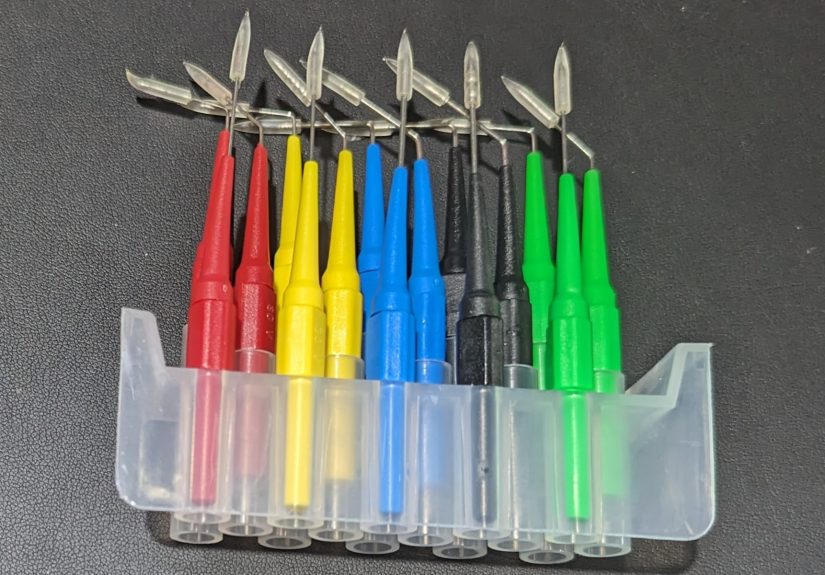
- Modular tips: Swap between sharp probes, blunt tips, and clips without buying five separate sets.
Specs That Actually Matter (And the Ones That Mostly Impress People at Lunch)
Bandwidth
Probe bandwidth should match what you’re measuring. As a rule of thumb, you want enough bandwidth to capture edge speed and
harmonics that define your signal integritynot just the fundamental frequency. Too little bandwidth and edges smear; too much
bandwidth and you might see more noise, but at least it’s honest noise.
Input Capacitance
Input capacitance is a big deal for high-impedance nodes and high-speed signals. Lower capacitance generally means less loading and
fewer “my waveform changed when I touched it” surprises.
Attenuation (1X vs 10X)
Attenuation affects loading and noise. 10X is usually the better default. 1X can be useful for very small low-frequency signalsbut
it loads the circuit more and can reduce bandwidth.
Accessories and Mechanical Fit
The best probe in the world can still fail you if it can’t physically connect to your test point without slipping off like a nervous
cat. Look for:
- Micro-grabbers for fine-pitch boards
- Hook tips for stable clip-on measurements
- Ground springs/blades for fast edges
- Right-angle adapters for cramped enclosures
Practical Upgrade Paths (Based on What You Actually Do)
Path 1: The “I Debug Microcontrollers and Sensors” Kit
- Quality 10X passive probes with spring ground and hook tips
- Grabber clips for fine-pitch signals and headers
- Better DMM silicone leads with modular tips
Why it works: Cleaner digital edges, fewer accidental shorts, and easier probing on breadboards and dev boards.
Path 2: The “I Build or Repair Power Electronics” Kit
- High-voltage-rated differential probe (or isolated probe, depending on the measurement and safety needs)
- 10X passive probes with excellent grounding accessories
- Clamp-on current probe (AC/DC) and/or Rogowski coil for transient work
- CAT-rated DMM lead kit with insulated clips and tip guards
Why it works: You can measure high-side nodes, switching behavior, and current safely and accurately without creating ground loop problems.
Path 3: The “I’m Doing High-Speed Digital / Signal Integrity” Kit
- Active probe (low capacitance, high bandwidth) for sensitive nodes
- Differential probe for differential pairs and small signal differences
- Short ground accessories and proper probe tip adapters
Why it works: You’re minimizing probe-induced distortion, which is critical when you’re measuring fast edges where a few pF matters.
Specific Examples: What Changes When You Upgrade?
Example 1: The “Ringing” That Was Really a Ground Lead
You probe a MOSFET gate and see nasty ringing after each transition. You suspect the driver, add a series resistor, tweak layout in
your head, and consider switching careers. Then you replace the long ground lead with a spring ground at the test point and the
ringing drops dramatically. The circuit didn’t magically improveyou stopped measuring a big inductive loop.
Example 2: The “Why Is My Clock Slower?” Mystery
You probe a high-impedance clock node with a 1X probe and the amplitude droops, edges slow down, and the device behaves differently.
Swap to a 10X probe (or an active probe in tougher cases) and the clock looks crisp again. That’s loading in action.
Example 3: Measuring Across a Shunt Without Ground Chaos
You want to measure voltage across a current shunt on a power stage. With a standard ground-referenced probe setup, it’s easy to
create errors if neither side of the shunt is at ground. A differential (or isolated) probe lets you measure the shunt voltage
directly across the two points without forcing one side to “be ground.”
Maintenance and Habits That Make Your Upgrades Pay Off
Calibrate Your Setup, Not Just Your Ego
- Check passive probe compensation regularly.
- Inspect leads for cracks, exposed conductors, and loose connectors.
- Keep tips clean; oxidation can turn “measurement” into “guessing.”
Label Your Probes
If you have multiple probe types10X passive, differential, current clamplabel them. Future-you will thank you, and present-you
will stop plugging the wrong thing in and then blaming the scope.
How to Decide What to Buy First
- Fix the most common pain: If your waveforms are noisy, start with grounding accessories and better passive probes.
- Improve safety next: If you work around higher-energy circuits, upgrade CAT-rated DMM leads and proper accessories.
- Then target specialized work: Differential/isolated probes and current probes pay off when your projects demand them.
Bottom line: the “best” probe is the one that gives you the most truthful measurement with the least drama. Upgrade strategically,
and your bench time turns from “detective novel” into “actually shipping a thing.”
Field Notes: Real-World Experiences When You Upgrade Your Test Probes (Extra)
The fastest way to appreciate probe upgrades is to watch how your workflow changes. Below are common “bench reality” stories engineers,
makers, and technicians run intobecause the laws of physics are consistent, even when your schedule isn’t.
1) The Day the Square Wave Finally Looked Like a Square Wave
A lot of people assume probe compensation is a one-time setup step. In practice, it’s the difference between “my circuit is unstable”
and “my probe is lying.” After upgrading to a higher-quality 10X probe (and actually compensating it), the same 1 kHz calibration
signal suddenly has a flat top and clean transitions. That small win becomes a habit: check compensation, then measure. It’s boring
which is exactly what you want from measurement.
2) The “Noise” That Disappeared When You Shortened the Ground
If you’ve ever seen a power rail “ring” like a tiny bell every time a switch turns on, you’ve probably met the long ground lead
problem. Upgrading your probe accessoriesespecially adding a spring groundcan turn a scary-looking waveform into something you can
actually interpret. The best part is emotional: you stop chasing phantom problems and start fixing real ones.
3) The First Time a Differential Probe Saved an Afternoon
Measuring across a shunt resistor or a half-bridge node with a ground-referenced probe setup can be a mess. A differential probe
upgrade often feels like cheating: you clip across the two points, the waveform makes sense, and you’re not forced into awkward
“how do I reference this without ruining everything?” gymnastics. Suddenly you can compare switching events, calculate ripple, and
confirm timing without fighting your measurement setup.
4) The Meter Lead Upgrade That Made You Faster (Not Just Safer)
People talk about CAT ratings (and yes, safety matters), but upgraded meter leads also make work easier. Silicone insulation stays
flexible, tips grip better, modular accessories let you swap to alligator clips, and you spend less time re-positioning the probes
like you’re playing a frustrating crane game. Over a week, that’s real time savedand fewer accidental slips that turn testing into
accidental “spark appreciation.”
5) The Current Probe Moment: “Oh, That’s What Inrush Looks Like”
Once you add a clamp-on current probe or Rogowski coil to your kit, you start measuring current because it’s easynot because it’s
a last resort. You can see inrush profiles, startup behavior, transient load steps, and switching current spikes without adding a
big shunt resistor and redesigning your board mid-debug. It changes how you troubleshoot: instead of guessing what the supply is
doing, you watch it happen.
The common thread in all these experiences is simple: better probing reduces uncertainty. Less uncertainty means fewer “try random
fixes and hope” cyclesand more confident decisions based on measurements you can trust. When you upgrade your test probes, you’re
not just buying accessories; you’re buying clarity.