Table of Contents >> Show >> Hide
- What Is an Urushi Box?
- Why the Wood Lid Changes the Whole Mood
- How Traditional Urushi Boxes Are Made
- The Historical Box Types Behind Today’s Appeal
- What Makes a Great Urushi Box with Wood Lid Today
- How to Use One at Home Without Ruining the Vibe
- Care and Preservation
- Why These Boxes Still Matter
- Extended Experience: Living with an Urushi Box with Wood Lid
- Conclusion
Some objects do not need to shout. They sit quietly on a shelf, catch the light like they know a secret, and somehow make the entire room behave better. That is the magic of urushi boxes with wood lid. They combine the depth and glow of Japanese lacquer with the calm honesty of natural wood, creating a piece that feels both refined and grounded. One part art object, one part storage, one part “please do not put loose paper clips in here unless you are absolutely committed to elegance.”
In the world of Japanese decorative arts, lacquer boxes have long been more than containers. They have housed writing tools, cosmetics, incense utensils, documents, sweets, and small precious things that deserve more respect than the average junk drawer can offer. Today, the idea of an urushi box paired with a wood lid feels especially relevant because it balances luxury and restraint. The lacquer brings richness. The wood brings warmth. Together, they create a design language that feels timeless rather than trendy.
This article explores what makes these boxes so compelling, how traditional lacquerware informs modern designs, why the wood lid matters aesthetically and practically, and how collectors, designers, and everyday admirers can appreciate them without treating them like fragile royalty. Though, to be fair, they are a little royal.
What Is an Urushi Box?
An urushi box is a box finished with natural lacquer made from the sap of the urushi tree. In Japanese craft, urushi is not just a surface coating. It is a discipline, a material culture, and a test of patience that makes sourdough starters look low maintenance. The lacquer is applied in very thin layers over a prepared core, often wood, then cured in a controlled humid environment, polished, and built up again. The final result can be glossy, satin, translucent, deeply black, richly red, or decorated with gold, silver, shell inlay, and carved patterns.
Historically, lacquer boxes appeared in many forms. There were suzuribako, or writing boxes, for inkstone and brushes. There were tebako, small hand boxes often associated with personal accessories or cosmetics. There were document boxes, letter boxes, and storage boxes used in formal and domestic settings. These were never random containers. Their shapes, proportions, and decoration were carefully linked to ritual, poetry, status, and daily refinement.
That history matters because when we talk about an urushi box with a wood lid today, we are not talking about a trendy mash-up of “natural meets luxury.” We are talking about a modern object that stands inside a very long conversation about material beauty, utility, and the art of containment.
Why the Wood Lid Changes the Whole Mood
It Creates Contrast Without Chaos
The most obvious reason a wood lid box feels special is contrast. Urushi has depth, luster, and visual density. A wood lid, especially one that leaves the grain visible, introduces softness and visual rest. It lets the eye breathe. Instead of an object that is glossy from edge to edge, you get a conversation between two surfaces: one reflective and refined, the other tactile and quietly organic.
That contrast is powerful in interiors. A fully lacquered box can feel formal and jewel-like. Add a wood lid, and the piece becomes more approachable. It still has gravitas, but it no longer acts like it expects a string quartet every time someone opens it.
It Honors the Box’s Wooden Soul
Traditional lacquerware often begins with a wood core. Even when the final piece looks like a smooth black or gold miracle, wood is frequently the structure underneath. A visible wood lid acknowledges that origin. It lets the material story remain legible. In design terms, this is part of what makes the object satisfying: the finish does not erase the base; it collaborates with it.
In some cases, the wood lid also echoes the long tradition of accompanying storage boxes in Japanese art, especially paulownia wood boxes used to protect valued works. That relationship between lacquer object and plain wooden container has always been beautiful: splendor on one side, restraint on the other. A contemporary urushi box with a wood lid compresses that dialogue into a single object.
It Softens Luxury
Luxury can go wrong very quickly. One wrong move and the piece looks less “quiet sophistication” and more “my ottoman has opinions.” A wood lid solves this problem. It keeps the lacquer from becoming too heavy or overly ceremonial. The result is a box that feels elegant enough for collectors yet usable enough for real life, which is exactly where the best decorative objects belong.
How Traditional Urushi Boxes Are Made
Layer by Layer, Very Much Not in a Hurry
One reason Japanese lacquer boxes are so respected is the sheer amount of labor involved. Urushi is usually applied in thin coats over a carefully prepared surface. Each coat must cure before the next one is added. Then it is polished. Then the cycle begins again. Depending on the object, the number of layers can range from a few to dozens, and in some traditions even more. This slow build creates the smoothness, durability, and depth that synthetic finishes try to imitate and usually fail to achieve.
The base matters too. Wood has to be shaped well, joined correctly, and stabilized. In certain traditions, cloth reinforcement and foundational coatings help create strength before the decorative work begins. The best boxes feel precise in the hand. Their lids sit properly. Their edges are clean. Their corners make sense. In other words, beauty here is not decoration pasted over bad carpentry. It begins with structure.
Decoration Is Its Own Language
If you start exploring urushi lacquerware, you quickly run into a glamorous vocabulary. Maki-e refers to sprinkled picture decoration, often using gold or silver powder. Takamaki-e builds areas in slight relief for richer dimensional effects. Togidashi involves polishing the design back to reveal embedded decoration. Raden adds shell inlay for iridescent brilliance. Chinkin means incised or sunken gold, where lines are cut into lacquer and then filled or pressed with gold.
These techniques matter for modern buyers and readers because they explain why one box feels merely pretty while another feels mesmerizing. A good urushi box is not just shiny. It has depth, layering, movement, and often symbolic imagery that reveals itself gradually, like a very patient poem.
The Historical Box Types Behind Today’s Appeal
Writing Boxes
The suzuribako may be the most iconic box type in Japanese lacquer history. These writing boxes held inkstones, water droppers, and related tools for calligraphy. They were functional, but they were also prestige objects. Their decoration often extended across the lid, sides, and interior, turning the act of opening the box into a staged visual experience. In short, even stationery once had a better life than most of us.
For contemporary audiences, writing boxes remain influential because they show how a container can become a narrative surface. A modern urushi box with wood lid may be simpler, but the underlying idea is the same: storage can be ceremonial, intentional, and beautiful.
Cosmetics and Personal Accessory Boxes
Small personal boxes, often called tebako, reveal another side of lacquer culture. These were intimate objects connected to grooming, dress, and private ritual. Their scale makes them especially relevant to modern lifestyles. Today, people use similar boxes for jewelry, tea tools, letters, watches, incense, or the kind of treasured odds and ends that somehow deserve a home better than a ceramic bowl near the entryway.
Document and Letter Boxes
Document boxes and letter boxes remind us that paper was once treated with proper dignity. These boxes housed correspondence, poetry slips, and formal papers, sometimes as part of wedding sets or elite furnishings. That legacy is useful today. If you want an urushi box with wood lid to feel authentic in spirit, do not fill it with dead batteries. Give it something worth keeping: handwritten notes, photographs, seals, fountain pens, or ceremonial tea items.
What Makes a Great Urushi Box with Wood Lid Today
Material Balance
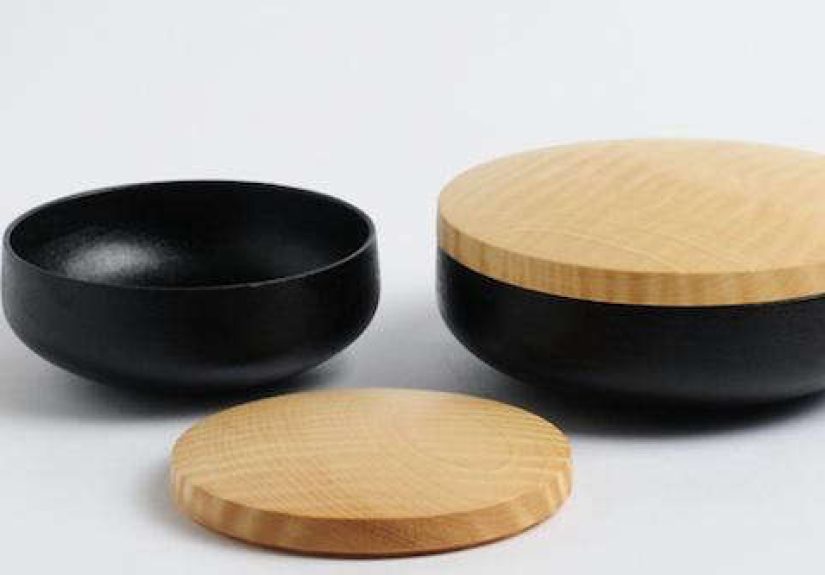
The finest examples achieve balance between lacquer and wood rather than letting one dominate the other. The lacquer body should feel deep and intentional. The wood lid should not look like an afterthought or a random slice of “natural” branding. Grain direction, wood species, finish level, and color temperature all matter. A pale wood lid against deep black urushi creates a crisp modern contrast. A darker lid with subtle figure creates a softer, moodier presence.
Proportion and Fit
Boxes live or die by proportion. Too squat and they feel clumsy. Too tall and they feel awkward. The lid fit is even more important. A good lid should sit with confidence, not wobble like it has unresolved emotional issues. In a well-made piece, the opening action feels gentle, controlled, and almost ceremonial. That small moment is part of the luxury.
Surface Intelligence
Some of the most successful modern boxes keep decoration restrained. Instead of turning every square inch into a fireworks display of gold and shell, they rely on texture, sheen, edge detail, and material transitions. This is where the wood lid becomes especially effective. It lets the box communicate through understatement, which is often more powerful than extravagance.
How to Use One at Home Without Ruining the Vibe
An urushi lacquer box with wood lid works beautifully in several settings. On a desk, it can hold fountain pens, sealing wax, note cards, or treasured stationery. In a bedroom, it makes an elegant jewelry or keepsake box. In a living room, it can store incense, tea utensils, or small collectibles. In an entryway, it can hold keys, provided everyone in the household understands that this is not a dumping ground for receipts, gum wrappers, and mystery screws.
Stylistically, these boxes pair well with both traditional and modern interiors. In minimalist spaces, they add warmth and depth. In layered rooms, they provide a moment of order. They also photograph beautifully, which should not be the main reason to own one, but let us not pretend it hurts.
Care and Preservation
Urushi is durable, but it is not invincible. Keep lacquerware away from prolonged direct sunlight, excessive dryness, high heat, and careless cleaning products. A soft dry cloth is usually best, and a very slightly damp soft cloth may be appropriate for gentle cleaning when needed. The box should never be soaked or treated like kitchenware unless it was specifically made for that purpose.
The wood lid deserves equal respect. Natural wood responds to humidity and handling, so sudden environmental swings are not ideal. Handle the piece with clean hands, avoid abrasive dust buildup, and resist the urge to “improve” the finish with random household sprays. Nothing says tragedy quite like a rare lacquer box meeting furniture polish in a well-meaning ambush.
Why These Boxes Still Matter
Urushi boxes with wood lid matter because they offer an alternative to disposable design. They embody patience, skill, and material intelligence. They ask us to value surfaces that deepen over time rather than falling apart after two seasons. They also remind us that storage can be beautiful without being loud, and useful without being boring.
In a broader design conversation, these boxes sit at a fascinating intersection: art and utility, ceremony and daily use, polish and grain, opacity and warmth. They carry echoes of writing boxes, cosmetic boxes, document boxes, and presentation boxes from Japanese history, while still feeling relevant to a twenty-first-century home.
That is probably why they are so compelling. They do not look like a trend. They look like a solution to modern visual fatigue. When everything else is trying to get our attention, an urushi box with a wood lid simply waits. And somehow, that wins.
Extended Experience: Living with an Urushi Box with Wood Lid
The first time you live with a really beautiful urushi box with a wood lid, you notice something surprising: it changes your behavior. Not in a dramatic, movie-montage kind of way. More in a quiet, domestic way. You stop tossing things around. You place them. You close the lid gently. You become, at least for a few seconds, the kind of person who appears to have excellent handwriting and firm opinions about paper quality.
In daily life, the box becomes more than storage. It becomes a small ritual station. Maybe it holds letters, seals, fountain pens, or incense tools. Maybe it stores jewelry or personal keepsakes. Whatever goes inside starts to feel more intentional simply because the container asks for intention. That is one of the great powers of well-made objects: they improve the atmosphere around them without making a speech about it.
The wood lid plays a huge role in that experience. Lacquer alone can feel formal, almost untouchable, especially if it is deep black or richly decorated. But the wood lid invites contact. Its grain softens the object emotionally. It makes the box feel human. You notice the subtle differences in tone from morning to evening light. You begin to appreciate how the matte or satin quality of the wood offsets the depth of the lacquer body. The contrast never feels forced. It feels composed.
There is also a pleasure in the opening itself. A good lid does not just come off; it reveals. It creates a small pause. That pause is important. In a world of zippers, plastic snaps, and packaging that seems angry at the concept of reuse, the calm movement of a fitted lid feels oddly luxurious. It turns access into ceremony. Even reaching for a paper clip can feel elevated, which is frankly impressive work for a box.
Over time, you also notice how the object organizes a room. It can sit on a desk and make the whole workspace feel less chaotic. It can anchor a bedside table without cluttering it. It can rest on a shelf among books and ceramics and somehow keep everything from drifting into visual nonsense. Designers talk a lot about “grounding a space.” This is one of those objects that actually does it.
Emotionally, an urushi box with wood lid tends to collect meaning as much as it collects contents. Because it looks considered, people tend to put considered things inside it. Notes from loved ones. A watch from a grandparent. Ticket stubs from a trip. Small photographs. Tea tools. Things that matter but do not need to live in plain sight. The box becomes a keeper of edited memory. Not hoarding. Curating. Very elegant, very disciplined, definitely not hoarding.
And perhaps that is the deepest appeal. The experience of owning one is not flashy. It is cumulative. The more you use it, the more you appreciate the craft, the contrast of materials, the quiet authority of the form, and the way it nudges everyday life toward greater care. That is rare. Plenty of objects look expensive. Far fewer make you live a little better. A fine urushi box with a wood lid does exactly that, one gentle opening at a time.
Conclusion
Urushi boxes with wood lid offer a rare balance of beauty, history, and usefulness. They draw on centuries of Japanese lacquer tradition while feeling completely at home in modern interiors. Their appeal lies not only in glossy surfaces or decorative techniques, but in the relationship between lacquer and wood, discipline and warmth, ceremony and everyday life. Whether used for stationery, jewelry, keepsakes, or tea accessories, these boxes prove that storage can be soulful, and that the right object can make ordinary routines feel a little more deliberate, graceful, and memorable.