Table of Contents >> Show >> Hide
- Decluttering vs. Cleaning vs. Organizing (Because They’re Not the Same)
- Why Clutter Feels Stressful (Even When You Swear You Don’t Notice It)
- Decluttering and Mental Health: The Wellness Connection
- Decluttering and Physical Wellness: Sleep, Movement, and Air Quality
- Decluttering as Emotional Self-Care: Letting Go With Kindness
- How to Declutter Without Burning Your Whole Weekend (Or Your Soul)
- Decluttering Habits That Support Long-Term Wellness
- When Decluttering Feels Too Hard: Be Gentle With Yourself
- Conclusion: Decluttering Is Self-Care You Can Live Inside
- Experiences: What Decluttering Looks Like in Real Life (And Why It Feels So Good)
- SEO Tags
Self-care gets marketed like it’s always bubble baths, face masks, and saying “no” with the confidence of a movie villain.
But there’s a quieter kind of self-care that doesn’t come in a cute bottle: making your space easier to live in.
Not because your home needs to look like a showroombut because your brain deserves fewer open tabs.
Decluttering is a wellness practice hiding in plain sight. It can lower daily stress, support better habits, reduce friction in your routines,
and make it easier to rest, focus, and move through your day without feeling like your stuff is slowly forming a tiny, chaotic government.
(And yes, it has opinions.)
Decluttering vs. Cleaning vs. Organizing (Because They’re Not the Same)
Let’s get one thing straight: decluttering isn’t “cleaning harder.” It’s removing what doesn’t serve you so the things that do can actually function.
- Cleaning is removing dirt (dust, crumbs, mysterious sticky spots).
- Organizing is deciding where things live.
- Decluttering is deciding what gets to stay in your life at all.
If you’ve ever “organized” a junk drawer by shoving the chaos into smaller containers… congratulations, you have practiced
advanced clutter choreography. Decluttering is the part where you stop paying rent to items you don’t even like.
Why Clutter Feels Stressful (Even When You Swear You Don’t Notice It)
1) Visual clutter competes for your attention
Your brain is always processing your environment. When there are lots of visible itemsstacks, piles, crowded countersyour attention gets pulled in
multiple directions. Even if you’re “used to it,” the visual noise can make focusing harder and can contribute to mental fatigue.
Think of it like trying to read a book while five people tap you on the shoulder asking small questions.
This is one reason clutter can feel oddly exhausting. You’re not lazyyou’re overstimulated. A clearer space is a quieter signal to your brain:
“You’re safe. You can settle.”
2) Clutter adds to your “mental load”
Clutter isn’t only physical; it’s also a list you keep carrying:
“I should deal with that.” “I need to return that.” “Why do we still own three broken phone chargers?”
Those background reminders create low-grade stress, like a notification you can’t dismiss.
In wellness terms, decluttering reduces frictionfewer decisions, fewer delayed tasks, fewer “someday” items silently judging you from the corner.
(Someday items are the pettiest objects in existence.)
3) Clutter can trigger guilt and overwhelm
Many people don’t feel calm in clutter because clutter is often tied to unfinished intentions:
the craft supplies for the hobby you’ll definitely start, the clothes that “should fit again,” the books you bought to become your best self.
That’s not just stuffit’s emotional baggage with handles.
Decluttering helps you practice a powerful self-care skill: letting go without punishment. You can release an item and keep the lesson.
Decluttering and Mental Health: The Wellness Connection
Decluttering isn’t a substitute for therapy, medication, or professional support. But your environment can either support your mental healthor quietly
drain it. A more functional space can make coping skills easier to use, routines easier to maintain, and rest easier to access.
Stress reduction starts with fewer daily stressors
When your home has fewer obstacles, your day runs smoother. You’re not searching for keys in a pile of receipts or stepping over bags you meant to unpack
three business days ago. Small wins add up, and the body often responds to that sense of control and order.
Decluttering supports focus and productivity
Work and school demand sustained attention. A cluttered desk can turn “I’ll just answer one email” into “Why am I holding a random screw and a takeout menu
from 2021?” When your workspace is simpler, your brain has fewer distractions to filter outmaking it easier to start and finish tasks.
It boosts self-efficacy (aka: “I can handle my life”)
Decluttering is proof you can take action. Every bag donated, every drawer reset, every “no” to an unnecessary purchase reinforces a core wellness message:
you can shape your environment. That can be especially meaningful when other parts of life feel unpredictable.
Decluttering and Physical Wellness: Sleep, Movement, and Air Quality
Better sleep starts with a calmer bedroom
Sleep hygiene isn’t just about avoiding your phone at night (even though your phone is basically a tiny casino).
A bedroom that feels soothingless crowded, less chaoticcan help your body shift into rest mode.
When the room looks “unfinished,” some people find it harder to mentally power down.
A simple self-care move: clear surfaces you see from bed. Nightstand. Dresser top. Floor corners.
Your brain loves a soft landing.
Less clutter can make movement safer and easier
Wellness includes how you move through your home. Shoes on stairs, cords across walkways, piles in hallwaysthese are tripping hazards, especially when you’re
tired, stressed, or carrying laundry like a champion who refuses to make two trips.
Decluttering improves “pathways,” which is a fancy way of saying: you should be able to walk through your house without doing parkour.
A cleaner space can support cleaner air
More stuff often means more surfaces that collect dustand more time needed to clean.
Decluttering makes it easier to wipe down, vacuum, and reduce irritants that can affect breathing and allergies.
You don’t need a sterile home; you need a home that’s easier to maintain.
Decluttering as Emotional Self-Care: Letting Go With Kindness
One of the biggest reasons decluttering matters for self-care is that it forces you to practice boundaries.
And boundaries aren’t only for people. Sometimes you need boundaries with your stuff.
It helps you stop living in the past (or the fantasy future)
Many clutter “hot spots” are time machines:
- Past you: gifts you don’t like, old paperwork, clothes from another era of your life.
- Future you: supplies for the “perfect routine,” backup gadgets, aspirational projects.
Decluttering is choosing the present: what you actually use, need, and enjoy now.
That’s emotional wellness with a donation receipt.
It can improve relationships and reduce household tension
Clutter is a common source of conflictwho cleans it, who “owns” it, who keeps buying more of it.
Creating shared systems (like a drop zone for keys or a bin for incoming mail) can reduce daily arguments that start with:
“Where is the thing?” and end with: “I live with raccoons.”
How to Declutter Without Burning Your Whole Weekend (Or Your Soul)
The best decluttering plan is the one you’ll actually do. Start small. Make it easy. Build momentum.
Here’s a self-care-friendly method that works even if you’re busy, tired, or allergic to extreme minimalism.
Step 1: Pick a “high impact, low drama” zone
Choose a spot that affects your day but won’t trigger a full identity crisis:
bathroom counter, kitchen junk drawer, entryway, nightstand, or the chair that has become a clothing exhibit.
Step 2: Set a timer for 15–30 minutes
Timers turn “decluttering” from a vague life goal into a contained task. Short sessions reduce overwhelm and perfectionism.
Step 3: Use the 4-pile sort (simple, not dramatic)
- Keep (used and loved)
- Donate/Sell (useful, but not for you)
- Recycle/Trash (broken, expired, truly done)
- Relocate (belongs elsewhere)
Step 4: Ask better questions (not guilt questions)
- Do I use this regularly?
- Would I buy this again today?
- Is this worth the space it takes?
- Am I keeping it for meor for guilt, fear, or “just in case”?
“Just in case” is how clutter negotiates. It sounds reasonable… until you realize you’re storing 14 “just in case” items you never choose.
Step 5: Give your essentials an easy “home”
Organization fails when it requires extra steps. If the scissors belong in a drawer that’s blocked by a stack of mystery gadgets,
the scissors will live on the counter forever. Decluttering makes organization realistic.
Step 6: Remove donations immediately (or schedule it)
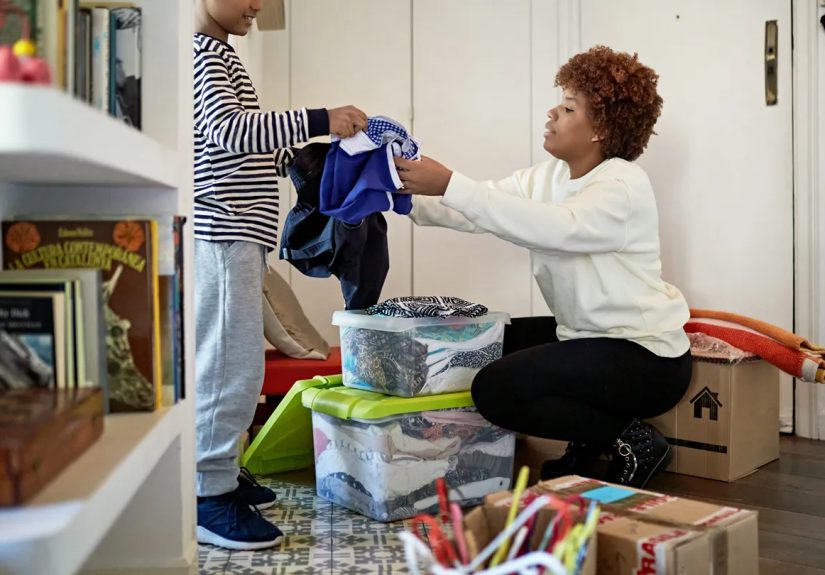
A donation bag that sits by the door for three weeks becomes a new piece of furniture.
Put it in your car. Set a calendar reminder. Make the “exit” part of the system.
Decluttering Habits That Support Long-Term Wellness
Try the “daily reset” (10 minutes, not a personality)
A quick evening resetclear counters, toss trash, put things backkeeps clutter from becoming a full-time roommate.
It also makes mornings calmer, which is basically wellness in disguise.
Use the “one in, one out” rule for problem categories
If your clutter grows in specific categories (clothes, skincare, mugs, gadgets), try this:
when something new comes in, something old exits. It keeps your space stable without constant decluttering marathons.
Keep breathing room in storage
When every shelf is packed to 100%, maintaining order becomes harder.
Leaving a little space in drawers, closets, and cabinets makes it easier to put things away and find what you need.
Your home functions better when it isn’t stuffed like an overpacked suitcase.
When Decluttering Feels Too Hard: Be Gentle With Yourself
If decluttering triggers intense anxiety, grief, or shutdownor if acquiring and saving items feels out of controlyou’re not “bad at organizing.”
There may be deeper emotional or clinical factors involved, including trauma, depression, ADHD, or hoarding disorder.
In those cases, support from a mental health professional (and sometimes a professional organizer trained in these situations) can be life-changing.
Self-care is not forcing yourself through misery. Self-care is choosing support when you need it.
Conclusion: Decluttering Is Self-Care You Can Live Inside
Decluttering matters for wellness because your environment shapes your daily experience.
A less cluttered space can reduce stress triggers, support better sleep, improve focus, make movement safer, and cut down on the mental load of “stuff management.”
Most importantly, decluttering helps you align your home with your lifenot with guilt, not with “someday,” and not with the fantasy version of you
who alphabetizes spices for fun.
You don’t need a perfect home. You need a kinder oneone that supports your routines, your rest, and your real life.
Start small. Build momentum. Let your space take care of you back.
Experiences: What Decluttering Looks Like in Real Life (And Why It Feels So Good)
People often assume decluttering is about becoming “minimalist,” like you’ll end up owning two plates and a single emotionally supportive houseplant.
In reality, the most common decluttering experiences are practical, emotional, and surprisingly personal. Here are a few real-world patterns
many people describe when they connect decluttering with self-care and wellness.
The “Morning Chaos” Reset
One frequent experience is realizing how much clutter steals energy during transitionsespecially mornings.
Someone might notice they start every day hunting for keys, a badge, a child’s missing shoe, or the one clean water bottle.
After decluttering the entryway and creating a simple drop zone (hooks for bags, a tray for keys, a bin for mail),
mornings feel less like a scavenger hunt and more like a routine. The emotional shift is huge: fewer frantic moments,
fewer arguments, and a calmer nervous system before the day even begins. It’s not magicit’s reducing friction.
The “I Didn’t Realize I Was Carrying That” Closet Moment
Closets can hold more than clothes. People often describe an unexpected wave of relief (or sadness) when they let go of items tied to old identities:
outfits from a previous job, clothes bought for a “goal body,” or things saved out of guilt because they were expensive.
A common self-care breakthrough is deciding, kindly, “I’m dressing the life I have now.” Once the closet matches the current season and lifestyle,
getting ready feels smoother, and self-talk often improves. The wellness win isn’t just a neat closetit’s less daily self-judgment.
The “I Can Breathe in Here” Work-From-Home Shift
Remote workers often report that clutter in their workspace affects their mood more than they expected.
A desk covered in random items can make work feel heavier, even if the tasks are manageable.
After declutteringremoving papers that no longer matter, creating a single spot for supplies, clearing the visual field
they often describe feeling more “switched on” and less mentally foggy. The space becomes a cue for focus rather than a reminder of unfinished tasks.
Over time, that can support better work boundaries, too: when the workspace is clearer, it’s easier to “close down” at the end of the day.
The “Health Support” Declutter
People managing chronic pain, fatigue, or stress frequently describe decluttering as a way to conserve energy.
When your body has limits, your home needs to cooperate. Decluttering can reduce how much bending, searching, lifting, and decision-making you do.
A simple example is creating “point-of-use” storage: keeping meds where you take them, keeping cleaning supplies where they’re used,
keeping everyday dishes within easy reach. The experience many share is a shift from “my home drains me” to “my home supports me.”
That’s wellness in a very real, very lived sense.
The “Small Wins Change Everything” Effect
A final common experience is discovering that the emotional reward comes faster than expected.
People often start with one tiny projectone drawer, one shelf, one countertopbecause the bigger picture feels overwhelming.
But that small win creates momentum: you see the result, feel the relief, and suddenly the next step feels possible.
This is why decluttering works as self-care: it’s actionable, visible, and reinforcing. You don’t have to wait weeks to feel better.
Sometimes you feel better after 20 minutes and one trash bag. That’s not “just cleaning.” That’s rebuilding your environment to match your wellbeing.