Table of Contents >> Show >> Hide
- 1) Pause, Assess, and Get Specific (Before You Declare Hair War)
- 2) Go Back and Ask for a Professional Fix (Yes, You’re Allowed)
- 3) Use “Optical-Illusion” Styling to Make It Look Intentional
- 4) Build a Grow-Out Game Plan (Because Time Will Pass Either Way)
- Know the timeline so your expectations don’t bully you
- Schedule “shape trims,” not “length disasters”
- Protect your hair from breakage (growth is great, but retention is the real flex)
- Consider temporary helpers (no shame in a little “supporting cast”)
- Reframe the moment (your hair is not your entire personality)
- Extra: of Real-Life “Bad Haircut” Experiences and What Worked
- Conclusion
- SEO Tags
A bad haircut is a special kind of chaos: you paid money, you were polite, and now your mirror is acting like it doesn’t know you.
The good news? Most “hair emergencies” are fixableeither quickly (with a tweak), quietly (with styling), or inevitably (with time).
The key is doing the right thing in the right order, so you don’t turn a bad haircut into a hair saga with sequels.
Below are four practical, expert-backed ways to deal with a haircut you hatewithout spiraling, without grabbing kitchen scissors,
and without forcing your friends to lie to your face like it’s their new part-time job.
1) Pause, Assess, and Get Specific (Before You Declare Hair War)
The first move is not “fix it immediately.” The first move is “figure out what’s actually wrong.”
Fresh cuts can behave oddly for a few daysespecially if your stylist blew it out differently than you usually style it.
Sometimes the “disaster” is just unfamiliarity plus a dramatic first-day blowout.
Give it 48 hours and a couple of washes
If you can stand it, wait a day or two. Wash your hair and style it the way you normally do.
New layers can sit differently once product buildup is gone, and some shapes settle after your natural texture returns.
This isn’t you “accepting defeat.” This is you gathering evidence.
Name the problem like a grown-up (even if your bangs are acting like a toddler)
“I hate it” is an emotion. Stylists need a diagnosis. Try to identify which bucket your issue falls into:
- Length: too short overall, too short in front, or unexpectedly long in back.
- Balance: one side feels heavier/longer, or the shape looks lopsided when you part it.
- Weight and bulk: too puffy, too triangular, too wide at the ends, or too flat at the crown.
- Layers: choppy, shelf-like, too high, too thin, or not blended.
- Texture mismatch: the cut looks fine straight but chaotic wavy/curly (or vice versa).
- Bangs/fringe: too short, too thick, too blunt, or sitting in an unflattering spot.
Take photos in normal lighting (your camera is the least dramatic friend)
Snap a few photos after you’ve styled it yourself: front, both sides, and back. Use daylight if possible.
This helps you see patterns (like “oh… it’s mainly the right side”) and makes it easier to explain what needs adjusting.
It also keeps you from relying on the bathroom mirror, which is famously unqualified to make major life decisions.
Once you can describe what’s wrong in a sentence or two, you’re ready for the most effective fix:
a professional correction.
2) Go Back and Ask for a Professional Fix (Yes, You’re Allowed)
Many people avoid returning because they don’t want to be “that person.”
But if you paid for a service and the result isn’t what you agreed on, it’s reasonable to ask for an adjustment.
The trick is to be calm, clear, and quick about itideally within a few days.
Use a simple script that keeps things factual
You don’t need a courtroom monologue. Try something like:
-
Option A (neutral): “Hi! I’m having trouble styling the cut at home. The left side feels heavier than the right.
Could I come in for a quick adjustment?” -
Option B (specific): “I like the overall length, but the layers start higher than I expected and look choppy when my hair air-dries.
Could we soften and blend them?” - Option C (bangs edition): “My bangs feel thicker and shorter than what we discussed. Could we thin them slightly and adjust the shape?”
Bring reference photosand point out what you actually want
Photos prevent the classic salon translation problem, where “soft layers” means five different things to five different humans.
Bring 2–4 images and say what you like about them: “I like the length hitting here,” “I want the ends to look blunt,”
“I like how the bangs open away from the face.”
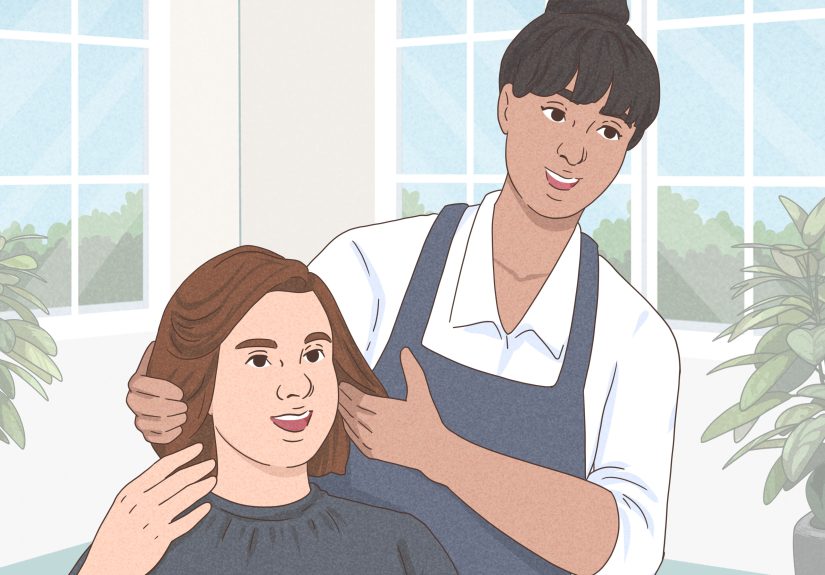
Ask for a different stylist or manager if trust is gone
If your stylist isn’t receptive, or you’re worried a second round will make things worse, it’s okay to ask politely for another set of eyes:
“Would it be possible to have a senior stylist take a look?” That’s not rudeit’s you protecting your hair and your sanity.
One important note: if the problem is “too short,” the correction is usually about shape, not length.
A great stylist can often make a short cut look intentional by cleaning up the perimeter, balancing weight, and refining the silhouette.
3) Use “Optical-Illusion” Styling to Make It Look Intentional
Styling won’t change how much hair is on your head, but it can absolutely change how that haircut reads.
The goal is not “perfect.” The goal is “people assume you meant to do that.”
(This is also the entire strategy behind modern art and half of TikTok.)
Switch your part (fastest makeover, zero scissors)
A different part can hide unevenness, soften harsh layers, and make bangs behave.
If one side is shorter, parting slightly toward the shorter side can reduce the visual gap.
If your crown looks flat, a deeper side part can add lift instantly.
Add texture to disguise choppy layers
Choppy layers look choppier when hair is pin-straight. Add texture and suddenly those pieces look “edgy” or “lived-in.”
Depending on your hair type, that could mean:
- Loose waves: quick bends with a flat iron or curling wand to break up blunt lines.
- Air-dry texture: a light styling cream or mousse scrunched in for movement.
- Root lift: blow-dry the roots upward, or use volumizing product at the crown.
Use volume strategically (where you place it matters)
If your haircut looks too “wide” at the ends, reduce volume there and lift the crown instead.
If your cut looks flat and stringy, add body through the mid-lengths with a blowout brush or a round-brush blow-dry.
The idea is to control the silhouette: taller at the top, cleaner at the bottom, softer around the face.
Emergency styling fixes for common bad-haircut scenarios
-
Too-short bangs: blow-dry them side-to-side to loosen the bend, then sweep them into a side part,
pin them back, or blend them into a curtain-bang shape with a round brush. -
Uneven bob: style with soft waves and tuck the longer side behind the ear for balance;
keep ends slightly underturned so the perimeter looks cleaner. -
Over-thinned ends: avoid heavy oils that separate strands; use a lightweight smoothing cream and gentle heat to polish.
Texture sprays can help the ends look fuller. - Too many layers: try a sleeker style with the top smooth and the ends softly wavedthis blends “steps” into “movement.”
Styling is your day-to-day survival plan. Next comes the longer-term plan: growing it out without feeling like you’re stuck in Haircut Purgatory.
4) Build a Grow-Out Game Plan (Because Time Will Pass Either Way)
If your haircut is truly too short, your main tool is time. But you can make that time easierand your hair healthierby using a plan instead of hope.
Know the timeline so your expectations don’t bully you
On average, scalp hair grows around about half an inch per month (roughly 4–6 inches per year).
That means in 8 weeks, you’re often looking at about an inch of growthenough to change how bangs sit, how a bob hits the jaw,
or how layers blend.
Schedule “shape trims,” not “length disasters”
This is counterintuitive, but tiny trims can help the grow-out feel better. The goal isn’t removing lengthit’s removing awkwardness.
Ask for micro-adjustments that improve balance while keeping as much length as possible.
Think: cleaning the perimeter, softening harsh corners, blending obvious steps.
Protect your hair from breakage (growth is great, but retention is the real flex)
You can’t force hair to grow faster from the scalp, but you can stop it from snapping off at the ends.
Simple habits make a difference:
- Use heat protectant whenever you use hot tools.
- Go easy on tight styles that pull at the hairline.
- Condition consistently and detangle gently (especially for textured or curly hair).
- Limit chemical stress if your hair already feels fragile from thinning or over-layering.
Consider temporary helpers (no shame in a little “supporting cast”)
If the cut is making daily life harder, temporary solutions can bridge the gap:
- Clip-in extensions: add length or fullness while layers grow out.
- Clip-in bangs: helpful if your fringe is too short (or if you miss having one).
- Professional color placement: subtle highlights or face-framing brightness can shift attention and add dimension,
which often makes shape issues less noticeable.
Reframe the moment (your hair is not your entire personality)
A bad haircut can mess with confidence because it’s right thereon your headdoing the most.
But it’s also temporary. Treat it like a style experiment you didn’t audition for.
Use it as an excuse to try accessories, different parts, new textures, or a bolder lip color.
If nothing else, it’s a great reminder to bring photos and over-communicate next time.
Extra: of Real-Life “Bad Haircut” Experiences and What Worked
If you’ve ever searched “how to fix a bad haircut” at 1:00 a.m., you’re in excellent company.
Stylists hear the same handful of haircut heartbreak stories all the timeand the fixes tend to follow patterns.
Here are a few very common scenarios (and the strategies that usually help people feel normal again).
The “My Bangs Are a Mini-Fringe and I Didn’t Order That” Moment
Too-short bangs are the emotional support animal of haircut regret: they’re always right there, front and center, demanding attention.
What works best is a two-part approach: training and hiding. People often get relief by blow-drying bangs in alternating directions
(left, then right, then forward) to loosen any harsh bend. After that, they either sweep the bangs into a side part, blend them into soft curtain-bang styling,
or pin them back with a clip that looks intentional (not like a panic response). Headbands also become surprisingly lovable during this phase
especially wide or padded ones that feel more “fashion” than “I’m in witness protection.”
The “Uneven Bob” That Looks Fine Until You Turn Your Head
A bob that’s slightly longer on one side can feel like your hair is trolling you. A lot of people try to “prove it” by straightening everything,
which can make the unevenness more obvious. A better fix is usually soft texture: gentle waves or a bend at the mid-lengths
breaks up the sharp perimeter line so the difference is less noticeable. Another trick that works in real life is changing how you tuck:
tuck the longer side behind the ear to visually shorten it, and let the shorter side stay forward to balance the frame of the face.
If the difference is more than minor, a quick professional balancing trimjust enough to clean up the outlineoften restores sanity fast.
The “Too Many Layers” Situation (a.k.a. The Surprise Shag You Didn’t Consent To)
Over-layering can make hair look thin, fluffy, or unevenespecially if your hair is fine or naturally wavy.
People often feel better when they focus on smoothing the top and adding controlled movement to the bottom.
That might look like a sleek blowout at the crown with a soft wave through the ends, or a half-up style that keeps the top polished
while letting the rest look purposely textured. In the longer term, what helps most is a grow-out plan that includes tiny “shape trims”
every couple of months to blend the layers rather than letting them form obvious steps.
The “I Asked for a Trim and Left with a Whole New Identity” Shock
When hair is cut much shorter than expected, the first week is the hardestbecause your brain is still looking for your old reflection.
People report feeling better once they pick one or two “signature” styling moves and repeat them consistently.
For some, it’s a clean middle part with tucked sides. For others, it’s volume at the roots and a messy, textured finish.
Accessories can also do heavy lifting here: claw clips, barrettes, hats, and scarves turn “awkward stage” into “I’m styling on purpose.”
And when the initial shock fades, a lot of people realize the cut isn’t objectively terribleit’s just unfamiliar.
That doesn’t mean you have to love it. It just means you can stop fighting it every morning and start managing it like a pro.
Conclusion
A bad haircut feels dramatic because it’s visible and personalbut it’s also one of the most fixable problems in the beauty universe.
Start by pausing and getting specific, then ask for a professional adjustment if needed. Use styling tricks to make the shape look intentional,
and build a grow-out plan that protects your hair from breakage while time does its thing.
In a few weeks, you’ll likely be in a different hair chapterhopefully one where your bangs stop auditioning for villain roles.