Table of Contents >> Show >> Hide
- What the $5 Dollar Tree Christmas Tree Actually Is (And What It Isn’t)
- Why This $5 Tree Keeps Going Viral Every Year
- How to Make a $5 Tree Look Like You Paid “Actual Money”
- 7 Places a Four-Foot Tree Looks Weirdly Perfect
- Budget Breakdown: Three Looks Under $25
- Pro Tips to Actually Get One Before They Disappear
- The Bottom Line
- Extra: Real-World “$5 Tree” Experiences (The Stuff People Actually Do With It)
Christmas has a talent for showing up earlier every year. One minute you’re buying Halloween candy, the next minute your group chat is arguing about whether
“warm white” lights are cozier than “cool white” (they are) and someone’s already playing Mariah like it’s a competitive sport.
If you want to win the holiday decorating game without spending “new phone” money on a Christmas tree, here’s your headline: Dollar Tree’s viral $5 Christmas tree
is back. And yes, it’s still one of the best budget-friendly ways to make a small space feel festive, sparkly, and slightly magicalwithout sacrificing your couch
to a seven-and-a-half-foot pine behemoth.
What the $5 Dollar Tree Christmas Tree Actually Is (And What It Isn’t)
The basics: small, cute, and surprisingly versatile
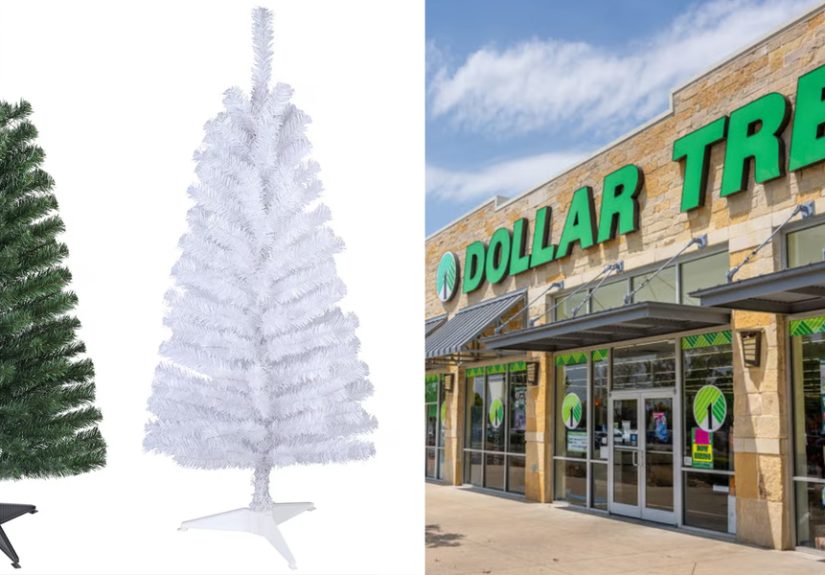
The viral pick is a four-foot artificial Christmas tree that’s become a seasonal celebrity for people decorating apartments, dorms, offices, bedrooms,
classrooms, and “that one empty corner” you keep promising to do something with. It’s typically sold as an unlit tree, which is actually a plus:
you can choose your own lights, your own color temperature, and your own level of “twinkle intensity.”
The tree’s main superpower is its size. Four feet is tall enough to feel like a real Christmas tree moment, but compact enough to fit where full-size trees can’t:
on a sturdy table, next to a desk, by an entryway bench, or in a kid’s room without turning bedtime into a branch-related obstacle course.
The “fine print”: availability and the online bulk situation
Here’s the part people discover mid-scroll: Dollar Tree’s online shopping often caters to bulk buying. That can mean the tree shows up online in multi-packs rather than
single units. Translation: you might have better luck finding a single tree in-store than ordering just one online.
Also, inventory can be wildly seasonal. Some stores get a decent stash; others sell out faster than peppermint bark at an office potluck. If you see one in the wild,
consider this your sign to grab it and keep walking like you didn’t just win a small victory for your holiday budget.
Why This $5 Tree Keeps Going Viral Every Year
1) It’s the small-space holiday hero
Small Christmas trees are having a moment because small living is having a moment. Whether you’re in a studio apartment, sharing a place with roommates, or just don’t want
your living room to look like a tree lot exploded, a compact tree delivers the vibe without the square-footage tax.
Design-wise, smaller trees also give you permission to decorate more than one area. A living room tree can be traditional, while a smaller “bonus tree” can be themed:
candy colors for a kid’s room, minimalist for your office, or glam metallics for the entryway.
2) It’s part of Dollar Tree’s bigger price-point shift
If you haven’t been in Dollar Tree lately and still picture a strict $1 universe, welcome to the modern era. Dollar Tree has expanded into multiple price points over the
past few years. That evolution is exactly why a larger seasonal item like a small artificial tree can exist at a headline-friendly price.
In other words: the viral $5 tree isn’t random. It fits a broader strategy where shoppers can still find low-cost basics while also seeing a wider range of seasonal décor,
party supplies, and home items at a few different price levels.
How to Make a $5 Tree Look Like You Paid “Actual Money”
Let’s be honest. Out of the box, most artificial trees look a little… defeated. Like they just got off a red-eye flight with no neck pillow. The glow-up is real, though
and it’s mostly about shaping, layering, and being strategically dramatic with lights and filler.
Step 1: Fluff like you mean it
Fluffing is the difference between “sad little tree” and “wow, that’s cute.” Wear gloves if the branches are scratchy. Start at the bottom, spread branches outward,
and work upward. Don’t just tug the tipsget your hands inside the tree and ruffle sections from the inside out to build fullness.
Pro tip: step back every few minutes and rotate the tree. Your eyes catch gaps from a distance that you won’t notice when you’re nose-to-needles.
Step 2: Choose a light plan that matches the vibe
Because the tree is unlit, you control the mood:
- Warm white = cozy, classic, “hot cocoa energy.”
- Cool white = crisp, modern, icy winter aesthetic.
- Multicolor = nostalgic, playful, kid-friendly.
For a four-foot tree, you usually don’t need an industrial amount of lights. The goal is balanced sparkle, not “airport runway.” Wrap lights deeper into the branches
for dimension, then add a second quick pass closer to the outer tips if you want extra glow.
Step 3: Add volume with one “filler” and one “statement”
A small tree looks more expensive when it has layers. Try this simple formula:
- Filler: garland, tinsel, picks, sprays, or ribbon to create depth.
- Statement: one bold elementbig bows, oversized ornaments, or a themed color palette.
Ribbon is the cheat code. Wired ribbon holds shape and instantly looks more “styled.” On smaller trees, go slightly narrower than you would on a tall tree so the proportions
feel intentional. Make loops, tuck them into branches, and let tails cascade in a relaxed, not-too-perfect way.
Step 4: Ornament math for a 4-footer
A small tree can get overwhelmed fast, so think in clusters:
- Base ornaments: a set of small-to-medium balls for consistent coverage.
- Texture ornaments: a few matte, glitter, velvet, or wood pieces for depth.
- Personality ornaments: 3–6 “fun” items that make people smile.
If the tree still feels sparse, don’t panic-buy twenty more ornaments. Add picks (berries, frosted stems, faux pinecones) or a soft garland. They fill
gaps faster and make the whole tree look fuller.
Step 5: Hide the base like a professional
The quickest way to upgrade a budget tree is to style the bottom:
- Use a tree skirt for classic cozy charm.
- Try a basket (or basket-look wrap) for modern farmhouse vibes.
- Add a few “fake presents” (wrapped boxes) to create instant holiday staging.
7 Places a Four-Foot Tree Looks Weirdly Perfect
- Home office: festive background for calls, morale boost for the workday grind.
- Bedroom corner: soft lights = instant winter cozy.
- Kids’ room: small-scale magic without taking over the floor.
- Entryway: makes coming home feel like a Hallmark scene (minus the dramatic plot twist).
- Kitchen nook: a tiny tree can make breakfast feel like a holiday movie montage.
- Classroom or daycare: cheerful, budget-friendly, easy to theme.
- Party table: use as a centerpiece, especially for cookie swaps or holiday brunches.
Budget Breakdown: Three Looks Under $25
1) Cozy Classic (warm white + red + gold)
- $5 tree
- Warm white string lights
- Basic ornaments in two colors
- One bow topper or simple star
This is the timeless look that works anywhere. Add a red ribbon or a plaid accent if you want it to feel extra nostalgic.
2) Minimalist Chic (neutral + texture)
- $5 tree
- Warm white lights
- Neutral ornaments (white, champagne, wood-tones)
- One statement ribbon or a few frosted picks
The trick here is restraint. Pick a tight palette and repeat it. Minimal doesn’t mean empty; it means intentional.
3) Kids’ Room Candyland (multicolor + fun)
- $5 tree
- Multicolor lights
- Bright ornaments
- Playful topper (big bow, pom-pom style, or a mini character theme)
This is the “joy bomb” tree. Lean into it. The whole point is cheerful chaostastefully, of course.
Pro Tips to Actually Get One Before They Disappear
Shop earlier than your instincts want to
Viral seasonal items don’t wait for December. If the tree is back on shelves in fall, it’s because a lot of shoppers start holiday decorating earlyespecially when deals
are involved. The earlier you look, the better your chances.
Check multiple locations and watch restocks
Dollar stores can vary store-to-store. If your closest location is sold out, a nearby store might still have a stack. Restocks happen, but not always on a predictable schedule.
If you’re serious, make it part of a normal errand loop.
If you can’t find it, copy the strategynot the exact tree
The real magic is the formula: small tree + great fluffing + smart layering. If the $5 tree is gone, you can apply the same styling tricks to any compact
artificial tree you find elsewhere. You’re not hunting a unicornyou’re building a vibe.
The Bottom Line
A viral $5 Christmas tree is the kind of joyful, low-stakes win we all deserve. It’s budget-friendly, small-space friendly, and flexible enough to look classic, modern,
playful, or downright glamorous depending on how you style it.
If you spot one, grab it. Then fluff it, light it, layer it, and let your tiny tree live its best holiday lifebecause the only thing better than Christmas cheer is
Christmas cheer that doesn’t wreck your bank account.
Extra: Real-World “$5 Tree” Experiences (The Stuff People Actually Do With It)
The funniest thing about a budget Christmas tree is how quickly it turns into a personality test. Put two people in front of the same four-foot tree and you’ll get two
completely different outcomes: one will create a serene, minimalist winter moment; the other will build a glittery monument to joy that can be seen from space.
One common scenario: the home office rescue tree. Someone realizes they’ll be on video calls all December and doesn’t want their background to look like
a blank wall in a dentist’s waiting room. The small tree gets placed in the corner, warm white lights go on, and suddenly every meeting feels 12% less annoying. Add a
simple ribbon and a few ornaments, and coworkers start asking where you got it. That’s how the “viral” part happensone jealous coworker at a time.
Another favorite: the kid’s room “ownership” tree. Instead of letting children redecorate the main tree every 14 minutes (a bold lifestyle choice),
families set up the small tree as a dedicated kid zone. The ornaments are softer, the theme is brighter, and the rules are basically: “Yes, the dinosaur ornament can go
next to the candy cane. No, we are not feeding the tree crackers.” Kids love it because it’s theirs, and adults love it because the living room tree stops getting
aggressively reorganized.
Then there’s the “second tree” era, which is how many people quietly become holiday maximalists. It starts innocently: “This one is just for the bedroom.”
But once you see how cute a four-foot tree looks by a dresser with a little basket at the base and a soft glow at night, you begin to imagine other trees. A kitchen tree.
An entryway tree. A tree for the dog (don’t do that unless you enjoy chaos). Suddenly you have multiple holiday zones and you’re calling it “seasonal styling” like you’re
on a home design show.
People also use this tree for events in a way full-size trees can’t compete with. Think classrooms, daycare parties, holiday markets, cookie swaps, office
lobbies, pop-up photo corners, even small winter weddings. Four feet is portable enough to move without needing three adults and a motivational speech. Decorate it for the
event theme (silver and white for winter, red and gold for classic, pink for modern playful), and it becomes a ready-made focal point.
Finally, there’s the DIY glow-up crowd: shoppers who treat the $5 tree like a blank canvas. They add extra garland to widen the silhouette, layer
oversized bows, tuck in picks for fullness, and style the base with wrapped boxes so it looks “designer.” Some even pair two small trees side-by-side to create the
illusion of a fuller statement piece. The result is the same every time: someone says, “Waitthat was how much?” and you get to enjoy the rare pleasure of being both
festive and financially responsible.