Table of Contents >> Show >> Hide
- Eczema vs. hives at a glance
- What is eczema?
- What are hives?
- How eczema and hives are similar
- The biggest differences between eczema and hives
- What causes eczema?
- What causes hives?
- How doctors tell eczema and hives apart
- Eczema treatment options
- Hives treatment options
- When it might be something else
- When to seek medical care right away
- Common experiences people describe with eczema and hives
- Final thoughts
If your skin suddenly starts acting like it has its own chaotic group chat, you are not alone. Redness, itching, bumps, patches, welts, dryness, swellingsometimes it can feel like your body is sending notifications without any useful explanation. Two of the most commonly confused skin problems are eczema and hives. They can both itch like crazy, they can both look angry, and they can both make a perfectly normal day feel dramatically less normal.
But eczema and hives are not the same thing. One tends to be a chronic, dry, inflamed skin condition that hangs around and flares. The other is more like a surprise pop-up: raised welts that can appear quickly, move around, and sometimes vanish within hours. Knowing the difference matters because the causes, timing, and treatments are often very different.
In this guide, we will break down eczema vs. hives in plain English: what they look like, what causes them, how doctors tell them apart, how treatment differs, and when it is time to stop Googling and call a medical professional.
Eczema vs. hives at a glance
| Feature | Eczema | Hives |
|---|---|---|
| Main look | Dry, inflamed, scaly, cracked, or rough patches | Raised, itchy welts or wheals |
| How long it lasts | Often chronic or recurring | Can appear suddenly and individual spots often fade within 24 hours |
| Typical pattern | Sticks around in the same areas and may flare repeatedly | Can move around the body and change shape or location |
| Texture | Usually dry, rough, or thickened | Usually smooth but raised and swollen |
| Common triggers | Dry skin, irritants, allergens, stress, heat, sweating | Allergies, infections, medications, heat, cold, pressure, stress |
| Common treatment | Moisturizers, trigger control, medicated creams, prescription therapies | Antihistamines, trigger avoidance, and in some cases advanced therapies |
What is eczema?
Eczema is a broad term often used to describe atopic dermatitis, the most common form of eczema. It is a chronic inflammatory skin condition that tends to cause dry, itchy, irritated skin. It often starts in childhood, but adults can get it too. Eczema is not contagious, so no, you cannot “catch” it from somebody else’s elbow.
People with eczema often have a weakened skin barrier, which means the skin does not hold moisture as well as it should and can react more easily to irritants and allergens. The result? Skin that feels dry, sensitive, and way too eager to overreact.
Common eczema symptoms
- Dry or rough skin
- Intense itching
- Red, brown, purple, or grayish patches depending on skin tone
- Scaly skin
- Cracking or oozing in more severe flares
- Thickened skin from frequent scratching
Eczema often appears in the bends of the elbows, behind the knees, on the hands, neck, face, or around the eyes. In babies and young children, it may show up on the cheeks or scalp. It tends to linger in familiar spots rather than bouncing around like an uninvited party guest.
What are hives?
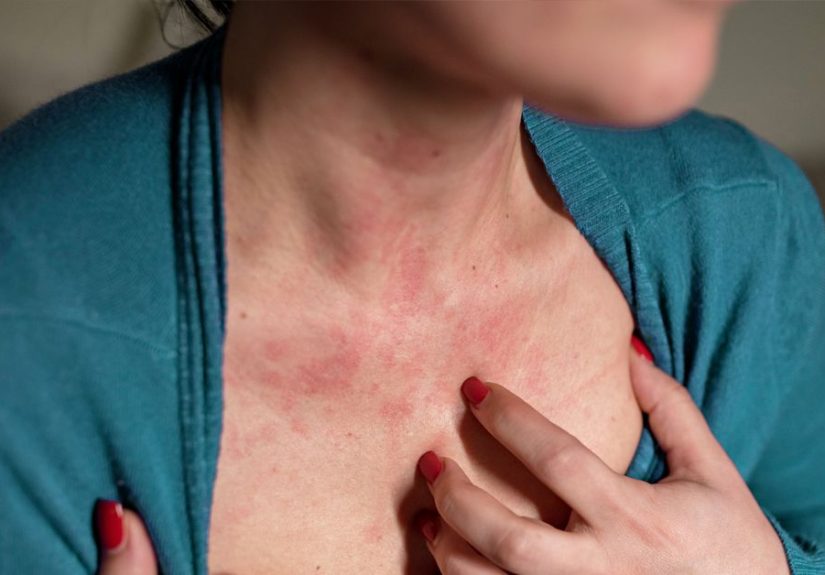
Hives, also called urticaria, are raised, itchy welts that can appear suddenly on the skin. They may be pink, red, or skin-colored and often blanch, meaning they turn lighter when pressed. Some are tiny. Some are dinner-plate dramatic. Many have irregular borders and may join together into larger patches.
The classic clue is speed. Hives tend to come on fast, itch intensely, and individual welts often disappear within a day, even though new ones may keep popping up elsewhere. That “now you see it, now you don’t” behavior is a strong hint that you are dealing with hives rather than eczema.
Common hive symptoms
- Raised welts or wheals
- Itching, burning, or stinging
- Swelling that may change size quickly
- Lesions that move around the body
- Episodes linked to foods, medications, infections, or physical triggers
Hives may be acute, lasting less than six weeks, or chronic, lasting more than six weeks. Chronic hives are especially frustrating because the cause is often not obvious. Thanks, immune system. Very helpful.
How eczema and hives are similar
There is a reason people mix them up. Eczema and hives share several features:
- Both can itch intensely
- Both can flare after exposure to triggers
- Both may be related to allergic or immune system activity
- Both can disrupt sleep, concentration, and mood
- Both may require prescription treatment when home care is not enough
They also overlap in real life. A person with eczema may also be prone to allergies, asthma, or sensitive skin. A person with hives may notice their flares worsen with stress, heat, or illness. Skin has a way of being medically complicated and socially inconvenient at the same time.
The biggest differences between eczema and hives
1. The appearance is different
Eczema usually looks dry, inflamed, flaky, cracked, or thickened. Hives usually look swollen and raised, with smoother surfaces and more obvious borders. If the rash looks like dry skin having a meltdown, eczema moves up the suspect list. If it looks like raised welts that arrived in a hurry, hives become more likely.
2. The timing is different
Eczema tends to be persistent. It may flare, calm down, and flare again, but it usually hangs around longer. Hives are famous for coming and going quickly. One patch may vanish and another may show up somewhere else the same day.
3. The skin texture is different
Eczema often feels rough, dry, and irritated. Hives tend to feel smooth but puffy. The swelling in hives is caused by fluid leaking into the skin after certain cells release histamine and other chemicals.
4. The treatment strategy is different
Eczema treatment focuses heavily on repairing the skin barrier and calming inflammation. Hives treatment focuses more on reducing the histamine-driven reaction, usually with antihistamines and trigger management.
What causes eczema?
Eczema does not have one single cause. It is usually linked to a mix of genetics, immune system dysfunction, and a weakened skin barrier. In simple terms, the skin is extra sensitive and extra bad at holding it together when faced with everyday irritants.
Common eczema triggers
- Dry air or cold weather
- Hot showers
- Harsh soaps and fragranced skin products
- Dust mites, pet dander, or pollen
- Sweating and overheating
- Stress
- Wool or scratchy fabrics
Not every flare is caused by an allergy. Sometimes eczema worsens simply because the skin is dry, irritated, or scratched. That is one reason eczema can be stubborn: it is part inflammation, part barrier problem, and part vicious itch-scratch cycle.
What causes hives?
Hives happen when the body releases histamine and other inflammatory chemicals into the skin. That release can happen for many reasons, including allergies, infections, temperature changes, medications, pressure on the skin, exercise, or stress. Sometimes there is a clear trigger. Sometimes there is only mystery and inconvenience.
Common hives triggers
- Foods such as nuts, shellfish, eggs, or other allergens
- Medications, including antibiotics or pain relievers in some people
- Viral infections
- Heat, cold, sun, water, or pressure
- Exercise or sweating
- Emotional stress
- Autoimmune processes in some chronic cases
Some people also develop angioedema, which is deeper swelling under the skin, often around the lips, eyelids, hands, feet, or throat. This can happen with hives and deserves prompt attention, especially if breathing or swallowing becomes difficult.
How doctors tell eczema and hives apart
Diagnosis usually starts with a medical history and a physical exam. A clinician will look at what the rash looks like, where it appears, how long it lasts, and what seems to trigger it.
For eczema, doctors often focus on:
- Chronic or recurring itch
- Dry, inflamed patches
- Typical body locations
- Personal or family history of allergies, asthma, or eczema
For hives, doctors often focus on:
- Raised welts that come and go
- Rapid changes in location and shape
- Recent illness, food exposure, medication changes, or physical triggers
- Any signs of angioedema or anaphylaxis
Sometimes testing is helpful, especially when a contact allergy, food allergy, medication reaction, or chronic unexplained hives is suspected. But many cases are diagnosed mainly by the rash pattern itself. Dermatology and allergy specialists see these patterns all the time, which is comforting if your skin has decided to become abstract art.
Eczema treatment options
Treatment for eczema usually starts with skin care basics and then moves up if symptoms are more severe.
At-home eczema care
- Apply a thick, fragrance-free moisturizer at least once or twice daily
- Use gentle cleansers instead of harsh soaps
- Take short, lukewarm showers rather than long, hot ones
- Avoid known irritants and rough fabrics
- Keep nails short to reduce skin damage from scratching
Prescription eczema treatments
- Topical corticosteroids to calm inflammation
- Topical calcineurin inhibitors for sensitive areas or ongoing control
- Other nonsteroid prescription creams or ointments
- Phototherapy for some moderate cases
- Biologics or oral medications for moderate to severe eczema
The goal is not just to stop a flare. It is also to help the skin barrier recover so future flares become less frequent and less intense.
Hives treatment options
The first step is often identifying and avoiding the trigger if one can be found. But because hives can be fast and dramatic, treatment often centers on relief first and detective work second.
Common hives treatments
- Non-drowsy oral antihistamines
- Avoidance of known triggers
- Cool compresses and loose clothing
- Short-term additional medications in more severe cases
- Specialist care for chronic or difficult-to-control hives
For chronic hives that do not improve with antihistamines, allergy or dermatology specialists may consider advanced treatments such as biologic therapy. The exact plan depends on how often hives happen, how severe they are, and whether there is swelling or other symptoms.
When it might be something else
Not every itchy rash is eczema or hives. Contact dermatitis, psoriasis, fungal infections, heat rash, scabies, medication eruptions, and viral rashes can all look similar at first glance. That is why a rash that keeps returning, spreads rapidly, becomes painful, oozes, or does not improve deserves a professional evaluation.
When to seek medical care right away
Get urgent medical attention if a rash is accompanied by:
- Trouble breathing
- Trouble swallowing
- Swelling of the lips, tongue, or throat
- Dizziness or fainting
- A rapidly worsening reaction after a food, medication, or insect sting
For eczema, it is time to check in with a clinician if the skin is painful, infected, bleeding, crusting heavily, or interfering with sleep and daily life. For hives, medical evaluation is especially important when symptoms are frequent, chronic, associated with swelling, or hard to control.
Common experiences people describe with eczema and hives
People with eczema often describe it as a long relationship with bad boundaries. It is always there in the background, even during calmer stretches. The skin may feel tight after showering, itchy at bedtime, and weirdly offended by things that should be harmless, like a scented lotion or a wool sweater. Many people say the worst part is the cycle: the skin itches, they scratch, the skin gets more inflamed, and then it itches even more. Sleep can take a hit. Focus can take a hit. Confidence can take a hit too, especially when flares show up on visible areas like the face, neck, or hands.
Parents of children with eczema often talk about the emotional exhaustion of managing it. There is the constant moisturizing, the trial and error with soaps and detergents, the worry about scratching at night, and the frustration of hearing, “Just stop scratching,” as if that has ever been useful advice in human history. Adults with eczema often describe a similar fatigue, especially when flares seem tied to stress, weather, or unknown triggers that never send a calendar invite first.
People with hives often describe a very different kind of stress. Hives can feel sudden and unpredictable. Someone may feel fine, then look down and see raised welts spreading across the arms, legs, or torso. Because hives can move quickly and look dramatic, they often cause immediate anxiety. Was it something I ate? A new medication? A virus? Laundry detergent? The mystery can be as irritating as the itch.
Those with chronic hives frequently say the hardest part is not knowing when the next flare will happen. One day the skin is calm. The next day there are itchy welts after exercise, a hot shower, or seemingly nothing at all. Some people describe checking their skin throughout the day the way others check the weather: not because they enjoy it, but because surprise is rarely fun when it involves swelling.
There is also an emotional overlap between eczema and hives. Both conditions can make people feel self-conscious, distracted, and plain old worn out. Clothing choices change. Sleep suffers. Social plans get reconsidered. People may avoid heat, sweat, certain products, or long events because they are worried about flaring in public. The good news is that both conditions are treatable, and many people improve a lot once they get the right diagnosis, a realistic skin-care routine, and a treatment plan that actually matches what is going on. Skin may be dramatic, but with good care, it does not always get the last word.
Final thoughts
When comparing eczema vs. hives, the biggest clues are timing, texture, and behavior. Eczema is usually a chronic, dry, inflamed rash that sticks to familiar body areas and often needs skin-barrier repair plus anti-inflammatory treatment. Hives are raised, itchy welts that tend to show up suddenly, move around, and respond more directly to antihistamines and trigger control.
If you are dealing with a rash that keeps returning, does not look typical, or comes with swelling or breathing symptoms, a doctor or specialist can help sort it out quickly. Your skin may be trying to send a message. The trick is figuring out whether it is saying “I need moisture,” “I need antihistamines,” or “Please stop using that mystery body wash from the discount bin.”