Table of Contents >> Show >> Hide
- 1. Bring Back Apple Bobbing and Other Classic Halloween Party Games
- 2. Revive Candlelit Ghost Stories and Spooky Story Circles
- 3. Bring Back Handmade Costumes and Paper Decorations
- 4. Revive Neighborhood Halloween Parties, Parades, and Porch Socials
- 5. Bring Back Playful Halloween Fortune Games and Parlor Mysteries
- Why Retro Halloween Feels So Good Right Now
- Extra Experience: What a Retro Halloween Night Actually Feels Like
Halloween has gotten a little… efficient. We buy the bagged candy, queue up the streaming horror picks, slap a skeleton on the porch, and call it a season. Fun? Sure. Memorable? Sometimes. But old-school Halloween had a different flavor: less algorithm, more atmosphere. It was a holiday built on neighborhood energy, handmade creativity, silly party games, spooky storytelling, and traditions that felt delightfully weird in the best possible way.
If you look back at vintage Halloween culture, one thing becomes clear fast: the holiday used to be much more social and much less polished. People hosted parlor parties. Kids and adults swapped ghost stories. Decorations were often handmade or simple paper cutouts with oversized grins and gloriously questionable design choices. Apples, nuts, candles, masks, and a little mystery did a lot of heavy lifting. In other words, Halloween did not need a twelve-foot animatronic demon to have a personality.
That is exactly why retro Halloween traditions are worth reviving now. They are budget-friendly, charming, easy to personalize, and surprisingly good at getting people off their phones and into the same room. Better yet, many of these old-fashioned Halloween activities can be updated for modern households without losing their vintage magic. You can keep the cozy nostalgia, skip the unsafe nonsense, and still create a night that feels richer than a sugar rush and a group text.
So if you are craving a Halloween that feels a little warmer, a little weirder, and a lot more memorable, here are five retro Halloween traditions worth bringing back this year.
1. Bring Back Apple Bobbing and Other Classic Halloween Party Games
Apple games were once a huge part of Halloween, and not just because apples are cheap and plentiful in the fall. Historically, they were tied to harvest traditions, matchmaking rituals, and playful fortune games. That means bobbing for apples was never just a random party stunt. It had a whole backstory, which honestly makes it much cooler than most plastic spider ring toss sets.
The vintage version of Halloween loved games that got everybody laughing while pretending to be very serious about destiny. Bobbing for apples, apple peeling, and even dangling apples from strings all showed up in old Halloween customs. In some traditions, the first person to grab the apple might supposedly be the first to marry. Was this scientifically rigorous? Absolutely not. Was it peak Halloween energy? Completely.
Why it still works today
Classic Halloween games are easy, interactive, and instantly nostalgic. They break the ice faster than forcing guests to admire your decorative gourds for twenty straight minutes. They also work for all kinds of gatherings: family parties, classroom events, fall festivals, porch hangs, and neighborhood get-togethers.
To modernize the tradition, skip the one-tub-for-everyone setup and go for cleaner, smarter options. Try individual bowls for kids, or swap in a snap-apple style game where apples hang from string and players try to catch them hands-free. You get the old-fashioned fun without turning the evening into a low-budget germ documentary.
How to make it feel retro
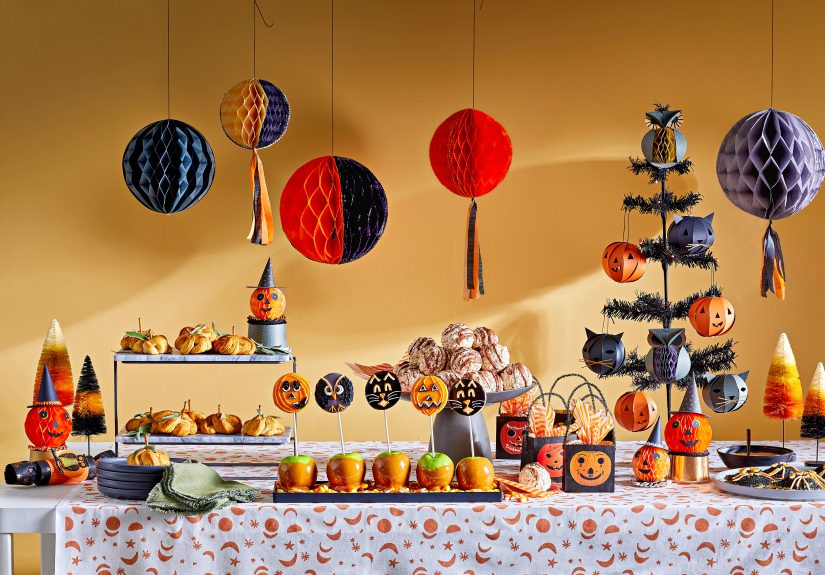
Set up a simple game station with apples, cider, vintage-style paper signs, and a few old-fashioned prizes like candy sticks, caramel chews, or tiny notebooks for “fortune records.” Pair it with another classic game such as donut-on-a-string, pumpkin ring toss, or a Halloween guessing jar. Suddenly your party has a personality, and that personality is “1920s parlor host with excellent snack instincts.”
2. Revive Candlelit Ghost Stories and Spooky Story Circles
Before Halloween became dominated by screens, one of the simplest traditions was also one of the best: people gathered and told spooky stories. Not necessarily gore-heavy stories, not jump-scare marathons, and definitely not two hours of everyone asking, “Wait, is this based on a Reddit thread?” Just good old-fashioned ghost tales, local legends, and eerie folklore shared out loud.
This tradition has deep staying power because oral storytelling is one of the oldest ways humans make meaning out of fear, mystery, and the unknown. Halloween has always been the perfect setting for that kind of storytelling. A dark porch, a candle or flashlight, a chilly night, and one person saying, “Okay, this happened to my cousin’s friend’s uncle,” can still outperform a lot of expensive entertainment.
Why it still works today
Ghost-story circles are low-cost and high-impact. They invite imagination instead of passive scrolling. They also scale beautifully. A family with kids can keep it fun and creepy-cute. Teen gatherings can lean into urban legends and folklore. Adults can go atmospheric with local history, classic haunted-house stories, or old-school cautionary tales. No one needs a huge budget. You just need a good storyteller and a willingness to dim the lights.
And there is something wonderfully retro about a Halloween that leaves room for voices, pauses, and dramatic timing. A well-told spooky story makes people lean in. That kind of shared attention feels rare now, which may be exactly why it feels special.
How to make it feel retro
Create a “story hour” instead of defaulting to background television. Put out blankets, warm drinks, and a bowl of popcorn or caramel corn. Invite everyone to come with one ghost story, family legend, or hometown mystery. If your guests are shy, use prompt cards like “The creepiest house in town,” “A strange sound no one could explain,” or “The one Halloween costume that still haunts old photo albums.”
The goal is not to terrify people into sleeping with every light on. The goal is to make Halloween feel like a night of wonder again. There is a big difference, and vintage Halloween understood that beautifully.
3. Bring Back Handmade Costumes and Paper Decorations
There was a time when Halloween costumes were more homemade than store-bought, and decorations were more clever than coordinated. Families cut masks, stitched capes, repurposed old clothes, painted cardboard, and filled their homes with paper cats, witches, moons, and grinning jack-o’-lantern faces. It was crafty, a little chaotic, and full of personality.
That spirit is worth reviving because modern Halloween can feel oddly overproduced. Everywhere you look, there is another giant inflatable, another mass-manufactured décor collection, another race to make your porch look like a theme park queue. Handmade Halloween pushes back against that. It says your bat garland can be slightly crooked and still be perfect. Honestly, it may be better because it is slightly crooked.
Why it still works today
Handmade costumes and decorations are cheaper, more sustainable, and often more memorable than the packaged alternatives. They also give kids and adults a chance to participate in the holiday before October 31 actually arrives. That matters. Traditions feel stronger when they start in the making, not just in the buying.
A homemade ghost made from an old sheet, a witch hat built from poster board, or a swarm of paper bats taped across a hallway can create more charm than something expensive and generic. Vintage Halloween décor proves that strong shapes, bold faces, and playful silhouettes still work. You do not need realism. You need mood.
How to make it feel retro
Host a pre-Halloween craft night. Make paper lanterns, black cat cutouts, hand-painted signs, and simple masks. Challenge family members to build costumes from what they already own: a detective, a scarecrow, a fortune teller, a classic ghost, a movie monster, or a “mystery librarian” if you want to get delightfully specific.
You can also use vintage design cues without turning your home into a museum exhibit. Think crepe paper, tissue bells, orange-and-black table toppers, old postcard-inspired motifs, and carved pumpkins grouped with candles or lanterns. It is festive, theatrical, and blissfully free of Bluetooth settings.
4. Revive Neighborhood Halloween Parties, Parades, and Porch Socials
Retro Halloween was often more community-centered than today’s version. In the early twentieth century, towns and neighborhoods leaned into parades, school events, and local parties as a way to channel Halloween energy into something fun instead of destructive. That was not just wholesome branding. It was practical. Halloween mischief used to be a real concern, and organized celebrations helped turn chaos into community.
That old idea feels surprisingly relevant now. Many families want Halloween to feel social again, but without the pressure of complicated travel, pricey attractions, or overscheduled events that require three apps and a parking strategy. A neighborhood-focused celebration solves a lot of that. It gives Halloween back its front-porch charm.
Why it still works today
When neighbors celebrate together, Halloween becomes more than a candy transaction. Kids feel like they are part of something bigger. Adults actually talk to one another. People remember the decorated porches, the chili pot on the folding table, the dog in the tiny vampire cape, and the spontaneous applause for the toddler who committed deeply to being a pumpkin.
Community Halloween also spreads out the fun. Not everyone wants a loud party, but many people enjoy a costume walk, a porch cider station, a mini parade down the block, or a front-yard game corner. These smaller rituals make the holiday feel lived in instead of merely consumed.
How to make it feel retro
Think simple and local. Organize a porch-to-porch social hour before trick-or-treating. Create a short neighborhood costume parade with goofy award categories like “Most Dramatic Entrance,” “Best Homemade Costume,” and “Most Convincing Tiny Monster.” Ask a few households to host a game, a snack, or a storytelling stop. It becomes a Halloween crawl, but charmingly PG and much better for your group chat archive.
If your block is not up for a full event, even a shared bonfire, driveway potluck, or front-yard movie screening can revive the old spirit of Halloween as a communal celebration instead of a solo household performance.
5. Bring Back Playful Halloween Fortune Games and Parlor Mysteries
One of the quirkiest vintage Halloween traditions involved lighthearted fortune-telling. Old Halloween parties often included games built around predicting romance, luck, or the future using apples, nuts, mirrors, paper slips, and other household items. Early Halloween postcards and party culture were full of this imagery. It was mysterious, theatrical, and just silly enough to be irresistible.
Now, to be clear, bringing this back does not mean turning your living room into a foggy prophecy dungeon. It means reviving the playful side of Halloween mystery. The charm lies in the ritual, not in pretending your snack table has become an accredited institution of supernatural forecasting.
Why it still works today
Fortune games are interactive, funny, and surprisingly good conversation starters. They give guests something to do besides standing near the chips and pretending they know when it is socially acceptable to leave. They also tap into a side of Halloween that is less about jump scares and more about curiosity, symbolism, and imagination.
This tradition is especially useful if you want your Halloween gathering to feel vintage and a little theatrical. It can be sweet, campy, elegant, or family-friendly depending on how you frame it.
How to make it feel retro
Create a “parlor mystery” corner with old-fashioned candles, a typewriter-style sign, envelopes, and simple prediction prompts. Guests can pick a card that tells them their Halloween role for the night, draws a funny “fortune,” or assigns a mini challenge like “swap ghost stories with a stranger” or “find the person most likely to survive a haunted house.”
You can also adapt older traditions into safer, friendlier formats. Instead of mirror games, try apple-peel initials using paper strips, hidden-message treats, or a bowl of fortune notes that predict things like “You will eat too much candy corn and defend your choice with confidence.” That is the kind of prophecy we can all live with.
Why Retro Halloween Feels So Good Right Now
There is a reason old-fashioned Halloween ideas are having another moment. They offer something modern life often lacks: participation. Not content. Not consumption. Participation. They ask people to make, gather, tell, laugh, guess, decorate, and play. That is powerful.
Retro Halloween traditions also remind us that the holiday does not have to be expensive to be atmospheric. A bucket of apples, a stack of paper decorations, a porch full of neighbors, a flashlight, and a few great stories can create a better memory than a shopping cart full of stuff no one remembers by November 3.
So this year, instead of chasing the flashiest Halloween possible, try bringing back the most human parts of it. Let the decorations be handmade. Let the games be goofy. Let the stories be a little dramatic. Let the neighborhood feel like a neighborhood. Halloween does not need to be perfect to be magical. In fact, it is usually better when it is not.
Extra Experience: What a Retro Halloween Night Actually Feels Like
Picture this: the porch light is low, a bowl of apples is waiting on the table, paper bats are taped a little unevenly across the wall, and someone in the kitchen is loudly insisting that homemade caramel popcorn is a “traditional centerpiece” as if they are defending a doctoral thesis. A child in a slightly lopsided ghost costume is practicing a dramatic entrance. A neighbor arrives wearing a cape that is very clearly made from an old curtain. It is perfect.
That is the magic of a retro Halloween experience. It does not feel staged. It feels shared. The room is not trying to impress the internet. It is trying to delight the people standing in it. And that changes everything.
At a modern party, entertainment is often outsourced. The playlist is preloaded. The décor is delivered. The costumes are ordered. The night can still be fun, but it sometimes feels like everyone is interacting with the packaging instead of with each other. A retro Halloween flips that balance. The entertainment is the people. The strange little traditions become the engine of the evening.
Someone starts the apple game and immediately takes it far too seriously. Another person swears they are “only here to observe” and then becomes wildly competitive. The youngest kid wins a prize and reacts like they have conquered a kingdom. On the porch, two adults swap the same local ghost story they both heard as children, each convinced they know the more accurate version. Inside, somebody is cutting black paper cats while another person tapes orange streamers to a doorway that really did not ask for this level of commitment.
The best part is how these experiences stretch the holiday out. Instead of Halloween being a quick burst of costumes and candy, it becomes a season of tiny rituals. You make the decorations together. You plan a silly game. You test a popcorn-ball recipe. You ask older relatives what Halloween used to look like on their street. Suddenly the holiday has texture. It has memory. It starts to belong to your household in a personal way.
And then there is the mood. Retro Halloween has a kind of cozy eeriness that modern spooky season sometimes forgets. It is less about volume and more about atmosphere. Candlelight instead of strobe lights. Shadows instead of overload. Laughter instead of constant screaming sound effects from a motion-activated clown that seems to have personal issues. It is spooky, yes, but it is also warm.
That warmth matters. It is what makes people linger. It is what makes kids remember the game table, not just the candy haul. It is what makes adults feel like they got to celebrate rather than merely supervise. A retro Halloween night leaves room for conversations, for inside jokes, for stories that get retold every October. That is how traditions stay alive. Not because they are historically interesting, but because they become emotionally useful.
By the end of the night, the decorations may be drooping, the cider may be gone, and the paper witch on the door may be hanging on by what appears to be one heroic piece of tape. But the house feels happy. It feels used. It feels like a holiday happened there. And that, more than anything, is why these retro Halloween traditions are worth bringing back. They do not just decorate a night. They give it character.