Table of Contents >> Show >> Hide
- Why Seasoning Cast Iron Matters
- How to Season Cast Iron Cookware: 11 Steps
- 1. Check Whether Your Pan Really Needs Full Seasoning
- 2. Wash the Cookware Thoroughly
- 3. Dry It Completely
- 4. Warm the Pan Slightly Before Oiling
- 5. Choose the Right Oil
- 6. Rub Oil Over Every Surface
- 7. Wipe Away the Excess Until the Pan Looks Nearly Dry
- 8. Place the Cookware Upside Down in the Oven
- 9. Bake for One Hour
- 10. Cool the Pan in the Oven
- 11. Repeat if Needed, Then Start Cooking Smart
- Common Mistakes That Ruin Cast Iron Seasoning
- How to Maintain Seasoned Cast Iron
- Best Foods to Cook After Seasoning
- Real-World Kitchen Experience: What Seasoning Cast Iron Actually Feels Like
- Conclusion
Cast iron cookware is the kitchen equivalent of a pickup truck: tough, dependable, and somehow cooler with a few scratches. But even a rugged skillet needs proper seasoning to perform at its best. If you have ever wondered why one cast iron pan releases cornbread like a dream while another clings to eggs like it is emotionally attached, seasoning is usually the answer.
Seasoning cast iron is the process of coating the cookware with a very thin layer of oil and heating it until that oil transforms into a hard, protective finish. Done right, it helps prevent rust, improves release, and gives your skillet that rich, dark look that says, “Yes, I know how to make potatoes properly.” The good news is that learning how to season cast iron cookware is not complicated. It just requires a little patience, a little heat, and a lot less oil than most people think.
This guide walks through 11 practical steps for seasoning cast iron cookware at home, plus common mistakes to avoid, maintenance tips, and real-life kitchen experience that makes the process easier the second time around. Whether you are reviving a rusty flea-market pan or giving a new skillet an extra coat of protection, this method will help you build durable seasoning that lasts.
Why Seasoning Cast Iron Matters
Before we get to the steps, it helps to know what seasoning actually does. Cast iron is porous and can rust if left unprotected. A proper seasoning layer acts like armor. It helps shield the metal from moisture, reduces sticking, and improves the cooking surface over time. That is why well-used pans often cook better than brand-new ones. They have history, character, and several layers of baked-on success.
Seasoning is also not a one-and-done event. Think of it as a foundation. One good oven seasoning session creates the base, but regular cooking with fat continues to strengthen the finish. In other words, making grilled cheese is basically skillet self-care.
How to Season Cast Iron Cookware: 11 Steps
1. Check Whether Your Pan Really Needs Full Seasoning
Many modern cast iron skillets come pre-seasoned. That means the manufacturer has already baked on an initial layer of oil. In some cases, you can start cooking right away. Still, adding another round of seasoning at home can improve the finish, especially if the pan looks dull, patchy, or slightly dry. If your cookware is rusty, sticky, or has uneven spots, a full re-seasoning is a smart move.
2. Wash the Cookware Thoroughly
Start with a clean surface. Wash the cast iron in warm water and scrub away dust, residue, rust flakes, or old food bits. If you are working with a brand-new pan, this step removes factory dust and shelf grime. If the pan is older or rusty, you may need a bit more elbow grease. For stubborn rust, scrub with steel wool until the orange spots are gone. This is one of the few times cast iron fans will not gasp dramatically at the sight of abrasive scrubbing.
3. Dry It Completely
Water is the enemy here. The moment clean cast iron sits wet, rust starts plotting its comeback. Dry the pan thoroughly with a lint-free towel, then place it over low heat for a few minutes to evaporate any hidden moisture. Pay attention to the handle, corners, and outer edges. If you skip this step, you are basically inviting rust back into the house.
4. Warm the Pan Slightly Before Oiling
A slightly warm pan helps the oil spread into a thinner, more even layer. You do not want it blazing hot. Just warm enough that the metal is dry and receptive. This small step makes a big difference because thin, even oil layers are the secret to good seasoning. Thick, gloopy oil layers create stickiness, blotches, and regret.
5. Choose the Right Oil
Use a neutral, high-heat oil or fat. Good choices include vegetable oil, canola oil, grapeseed oil, or melted shortening. These are popular because they are affordable, widely available, and reliable for building a smooth coating. Some cooks also use avocado oil or other high-smoke-point fats. What matters most is not choosing the trendiest oil; it is choosing one that can handle heat and be applied in a whisper-thin layer.
Olive oil can work in some maintenance situations, but it is not always the first pick for a deep seasoning session. Bacon grease sounds charmingly old-school, but it may contain impurities that can leave residue. Flaxseed oil has passionate supporters, yet many experienced cooks report that it can build fast but flake later. Cast iron does not need drama. It needs consistency.
6. Rub Oil Over Every Surface
Using a paper towel or clean cloth, rub a small amount of oil over the entire pan. That means the cooking surface, exterior, bottom, sides, and handle. If it is cast iron, it gets oiled. Seasoning only the inside is like painting your front door and ignoring the rest of the house.
This is also the point where many people accidentally overdo it. The pan should be coated, but not shiny with excess oil. You are not marinating the skillet. You are creating an ultra-thin film.
7. Wipe Away the Excess Until the Pan Looks Nearly Dry
This is the step that separates beautiful seasoning from sticky disappointment. After oiling, take a fresh paper towel and buff the pan thoroughly. Then buff it again. The surface should look almost dry, not greasy. If you can see wet-looking patches, there is too much oil.
Why does this matter? Excess oil can pool during baking and leave gummy spots or hardened droplets. That rough, tacky finish people complain about is usually not bad luck. It is too much oil refusing to behave.
8. Place the Cookware Upside Down in the Oven
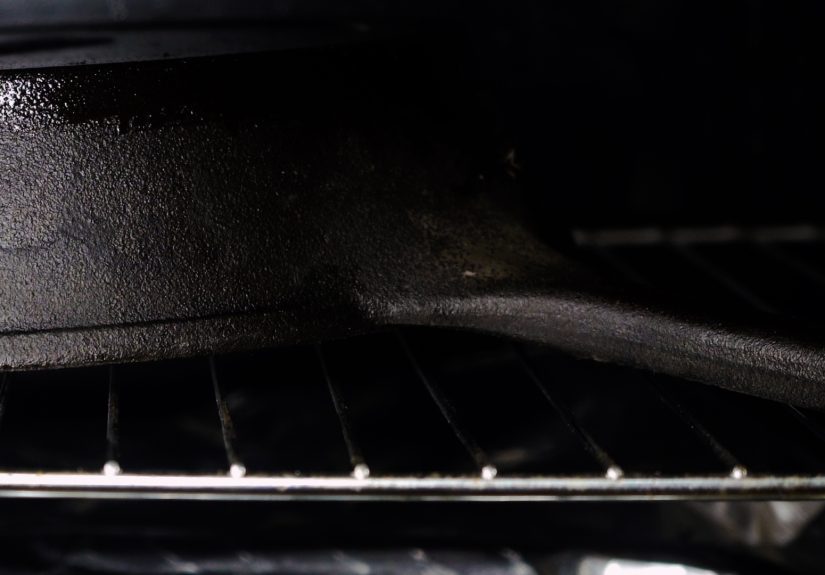
Preheat your oven to around 450 to 500 degrees Fahrenheit. Place a sheet of foil on the lower rack to catch drips, then put the cast iron upside down on the center rack. The upside-down position helps prevent oil from pooling inside the pan during the baking process. Gravity is doing you a favor here, so let it.
If you are seasoning a Dutch oven lid, grill pan, or other cast iron piece, the same rule applies. Keep the oil layer thin and place the item so any excess can drip away rather than settle into sticky patches.
9. Bake for One Hour
Let the cookware bake for one full hour. During this time, the oil undergoes polymerization, which is the fancy science term for turning that thin layer of fat into a hardened protective coating. The oven may smell faintly like hot oil, so ventilation helps. This is normal. If your kitchen starts smelling like a deep-fryer convention, however, you probably used too much oil.
One hour is a practical sweet spot for home seasoning. It gives the coating enough time to set without turning the process into an all-day event.
10. Cool the Pan in the Oven
When the hour is up, turn off the oven and let the cast iron cool inside. Slow cooling helps the new seasoning settle and adhere more evenly. It also prevents you from grabbing a blazing-hot handle with the confidence of someone who has apparently never learned a lesson before.
Once the pan is cool enough to handle, inspect the finish. It should look darker and more even. A little variation in color is normal, especially on newly seasoned or restored cast iron.
11. Repeat if Needed, Then Start Cooking Smart
One round of seasoning is enough to create a base layer, but two or three cycles can help if the pan was rusty, stripped, or badly neglected. After that, the best way to improve the finish is to cook in it. Early on, focus on foods that are friendly to cast iron seasoning, such as cornbread, roasted vegetables, bacon, burgers, or skillet potatoes.
Try not to jump straight into acidic tomato sauce or a delicate omelet on day one. New seasoning needs a little time to mature. Think of it like a new friendship. Start with something easy before testing it with eggs.
Common Mistakes That Ruin Cast Iron Seasoning
Even a simple process can go sideways when people improvise too aggressively. Here are the most common mistakes:
- Using too much oil: This is the number one problem and the fastest route to a sticky finish.
- Skipping the drying step: Any trapped moisture can encourage rust.
- Not seasoning the outside: The entire pan needs protection, not just the cooking surface.
- Cooking highly acidic foods too soon: Tomato sauce, wine-heavy braises, and vinegar-based dishes can wear down fresh seasoning.
- Leaving food in the pan after cooking: Moisture and acid do not make good overnight guests.
- Storing it damp: A put-away-wet skillet is basically rust with excellent branding.
How to Maintain Seasoned Cast Iron
Once your cookware is seasoned, maintenance is refreshingly low-tech. After cooking, wash with warm water and a soft scrubber or brush. For stuck-on bits, kosher salt can work as a gentle abrasive. Dry the pan thoroughly right away, then rub on the thinnest hint of oil while the pan is still warm. That tiny maintenance layer helps keep the finish strong between full seasoning sessions.
You do not need to baby cast iron, but you do need to respect moisture. Store it in a dry place. If stacking pans, place a paper towel between them to absorb humidity and protect the surface. If the pan starts looking dull, develops rusty freckles, or food begins sticking more than usual, give it another oven seasoning round.
Best Foods to Cook After Seasoning
If you want to help build your skillet’s surface naturally, start with foods that reward cast iron’s strengths. Cornbread bakes beautifully and helps reinforce the coating. Smashed burgers and steaks benefit from excellent heat retention. Roasted potatoes, hash, grilled cheese, and pan pizza also play nicely with a seasoned skillet.
On the other hand, very delicate fish, sticky eggs, and acidic dishes can be trickier in a freshly seasoned pan. Once the surface matures, cast iron becomes far more forgiving. Until then, set yourself up for success with foods that add flavor and confidence at the same time.
Real-World Kitchen Experience: What Seasoning Cast Iron Actually Feels Like
The first time many home cooks season cast iron, they expect a dramatic makeover. They imagine pulling a pan from the oven and finding a flawless, jet-black, mirror-smooth finish worthy of a museum gift shop. In reality, the first session often produces something more humble: a pan that looks better, feels drier, and still has a few blotchy areas. That is normal. Cast iron gets better through repetition, not perfectionism.
One common experience is discovering that the skillet improves faster through cooking than through obsessing. For example, a pan that feels only moderately slick after oven seasoning may become noticeably better after a week of making breakfast potatoes, grilled sandwiches, and skillet cornbread. Those everyday cooking fats continue to reinforce the surface. This surprises people who assume seasoning is only an oven project. It is actually part oven science, part regular use, and part refusing to panic over harmless color changes.
Another real-world lesson is that texture matters more than appearance. A newly seasoned pan may not look evenly black all over, especially if it was restored from rust or stripped down to bare metal. But if the surface feels smooth and dry rather than sticky, you are headed in the right direction. Many great pans wear a patchwork look in the beginning. They earn their beautiful finish slowly, like jeans or leather boots, except far better at making crispy chicken thighs.
Home cooks also learn quickly that eggs are the final exam, not the first homework assignment. People often season a skillet once, crack in an egg, and then act betrayed when it sticks. A smarter approach is to build confidence with higher-fat foods first. Sear a burger. Roast vegetables with oil. Bake cornbread. Make a grilled cheese that leaves behind a little buttery goodwill. After several rounds of cooking and cleaning, the same pan will usually handle eggs much better.
There is also the famous sticky-pan lesson. Almost everyone over-oils cast iron at least once. The surface comes out tacky, and suddenly the internet feels very loud. The fix is usually simple: wipe it harder next time and rebake if necessary. That experience teaches the central truth of seasoning cast iron cookware: less oil gives better results. It feels wrong at first because our brains say shiny means protected. Cast iron says the opposite. The pan should look almost dry before it goes into the oven.
Finally, seasoned cast iron changes the way people cook. Once you trust the pan, you start reaching for it more often. It goes from being “that heavy thing in the cabinet” to the piece you use for searing chicken, baking biscuits, roasting vegetables, and reheating pizza properly. The experience becomes less about maintenance and more about rhythm. Wash, dry, oil lightly, use again. That is when cast iron becomes easy: not because it demands nothing, but because the care becomes second nature.
Conclusion
If you want cast iron cookware that lasts for decades, seasoning is the step that sets everything up. Clean the pan, dry it thoroughly, apply a very thin layer of oil, bake it upside down, and repeat when needed. That is the heart of the method. The rest is consistency. With regular cooking and simple maintenance, your skillet will develop a stronger, darker, more naturally nonstick surface over time.
The beauty of cast iron is that it does not need to stay perfect to work beautifully. A few marks, color changes, and uneven patches are part of the story. What matters is that the surface stays protected, dry, and ready for the next meal. Learn the basics, keep the oil thin, and let the pan improve the old-fashioned way: through use.
Note: This article is based on broadly consistent guidance synthesized from major U.S. cooking and consumer sources, including Lodge, Serious Eats, Food Network, Southern Living, Better Homes & Gardens, Epicurious, Martha Stewart, The Kitchn, Bon Appétit, and Consumer Reports.