Table of Contents >> Show >> Hide
- Why Jeans Get Holes in the First Place
- What You Need to Sew a Hole in Jeans
- When to Sew a Hole Without a Patch
- How to Sew a Hole in Jeans Without a Patch
- When to Sew a Hole With a Patch
- How to Sew a Hole in Jeans With a Patch
- Best Hand Stitch for Repairing Jeans
- Machine Sewing a Hole in Jeans
- How to Make the Repair Less Noticeable
- How to Make the Repair Look Intentionally Cool
- Mistakes to Avoid When Mending Jeans
- How to Care for Jeans After Repair
- Real-Life Experiences Sewing Holes in Jeans
- Conclusion
- SEO Tags
Jeans have a funny way of acting immortal right up until the exact moment they split at the knee, wear thin at the thigh, or develop a mysterious hole near the pocket that definitely was not there yesterday. The good news is that a hole in denim does not mean your favorite pair is headed for retirement. In most cases, you can repair jeans at home with a few basic supplies, a little patience, and a willingness to wrestle with thick fabric like a civilized adult.
If you want to know how to sew a hole in jeans with or without a patch, the trick is choosing the right repair for the damage. A small worn spot can often be stitched closed or darned without adding extra fabric. A larger tear, a blowout in a high-friction area, or a hole with frayed edges usually needs a patch for strength. The goal is not just to make the hole disappear. It is to keep the jeans wearable, comfortable, and strong enough to survive sitting, walking, bending, and whatever else your denim life demands.
This guide walks you through both methods, explains when to use each one, and shares practical tips for repairing ripped jeans so the fix lasts longer than one dramatic squat.
Why Jeans Get Holes in the First Place
Before you grab a needle and thread, it helps to understand what kind of damage you are dealing with. Denim does not usually fail all at once. It often starts with thinning fabric, loose white threads, or a weak spot that finally gives up after too much friction.
The most common trouble zones are the inner thighs, knees, seat, hems, and pockets. Knee holes often start with one snag and turn into a full rip. Thigh holes usually come from repeated rubbing, which means the denim around the opening may already be weak even if the hole itself looks small. Pocket and seat damage can also spread fast because those areas are under stress every time you sit, stand, or carry things.
That is why the best jeans repair is not always the prettiest one. Sometimes the stronger fix wins. Sometimes a visible patch is smarter than pretending a crater can be closed with three optimistic stitches and a prayer.
What You Need to Sew a Hole in Jeans
You do not need a fancy sewing studio to mend denim. You just need the right basics.
For repairs without a patch
You will usually need sharp scissors, a hand-sewing needle or sewing machine, matching thread, pins or clips, and good lighting. An embroidery hoop can help keep the area steady if you are hand-darning. A thimble is also useful because denim is not exactly known for being cooperative.
For repairs with a patch
Add a denim patch, cotton fabric scrap, iron-on mending material, or fusible reinforcement. You may also want an iron to hold the patch in place before stitching. If you are machine sewing, a denim needle is a smart choice because thick layers can make regular needles complain loudly and then quit.
Thread and patch color choices
If you want the repair to blend in, choose thread close to the color of the denim. If you like visible mending, use contrasting thread and make the fix part of the design. The same goes for patches. A matching inside patch can be subtle. A printed or contrasting patch can turn worn jeans into a personal style statement.
When to Sew a Hole Without a Patch
A patch-free repair works best when the hole is small, the fabric around it is still fairly strong, and you want a flatter finish. This method is especially useful for tiny holes, worn spots, and early-stage damage where the denim has thinned but not completely disintegrated.
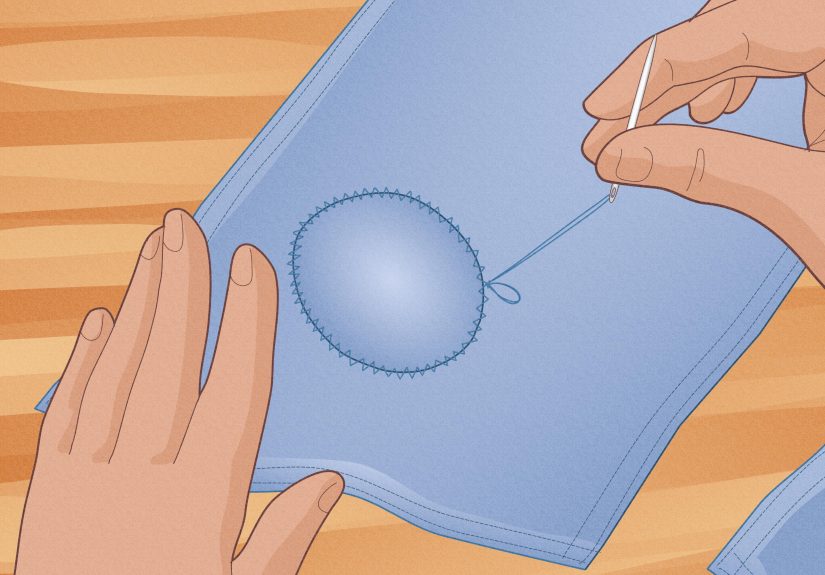
The most common no-patch method is darning. In plain English, that means rebuilding the damaged area with thread. You stitch back and forth across the hole, then weave more stitches across those first threads to create a little support grid. It is simple, effective, and surprisingly satisfying once you get going.
That said, if the surrounding fabric feels weak, fuzzy, or paper-thin, a no-patch repair may not hold for long. In that case, use a patch to reinforce the area from behind.
How to Sew a Hole in Jeans Without a Patch
Step 1: Clean up the damaged area
Start by trimming loose threads and frayed fuzz around the hole. Do not cut away healthy fabric. Just remove the stringy bits that will get in the way. You want a clean working area, not a larger problem.
Step 2: Turn the jeans inside out if needed
This makes it easier to see the damage and keep your stitches neat. If you are repairing by hand, you can work from either side, but many people find it easier to control the shape from the inside.
Step 3: Anchor the area
If the hole is tiny, you can gently pull the edges closer together. If it is more of a worn gap than a clean rip, leave it flat and prepare to stitch across it. The goal is to support the area, not pucker it into a denim raisin.
Step 4: Sew vertical stitches across the hole
Thread your needle and knot the end. Begin a little outside the damaged area and sew straight stitches back and forth across the opening. Think of these stitches as the “warp” threads of your new mini fabric. Keep them close together, but do not pull so tightly that the denim bunches.
Step 5: Weave horizontal stitches across the first row
Now sew in the opposite direction, passing your thread over and under the vertical stitches. This creates a woven mend that fills in the hole and spreads stress across the repair. If you are hand sewing, take your time. If you rush, the repair can end up lumpy and uneven.
Step 6: Secure the edges
Once the hole is covered, add a few small stitches just beyond the damaged area to lock everything in place. Knot securely on the inside. Trim excess thread.
This method is ideal if you want to mend a hole in jeans by hand without adding bulk. It works well for smaller holes near the knee or pocket and for worn areas that have not completely blown out.
When to Sew a Hole With a Patch
If the hole is large, the denim around it is thin, or the area gets lots of movement, a patch is usually the better choice. Patches add support and give your stitches something sturdy to hold onto. This matters a lot for inner thigh holes, seat damage, and bigger knee tears.
You can sew on a patch from the inside for a cleaner look or place it on the outside if you want the repair to stand out. Inside patches are the classic choice for jeans because they reinforce the area without shouting for attention. Outside patches are great for visible mending, kids’ jeans, and anyone who enjoys a “Yes, I meant to do that” fashion moment.
How to Sew a Hole in Jeans With a Patch
Step 1: Choose the patch material
Denim is the obvious choice, but sturdy cotton works too. Cut a piece that extends beyond the hole on all sides. A patch that is too small will only support the damaged center and ignore the weak fabric around it, which is like fixing half a roof and hoping the rain shows mercy.
Step 2: Prep the hole
Trim loose threads. If the hole has flaps, flatten them into place rather than cutting away too much fabric. Those original fibers can help the patch blend better, especially from the front.
Step 3: Position the patch
Place the patch behind the hole on the inside of the jeans. Smooth the denim over it and pin or clip it in place. You can also lightly fuse it first with iron-on mending material if you want extra stability before sewing.
Step 4: Sew around the damaged area
Using a hand needle or machine, stitch around the hole and through both the jeans and patch. You can use a backstitch for hand sewing or a zigzag stitch on a machine. For larger holes, sew multiple lines across the opening to attach the loose denim to the patch and reinforce the full area.
Step 5: Reinforce beyond the hole
Do not stop exactly at the edge of the damage. Sew a little past the weak area so the strain is spread out. This helps prevent the jeans from tearing again right next to your repair, which is one of denim’s ruder habits.
Step 6: Trim and press
Trim any bulky patch corners if needed and press the repair flat. Pressing makes a surprising difference. A repaired area can go from “homemade emergency” to “actually pretty tidy” after a good press.
Best Hand Stitch for Repairing Jeans
If you are hand sewing jeans, the best stitch depends on what you are fixing. A backstitch is strong and great for closing tears or securing a patch. Running stitches can work for decorative visible mending but are less sturdy on their own. Darning is best when you are rebuilding missing fabric without a patch.
For most everyday repairs, a backstitch is the workhorse. It creates a stronger seam than a simple running stitch and holds up better on denim. If the area sees a lot of strain, combine methods: patch underneath, then reinforce with rows of close stitches on top.
Machine Sewing a Hole in Jeans
If you have a sewing machine, repairing jeans can go faster, especially with larger holes. Use a denim needle and sturdy thread. A zigzag stitch works well for patch repairs because it catches both the jeans and the patch underneath. For darning-style repairs, sew repeated lines back and forth over the damaged area.
Go slowly, especially over thick seams. Do not yank or shove the fabric through the machine. Denim can be tough, and forcing it usually leads to skipped stitches, broken needles, or language not suitable for a family craft blog.
If your machine struggles with very thick denim or seam intersections, hand sewing may actually give you a cleaner result. There is no shame in that. There is only repaired denim.
How to Make the Repair Less Noticeable
If your goal is an invisible or near-invisible jeans repair, use matching thread, place the patch inside the jeans, and keep your stitches neat and close together. A patch cut from old jeans in a similar wash often blends better than generic repair fabric.
Try to follow the grain and direction of the denim when placing the patch. If there are original threads around the hole, lay them back over the patch before stitching so the repair looks more natural from the outside. Press the area once you finish.
Also, manage expectations. A repaired hole in jeans does not have to become invisible to be successful. If it looks good from normal standing distance and holds through real wear, that is a win.
How to Make the Repair Look Intentionally Cool
Visible mending has gone from practical fix to style choice, and denim is the perfect canvas for it. Use contrasting thread, sashiko-inspired lines, geometric stitching, or a patterned cotton patch behind the hole. This works especially well on knees and pockets where the repair can look deliberate instead of accidental.
You can even use different shades of blue thread to mimic worn denim. Or go bold with white, red, or mustard thread if you want the repair to stand out. Done well, a patched pair of jeans tells a better story than a brand-new pair ever could.
Mistakes to Avoid When Mending Jeans
One common mistake is sewing only the exact hole and ignoring the weak fabric around it. Another is using thread that is too delicate for heavy denim. People also tend to pull stitches too tight, which causes puckering and makes the area feel stiff.
Using a patch that is too small is another classic error. So is choosing a repair method based only on appearance. A tiny invisible fix may look great today and fail next week if the area is under constant stress.
Finally, do not keep wearing heavily damaged jeans for weeks before repairing them. A small tear is usually a simple project. A giant denim cave system is a weekend.
How to Care for Jeans After Repair
Once your jeans are repaired, wash them gently and avoid overly hot drying if possible. Turn them inside out before washing to reduce abrasion on the repaired area. Check the mend occasionally, especially after the first few wears and washes, to make sure no stitches have loosened.
If the area starts thinning again, reinforce it early. Small touch-ups are much easier than repeating the whole repair from scratch.
Real-Life Experiences Sewing Holes in Jeans
The first time I repaired a hole in jeans, I treated it like a tiny sewing task. It was not tiny. It was an inner-thigh hole, which is basically denim’s version of a structural engineering emergency. I sat down with matching thread, a regular needle, and far too much confidence. Ten minutes later, the thread was tangled, the stitches were crooked, and the jeans looked like they had survived a bar fight with a stapler. But the experience taught me something useful: denim repair is not about perfection on the first try. It is about understanding what the fabric needs.
After that, I started paying attention to where the holes were forming. Knee holes were usually easier to fix because the surrounding denim still had some strength. Thigh holes were trickier because the area around them was often thinning, even when it looked fine at a glance. Once I began adding inside patches to high-friction spots, my repairs lasted much longer. That one change made the difference between a repair that survived two wears and one that lasted for months.
I also learned that thread choice matters more than beginners expect. Lightweight thread on heavy denim can work for a small decorative mend, but for real reinforcement, sturdier thread gives a better result. On the other hand, thread that is too thick for the needle or fabric can make stitching harder than it needs to be. There is a sweet spot, and once you find it, the whole process gets less frustrating.
One of the most satisfying repairs I ever did was on a pair of faded blue jeans with a knee tear that had slowly expanded into a ragged opening. Instead of hiding it completely, I put a darker denim patch behind the hole and stitched rows of visible thread across the front. The mend looked intentional, almost like the jeans had been designed that way. Those jeans got more compliments after the repair than they ever did before the damage. Apparently, a little mending gives denim character. Also, apparently, people love a good “I fixed these myself” story.
Another memorable experience came from trying to save a pair of jeans that were hanging on by hope alone at the inner thighs. I knew a patch-free repair would not be enough, but I tried it anyway because I wanted the flattest finish possible. It looked decent at first and failed quickly. The second time, I used a generous inside patch, stitched well beyond the worn area, and reinforced the edges carefully. That repair held. It was not invisible, but it was comfortable, sturdy, and far more realistic for a pair of jeans that had clearly lived a full life.
These experiences changed the way I think about mending. Sewing a hole in jeans is not just a money-saving trick. It is a practical skill that lets you keep wearing clothes you already love. It slows down the cycle of tossing and replacing. It also makes you more observant. You start to notice wear patterns, fabric quality, and which jeans are actually worth saving. Usually, the answer is the pair that fits just right and has already shaped itself to your life.
And yes, there is something oddly satisfying about rescuing denim instead of giving up on it. A repair says, “Not today, hole.” It is part maintenance, part creativity, and part stubborn refusal to let a good pair of jeans lose the battle.
Conclusion
Learning how to sew a hole in jeans with or without a patch is one of the most useful clothing repair skills you can have. For small holes and early wear, darning or careful hand stitching can do the job without adding extra fabric. For larger tears and weak areas, a patch gives the repair the strength it needs to last. The best method depends on the size of the hole, the condition of the surrounding denim, and whether you want the fix to disappear or show off a little personality.
In other words, jeans repair is not one-size-fits-all. But once you understand the basics, you can mend denim confidently, save favorite pieces, and maybe even end up with jeans that look better because they have been lived in, worn hard, and repaired well.