Table of Contents >> Show >> Hide
- The Quick Verdict
- What Exactly Is the Mill Food Recycler?
- What Changed (and Matters) by 2025
- Design, Size, and Where This Thing Lives
- How It Works in Real Life
- What You Can (and Shouldn’t) Put in Mill
- Odor Control: Mill’s Real Superpower
- Noise: Quiet-ish… With Occasional Crunch Drama
- Performance: Does It Actually Work?
- Cost Breakdown: The Real Question Behind “Worth It”
- Mill vs. Other Popular Food Recyclers in 2025
- Environmental Impact: The “Good,” the “Complicated,” and the “Be Real”
- Tips to Get the Best Results (and Avoid Rookie Mistakes)
- Who Should Buy Mill in 2025?
- FAQ
- So… Is the Mill Food Recycler Worth the Investment?
- Real-Life Experiences in 2025: What It’s Like Living With Mill (500+ Words)
Picture your kitchen trash can at 9 p.m. after taco night: a little leaky, a little smelly, and definitely judging you.
Now imagine that same pile of leftovers getting quietly dehydrated and ground into dry “food grounds” overnightno stink, no slime, no fruit flies
hosting their own reality show in your bin.
That’s the pitch behind the Mill Food Recycler: a sleek, floor-standing food-waste recycler designed to make dealing with scraps feel less like
a chore and more like… well, pushing a pedal and walking away. In 2025, Mill has become one of the most talked-about “composters”
(putting that in quotes for a reason) in the U.S.especially among households that cook often, hate odors, and don’t have curbside compost pickup.
So: Is Mill worth the moneyor is it an expensive, Wi-Fi-enabled apology for last week’s forgotten broccoli?
Let’s break it down with real-world takeaways from major U.S. publications, long-term testers, and practical daily-life considerations.
The Quick Verdict
Buy (or rent) the Mill if you cook frequently, generate a lot of food scraps, want an odor-free kitchen, and either:
(1) have a garden/compost system that can use dry grounds, or (2) want an easy “send it out” option via Mill pickups.
Skip it if your budget is tight, your food waste is minimal, you already have convenient municipal composting, or you’re expecting this to
produce ready-to-spread, crumbly compost like a backyard pile.
What Exactly Is the Mill Food Recycler?
Mill is best described as a dry-and-grind food recycler. It takes your kitchen scraps (including many things traditional compost programs reject,
like meat and dairy in some areas) and transforms them into dry, shelf-stable grounds.
Here’s the important nuance: it does not “compost” in the classic sense. Composting is biological decompositionmicrobes breaking down organic
material over time into stable humus. Mill’s process is primarily dehydration + grinding. That’s incredibly useful for odor control and storage,
but it means the output usually needs a “next step” (like adding to a compost pile, soil, or using a pickup program) rather than being a finished compost product.
What Changed (and Matters) by 2025
By 2025, Mill’s second-generation approach (and broader rollout) helped clarify what Mill is really selling: convenience.
Earlier conversations about subscriptions evolved into more flexible ways to own or rent the device, plus optional add-ons like pickups.
That matters because it lets people choose between being a “send it away” person or a “use it at home” person.
In addition, Mill’s positioning became clearer: it’s a large-capacity, floor-standing unit built for households that generate enough scraps to
make countertop machines feel like toys.
Design, Size, and Where This Thing Lives
First-time buyers often underestimate one thing: Mill is not countertop cute. It’s more like a high-end trash can with a secret second job.
You’ll want a spot with:
- Floor space (it has a real footprint, not “tuck behind the toaster” energy).
- Outlet access (it’s powered, and it runs cycles regularly).
- Lid clearance so the top can open comfortably.
The upside of the floor-standing format is underrated: your counters stay clear. If your kitchen already has a blender, air fryer, stand mixer, and a
“why do we own this?” bread maker, Mill feels like a relief because it isn’t fighting for countertop custody.
How It Works in Real Life
Step 1: Toss scraps like a normal human
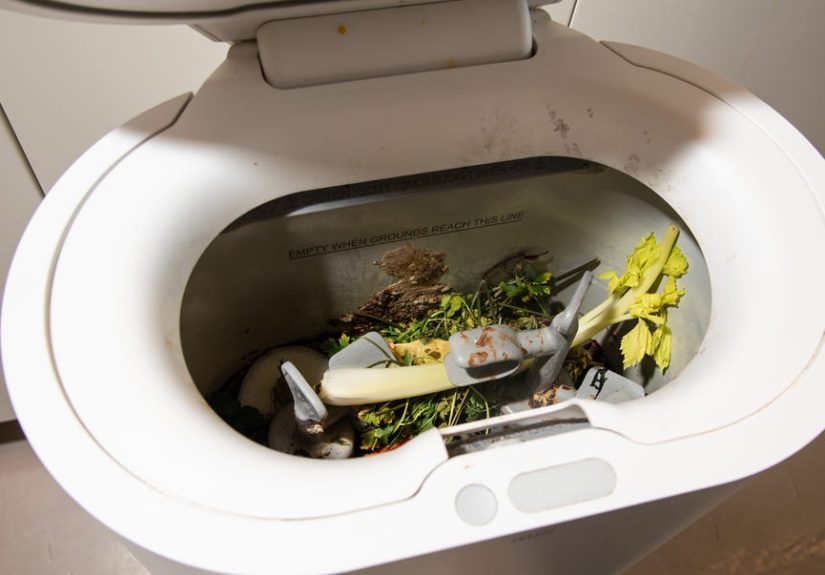
Open the lid (often with a foot pedal), dump scraps, close. No special bags. No stirring. No “add a magic powder” routine.
It’s designed to match the rhythm of cooking: peel, chop, scrape plate, repeat.
Step 2: Mill runs a Dry & Grind cycle
Mill uses sensors to determine how and when to run, and many people schedule it overnight.
The device dries food scraps and grinds them into shelf-stable grounds that can sit without turning into a science experiment.
Step 3: Empty less often (because volume drops)
One of Mill’s biggest selling points is how much it shrinks food waste. By removing moisture, it reduces volume dramatically,
which means fewer trips to the outdoor bin and less “why does my kitchen smell like regret?”
What You Can (and Shouldn’t) Put in Mill
Mill is famously tolerant compared to many compost setups. It’s built to handle a broad range of everyday scraps:
- Fruit and vegetable scraps (peels, rinds, pits in many cases)
- Plate scrapings and leftovers
- Meat, fish, dairy, eggshells (within normal household amounts)
- Some small bones (think chicken/fish bonesnot giant stew bones)
But it’s not a black hole. It’s picky about things that can gum up the system or don’t belong in a food recycler:
- Large bones (beef/pork/lamb-style “this came from a dinosaur” bones)
- Large amounts of liquid, grease, or oil (a little is normal; a deep-fryer’s worth is not)
- Compostable plastics or packaging (yes, even the “compostable” stuff)
- Large amounts of sugary baked goods (occasionally fine; dumping half a cake is a bad plan)
- Extremely moldy or “questionable” food (if it looks like it’s auditioning for a horror movie, don’t)
Odor Control: Mill’s Real Superpower
The reason Mill has loyal fans is simple: it keeps your kitchen from smelling like a mini landfill.
Reviews consistently highlight that day-to-day odor is minimal compared with countertop scrap bins or old-school compost caddies.
Mill uses a carbon filtration approach and a sealed system designed to keep smells insideplus it dries scraps so they don’t rot the same way.
If you’ve ever opened a standard trash can and been hit with the scent of “warm onion yogurt,” you understand why odor control alone can feel like a lifestyle upgrade.
Noise: Quiet-ish… With Occasional Crunch Drama
In normal operation, Mill tends to sound like steady fan noisethink dishwasher-adjacent. But when you feed it hard items (pits, bones),
you may hear quick snaps or clunks. Some reviewers have measured real-world noise higher than the brand’s marketing claims,
especially when the grind phase kicks in.
Translation: It’s not silent. It’s just not usually “wake the baby” loudunless you live in a studio apartment where your kitchen and your pillow are basically roommates.
Performance: Does It Actually Work?
Across long-term testing in mainstream U.S. lifestyle and food publications, the story is fairly consistent:
Mill reliably turns mixed kitchen scraps into dry grounds, with excellent odor control and minimal hands-on effort.
The biggest performance “gotcha” isn’t failureit’s expectations. Mill will not give you finished compost you can spread like black gold immediately.
Instead, it gives you a stable intermediate product that’s easier to store, transport, or integrate into composting workflows.
Cost Breakdown: The Real Question Behind “Worth It”
Mill is premium-priced. In 2025, it’s typically positioned around the $999 mark for purchase (finish-dependent pricing exists), with rental
options often around $35/month in common plans. Then there are optional ongoing costs, depending on how you use it.
Typical ongoing costs to consider
- Carbon filter replacement: often roughly annual (commonly around the $89 range for a replacement filter).
- Optional pickups: available for people who want to ship grounds out (pricing often shown as an annual plan, commonly around $192/year).
- Electricity: varies by usage and local rates; Mill is generally reported as relatively efficient for what it does.
Example “ownership math” (simple and honest)
If you buy the unit, replace one filter per year, and add pickup service, you’re potentially looking at:
Purchase price + filter + pickup + electricity.
If you rent, you’re likely trading the big upfront hit for predictable monthly costoften a better emotional experience if your budget hates surprises.
| Scenario | Upfront | Recurring (Typical) | Best For |
|---|---|---|---|
| Buy + Use Grounds at Home | High (device purchase) | Filter + electricity | Gardeners, composters, chicken owners |
| Buy + Add Pickups | High | Filter + pickup plan + electricity | Urban homes without compost options |
| Rent + Optional Pickups | Low | Monthly rent (+ pickup if chosen) | People who want flexibility (or fear commitment) |
Mill vs. Other Popular Food Recyclers in 2025
The “electric composter” category is crowded, but most devices fall into two camps:
(1) dehydrator-and-grinder machines (fast, tidy, not true compost),
and (2) microbial composters (slower, more biologically compost-like output).
Mill vs. Lomi
Lomi is countertop-friendly and widely marketed, but many reviewers describe it as primarily a dehydrator/grinder system as well.
If you want something smaller and can tolerate more frequent emptying, Lomi may fit better. If you want capacity and fewer interactions,
Mill generally wins on “set it and forget it” vibes.
Mill vs. Vitamix FoodCycler
FoodCycler models are popular for smaller households and tend to be less expensive up front, but they’re countertop appliances with smaller capacity.
For a couple who generates modest scraps, FoodCycler can be “enough.” For a family that cooks daily, Mill’s size and monthly-emptying rhythm can feel liberating.
Mill vs. Reencle-style microbial composters
Microbial systems aim to biologically break down waste in a more compost-like way. They can be appealing if you want output that behaves more like compost,
but they often have different maintenance needs (starter material, occasional additives, or attention to balance).
Mill’s advantage is consistency and cleanlinessespecially for mixed scraps.
Environmental Impact: The “Good,” the “Complicated,” and the “Be Real”
Food waste matters. In the U.S., landfilled food waste is a major methane driver, and methane is a powerful greenhouse gas. Diverting food scraps away from
landfill can be meaningfulespecially when paired with smarter shopping and meal planning so you waste less to begin with.
Where Mill shines environmentally is in behavior change through convenience. People who would never maintain a backyard compost pile may actually
keep scraps out of the trash if it’s odor-free and easy.
Where it gets complicated is the “what happens next” question. If you mail grounds across the country, there’s transportation footprint involved.
If you use grounds at home, you still need a responsible pathway (compost pile, soil integration, municipal organics, etc.).
Mill’s best-case environmental story happens when it replaces landfilling and supports a circular use for the output.
Tips to Get the Best Results (and Avoid Rookie Mistakes)
1) Treat liquids like a condiment, not a beverage
A little sauce on leftovers is fine. Dumping a cup of soup into the bin is not. Drain wet items when possible.
2) Chop the super-fibrous stuff
Corn husks, artichoke leaves, and other tough fibers can be harder on any grinder system. Cut into smaller pieces to help the machine.
3) Run cycles when it won’t annoy you
Most users schedule Mill overnight. If your kitchen is open to your living room and you’re a “TV at whisper volume” person, schedule accordingly.
4) Plan your “grounds workflow” before you buy
The machine is the easy part. Decide ahead of time whether you’ll:
(a) add grounds to an outdoor compost pile, (b) use in a garden/soil strategy,
(c) use as part of animal feed pathways where appropriate, or (d) subscribe to a pickup/shipping option.
Who Should Buy Mill in 2025?
Mill is a great fit if you are:
- A household that cooks often (families, meal-preppers, “leftovers are a lifestyle” people)
- Someone who hates odor, mess, and fruit flies with a burning passion
- Living in a place without easy compost pickup
- Willing to pay for convenience (and the satisfaction of not throwing food into landfill)
Mill is a bad fit if you are:
- Expecting finished compost with no additional steps
- Low-waste already (tiny household, mostly packaged foods, minimal scraps)
- On a strict budget where a premium appliance would cause real financial stress
- Short on floor space (especially in tight kitchens)
FAQ
Does Mill replace composting?
It can replace the gross part of composting (smelly storage and dealing with scraps), but it doesn’t magically create traditional finished compost.
Think of it as a powerful pre-processing step that makes composting (or diversion) easier.
Is Mill safe with meat and dairy?
Mill is designed to handle many common scraps, including meat and dairy in normal household quantities, but you still need to follow the brand’s guidelines
about what not to add (especially large bones and excessive liquids/grease).
How often do you empty it?
That depends on how much you cook and how many people you’re feeding. Heavy-cooking households can go weeks between emptying because dehydration shrinks volume.
So… Is the Mill Food Recycler Worth the Investment?
In 2025, Mill sits in a very specific sweet spot: high convenience, high capacity, and genuinely excellent odor control,
with the tradeoff of a premium price and the reality that it’s not “true composting” on its own.
If you’re the type of household that constantly generates scrapsand you’ve tried countertop bins, freezer scrap bags, or backyard composting and hated all of it
Mill can feel like a kitchen upgrade on the same level as a dishwasher: not strictly necessary, but once you have it, you get a little dramatic about living without it.
But if your scraps are minimal, your budget is tight, or you already have an easy compost pickup program, Mill may feel like buying a luxury solution to a problem
you’ve already solved.
Real-Life Experiences in 2025: What It’s Like Living With Mill (500+ Words)
Let’s talk about the part reviews don’t always capture: the daily rhythm. Because Mill isn’t just a gadget you admireit’s a kitchen roommate.
A quiet, hardworking roommate who doesn’t leave dishes in the sink, but does expect you to stop pouring soup into it like it’s a garbage disposal.
Week 1 feels weirdly emotional. Not because you suddenly become a sustainability monk (though you might), but because your trash can stops stinking.
You’ll catch yourself doing the old привычкаopening the trash lid cautiously like you’re defusing a bombonly to realize there’s nothing to fear.
Your kitchen smells like… your kitchen. Not “banana peel plus chicken juice, vintage 48 hours.”
Then comes the habit shift. People often report that Mill changes how they prep food. Instead of scraping scraps into the trash,
you aim them into Mill automatically. It becomes part of the cooking choreography: chop, slide scraps in, close lid, keep moving.
If you cook nightly, it’s almost like having a dedicated “scrap station” that doesn’t demand constant attention.
By week 2, you start playing “will it Mill?” (This is not officially endorsed, but it is spiritually inevitable.)
Lemon rinds? Yes. Onion skins? Yes. Old leftovers from the back of the fridge? Usually yesthough you learn quickly that “old” and “biohazard” are not the same thing.
You also learn the limits. The first time someone dumps a greasy pan situation into the bin, you’ll understand why guidelines exist.
Mill is forgiving, but it is not a magical portal where the laws of physics go to retire.
Noise becomes a personality trait. Most nights, it blends into the background, like a dishwasher humming in the distance.
But if you toss in something hardlike a pit or a stubborn bone fragmentyou may hear a quick clunk that makes you look up like,
“Was that the house… or did the machine just crack a walnut with pure determination?”
Over time, people tend to schedule cycles around their lifestyle: overnight for heavy cooks, midday for work-from-home folks who prefer it run while they’re on calls
(because nothing says “professional” like discussing quarterly forecasts while your food scraps are being pulverized nearby).
The biggest real-life question is always: What do you do with the grounds? This is where experiences split into two camps.
Camp A: the gardeners/composters who use the grounds to boost an outdoor compost pile or soil routine.
They love the convenience because scraps are dry, easy to handle, and less likely to attract pests immediately than wet waste.
Camp B: the “please take this away from me” camp, who use pickup/shipping options because they don’t have outdoor space or don’t want to manage the final step.
For them, Mill feels like outsourcing the mess while still keeping food waste out of the trash.
And then there’s the unexpected side effect: you notice your food waste more. When you see the amount of grounds you generate,
you become painfully aware of patternslike the bag of salad you buy with good intentions every week, only to watch it liquefy in the crisper drawer.
Some people report that owning Mill nudges them to plan meals better, store food smarter, and waste less in the first place.
That’s not because the machine lectures you (thankfully), but because it quietly keeps receipts.
In short: living with Mill in 2025 often feels like upgrading from “gross trash management” to “clean food recycling routine.”
It won’t turn you into a perfect zero-waste angel. But it can make the everyday act of dealing with scraps easier, cleaner, and surprisingly satisfying
which, honestly, is a lot to ask from a device whose job is to process yesterday’s spaghetti.